
For anyone approaching Ida Cox for the first time, the most sensible starting point is the song that has become her eternal calling card: "Wild Women Don't Have the Blues." Recorded in 1924 with Lovie Austin's Blues Serenaders, this is not merely her best-known composition; it is the gateway to everything that made her extraordinary. The opening clarinet wail, the steady piano stride, and then that voice—clear, confident, and edged with a knowing smile—declaring independence from every social convention that sought to bind her. Listen to how she delivers the line "Wild women don't worry, wild women don't have the blues" not as a boast but as a statement of fact, as immutable as gravity. This is the sound of a woman who understood that the blues could be a weapon of liberation, and newcomers should begin here because it encapsulates her spirit in under three minutes. Once you have absorbed the swagger and defiance of this recording, you are ready to travel deeper.
Ida Cox: A Newcomer's Guide to Listening to Ida Cox
- Details
- Written by: Simon Godfrey
- Category: Listening Guides
- Hits: 61
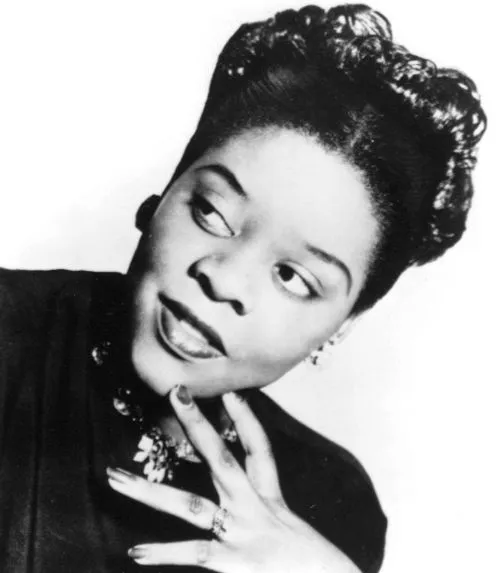
Cox's essential body of work was recorded for Paramount Records between 1923 and 1929, and this is where the newcomer should spend the majority of their initial listening time. These seventy-eight sides represent the classic blues era at its most literate and emotionally complex, and they reward repeated listening in ways that reveal new details with each pass.
Start with the 1923 debut sessions that paired her with Lovie Austin's Blues Serenaders. "Graveyard Dream Blues" and "Weary Way Blues" establish the twin poles of her art: mortality and exhaustion, rendered with a theatrical precision that never feels cold. The Serenaders provide a tight, responsive backdrop—Tommy Ladnier's cornet and Jimmy O'Bryant's clarinet weaving counter-melodies around her voice—and the acoustic recording quality, while dated, lends an intimacy that suits the material. These are not party records; they are late-night confessions, best heard with attention and a willingness to sit with discomfort.
From there, move to the 1924 sessions that produced "Death Letter Blues," which many aficionados consider her masterpiece. This is where Cox the songwriter reveals herself fully. She constructs a narrative of almost novelistic economy: the letter arrives, the journey home, the deathbed vigil, the funeral, the final parting. Listen to how her voice tightens with panic in the early verses, softens into grief, and finally settles into a resigned acceptance that is more devastating than any wail. The Blues Serenaders accompany her with a restraint that lets the story breathe, and the result is one of the most moving recordings in the entire blues canon. If you find yourself returning to this track repeatedly, you have understood something essential about Cox's art: she was a storyteller first, a singer second.
The mid-1920s recordings expand her range considerably. "How Long Daddy," recorded in 1925, became a blues standard for good reason; its melody is instantly memorable, and its lyric captures the anxiety of waiting with a universality that transcends era. "Coffin Blues," "Rambling Blues," and "Bear-Mash Blues" demonstrate her ability to shift between the mournful and the comic, sometimes within the same phrase. By 1927, with Jesse Crump accompanying her on piano, she was recording "Mojo Hand Blues," "Fore Day Creep," and "Gypsy Glass Blues," songs that drew on Southern folk traditions while maintaining the sophisticated structure of her best work. Listen to "Fore Day Creep" for its proto-jazz rhythmic feel, and to "Mojo Hand Blues" for its immersion in hoodoo imagery, a theme she explored with more nuance than many of her contemporaries.
No listening guide to Ida Cox would be complete without addressing what blues collectors call her "graveyard songs." These were not morbid indulgences; they were acknowledgments of the proximity of death in a society where Black life was systematically devalued. "Graveyard Dream Blues" began the series in 1923, and she returned to it repeatedly: "New Graveyard Dream Blues," "Coffin Blues," "Bone Orchard Blues," and "Cemetery Blues." Newcomers should approach these songs not as a suite but as variations on a theme, each offering a different emotional angle on mortality. "Coffin Blues" has a sardonic edge, almost gallows humor; "Bone Orchard Blues" is more contemplative; "Cemetery Blues" carries the weight of community, of burial grounds as gathering places for the living as well as the dead. Listen to how her phrasing changes across these recordings—the same subject rendered with different shades of feeling. It is here that Cox most clearly distinguishes herself from Bessie Smith and Ma Rainey; where they might have belted their way through such material, Cox whispers, insinuates, and lets silence do the work.
After the Paramount contract ended, Cox's recording career entered a long hiatus, but the sessions she made in 1939 and 1940 are essential for understanding her as an artist who evolved rather than froze in time. These recordings for Vocalion and Okeh feature accompaniment by some of the most important jazz musicians of the emerging bebop era—Charlie Christian on guitar, Hot Lips Page on trumpet, Red Allen on trumpet, J.C. Higginbotham on trombone, and Lionel Hampton on drums—and the modern rhythmic feel is immediately apparent.
"Pink Slip Blues" should be the newcomer's entry point to this period. It addresses the devastation of unemployment with a specificity that grounds the blues in economic reality: "After four long years, Uncle Sam done put me on the shelf / Cause that little pink slip means you got to go for yourself." The jazz accompaniment is looser, more propulsive than the Blues Serenaders' precise backing, and Cox adapts her phrasing accordingly, riding the beat rather than carving it into sections. "Hard Time Blues" and "Four Day Creep" from these same sessions reveal an artist still engaged with the social issues of her moment, still writing material that spoke to the lived experience of working-class Black Americans.
Then there is the final statement. In 1961, at the age of sixty-five, Cox recorded "Blues for Rampart Street" for the Riverside label, accompanied by the Coleman Hawkins Quintet. Newcomers should approach this album with adjusted expectations; the voice is thinner, the high notes more tentative, the instrument diminished by time and illness. But listen past the surface limitations to what remains: the authority, the dramatic intelligence, the ability to shape a lyric so that every word lands with purpose. Her rendition of "Wild Women Don't Have the Blues" on this album, with Hawkins's smoky tenor saxophone providing commentary, is a valediction—a woman looking back on a life of independence and finding that she would change nothing. "Death Letter Blues," revisited with this modern jazz ensemble, gains a new layer of poignancy; the narrator who once rushed to her lover's deathbed is now closer to her own mortality, and the song becomes a meditation on time itself. "Fogyism" and "Cherry Picking Blues" remind us that she never lost her humor, and her take on W.C. Handy's "St. Louis Blues" demonstrates that she could inhabit the standard repertoire with the same authority she brought to her own compositions.
Ida Cox demands a different kind of listening than many blues artists. She is not Bessie Smith, whose volcanic power can overwhelm you on first contact; she is not Ma Rainey, whose earth-shaking moans connect immediately to something primal. Cox is more subtle, more architectural. Her greatness lies in phrasing, in the spaces between notes, in the way she constructs a narrative arc across three minutes. Newcomers should listen with headphones, in a quiet room, with the lyrics in front of them if possible. Read along as she sings "Death Letter Blues" and notice how the story unfolds with the precision of a short story. Listen to "Wild Women" and pay attention to the way she swings behind the beat, creating a tension that makes the declaration of independence land harder. Listen to the graveyard songs and notice how she modulates her tone, moving from sardonic detachment to genuine sorrow within a single verse.
For the newcomer seeking a single entry point, the compilation The Essential Ida Cox or any collection bearing the title Wild Women Don't Have the Blues will provide a representative sampling across her career. The 1961 Riverside album Blues for Rampart Street is indispensable and widely available, serving as both introduction and conclusion. For those who wish to dig deeper, the Document Records reissues of her complete Paramount output offer the full archaeological record, though newcomers may find the sheer volume overwhelming at first.
The key is to start with the songs that speak to you personally. If you are drawn to feminist declarations, begin with "Wild Women" and "Four Day Creep." If you respond to narrative depth, start with "Death Letter Blues" and "Hard Time Blues." If you want to understand the social context of the classic blues era, listen to "Pink Slip Blues" and "Chicago Bound Blues." And if you simply want to hear a master at work, put on any recording from the 1924-1927 period, close your eyes, and let her voice do what it was designed to do: tell the truth, with elegance, with wit, and with an independence that still sounds radical nearly a century later.