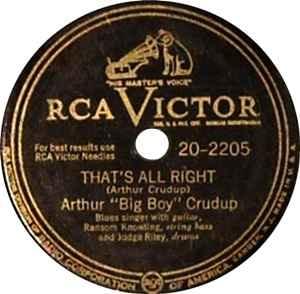
"That's All Right" (also known as "That's All Right, Mama") is a landmark Delta/Chicago blues track by Arthur "Big Boy" Crudup (1905–1974), widely regarded as one of the foundational songs of rock 'n' roll due to Elvis Presley's influential 1954 cover. Crudup's original is a raw, upbeat blues that blends Delta roots with emerging electric energy.
Recording Session
The song was recorded on September 6, 1946, in Chicago for RCA Victor's Bluebird label. It was part of Crudup's sessions produced under the direction of Lester Melrose, who discovered him in Chicago. The track was released as a single in 1946–1947 (Bluebird 20-2205 or similar) and became a regional hit in the South.
Producer: Lester Melrose, a powerful A&R man and publisher for Bluebird who shaped much of the Chicago blues scene in the 1940s. He signed Crudup after finding him busking on the streets.
Songwriters
Arthur "Big Boy" Crudup is the sole credited writer of "That's All Right." Like many blues compositions of the 1940s, it builds on traditional 12-bar structures, common lyrical phrases, and call-and-response patterns, but Crudup infuses it with personal optimism and rhythmic drive. The lyrics are deceptively simple: a man reassuring his lover (or himself) that "that's all right" no matter how she treats him, turning potential heartbreak into resilient acceptance ("Any way you do / That's all right with me").
This theme of stoic endurance amid romantic turmoil is classic blues, but Crudup's version stands out for its upbeat, almost defiant positivity—less wallowing and more forward-moving. The repetition of the title phrase creates a hypnotic, mantra-like quality that invites sing-alongs and reinterpretation. The song lacks the deep poetic imagery of some Delta blues but excels in directness and catchiness, making it highly adaptable for rock 'n' roll. Crudup reportedly drew from his own life experiences as a wandering musician facing hardship, channeling them into anthemic reassurance. Its universal appeal and rhythmic foundation made it a natural bridge from blues to the emerging rock sound, as evidenced by Elvis's version. The song's strength lies in its emotional accessibility and rhythmic vitality rather than narrative complexity.
Musicians
The session featured Crudup with a small combo typical of Bluebird blues recordings:
- Arthur "Big Boy" Crudup – vocals, guitar (his driving rhythm and lead work anchor the track)
- Supporting musicians from Melrose's stable (exact credits for this specific date often list minimal personnel, but included bass and possibly drums or additional guitar for the full band feel)
The sound is raw and energetic: acoustic-based with electric potential, featuring Crudup's strong vocal and rhythmic guitar that pushes the song forward.
Musical Style and Analysis
"That's All Right" is an up-tempo Delta/Chicago blues track that pulses with energy and foreshadowed rock 'n' roll's rhythmic drive. Performed at a brisk pace (roughly 140–160 BPM in Crudup's original), it transforms the typically mournful 12-bar blues form into something lively and danceable.
Crudup's guitar and vocals are the core: His acoustic (or lightly amplified) guitar delivers a strong, percussive rhythm with bright picking, simple riffs, and occasional lead fills. The playing has a rolling, train-like momentum that propels the song forward. His vocals are confident and full-throated, with a slight growl and rhythmic phrasing that swings naturally. He uses repetition and call-and-response ("That's all right... yes, it's all right") to build infectious energy.
The arrangement is sparse yet effective—a small combo (guitar, possible bass/drums) creates a raw, live feel with strong backbeat. There are no elaborate solos; instead, the focus is on groove and vocal-guitar interplay. The overall sound bridges acoustic Delta roots with the electrified potential of Chicago blues, giving it a transitional quality. At approximately 2:40–3:00, the track is concise and hook-driven, ideal for singles and radio play.
Compared to slower, heavier blues laments, Crudup's version has a joyful resilience and rhythmic bounce that made it ripe for rock adaptation. Elvis's 1954 Sun recording amplified this with slapback echo, upright bass slap, and electric guitar, accelerating the tempo and adding youthful energy. Crudup's original remains the authentic blues foundation—raw, rhythmic, and emotionally direct—highlighting how a simple blues number could spark a cultural revolution. Its influence on rhythm, attitude, and song structure is foundational to rock 'n' roll's birth.
Other Versions
- Elvis Presley (1954, Sun Records): His version, backed by Scotty Moore and Bill Black, is often cited as the "first rock 'n' roll record." It launched his career and introduced the song to a global audience.
- Numerous blues and rock covers, including versions by Rod Stewart, Elton John, and many live performances. It remains a staple in rockabilly and blues sets.
Elvis' Specific Variations
Elvis Presley's 1954 recording of "That's All Right" (recorded July 5 at Sun Studio in Memphis with Scotty Moore on guitar and Bill Black on upright bass) is a transformative cover that accelerated the shift from blues to rock 'n' roll. While Elvis retained Crudup's core structure and lyrics, he and his band made several key musical changes that injected youthful energy, rhythmic drive, and a new sonic identity. Here is a detailed breakdown:
Tempo and Feel
- Crudup's original (1946) is an up-tempo blues with a swinging, somewhat loose shuffle feel—energetic but rooted in traditional blues groove (roughly 140–160 BPM in feel).
- Elvis's version noticeably increases the tempo and tightens the rhythm into a driving, propulsive rockabilly beat. The slap from Bill Black's upright bass and Scotty Moore's rhythmic guitar create a frantic, danceable urgency. This shift from blues shuffle to rock 'n' roll "train" rhythm made the song feel modern and exciting for 1950s teens.
Rhythm Section and Groove
- Crudup relies on his own guitar for rhythm and lead, with minimal accompaniment—raw, acoustic-leaning, and focused on the vocal-guitar interplay.
- Elvis trio introduces a prominent upright bass slap (Bill Black) that provides a percussive, rhythmic foundation absent in the original. Scotty Moore's electric guitar adds crisp, country-influenced picking and rhythmic chunks. The result is a fuller, more dynamic rhythm section that "rocks" harder, with a backbeat emphasis that anticipates rock drumming.
Guitar Work (Scotty Moore)
- Crudup's guitar is rhythmic and riff-based with simple fills.
- Moore's electric lead guitar is a game-changer: clean, twangy tone with country picking, quick runs, and melodic fills that respond to Elvis's vocals. His solo breaks add excitement and instrumental personality. Moore's playing blends country, blues, and emerging rock elements, creating the signature Sun sound.
Vocals and Delivery
- Crudup's vocal is confident, full-throated, and bluesy—direct and resilient.
- Elvis adopts a youthful, energetic delivery with more pronounced rhythmic phrasing, hiccups, and playful inflections. His higher range and enthusiastic performance give the song a rebellious, carefree attitude. Sam Phillips's slapback echo on Elvis's voice adds depth and a sense of space, enhancing the rockabilly feel.
Production and Overall Sound
- Crudup's Bluebird recording is straightforward and raw, typical of 1940s blues production.
- Sun Studio production (Sam Phillips) emphasizes echo, space, and intimacy. The sparse trio format (no drums) creates a "bigger than life" sound in a small room. The overall mix is brighter, more trebly, and electrified, moving away from blues heaviness toward a lighter, more commercial rock sound.
Structural and Arrangement Changes
- Elvis keeps the basic 12-bar structure and lyrics but trims and tightens it for a punchier, radio-friendly length.
- The band adds dynamic builds, instrumental breaks, and a sense of improvisation that feels live and spontaneous—hallmarks of early rock.
Overall Impact: Elvis didn't just cover the song—he reimagined it as rock 'n' roll. By speeding it up, electrifying the instrumentation, adding slap bass and echo, and infusing youthful exuberance, the trio created a hybrid that appealed to both Black and white audiences. This version is frequently cited as one of the first rock 'n' roll records, illustrating how a blues song could be transformed into a cultural phenomenon. Crudup's original provided the DNA; Elvis and his band supplied the spark that ignited the rock revolution.
Legacy
The song's greatest legacy is its role in birthing rock 'n' roll via Elvis's cover, which reached #5 on the country chart. Crudup received little financial reward due to exploitative publishing practices common at the time (Melrose controlled rights). Nevertheless, "That's All Right" is a cornerstone of 20th-century popular music, symbolizing the transition from blues to rock. It has been recognized in countless "first rock song" debates and continues to be celebrated in documentaries, reissues, and performances. Crudup's influence on Elvis and the rock generation is profound, even if he saw limited personal benefit. The track endures as a testament to the blues' foundational role in American music.
Suggested Listening
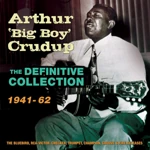 Buy from Amazon Definitive Collection 1941-62