In the vast and often mysterious landscape of American blues history, there exist figures who flicker briefly across the recording horizon and then vanish into the fog of time, leaving behind only a handful of 78 rpm records and a trail of unanswered questions. Sonny Boy Johnson is one such phantom—a harmonica-playing blues singer who cut eight sides between 1947 and 1948, was miscredited on at least one release, and then disappeared from the historical record entirely. No birth date, no death date, no hometown, no photograph, no oral history, no secondhand account from a fellow musician who shared a stage or a drink with him. He is, in the words of blues researcher Mike Rowe, an artist about whom "nothing is known."
And yet, the records exist. They are physical artifacts of a life, however briefly glimpsed, and they tell us something about the musical world Johnson inhabited and the artistic choices he made. This article is an attempt to reconstruct what little can be known about Sonny Boy Johnson, to place him in the context of the post-war West Coast blues scene, and to listen carefully to the eight songs that constitute his entire known legacy.
The Obscurity: What We Don't Know
The first and most important thing to say about Sonny Boy Johnson is that almost everything about his life is unknown. Researcher Mike Rowe, whose work on Chicago and West Coast blues remains foundational, noted in his writings on the Murray Records catalog: "Nothing is known of Sonny Boy Johnson who cut three sides from an uncredited source in 1947 with unknown backing, one side for Gotham the same year, credited to Wright Holmes who is on the reverse, and four songs for Murray in 1948 backed by Beverly Scott and Ernest McClay." This single sentence constitutes the most complete biographical summary of Johnson that exists in the blues literature.
We do not know where he was born, when he was born, or where he died. We do not know if "Sonny Boy Johnson" was his real name or a stage name adopted to capitalize on the fame of the two Sonny Boy Williamsons who dominated blues harmonica in the 1940s. We do not know if he was a migrant from the South who came to Los Angeles during the Great Migration, like so many African Americans of his era, or if he was a native Californian. We do not know if he performed regularly in the clubs of Watts and Central Avenue, or if his recording sessions were his only professional engagements. We do not know if he had a family, a day job, or any connection to the musicians who backed him on his records.
This absence of information is not unusual in blues history. The recording industry of the 1940s was a commercial enterprise, not a documentary project. Labels like Gotham and Murray were small, often underfunded operations that recorded artists quickly, pressed records in limited quantities, and moved on to the next session without keeping detailed files. The artists themselves were frequently itinerant, working-class musicians who left no paper trail. For every Muddy Waters or B.B. King who achieved fame and left behind an archive of interviews and photographs, there were dozens of Sonny Boy Johnsons—talented musicians who recorded a few sides and then faded back into the communities from which they came.
The Recordings: A Discography of Shadows
Sonny Boy Johnson's entire known discography consists of eight songs recorded in three sessions over approximately eighteen months in 1947 and 1948. The sessions were held in Los Angeles, placing Johnson squarely within the burgeoning West Coast blues scene that attracted so many Southern migrants during and after World War II.
The 1947 Sessions: Gotham and the Uncredited Source
Johnson's first known recordings took place in 1947. According to Mike Rowe, Johnson cut three sides from an "uncredited source"—a term that suggests the recordings were made for a label or producer whose identity has not been established, or perhaps were private recordings that were later sold or licensed to a record company. The backing musicians on these three sides are unknown, adding to the mystery.
In the same year, 1947, Johnson recorded one side for Gotham Records, a Philadelphia-based label founded by Ivin Ballen that specialized in R&B, jump blues, and down-home blues. The Gotham release is particularly notable because Johnson was miscredited: the record was issued under the name of Wright Holmes, a Houston-based blues guitarist who recorded for Gotham around the same period. The discography compiled by Stefan Wirz notes that the recording was made in Los Angeles in 1947, with Johnson on vocals and harmonica, accompanied by two guitarists, and that it was "miscredited to Wright Holmes." The song was "Quinsella," released on Gotham 511 in 1950.
The Wright Holmes miscredit is a telling detail. It suggests that either the master tape or the session documentation was mislabeled, or that Gotham's executives deliberately credited the recording to a better-known artist in the hope of selling more records. In either case, Johnson's name was erased from his own work, a fate that befell many obscure blues artists whose identities were subsumed by the commercial machinery of the record industry.
The 1948 Murray Session
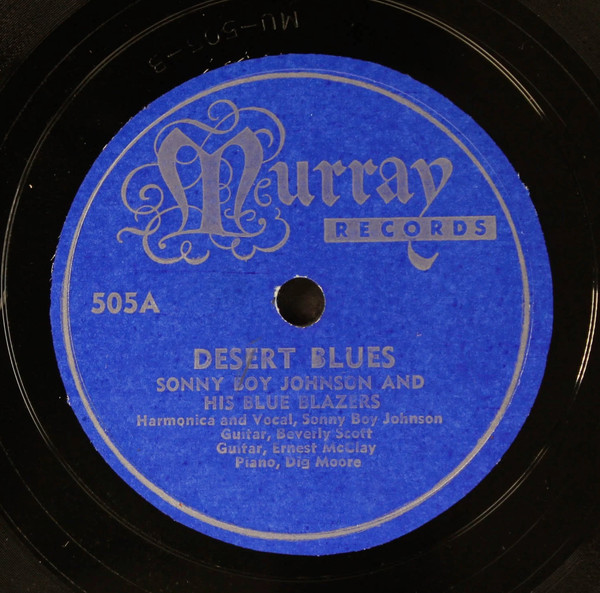
Johnson's final known recordings took place in Los Angeles in 1948 for Murray Records, a small independent label that documented the West Coast blues scene with a roster that included Beverly Scott, Ernest McClay, Louis Jackson, Slim Green, and Junior Hampton. The session produced four songs, with Johnson backed by guitarist Beverly Scott and guitarist Ernest McClay.
The choice of accompanists is significant. Beverly Scott was a Louisiana-born singer and guitarist who had moved to Los Angeles and was active in the local blues scene until his untimely death on January 8, 1948, at the age of 37. The fact that Scott accompanied Johnson suggests that the session took place early in 1948, before Scott's death. Ernest McClay was another West Coast guitarist who recorded for Murray and other labels in the late 1940s.
The four songs from the Murray session were: "Netta Mae," "She's Alright With Me," "I Done Got Tired," and presumably a fourth title. These recordings, along with the three uncredited 1947 sides and the Gotham miscredit, constitute Johnson's complete known output.
The Musical Style: A Devotee of Sonny Boy Williamson
The most concrete assessment of Johnson's musical style comes from the Big Road Blues blog, which noted that Johnson, heard on "Quinsella," was "very obviously a devotee of John Lee 'Sonny Boy' Williamson, and not a bad singer in his own right." This observation places Johnson within a specific tradition of blues harmonica playing and singing that was defined by John Lee Williamson (Sonny Boy Williamson I), the pioneering Chicago bluesman whose 1937 recording of "Good Morning, School Girl" established the harmonica as a lead instrument in blues music.
John Lee Williamson's style was characterized by a relaxed, conversational vocal delivery, intricate harmonica work that combined melodic lines with rhythmic chording, and a repertoire that drew from rural blues traditions while pointing toward the amplified band sounds of post-war Chicago. If Johnson was indeed a "devotee" of this style, we can infer that his own playing and singing likely emphasized clear, articulate harp lines, a smooth vocal approach, and a repertoire of original and traditional blues material.
The song "Quinsella" itself offers some clues. The title suggests a woman's name, a common trope in blues songwriting, and the fact that it was chosen for release indicates that it was considered commercially viable. The Gotham 511 coupling paired Johnson's "Quinsella" with Wright Holmes's "Alley Special," a typical blues release strategy of the era that paired two down-home blues sides for the jukebox market.
The Murray session titles—"Netta Mae," "She's Alright With Me," "I Done Got Tired"—follow similar patterns. "Netta Mae" is another woman's name, suggesting a narrative blues in the tradition of songs like "Frankie and Johnny" or "Stagger Lee." "She's Alright With Me" hints at a more upbeat, optimistic take on romantic relationships, while "I Done Got Tired" suggests a weary, world-weary blues in the tradition of songs about exhaustion and hard living.
The West Coast Blues Context
To understand Sonny Boy Johnson, it is necessary to understand the world in which he recorded. The post-war West Coast blues scene was one of the most vibrant and diverse in American music, fueled by the Great Migration of African Americans from Texas, Louisiana, Mississippi, and Arkansas to California during World War II. Defense industry jobs in Los Angeles, San Francisco, and San Diego drew hundreds of thousands of Black workers, and they brought their music with them.
The Central Avenue district of Los Angeles became the epicenter of this musical culture, with clubs like the Club Alabam, the Downbeat, and the Last Word hosting nightly performances by blues, jazz, and R&B artists. The Watts neighborhood, where the Harlem Club opened in 1936, was another crucial venue. It was here that T-Bone Walker developed his electric guitar style, where Big Joe Turner and Jimmy Witherspoon honed their shouting blues vocals, and where countless lesser-known musicians like Sonny Boy Johnson found work.
The recording industry on the West Coast was fragmented but active. Small labels like Specialty, Modern, RPM, Aladdin, and Imperial documented the local scene, while even smaller operations like Murray and Gotham provided opportunities for artists who might not have attracted the attention of the bigger companies. These labels often operated on shoestring budgets, recording artists in makeshift studios, pressing limited runs of 78 rpm records, and distributing them through regional networks of jukebox operators and record stores.
For a musician like Sonny Boy Johnson, a session for Murray or Gotham represented a chance to be heard beyond the local club circuit, to have his name on a record that might be played on the radio or in jukeboxes across the country. But the commercial realities of the independent record business meant that most of these records sold poorly, and the artists who made them rarely saw significant financial returns. Johnson's records were no exception: no copies of his Murray or Gotham releases are known to have charted, and no contemporary reviews or advertisements for his records have surfaced.
The Miscredit and the Erasure
The miscrediting of "Quinsella" to Wright Holmes is emblematic of the ways in which obscure blues artists were written out of their own histories. Wright Holmes was a Houston-based guitarist with a distinctive boogie style who recorded for Gotham in 1947 and 1950. He was a real person with a documented career, and his name carried more weight with record buyers than that of an unknown harmonica player from Los Angeles. By putting Holmes's name on the label, Gotham may have hoped to sell a few more copies, but in doing so, they erased Johnson's authorship of his own work.
This kind of erasure was common in the blues industry. Artists recorded under pseudonyms, their songs were credited to label owners or producers, and their names were changed to avoid contractual disputes or to capitalize on the fame of better-known performers. For Johnson, the miscredit meant that his one chance at national distribution was under someone else's name. It is a small tragedy, but one that repeats itself throughout the history of the blues.
Rediscovery and Reissue
Sonny Boy Johnson's music did not remain entirely lost. His recordings have been reissued on several compilation albums, bringing his work to the attention of blues collectors and enthusiasts who specialize in the obscure corners of the genre.
The 1966 Blues Classics compilation Blues Classics Volume 3 included Johnson's "Quinsella," credited correctly for the first time. The 1992 Flyright Records release Down Behind The Rise 1947-1953, compiled by Larry Hoffman, featured three of Johnson's Murray sides: "Netta Mae," "She's Alright With Me," and "I Done Got Tired." In 2004, the Boulevard Vintage label included "Quinsella" on its two-CD set Down Home Blues Classics (1943-1953), placing Johnson alongside better-known artists like Lightnin' Hopkins, Frankie Lee Sims, and Muddy Waters.
These reissues are significant not because they made Johnson famous—he remains one of the most obscure figures in blues history—but because they preserved his music for future generations. In an era before digital archiving, the physical 78 rpm records were the only evidence of Johnson's existence, and their inclusion on compilation LPs and CDs ensured that his voice and harmonica would not be entirely forgotten.
The Mystery of Identity
One of the most tantalizing questions about Sonny Boy Johnson is whether that was his real name. The blues world of the 1940s was filled with "Sonny Boys"—John Lee Williamson was Sonny Boy Williamson I, Alex Miller was Sonny Boy Williamson II, and there were doubtless other musicians who adopted the name for professional purposes. "Johnson" is the most common surname in blues history, shared by Robert Johnson, Lonnie Johnson, Tommy Johnson, and countless others.
It is possible that "Sonny Boy Johnson" was a stage name chosen to evoke the success of the two Sonny Boy Williamsons. If so, it would not be the first time a blues artist borrowed a name to capitalize on a trend. But it is also possible that Johnson's given name was indeed Johnson, and that "Sonny Boy" was a nickname bestowed by family or friends, as was common in the South.
The fact that Johnson played harmonica and sang in a style reminiscent of John Lee Williamson suggests that he may have modeled his entire act on the famous Sonny Boy. This was a common practice in the blues: young musicians learned by imitating the records and performances of established stars, and many developed their own styles only after years of playing in the shadow of their idols. If Johnson was a "devotee" of Williamson, as the Big Road Blues blog suggests, then his recordings may represent a fascinating case study in the transmission of blues style from the Chicago scene to the West Coast.
The Tragedy of the Unknown
There is a particular kind of sadness that attaches to artists like Sonny Boy Johnson. We know that he existed, that he made music, that he had enough talent to be recorded by multiple labels in a competitive industry. And yet we know nothing about the person behind the music—where he came from, what he looked like, what he hoped for, what he feared, how he lived, or how he died.
The blues, as a genre, is filled with songs about anonymity and obscurity—about being "down and out," "nobody's dog," "a long way from home." Johnson's own song "I Done Got Tired" speaks to a weariness that may have been personal as well as artistic. But the irony is that the blues, which gave voice to so many marginalized people, often failed to preserve the identities of the voices it amplified. The record labels kept poor records, the musicians moved on, and the communities that nurtured them were displaced by urban renewal, freeway construction, and economic change.
For Sonny Boy Johnson, the silence is nearly total. No one has come forward to say, "I knew him," or "I saw him play," or "He was my uncle, my neighbor, my friend." No photograph has surfaced. No obituary was written. His eight songs are the only testament to his existence, and they must speak for a life that is otherwise unrecorded.
Listening to the Records
What can we hear when we listen to Sonny Boy Johnson's records? The reissues suggest a musician of solid competence and genuine feeling. "Quinsella," with its two-guitar accompaniment, has a relaxed, conversational quality that recalls the best of John Lee Williamson's work. The Murray sides, with their more stripped-down guitar backing, place Johnson's voice and harmonica at the center of the mix, allowing us to hear his phrasing and tone with unusual clarity.
Johnson's harmonica playing, from what can be discerned on the reissues, is melodic and controlled, with a preference for single-note lines over the more aggressive chording that would become popular in Chicago blues. His voice is smooth and unhurried, with a slight rasp that adds character without overwhelming the lyrics. He does not shout or plead; he sings with the quiet authority of someone who has lived the blues and does not need to dramatize his suffering.
The songs themselves are conventional in structure but personal in detail. "Netta Mae" tells a story of a specific woman, not a generic "baby" or "mama." "I Done Got Tired" expresses a weariness that feels lived-in, not performed. "She's Alright With Me" has a warmth and affection that transcends the blues clichés of infidelity and betrayal. These are the songs of a man who observed the world around him and turned his observations into art.
Legacy and Influence
It would be an overstatement to say that Sonny Boy Johnson had a significant influence on the development of the blues. He was not a pioneer like John Lee Williamson, not a star like Muddy Waters, not a songwriter whose compositions were covered by generations of musicians. His influence, if any, was local and ephemeral, confined to the Los Angeles clubs where he may have performed and the musicians who may have heard him.
But Johnson's legacy is not entirely negligible. His records are part of the documentary record of the West Coast blues scene, a scene that produced T-Bone Walker, Charles Brown, Pee Wee Crayton, and countless other important artists. They demonstrate that the influence of John Lee Williamson extended far beyond Chicago, reaching musicians in Los Angeles who absorbed his style and made it their own. And they remind us that the blues was not created only by the famous names in the history books, but by hundreds of anonymous musicians who played in juke joints, rent parties, and street corners, who recorded a few sides and then disappeared, but who nonetheless contributed to the rich tapestry of American music.
In a broader sense, Johnson's story—what little we know of it—is a reminder of the fragility of musical memory. The blues tradition was an oral and aural one, passed down through performance and recording rather than through written documentation. When a musician like Johnson vanished from the historical record, a small piece of that tradition vanished with him. The reissues of his records are an act of recovery, an attempt to pull a forgotten voice back from the edge of oblivion.
Conclusion: The Phantom Remains
Sonny Boy Johnson is a phantom, a name on a few record labels, a voice on a handful of 78 rpm discs, a footnote in the discographies compiled by dedicated researchers. We do not know when he was born or when he died. We do not know if he was satisfied with his eight recordings or if he dreamed of greater success. We do not know if he ever heard his own records on the radio or in a jukebox, or if he ever received a royalty check, however small.
What we do know is that he existed, that he made music, and that his music has survived against the odds. In a world that forgets so easily, the fact that Sonny Boy Johnson's name appears on a reissue CD, that a blogger in the 21st century can write that he was "not a bad singer in his own right," that a researcher like Mike Rowe took the time to note his sessions and his accompanists—these are small victories against the great forgetting.
The blues is a music of loss, of memory, of the struggle to be heard. Sonny Boy Johnson's story is the blues in miniature: a life barely glimpsed, a voice briefly captured, a legacy that depends entirely on the dedication of collectors and scholars who refuse to let the past disappear. He may have been nobody's Sonny Boy, but he was somebody's musician, and his eight songs are a testament to the countless unknown artists who gave the blues its depth and its soul.
Suggested Listening
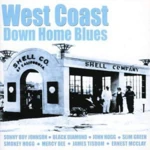 Buy from Amazon West Coast Down Home Blues - Various Artists - includes "Come and Go with Me", "All My Money Is Gone", "Swimming Pool Blues" and "Desert Blues" by Sonny Boy Johnson