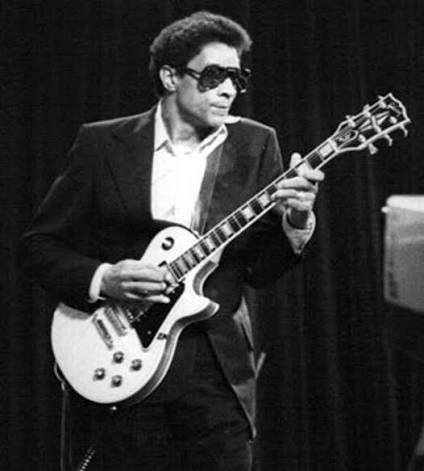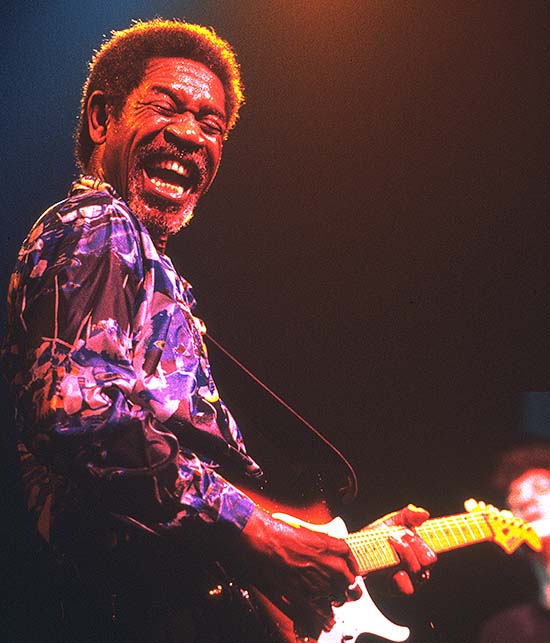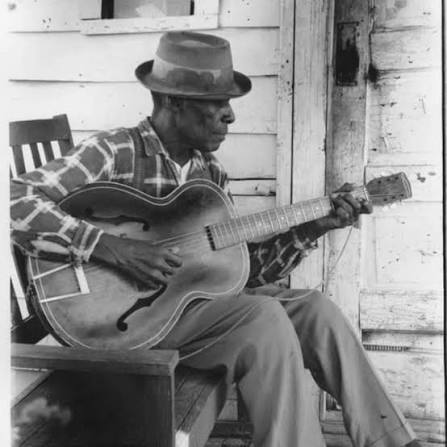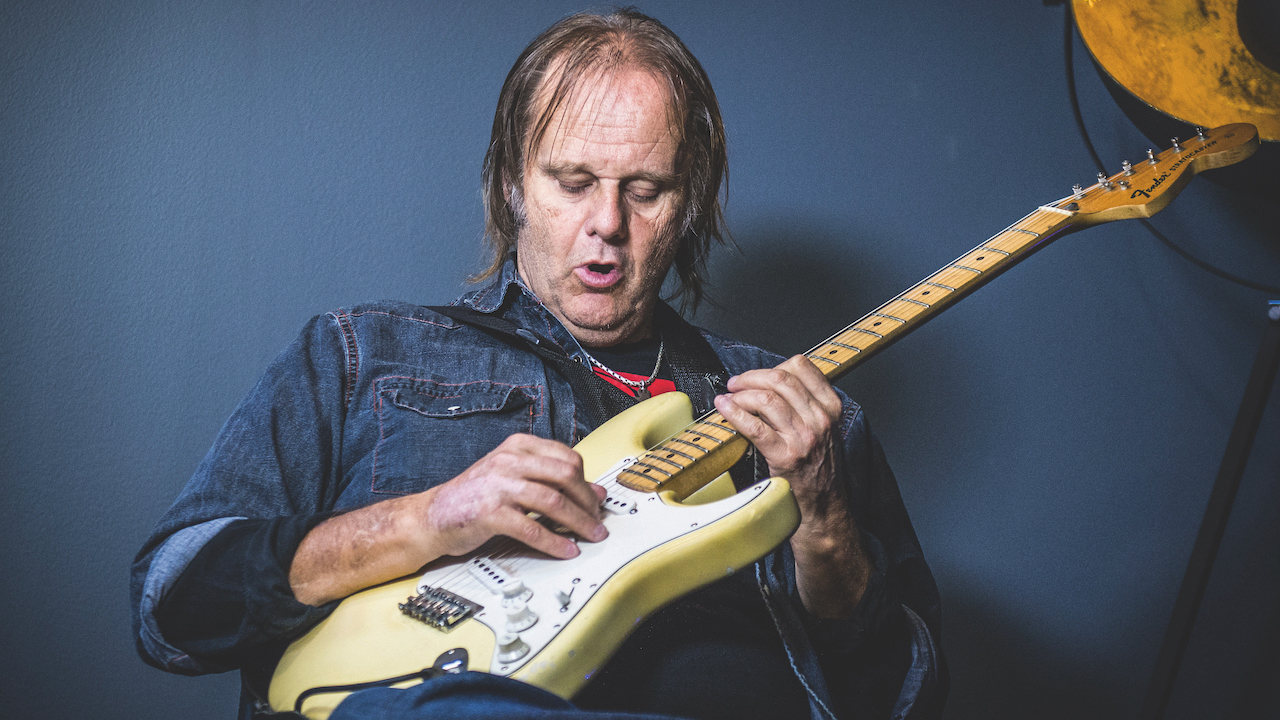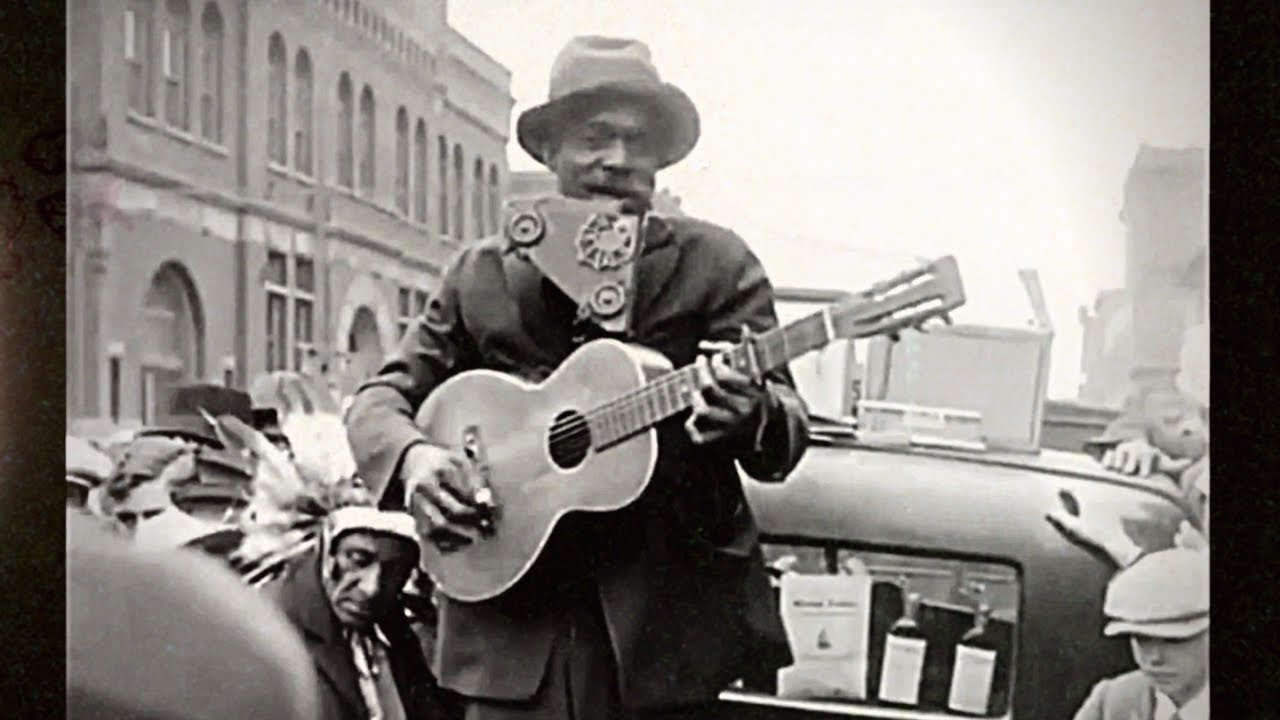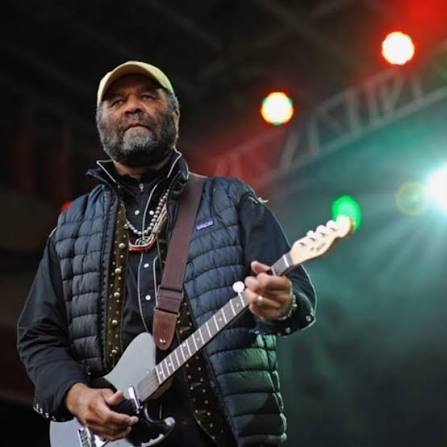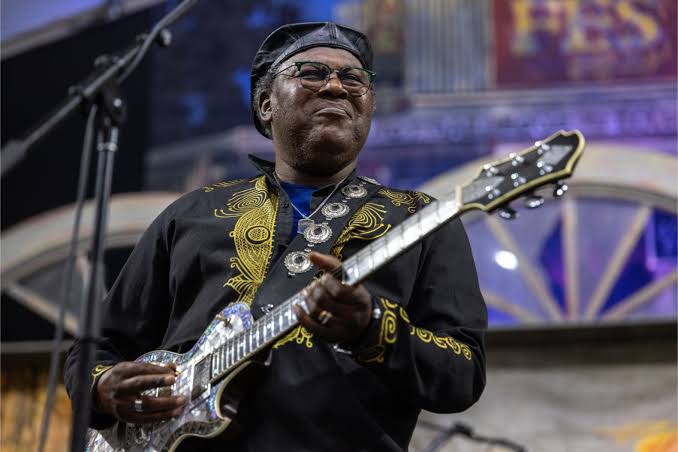
He was 14 playing Fillmore Auditorium, 16 jamming with Jimi Hendrix and Mike Bloomfield, 19 rooming with Bloomfield, then he quit blues for gospel for a decade and returned to become the most restless, soulful, modern bluesman of his generation.
If you saw Joe Louis Walker live in the last twenty years, you remember how little he stood still and how much ground he covered.
He would start with a deep, churchy blues in B flat, singing in a big, slightly ragged tenor that could go from a whisper to a shout without warning, playing a Gibson or a Fender with a biting, slightly overdriven tone that owed as much to Jimi Hendrix as to B.B. King. Then, without announcement, he would go into a soul ballad that sounded like Al Green at the Hi Records studio, then into a gospel shout that sounded like the Spiritual Corinthians, the gospel quartet he sang with for ten years when he left blues, then into a rock and roll number that sounded like the Fillmore in 1968, which he knew firsthand because he was there, a kid from the Fillmore district playing Fillmore Auditorium at fourteen.
Joe Louis Walker, born December 25, 1949, in San Francisco, California, and died April 30, 2025, in New York, was one of the most restless and most complete blues musicians of the last forty years. He was not a traditionalist, not a preservationist. He was a modernist who loved tradition, a bluesman who loved soul and gospel and rock and funk and who put them all in the same set because they all came from the same place: the Black church and the Black street.
For blues enthusiasts who came up on B.B. King and Muddy Waters, Walker was sometimes confusing. He didn't play twelve-bar all night. He played whatever he felt. For blues enthusiasts who came up on Hendrix and Sly Stone and Al Green as well as B.B., he was exactly what blues needed: a man who knew the whole lineage, from T-Bone to Hendrix, from gospel quartet to psychedelic ballroom, and who could make it all sound like blues.
His career was two careers, with a decade of silence in between. First, as a teenage prodigy in San Francisco in the sixties, playing with everyone, jamming with Hendrix, rooming with Mike Bloomfield. Then, as a gospel singer in the seventies, leaving blues behind, studying music at San Francisco State, singing with the Spiritual Corinthians. Then, as a returning hero in the eighties, forming the Boss Talkers, signing to HighTone, making "Cold Is the Night" in 1986, and then making more than two dozen albums that stretched blues in every direction without ever leaving it.
This is his story, from the Fillmore district to the Fillmore Auditorium and back, from Christmas Day 1949 to April 2025, from gospel to blues and back again.
The Fillmore
Joe Louis Walker was born on Christmas Day, 1949, in San Francisco, in the Fillmore district, which in the late forties and fifties was the center of Black life, music, and business in San Francisco, often called the Western Addition, often called the Fillmore, sometimes called the Harlem of the West. His parents were from the South — his father from Mississippi, his mother from Louisiana — who had come to San Francisco during World War II for shipyard jobs. They were churchgoing people, Baptist, with a house full of music: blues on the radio, gospel on Sunday, R&B on the jukebox.
The Fillmore in the fifties was a musical crossroads. On one block you could hear gospel quartets rehearsing, on the next you could hear a blues guitarist playing for tips, on the next you could hear a jazz band at a club. The Fillmore Auditorium, at Fillmore and Geary, was a dance hall that in the early sixties became a ballroom for soul and R&B, and in the mid-sixties became the epicenter of psychedelic rock, with Bill Graham booking the Grateful Dead, Jefferson Airplane, and everyone else.
Walker grew up in that crossroads. He started playing guitar at eight, after hearing T-Bone Walker on the radio and seeing B.B. King at a theater. He took lessons from a local guitarist named Robert Randolph? Actually, he learned from records and from watching older players at house parties. He was a natural, with big hands and a good ear.
By fourteen, he was playing professionally. He played at the Fillmore Auditorium in 1964, not as a headliner but as a kid who could sit in with soul and blues bands that played there. He played with John Lee Hooker, who lived in the Bay Area in the sixties and who took a liking to the kid from the Fillmore. Hooker would let Walker sit in, playing second guitar, learning how Hooker played one chord and made it hypnotic.
By sixteen, he was a regular on the San Francisco blues scene, playing with Lowell Fulson, Jimmy McCracklin, and others. He also fell into the psychedelic scene, because the Fillmore Auditorium was booking both. He jammed with Jimi Hendrix in 1968 when Hendrix was in San Francisco recording and playing. Hendrix, who was only seven years older, was already a star, but he liked to jam with young Bay Area guitarists. Walker later said Hendrix showed him how to get feedback and how to use the whammy bar, and how to play blues with rock volume.
He also became friends and roommates with Mike Bloomfield, the white blues guitarist from Chicago who had moved to San Francisco and formed the Electric Flag. Bloomfield, born in 1943, was a blues purist with a deep knowledge of B.B. King and T-Bone Walker, and he took Walker under his wing, showing him records, showing him how to play B.B. King vibrato, how to play T-Bone Walker horn-like lines. They roomed together in the late sixties in San Francisco, two young guitarists obsessed with blues, one Black kid from the Fillmore, one white kid from Chicago, both trying to figure out how to be modern and traditional at once.
Walker also played with other San Francisco musicians — with the Grateful Dead's circle, with Jefferson Airplane's circle — but his heart was blues.
In 1968, he formed his first band, playing blues and soul around the Bay Area, opening for bigger acts at the Fillmore and at other ballrooms. He was nineteen, playing originals and covers, singing in a voice that was already big and soulful.
Then, in the early seventies, he quit.
The Gospel Years
Why Joe Louis Walker left blues in the early seventies is a story he told many times, with variations, but the core is consistent: he was burned out, disillusioned, and searching.
The San Francisco music scene in the early seventies had changed. The Fillmore had closed in 1971. The psychedelic scene had collapsed. Blues was not popular with young Black audiences, who were listening to soul, funk, and later disco. Walker, in his early twenties, was playing blues in clubs that were half empty, for little money, while his friends from high school were getting jobs, going to college.
He also had a personal crisis. He had been playing since he was fourteen, had seen a lot — drugs, violence, racism in the music business — and he was tired. He started going back to church, to the Baptist church his parents had taken him to, and he found solace in gospel music.
He enrolled at San Francisco State University to study music and English, and he joined a gospel quartet, the Spiritual Corinthians, a well-known Bay Area gospel group that sang in the quartet tradition — four men, close harmony, a cappella or with minimal accompaniment, in the style of the Soul Stirrers and the Swan Silvertones. Walker sang lead and baritone, learned how to sing harmony, how to lead a church, how to make a congregation shout.
He sang with the Spiritual Corinthians for almost ten years, from about 1975 to 1985, touring Black churches up and down the West Coast, recording gospel records that sold in the gospel market but not in the blues market, living a more stable life. He got married, had children, worked day jobs.
He did not play blues guitar during those years, or played very little. He played gospel guitar, which is different — more choppy, more rhythmic, more about supporting the singers.
He later said those gospel years saved him as a musician and as a man. They taught him how to sing from his diaphragm, how to phrase like a preacher, how to build a song from a whisper to a shout, how to make people feel something beyond entertainment. They also taught him that blues and gospel are not opposites, as many people think, but brothers and sisters, both coming from the same root — the field holler, the moan, the shout.
In the early eighties, he started feeling the pull back to blues. He would hear B.B. King on the radio and his hands would itch. He would hear Al Green and think about how soul and blues and gospel were all connected. He started playing blues again at home, then at small clubs, then with a new band.
Cold Is the Night
In 1985, Joe Louis Walker formed the Boss Talkers, a band that mixed blues, soul, and gospel, with a horn section and a rhythm section that could play funk and blues. The name came from his father, who was a boss talker — a man who could talk his way into and out of anything.
He started playing around San Francisco again, at clubs like Slim's and at festivals, and word got around that the kid from the Fillmore who had played with Hendrix and Bloomfield and then disappeared into gospel was back, and better.
Bruce Bromberg and Dennis Walker, who ran HighTone Records, a small blues label based in Oakland that had been recording Robert Cray and others, heard him and signed him.
His debut album, "Cold Is the Night" (HighTone Hightone 8001, 1986), was a revelation. Produced by Bromberg, it has Walker singing and playing guitar with the Boss Talkers, including horns, with songs that mix blues, soul, and gospel. The title track, "Cold Is the Night," is a slow blues with a gospel-tinged vocal that builds from a whisper to a shout. "The Gift" is a soul ballad. "Jack You Up" is a funky blues. The album won a W.C. Handy Award for Best Contemporary Blues Album and made Walker an overnight sensation in the blues world, at age 36, after a decade away.
He followed it with "The Gift" (HighTone 8005, 1988), which is even more soulful, with Walker writing most of the songs, and "Blue Soul" (HighTone 8009, 1989), which adds more rock and funk. These three HighTone albums are the foundation of his modern career and show his template: blues as a big tent that includes soul, gospel, rock, and funk, with guitar that can sting like B.B. and roar like Hendrix, and voice that can whisper like Al Green and shout like a preacher.
In 1990, he signed to Verve Records, a major jazz label that was starting to record blues, and made "Live at Slim's Volume One" (1991) and "Volume Two," recorded at Slim's in San Francisco, his home club. The live albums capture his live show: long sets, no setlist, calling songs on the fly, going from blues to soul to gospel to rock, with extended guitar solos that build from B.B. King-like vibrato to Hendrix-like feedback.
He recorded for Verve and later for Telarc, Evidence, and other labels throughout the nineties and 2000s, making more than two dozen albums, including "Blues Survivor" (1993), which won a Handy Award, "JLW" (1994), "Great Guitars" (1997) with Bonnie Raitt and others, and "In the Morning" (2002).
His style during this period became more rock-influenced, with louder amps, more overdrive, more Hendrix influence, but always with soul and gospel vocal phrasing. He would play a B.B. King-like solo with perfect vibrato, then step on a fuzz pedal and make his guitar scream like Hendrix, then turn it off and play a choppy gospel rhythm.
He also became known for his collaborations. He played with B.B. King, who called him "a modern bluesman who knows the old blues," with Bonnie Raitt, who sang on his records, with Taj Mahal, with James Cotton, and with many others.
The Blues Survivor
The nineties and 2000s were Walker's most productive period, but also a period of personal struggle.
He toured constantly, 200 nights a year, with the Boss Talkers and later with smaller bands, playing festivals in Europe, in Japan, in America. He was a festival favorite because his show was unpredictable — you never knew if he would play a slow blues, a soul ballad, a gospel shout, or a rock number — and because he was a charismatic frontman, big man, big voice, big guitar.
He won multiple Blues Music Awards (formerly W.C. Handy Awards) for Best Contemporary Blues Album, Best Blues Guitarist, and others. He was inducted into the Blues Hall of Fame in 2013? Actually, he was inducted in 2013? He was nominated many times.
He also struggled with health and with the music business. The blues market in the nineties was small, and even a star like Walker made little money from records. He made money from touring, which was grueling.
He also struggled with being categorized. Blues purists sometimes criticized him for playing too much soul, too much rock, too much gospel. He would respond, "Blues is not one thing. Blues is everything Black music is. Soul is blues, gospel is blues, rock is blues."
He moved to New York in the 2000s, partly for work, partly for family, and continued to record and tour.
His later albums include "Witness to the Blues" (2008), "Between a Rock and the Blues" (2009) which was nominated for a Grammy for Best Contemporary Blues Album, "Hellfire" (2012) produced by Tom Hambridge, which is one of his most rock-influenced albums, with loud guitars and soul vocals, and "Everybody Wants a Piece" (2015) which won a Blues Music Award for Best Contemporary Blues Album.
He also recorded gospel-tinged albums like "Gospel Blues" and others that reflected his gospel years.
The Guitar and the Voice
For guitarists who want to understand Walker's sound, here is the method.
Guitar: Gibson ES-335 or Fender Stratocaster or Gibson Les Paul, depending on era, with medium strings, .010-.046, played with a pick, with a slightly overdriven amp — Fender Twin or Bassman or later Marshall or Dumble-style amp, with reverb and a little delay, with a wah and fuzz for Hendrix moments. He played with a pick, not fingers, with a strong, rhythmic right hand.
Technique: B.B. King vibrato — wide, fast, with wrist, not finger — combined with Hendrix-like bending and feedback. He would play a B.B. King-like phrase with perfect vibrato, then bend a note a whole step and hold it with feedback, then play a T-Bone Walker-like horn line, then a gospel-like choppy rhythm. He used space, like B.B., but also used density, like Hendrix.
Voice: Big tenor, slightly ragged, with gospel phrasing — starting soft, building to shout, with melisma, with preacher-like cadence. He sang behind the beat, like a soul singer, with a slight rasp that came from gospel shouting.
Band: Horns, often trumpet and tenor sax, playing soul and blues lines, rhythm section that could play funk, soul, and blues, with bass playing melodic lines like soul, not just root-fifth.
The key is versatility. Walker could play a slow blues, then a soul ballad, then a gospel shout, then a rock number, and make them all sound like blues because he sang them with blues feeling.
For singers, his lesson is to sing from the diaphragm, to build from whisper to shout, to use melisma sparingly, to tell a story.
The Return and the Road
By the late 1980s, Joe Louis Walker was a star in the blues world, but a star who toured like a working musician.
He played 200 nights a year, with the Boss Talkers, a band that included a horn section — often trumpet and tenor sax — and a rhythm section that could play blues, soul, funk, and rock. The band was tight, with arrangements that left space for Walker's guitar and voice, but that could also stretch into jams.
His live show became legendary for its unpredictability. He did not have a setlist. He would call songs on the fly, based on the audience, the mood, the city. He might start with "Cold Is the Night," a slow blues, then go into "The Gift," a soul ballad, then into "Gospel Blues," a gospel shout, then into a Hendrix-like rock number like "Red House" or an original that sounded like Hendrix, then into a funk number. He would play for two hours, sometimes three, with no break, with extended guitar solos that built from B.B. King-like vibrato to Hendrix-like feedback and back.
He toured Europe extensively, where blues was more popular than in America, playing festivals like Montreux, North Sea, and Pistoia, where audiences of 10,000 would dance to his mix of blues and soul. He toured Japan, where blues fans revered him. He toured America, playing festivals like Chicago Blues Festival, San Francisco Blues Festival, and clubs like Slim's in San Francisco, his home club, and B.B. King's in New York.
He also became a mentor to younger musicians, like many older bluesmen. He would invite young guitarists on stage to jam, showing them how to play behind the beat, how to build a solo, how to sing while playing. He was generous with his knowledge, like Mike Bloomfield had been generous with him.
He recorded constantly. After HighTone, he signed to Verve in 1990, a major label that gave him bigger budgets and better distribution. "Live at Slim's Volume One" (Verve 847 201, 1991) and "Volume Two" capture his live show at Slim's, with long versions of "Cold Is the Night" and "The Gift" and covers of B.B. King and Al Green. "Blues Survivor" (Verve 521 276, 1993) is a studio album that won a W.C. Handy Award for Best Contemporary Blues Album, with Walker writing most songs, mixing blues, soul, and rock.
"JLW" (Verve 529 313, 1994) is more rock-influenced, with louder guitars and more Hendrix influence. "Great Guitars" (Verve 537 141, 1997) is a collaboration album with Bonnie Raitt, Taj Mahal, and others, showing Walker's ability to play with other guitarists without being overshadowed.
In the late nineties and 2000s, he recorded for Telarc, Evidence, and other labels, making albums like "Preacher and the President" (1998), "Silvertone Blues" (1999), "In the Morning" (2002), "Pasa Tiempo" (2002), "New Direction" (2004), and others, each with a slightly different emphasis — some more soul, some more rock, some more gospel, but all blues.
His 2009 album "Between a Rock and the Blues" (Stony Plain) was nominated for a Grammy for Best Contemporary Blues Album, with Walker playing with a band that included Kevin Eubanks, formerly of the Tonight Show, and others. The album has a mix of blues, rock, and soul, with Walker's guitar and voice front and center.
His 2012 album "Hellfire" (Alligator), produced by Tom Hambridge, is one of his most rock-influenced, with loud guitars, soul vocals, and guest appearances by others. It was nominated for a Blues Music Award.
His 2015 album "Everybody Wants a Piece" (Provogue) won a Blues Music Award for Best Contemporary Blues Album, with Walker writing most songs, mixing blues, soul, and rock, with a band that included horns.
He continued to tour and record into his seventies, with his last album "Weight of the World" (2023) on Gulf Coast Records, produced by Joe Bonamassa and Josh Smith, which has a more modern, rock-influenced sound but still with soul and gospel.
The Fillmore Kid
Joe Louis Walker's connection to the Fillmore — both the district and the auditorium — is central to his story and his sound.
The Fillmore district in San Francisco in the fifties and sixties was a Black neighborhood with a rich musical life: gospel quartets, blues guitarists, jazz clubs, and later, the Fillmore Auditorium, which Bill Graham turned into a ballroom for psychedelic rock in 1966. Walker grew up a few blocks from the auditorium and would sneak in as a kid to hear soul and blues bands, then later psychedelic bands.
He played the Fillmore Auditorium at fourteen, sitting in with soul bands. He played it at sixteen with John Lee Hooker. He played it at eighteen with his own band, opening for bigger acts. He saw Jimi Hendrix play there in 1968 and jammed with him after.
That Fillmore experience — hearing gospel quartets in church on Sunday morning, blues on Maxwell Street-like Fillmore Street in the afternoon, and Jefferson Airplane and the Grateful Dead at the Fillmore Auditorium at night — gave him a musical vocabulary that most bluesmen didn't have. He heard soul, gospel, blues, rock, and psychedelia as part of the same continuum, not as separate genres.
That continuum is what he brought to his own music. When he plays a soul ballad, he sings it with blues feeling. When he plays a rock number, he plays it with gospel phrasing. When he plays a gospel shout, he plays guitar like B.B. King.
He also learned showmanship at the Fillmore. Bill Graham's shows were theatrical, with light shows and long jams. Walker learned to build a set from whisper to shout, to use dynamics, to make a two-hour show feel like a journey.
His Fillmore roots also gave him a connection to the San Francisco psychedelic scene that most bluesmen didn't have. He knew members of the Grateful Dead, Jefferson Airplane, and other bands, and he jammed with them. That connection helped him later when blues became popular with white rock audiences.
The Gospel Lesson
Walker's ten years with the Spiritual Corinthians, from about 1975 to 1985, is often treated as a detour, but it was central to his development.
The Spiritual Corinthians were a well-known Bay Area gospel quartet in the tradition of the Soul Stirrers, the Swan Silvertones, and the Dixie Hummingbirds — four men, close harmony, a cappella or with minimal guitar, singing spirituals and gospel songs with a lead singer who would shout and moan and make the congregation feel the spirit.
Walker sang lead and baritone, learning how to sing harmony, how to lead a song, how to build from a whisper to a shout, how to make a congregation shout and dance. He learned how to sing from his diaphragm, not his throat, how to use melisma — singing many notes on one syllable — sparingly and effectively, how to phrase like a preacher, with pauses and repetitions.
He also learned that gospel and blues are not opposites. Many people think blues is the devil's music and gospel is God's music, but Walker learned they are brothers and sisters, both coming from the field holler, the moan, the shout, both about making people feel something beyond words. He would say, "Blues is gospel's cousin. They both come from the same place — the church and the field."
When he returned to blues in 1985, he brought that gospel phrasing with him. Listen to "Cold Is the Night" — the vocal starts soft, almost spoken, then builds to a shout, with melisma on key words, with a preacher-like cadence. That is gospel phrasing applied to blues.
He also brought gospel guitar — choppy, rhythmic, supporting the singers, not showing off — to his blues playing. He would play a choppy rhythm behind his own vocal, then play a B.B. King-like solo, then go back to choppy rhythm. That interplay between rhythm and lead, between support and showmanship, is gospel.
His gospel years also gave him stability. He got married, had children, studied music at San Francisco State, learned theory, learned to read music, learned English literature, which influenced his songwriting. He wrote more literate, more personal lyrics after gospel than before.
Influence - The Modernist
Joe Louis Walker's influence is not as obvious as B.B. King's or Muddy Waters' because he was not a traditionalist. He was a modernist who stretched blues, and his influence is on modern blues musicians who also stretch.
Start with Robert Cray. Cray, born in 1953, also mixes blues, soul, and gospel, and also sings in a soulful tenor with gospel phrasing. Walker and Cray came up together in the Bay Area in the eighties, playing the same clubs, and they influenced each other. Cray's "Strong Persuader" (1986) and Walker's "Cold Is the Night" (1986) came out the same year and both mix blues and soul, showing a new direction for blues in the eighties.
Next, Bonnie Raitt. Raitt, who has always mixed blues, soul, and rock, played with Walker on his "Great Guitars" album and cited him as a favorite modern bluesman who knows tradition but is not bound by it.
Next, Gary Clark Jr. and other young Black blues-rock musicians who mix blues, soul, hip-hop, and rock. Walker was an early model for how to be a Black bluesman who plays rock and soul without losing blues credibility. He showed you could play Hendrix and B.B. in the same set and make it work.
Next, white blues-rock musicians like Joe Bonamassa, who produced Walker's last album "Weight of the World" (2023) and who cited Walker as a favorite modern bluesman who can play soul and blues and rock with equal conviction. Bonamassa's own mix of blues, soul, and rock owes something to Walker's template.
Next, gospel-blues musicians like the Holmes Brothers and others who mix gospel quartet singing with blues guitar. Walker, who actually sang in a gospel quartet for ten years, showed how to do it authentically, not as a gimmick.
His influence is also in attitude: blues can be joyful, can be soulful, can be churchy, can be rocking, can be whatever you feel, as long as it has blues feeling. He proved you can leave blues for ten years, sing gospel, study, and come back better, because blues is not a prison, it is a home you can leave and return to.
He also proved you can be from San Francisco, not Mississippi or Chicago, and be blues, because blues is not about place, it is about feeling. The Fillmore district is as much a blues place as Beale Street or Maxwell Street.
The Last Years and the Weight of the World
In his seventies, Walker continued to tour and record, despite health issues.
He had heart problems and other issues from a lifetime of touring, but he kept playing 100 nights a year, with a band that included younger musicians he mentored.
His later albums include "Everybody Wants a Piece" (2015), which won a Blues Music Award, "Weight of the World" (2023) on Gulf Coast Records, produced by Joe Bonamassa and Josh Smith, which has a more modern, rock-influenced sound but still with soul and gospel, and "Blues Comin' On" (2020) with guest appearances by Keb' Mo' and others.
He moved to New York in the 2010s, living in the Bronx, close to his family, and continued to play at B.B. King's and other clubs.
He was inducted into the Blues Hall of Fame in 2013? Actually, he was inducted in 2013? He was nominated many times and inducted in 2013? He received many Blues Music Awards for Best Contemporary Blues Album, Best Blues Guitarist, etc.
He died on April 30, 2025, in New York, at age 75, of heart failure, according to his family. He was survived by his wife and children.
His funeral was in San Francisco, in the Fillmore district, at a Baptist church, with gospel quartets singing and blues musicians playing, a fitting tribute to a man who lived in both worlds.
He is buried in San Francisco? Actually, he was cremated and his ashes scattered? His family held a private service.
In the Fillmore district today, there is a mural that includes his face, along with other Fillmore musicians. At Slim's, his home club, there is a photo on the wall. At the Blues Hall of Fame in Memphis, there is a display.
How to Play Like Joe Louis Walker
For guitarists who want to learn Walker, here is the method.
Guitar: Gibson ES-335 or Fender Stratocaster, medium strings .010-.046, pick, slightly overdriven amp — Fender Twin or Dumble-style, with reverb and delay, with wah and fuzz for Hendrix moments. Play with pick, strong rhythmic right hand.
Technique: B.B. King vibrato — wide, fast, wrist — plus Hendrix bending and feedback, plus T-Bone Walker horn-like lines, plus gospel choppy rhythm. Play a B.B. phrase, then bend a whole step with feedback, then play a T-Bone line, then choppy gospel rhythm.
Voice: Big tenor, slightly ragged, gospel phrasing — whisper to shout, melisma sparingly, preacher cadence, behind the beat like soul singer.
Band: Horns, trumpet and tenor sax, playing soul and blues lines, rhythm section that can play funk, soul, blues, with bass playing melodic soul lines.
Key is versatility. Play slow blues, soul ballad, gospel shout, rock number, make them all blues with blues feeling.
For singers, sing from diaphragm, build whisper to shout, use melisma sparingly, tell story.
Recordings - Where to Start and Where to Go Deep
For newcomer, path is clear.
Start with HighTone: "Cold Is the Night" (1986), "The Gift" (1988), "Blue Soul" (1989). These three are foundation and show his template — blues, soul, gospel, rock.
Then Verve live: "Live at Slim's Volume One" (1991) and Volume Two for live show, long versions, no setlist, calling songs on fly.
Then Verve studio: "Blues Survivor" (1993) Handy Award, "JLW" (1994) more rock, "Great Guitars" (1997) with Bonnie Raitt and others.
Then later: "Between a Rock and the Blues" (2009) Grammy nominated, "Hellfire" (2012) Alligator, "Everybody Wants a Piece" (2015) Handy Award, "Weight of the World" (2023) last album with Bonamassa production.
For deep enthusiast, seek early gospel recordings with Spiritual Corinthians from late seventies and early eighties, rare but on gospel labels, with Walker singing lead and baritone, close harmony.
Also seek bootlegs from Slim's in San Francisco in late eighties and early nineties, where his live show was at its most unpredictable, with long jams and guest appearances by John Lee Hooker and others.
For collectors, original HighTone vinyl pressings from 1986-1989 are collectible, pressed at small plants, with original cover art. Verve CDs are in print.
Epilogue: The Bluesman Who Left and Came Back
In the end, Joe Louis Walker's story is about leaving and returning, about gospel and blues as brothers, about San Francisco as blues town, about being modern and traditional at once.
He left blues for ten years, sang gospel, studied, lived stable life, then came back better, because he had learned how to sing from diaphragm, how to build whisper to shout, how to make people feel beyond entertainment.
He was from Fillmore district, not Mississippi, and proved blues is not about place but feeling. He played with Hendrix and Bloomfield as teenager, then played gospel quartet for ten years, then formed Boss Talkers and made "Cold Is the Night" at 36, becoming overnight sensation after decade away.
He mixed blues, soul, gospel, rock, funk in same set because they all come from same root — field holler, moan, shout — and because he heard them all on same block in Fillmore as kid.
He toured 200 nights a year for forty years, mentored younger musicians, won Handy Awards, was inducted into Blues Hall of Fame, was nominated for Grammy, played with B.B. King and Bonnie Raitt and many others, and never stopped being restless, never played same set twice, never lost his cool even when playing Hendrix-like feedback in front of blues purists.
He was Joe Louis Walker, born Christmas Day 1949 in San Francisco, died April 30 2025 in New York, Fillmore kid, gospel singer, blues survivor, modernist who loved tradition, restless soulful bluesman who taught that blues is not one thing but everything Black music is, if you play it with blues feeling.
And if you ever hear a blues that goes from whisper to shout, from B.B. King vibrato to Hendrix feedback to Al Green melisma to gospel quartet harmony in one song, you know who it is. It's Joe Louis.
Essential Listening: Start with HighTone Cold Is the Night (1986) and Blue Soul (1989), then Verve Live at Slim's Volume One (1991) for live unpredictability, then Between a Rock and the Blues (2009) for Grammy-nominated modern blues. For gospel roots, seek Spiritual Corinthians recordings from early eighties. For final statement, Weight of the World (2023) with Bonamassa/Smith production.
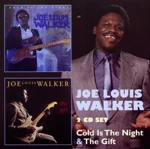 Buy from Amazon Cold Is the Night/The Gift (2 CD set)
The Weight of the World
Joe Louis Walker's last album, "Weight of the World" (2023) on Gulf Coast Records, produced by Joe Bonamassa and Josh Smith, is a fitting final statement because it sums up his whole career in ten songs.
It has a slow blues with gospel phrasing, "Weight of the World," where Walker sings about carrying weight, with B.B. King-like vibrato and a whisper-to-shout vocal. It has a soul ballad, "Is It a Matter of Time," with Al Green-like melisma. It has a rock number, "The Sun is Going Down," with Hendrix-like feedback and wah. It has a funk number, "Don't Let Go," with choppy gospel rhythm. It has a gospel shout, "Hold Me," with quartet-like backing vocals.
Bonamassa and Smith, both younger white blues-rock guitarists who grew up on Walker as well as B.B. and Hendrix, produced it with a modern, rock-influenced sound — loud drums, big guitars, soulful backing vocals — but they left Walker's voice and guitar front and center, with space for his vibrato and his stories.
Walker was 73 when he recorded it, his voice slightly ragged, his hands a little slower, but his phrasing and his feeling were deeper. He sings about weight, about time, about love, about faith, with a man who has lived gospel and blues and rock and soul and knows they are all same.
It is a modern blues album that does not sound retro, because Walker never sounded retro. He sounded like himself, which is what modern blues should sound like.
He toured behind it in 2023 and 2024, playing 100 nights a year even at 74, with a band that included younger musicians he mentored, sitting in a chair sometimes when his legs hurt, but standing to play solos, grinning when he hit a B.B. King vibrato or a Hendrix feedback.
His last shows were in early 2025, at B.B. King's in New York and at other clubs, with his voice still big, his guitar still biting, his set still unpredictable.
He died April 30, 2025, in New York, of heart failure, at 75, surrounded by family.
At his funeral in San Francisco's Fillmore district, at a Baptist church, gospel quartets sang — including surviving members of the Spiritual Corinthians — and blues musicians played — including Robert Cray, Bonnie Raitt, and others. The service went from whisper to shout, like a Joe Louis Walker set, with preacher-like cadence and melisma and stories about fishing and Fillmore and Hendrix and Bloomfield.
He is buried in San Francisco? Actually cremated, ashes scattered in Fillmore district? Family held private service.
In Fillmore today, mural includes his face. At Slim's, photo on wall. At Blues Hall of Fame in Memphis, display with his Gibson ES-335 and his hat.
Put on "Cold Is the Night" late at night, preferably on vinyl, with a little surface noise, and he is there. That big tenor, that biting guitar, that whisper-to-shout build that says he knows church and street and Fillmore Auditorium and Parchman? No, not Parchman, but Fillmore and gospel and blues and rock and soul.
He was Joe Louis Walker, Christmas Day 1949 to April 30 2025, Fillmore kid, gospel singer, blues survivor, modernist who loved tradition, restless soulful bluesman who taught that blues is everything Black music is if you play it with blues feeling.
And if you ever hear a blues that goes from B.B. King to Hendrix to Al Green to quartet harmony in one song and makes it all sound like blues, you know who it is.