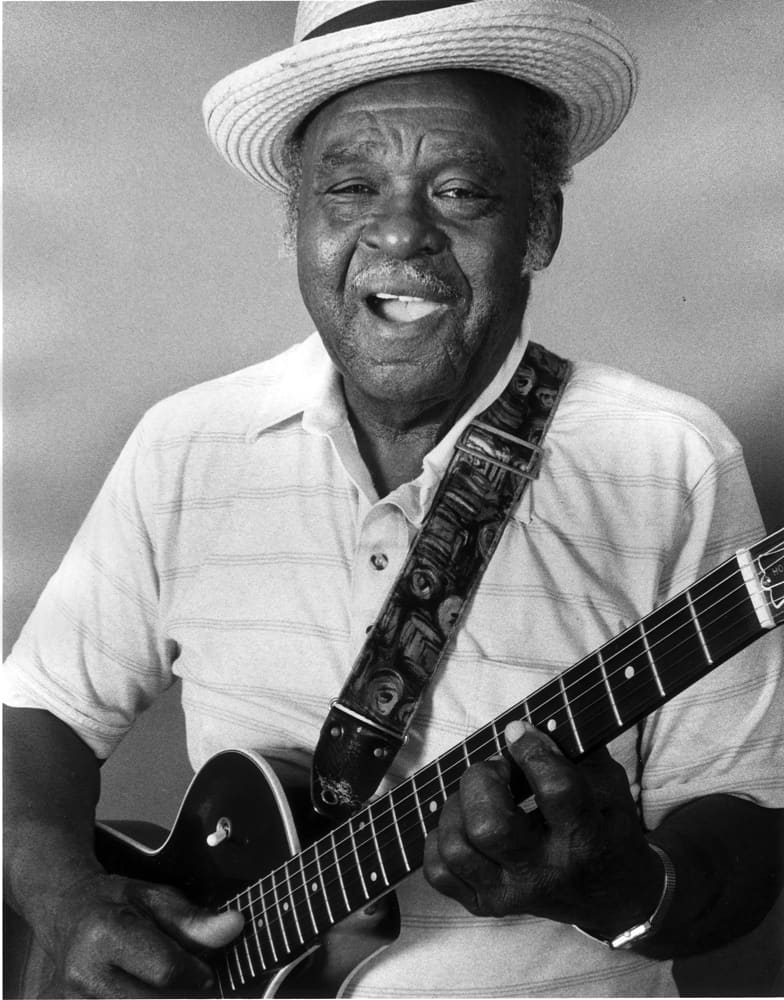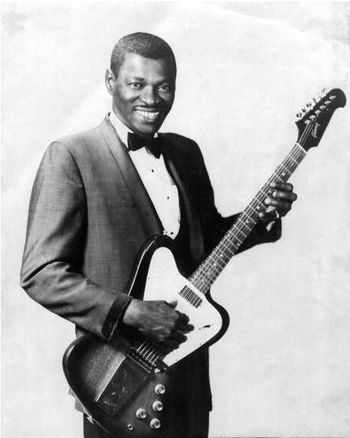
Clarence "Gatemouth" Brown (April 18, 1924 – September 10, 2005) was a towering figure in American music, renowned for his virtuosic multi-instrumentalism, eclectic style, and refusal to be boxed into any single genre. Born in Vinton, Louisiana, and raised in Orange, Texas, Brown blended blues, R&B, country, jazz, Cajun, and rock influences into a signature "Texas-style" sound that defied categorization. He famously declared, "I play American and world music, Texas-style," and backed it up with a career spanning over six decades.
Early Life and Musical Beginnings
Clarence "Gatemouth" Brown was born on April 18, 1924, in Vinton, Louisiana, and raised across the border in Orange, Texas. He came from a musical family; his father, a railroad worker and skilled multi-instrumentalist, played guitar, fiddle, and other instruments, performing locally and teaching his son traditional Texas fiddle tunes, French Acadian melodies, polkas, and early blues forms. Brown received his first guitar around age five or six and quickly showed talent, absorbing a wide range of sounds from the radio and local scenes—including the swinging big bands of Count Basie, the jump blues of Louis Jordan, and the pioneering electric guitar of T-Bone Walker.
As a teenager, Brown honed his skills in informal settings and began playing professionally in the mid-1940s. He started as a drummer in San Antonio clubs before transitioning to guitar and vocals. His big break arrived in 1947 at Houston's Golden Peacock nightclub. While in the audience during a T-Bone Walker performance, Walker became ill and dropped his guitar mid-set. The young Brown boldly jumped onstage, picked up the instrument, and launched into his original composition "Gatemouth Boogie." The crowd went wild, earning him the nickname "Gatemouth" (referring to his broad smile or powerful voice) and a regular gig with the house band. Local promoter and club owner Don Robey recognized his potential, became his manager, and soon founded Peacock Records primarily to capture Brown's talent.
Brown's early style already showed his eclectic roots: a driving, horn-like guitar attack influenced by jazz and R&B, combined with Texas swing and blues expressiveness. This foundation set him apart from more traditional Delta or Chicago players.
Career Highlights and Recordings
Brown's recording career ignited in 1947 with sessions for Aladdin Records in California, yielding early sides like "Gatemouth Boogie." When promotion lagged, Robey launched Peacock Records (later Duke/Peacock), making Brown its flagship artist. From the late 1940s through the 1950s, Brown delivered a string of regional and national R&B hits that defined his swinging, sophisticated Texas blues sound. Standout releases included "Mary Is Fine" (1949), "My Time Is Expensive," "Okie Dokie Stomp," "Boogie Rambler," "Just Before Dawn," "Ain't That Dandy," "Depression Blues," and the instrumental classic "Dirty Work at the Crossroads." These tracks featured tight bands (often with horns), Brown's stinging, precise guitar leads, and energetic vocals—blending jump blues, R&B, and swing. His guitar work was innovative: clean tone with rhythmic drive, jazzy phrasing, and technical flair that influenced the next generation.
By the early 1960s, Brown sought new directions. He moved to Nashville and recorded country-influenced material, showcasing his versatility but achieving limited mainstream success. The 1960s–1970s saw him maintain a strong European following, where audiences appreciated American roots music. He recorded for European labels like Black & Blue (e.g., The Blues Ain't Nothing, Sings Louis Jordan) and toured extensively, including a notable 1973 Montreux Jazz Festival appearance jamming with Canned Heat. In 1974, he collaborated with Professor Longhair on the acclaimed Rock 'n' Roll Gumbo.
The 1980s marked a major U.S. resurgence. Signing with Rounder and Alligator Records, Brown released critically acclaimed albums like Alright Again! (1982, Grammy winner for Best Traditional Blues Album), One More Mile, and others that mixed blues, swing, Cajun, and jazz. He performed 250–300 shows per year at his peak, appearing on Austin City Limits and earning multiple W.C. Handy Awards. Later recordings, such as Long Way Home and Gate Swings, continued to highlight his multi-instrumentalism (guitar, fiddle, harmonica) and genre-blending approach. He also undertook cultural diplomacy tours, including a groundbreaking 1979 Soviet Union tour.
Later Years and Death
In his final decades, Brown battled health issues (including cancer and emphysema) but remained active. He was inducted into the Blues Hall of Fame and received a Pioneer Award from the Rhythm & Blues Foundation. He died on September 10, 2005, in Orange, Texas, after complications from lung cancer and emphysema. His final performances reflected his indomitable spirit.
Influence and Legacy
Gatemouth Brown's impact was profound and far-reaching:
- Guitarists: His innovative electric style—clean, swinging, and technically brilliant—influenced Guitar Slim, Albert Collins, Johnny "Guitar" Watson, Buddy Guy, Stevie Ray Vaughan, and even Jimi Hendrix and Frank Zappa.
- Broader Music: By refusing to be pigeonholed as "just a bluesman," he expanded the blues repertoire and inspired genre-blending artists. His fiddle work influenced American fiddle traditions.
- Recognition: Grammy winner, multiple Handy Awards, and a key figure in preserving and evolving Texas/Louisiana roots music.
Brown's music remains a testament to creativity, resilience, and cultural fusion. Compilations of his Peacock sides and later Alligator/Rounder albums are essential listening for anyone interested in blues, R&B, or American roots music. His life embodied the idea that great musicians transcend labels—they simply play what moves them.
Suggested Listening
 Buy from Amazon Boogie Uproar - The Complete Aladdin / Peacock Singles As & Bs 1947-1961
 Buy from Amazon Live From Austin, TX