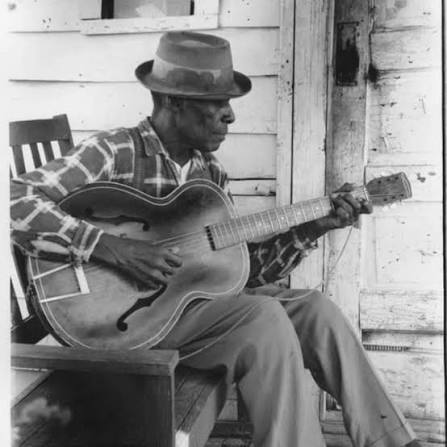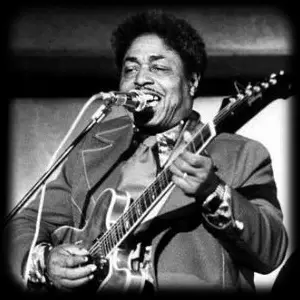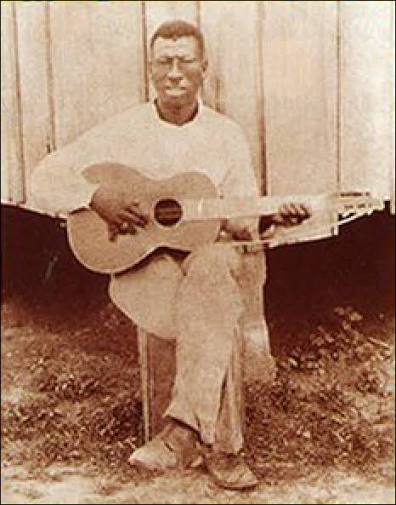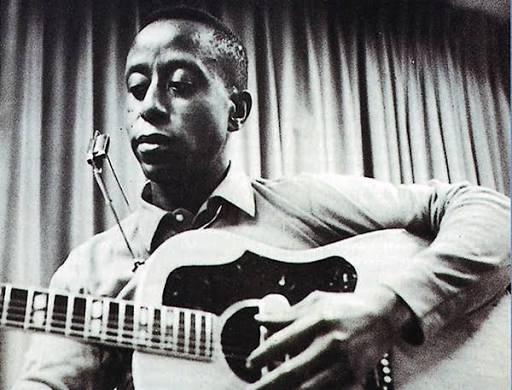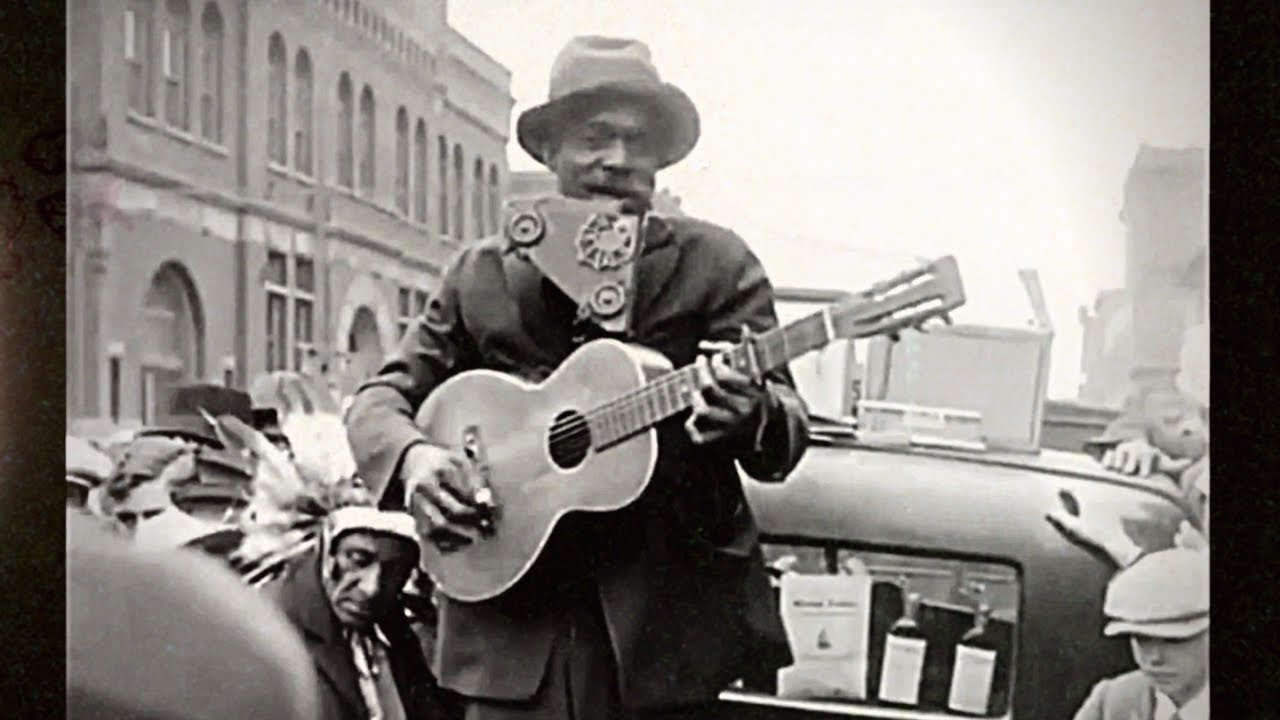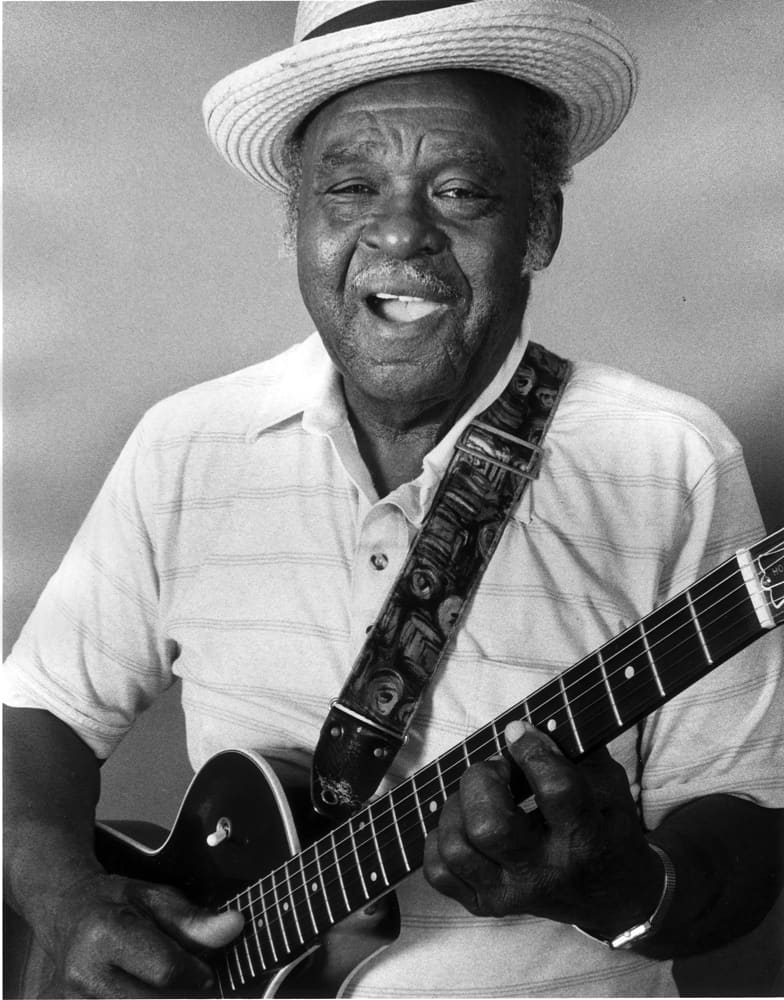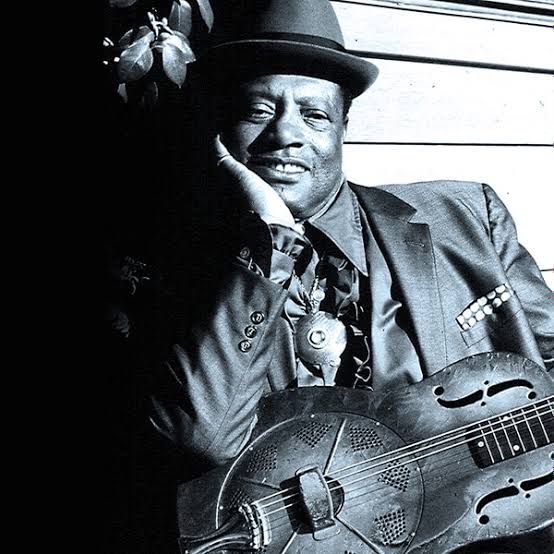
Booker T. Washington White—known to the world as Bukka White—was one of the most commanding figures in the history of the blues. A man whose music seemed to erupt from the earth itself, White combined a ferocious National steel guitar attack with a voice that could fill a room without amplification and lyrics that painted vivid, often harrowing pictures of life in the American South. His career spanned nearly five decades, from the dawn of recorded blues in 1930 through the folk revival of the 1960s, and his influence continues to resonate through generations of rock, blues, and roots musicians.
Early Life and Musical Beginnings
Bukka White was born on November 12, somewhere between 1900 and 1909, though the earliest census data and most reliable biographical research point to approximately 1904 or 1905. He was born on a farm about five miles south of Houston, Mississippi, in the northeastern part of the state—a region that would shape his identity and music for a lifetime. He was named for the great African American educator Booker T. Washington, a name that carried weight and expectation in the Jim Crow South.
His father, John White, was a railroad worker and a multi-instrumentalist who played fiddle, mandolin, guitar, and piano at local gatherings. When Bukka was nine years old, his father gave him his first guitar, setting in motion a musical journey that would make him one of the most distinctive voices in American music. At sixteen, he married for the first time—one of several marriages over his lifetime—and received a Stella guitar as a wedding present. The marriage was short-lived; his young wife died of a ruptured appendix.
White's musical education came from multiple sources. His father provided the foundation, but he also learned from local musicians who taught him the bottleneck slide technique that would become his signature. He spent time in Tallahatchie County in the Mississippi Delta and in St. Louis, developing his skills on both guitar and piano. Like many bluesmen of his era, he was a rambler, traveling across the South and Midwest, absorbing musical influences and hardening his craft in juke joints, street corners, and railroad camps.
The Pre-War Recording Career (1930–1940)
The 1930 Memphis Session
Bukka White's recording career began in May 1930, when talent scout Ralph Lembo of Itta Bena, Mississippi, spotted him walking down the street with his guitar and arranged a session for Victor Records in Memphis. On that single day, White recorded fourteen songs—a mix of blues and gospel material. Tragically, only four were ever released: "The New 'Frisco Train," "The Panama Limited," "I Am in the Heavenly Way," and "Promise True and Grand." The remaining ten sides were shelved, and the metal masters were later destroyed, lost to history forever. Some scholars believe that Memphis Minnie, credited as "Miss Minnie," may have lent her voice to two of the released Victor titles, while Napoleon Hairston accompanied him on others.
The 1930 recordings already displayed the elements that would define White's sound: a driving, rhythmic attack on the guitar, a voice of remarkable power and emotional depth, and a songwriting style that drew from personal experience and Delta folklore. The two train songs in particular—"The New 'Frisco Train" and "The Panama Limited"—established a theme that would recur throughout his career, the railroad as both literal transportation and metaphor for escape and longing.
"Shake 'Em On Down" and the Road to Parchman
White's life took a dramatic turn in 1937. He had moved to Aberdeen, Mississippi, with his second wife, Susie Simpson, and was working as a farmer. Around 1935, he had traveled to Chicago with fellow bluesman Peetie Wheatstraw, where he became friends with Big Bill Broonzy, Washboard Sam, and Tampa Red. These connections proved valuable when he returned to Chicago in early 1937 to record for Vocalion. The session produced two songs: "Pinebluff, Arkansas" and "Shake 'Em On Down." The latter became a significant hit, establishing White as a recording artist of note and earning him the nickname "Bukka" (a phonetic rendering of "Booker" that stuck).
But success was fleeting. In October 1937, White was arrested in Aberdeen for shooting a man in the thigh. The circumstances remain murky—White himself would later say that "a lot of time, it's not what you do, it's the way you do it and the way the justice you get"—but the result was a life sentence to the Mississippi State Penitentiary at Parchman Farm.
Parchman Farm: The Crucible
The Mississippi State Penitentiary at Parchman Farm was one of the most notorious institutions in American history. Located in rural Sunflower County, it operated essentially as a state-run cotton plantation. Prisoners worked six days a week under the watch of "trusty shooters"—armed convicts given guns and authority over their fellow inmates. The conditions were brutal, with punishment meted out by whips known as "Black Annie," and the prison remained a segregated, harsh labor camp well into the 20th century.
For Bukka White, however, Parchman became both prison and unlikely stage. His recording of "Shake 'Em On Down" had become a hit while he was incarcerated, making him something of a celebrity among the inmates and guards. He recalled in a 1976 interview that the prison superintendent was reluctant to release him because he was "too much service down here"—his music was in demand for prison shows, and he had become a valuable commodity within the institution.
In 1939, folklorist John Lomax visited Parchman Farm on behalf of the Library of Congress's Archive of Folk Culture. Lomax was conducting field recordings of work songs, blues, and spirituals, documenting musical traditions that had survived in the prison's isolated environment. White recorded two songs for Lomax: "Po' Boy" and "Sic 'Em Dogs On." The experience left a profound mark on White. He later told interviewer Chris Strachwitz that he had been skeptical at first but decided that the recording "might be a help to me when I got out." He was right—the attention his music received helped secure his release after approximately two years of his life sentence.
The Parchman experience became the defining chapter of White's early life and career. Upon his release in 1939, he returned to Chicago, where his wife Susie divorced him shortly after. He was determined to resume his recording career, but his producer, Lester Melrose, rejected the idea of re-recording his old material. Instead, Melrose put White up in a hotel and told him to write new songs. The result was one of the most remarkable sessions in blues history.
The 1940 Chicago Session: Masterpieces of the Delta Blues
In March 1940, Bukka White entered a Chicago studio with washboard player Washboard Sam and recorded twelve songs that constitute some of the greatest pre-war blues ever captured on record. The session produced a catalog of classics that would define his legacy:
-
"Parchman Farm Blues" — An autobiographical warning to young men about the horrors of the prison, with White's voice conveying both the trauma of experience and the authority of survival.
-
"Fixin' to Die Blues" — A meditation on mortality that Bob Dylan would later cover, bringing White's music to a new generation.
-
"Aberdeen Mississippi Blues" — A love letter and lament for the town where he had lived and suffered, featuring some of his most evocative imagery.
-
"Sleepy Man Blues" — Opening with the unforgettable line, "When a man gets trouble in mind / He wanna sleep all the time," this song displays White's gift for psychological insight.
-
"Good Gin Blues," "Bukka's Jitterbug Swing," "District Attorney Blues," "High Fever Blues," "Black Train Blues," "Strange Place Blues," "When Can I Change My Clothes?" and "Special Streamline" rounded out the session.
These recordings showcase White at the absolute peak of his powers. His guitar work on the metal-bodied National resonator guitar—chosen for its ability to cut through the noise of a juke joint crowd—combines percussive bass string thumping with searing bottleneck slide lines. His voice, a gritty, heavy instrument with a distinctive wobble, conveys pain, defiance, humor, and spiritual longing. The songs are deeply personal, filled with narrative detail and emotional complexity that place them alongside the work of Charley Patton, Son House, Skip James, and Robert Johnson as the finest expressions of the Delta blues.
The records were released on Vocalion and its successor label, OKeh, but like many pre-war blues recordings, they sold modestly. The United States was on the verge of entering World War II, and the market for rural blues was shrinking. White returned to Memphis, where he worked at a defense plant during the war years. He performed locally with blues legend Frank Stokes and helped his young cousin, Riley B. King—soon to be known as B.B. King—establish himself on the Memphis music scene. For nearly two decades, White's recording career lay dormant, his 1940 masterpieces circulating among collectors and enthusiasts but largely unknown to the wider public.
The Wilderness Years and the Folk Revival
The 1940s and 1950s were difficult decades for Bukka White. He worked various jobs, played local gigs, and watched as the blues world changed around him. The electric Chicago blues of Muddy Waters and Howlin' Wolf dominated the post-war scene, while White remained an acoustic player rooted in the Delta tradition. His pre-war recordings became rare collector's items, treasured by a small but dedicated group of blues enthusiasts.
The turning point came in the late 1950s and early 1960s, during the American folk blues revival. Samuel Charters's influential 1959 compilation album The Country Blues featured White's "Fixin' to Die Blues," introducing his music to a new generation of listeners. Bob Dylan covered the song in 1962, further reigniting interest. But the true rediscovery of Bukka White belongs to two young blues enthusiasts: John Fahey and Ed Denson.
In 1963, Fahey—then an ethnomusicology student at UCLA and an aspiring guitarist—and his friend Denson set out to find the legendary bluesman. They sent a postcard addressed simply to "Bukka White (Old Blues Singer), c/o General Delivery, Aberdeen, Mississippi." Miraculously, it reached him. Fahey traveled to meet White, and the encounter led to a new recording session and the album Mississippi Blues: Bukka White, released on Fahey's own Takoma Records in 1964. It was the first non-Fahey release on the label, which would go on to become one of the most important independent American record labels, championing solo steel-string guitar and Americana music.
The Rediscovery Years: A Second Career (1963–1977)
The 1963 rediscovery launched the most prolific period of White's recording and performing life. Now in his late fifties or early sixties—his exact age remained uncertain—he proved to be a remarkably energetic and compelling performer, his skills undiminished by the years. He became a fixture on the folk festival circuit, touring extensively across North America and Europe.
Key Recordings and Performances of the 1960s and 1970s
White's post-rediscovery discography is extensive and includes some of his most powerful work:
-
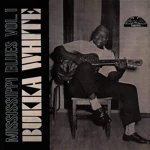 Buy from Amazon Mississippi Blues (Takoma, 1964) — The album that announced his return, featuring classic Delta blues performances and showcasing his National steel guitar and dobro playing.
-
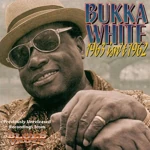 Buy from Amazon Bukka White: 1963 Isn't 1962 (Arhoolie) — Recorded by Chris Strachwitz, this captures White in a more intimate setting.
-
 Buy from Amazon Bukka White: Sky Songs (Arhoolie, 1965) — Featuring the extraordinary "Midnight Blues" and other late-period compositions. Strachwitz described White as "a man with one of the most vivid imaginations I ever had the pleasure of recording," noting that his performances were "marvelous, on the spot creations—images and recollections as they come to the artist's mind."
-
Bukka White: Live at the Cafe au Go-Go (Rockbeat, recorded November 1965) — A captivating performance from the Greenwich Village club, featuring "I'm Going Home" and two versions of "Aberdeen."
-
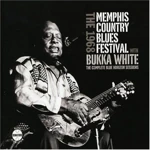 Buy from Amazon Bukka White: The 1968 Memphis Country Blues Festival (Sire/Blue Horizon) — A legendary performance that included "Hello Central, Give Me 49" and the devastating "My Mother Died." The following day, White recorded Memphis Hot Shots at Ardent Studios, produced by Mike Vernon, with electric band accompaniment—a unique departure from his usual solo format that produced an irresistible version of "Aberdeen Mississippi Blues."
-
Bukka White: Live in Germany (recorded 1970s, released later) — Documenting his international appeal, including a complete performance from Bremen.
White's live performances during this era were legendary. He played with an intensity that belied his age, his National steel guitar ringing out with the same power that had characterized his pre-war recordings. He toured with the American Folk Blues Festival in 1967 and again in 1970 and 1972, bringing his music to European audiences who embraced him as a living link to the origins of the blues.
In 1968, informal sessions were recorded at the apartments of Furry Lewis and Albino Red in Memphis, capturing a relaxed, festive atmosphere with White in great form. Later that year, he participated in the Memphis Swamp Jam sessions recorded by Chris Strachwitz during the Memphis Blues Festival, which included the notable "Columbus Mississippi Blues" and a twenty-minute monologue titled "Mixed Water."
The Man and His Music
Bukka White's musical style was unlike any other. He played in open tunings—particularly open G and open D—using a heavy brass tube on his finger for bottleneck slide work. His right-hand technique was equally distinctive: he combined a driving thumb bass pattern with aggressive strumming, creating a sound that was simultaneously rhythmic and melodic, primitive and sophisticated. The metal-bodied National resonator guitar was his instrument of choice because, as one commentator noted, "its volume allowed him to be audible over the noise of a good-time crowd."
His voice was an instrument of raw power and surprising subtlety. It could roar with the force of a freight train on songs like "Shake 'Em On Down" or ache with loneliness on "Sleepy Man Blues." He employed call-and-response patterns in his singing, answering his own vocal lines with guitar phrases, creating a dialogue within a single performance.
White described his songwriting process in mystical terms. "I just reach up and pull them out of the sky—call them sky songs—they just come to me," he told Chris Strachwitz. This improvisational approach meant that no two performances of a song were exactly alike. His lyrics were filled with vivid imagery drawn from daily life: trains, prisons, women, work, and the landscape of the Mississippi Delta. They were, as one biographer noted, "among the most creative and descriptive to be found on blues records."
Personal Life and Character
Bukka White was a man of contradictions—gentle and ferocious, spiritual and worldly, rooted in the past yet capable of reinvention. He married multiple times and had a complex romantic history. In his 1976 interview with Chris Strachwitz, he spoke candidly about his relationships, including a woman named Lucille who had wanted to know when he was returning to Parchman, and his hasty marriage to Susan after his release.
He was deeply religious, recording gospel material throughout his career, and saw his music as a gift. In a 1976 interview with David W. Johnson, conducted shortly before his discharge from a Massachusetts hospital where he was recovering from a stroke, White reflected on the importance of passing down stories: "Some of the [formerly enslaved] guys were wise enough to hold that in their head where they could tell a young pants, where it would go down in history, you know. Just like you doing that now—something happen to you, somebody else will carry that on."
Final Years and Legacy
On May 27, 1976, Bukka White returned to his hometown of Houston, Mississippi, as the featured artist at the city's bicentennial celebration—a triumphant homecoming for a man who had traveled so far. But his health was failing. He suffered a stroke and was hospitalized in Massachusetts. In July 1976, David Johnson interviewed him during his recovery, capturing the reflections of a man who knew his time was limited.
Bukka White died in Memphis on February 26, 1977. He was buried in Memphis, leaving behind a body of work that spans some of the most important recordings in American music.
His legacy is immense and multifaceted:
Musical Influence: White's bottleneck slide technique and percussive guitar style influenced generations of musicians. His cousin B.B. King credited him with helping establish his early career in Memphis. Rock and roll artists including Led Zeppelin (who covered "Shake 'Em On Down"), Bob Dylan (who covered "Fixin' to Die Blues"), and Jeff Buckley drew from his well of Delta blues. His influence extends to contemporary blues and roots musicians who continue to study his technique and repertoire.
Recognition: White was posthumously inducted into the Blues Hall of Fame in 1990. His song "Fixin' to Die Blues" was added to the Grammy Hall of Fame in 2012. A Mississippi Blues Trail marker honors his life and music in his hometown of Houston, Mississippi, and another marks the nearby Parchman Farm where he served time and found unlikely musical inspiration.
Historical Significance: White's recordings—both pre-war and post-rediscovery—provide an invaluable document of the Delta blues tradition. His 1940 session in particular stands as a pinnacle of the genre, and his 1960s work demonstrates the enduring vitality of acoustic blues in an electric age. The story of his rediscovery by John Fahey has become a foundational myth of the folk revival, illustrating the dedication of young enthusiasts who sought out the forgotten masters of American roots music.
Discographic Legacy: His complete recordings from 1930 to 1940 have been compiled and reissued by labels including Document and Columbia/Legacy, ensuring that his early masterpieces remain available. His post-rediscovery work on Takoma, Arhoolie, Blue Horizon, and other labels documents a remarkable second act.
Bukka White's life embodied the spirit of the Delta blues in its purest form: born of hardship, shaped by travel and trouble, sanctified by music, and ultimately redeemed through art. From the cotton fields of Mississippi to the prisons of Parchman Farm, from the studios of Chicago to the folk festivals of Europe, he carried the blues like a freight train carries its cargo—unstoppable, heavy, and moving always forward. His voice, his guitar, and his songs remain among the most powerful expressions of the American experience, a testament to the enduring power of music to transform suffering into beauty and to ensure that, as he himself hoped, "somebody else will carry that on."
Suggested Reading
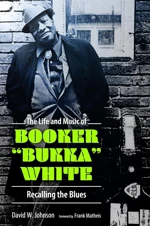 Buy from Amazon The Life and Music of Booker "Bukka" White: Recalling the Blues