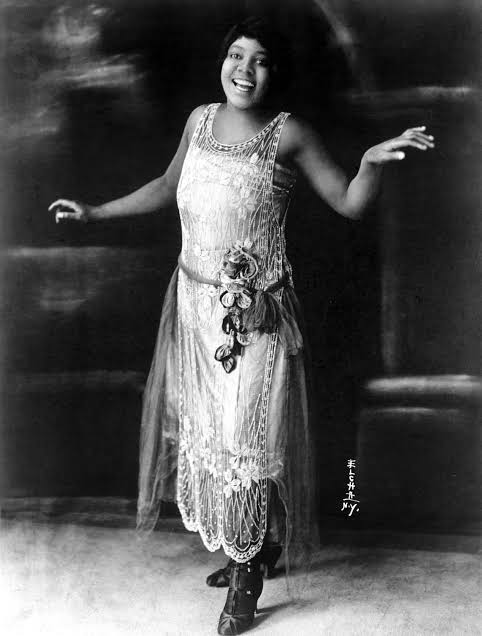
Bessie Smith stands as one of the most commanding figures in American music history. With a voice of extraordinary power, emotional depth, and theatrical authority, she transformed the blues from a regional folk expression into a national art form, becoming the highest-paid African American entertainer of her era and earning the enduring title "Empress of the Blues." Her recording career lasted only a decade—from 1923 to 1933—but in that brief span she created a body of work that shaped the sound of 20th-century popular music and continues to influence vocalists across every genre.
Early Life and Musical Beginnings
Bessie Smith was born on April 15, approximately 1892 to 1895, in Chattanooga, Tennessee, the youngest of seven children in a deeply impoverished family. Her father, William Smith, was a part-time Baptist preacher and day laborer who died shortly after her birth; her mother, Laura, worked as a laundress and passed away when Bessie was about nine years old. The six surviving children were orphaned and raised by an aunt, living in conditions of extreme poverty.
From the age of nine, Bessie began singing on the streets of Chattanooga with her brother Andrew accompanying her on guitar. They performed on Ninth Street, the city's center of music and dance, earning money to help support the family. The first published reference to her performance appeared in the May 8, 1909, issue of The Freedman, an Indianapolis newspaper, reviewing her appearance at Atlanta's 81 Theater when she was only fourteen years old. Even at that young age, reviewers noted her captivating contralto voice.
Smith's formal education was minimal—she attended public school briefly—but her musical education was rich and immersive. In 1912, at approximately eighteen years old, she auditioned for the Moses Stokes Traveling Show, a vaudeville troupe that toured the South. Initially hired as a dancer and occasional singer, she soon found that her vocal talent far outshone her dancing ability. The troupe featured Gertrude "Ma" Rainey, widely regarded as the "Mother of the Blues" and the first known female blues singer. Rainey became a mentor and mother figure to the young Bessie, teaching her how to command an audience, navigate the music business, and project the authority that would become her trademark.
Smith refined her craft on the Black vaudeville circuit, touring with Fats Chappelle's Rabbit Foot Minstrels and Pete Werley's Florida Blossoms. She gradually developed into a charismatic performer whose blues renditions could be hypnotic. By 1919, she was leading her own Liberty Belles show. Having established herself as a major star in the South, she began working the East Coast, performing in Atlantic City by 1920 and eventually settling in Philadelphia, which would become her home base.
The Columbia Years: Recording Stardom (1923–1933)
The Breakthrough: "Downhearted Blues"
The landscape of American recorded music changed dramatically in 1920 when Mamie Smith (no relation) recorded "Crazy Blues" for Okeh Records, proving that there was a substantial market for music by and for Black audiences—the so-called "race records" market. Record labels scrambled to find female blues singers who could replicate that success.
Bessie Smith's big break came in early 1923. She had made a test recording for Okeh of "I Wish I Could Shimmy Like My Sister Kate," accompanied by a quintet featuring Sidney Bechet and Bubber Miley, but Okeh executives considered her voice too rough and the record was never released. However, Frank Walker, a talent scout for Columbia Records who had seen Smith perform years earlier, recognized her potential. He signed her to Columbia, and her first recording session took place on February 15, 1923, engineered by Dan Hornsby, who was instrumental in discovering many Southern music talents of that era.
Two numbers cut on February 15 went unissued, but the following day, February 16, Smith successfully recorded Alberta Hunter's "Downhearted Blues" and her own "Gulf Coast Blues." "Downhearted Blues" was an immediate sensation, selling over 800,000 copies—an extraordinary achievement in an era of wind-up phonographs and primitive recording equipment. In that single year, Smith sold more than two million records. Columbia's publicity department initially nicknamed her "Queen of the Blues," but the national press soon upgraded her title to the one that would stick for eternity: "Empress of the Blues."
The power of "Downhearted Blues" lay not merely in Smith's remarkable vocal instrument but in her attitude. The song tells of a woman mistreated and heartbroken by a man, but rather than wallowing in victimhood, Smith projects defiance and self-determination. In the final stanza, she declares: "I got the world in a jug, the stopper's in my hand / I'm gonna hold it until you men come under my command." This combination of emotional vulnerability and fierce independence would become the hallmark of her artistry.
The Peak Years: 1923–1929
Over the next decade, Smith recorded approximately 160 songs for Columbia, creating one of the most important catalogs in American music. Her records were initially issued on Columbia's regular A-series; when the company established its dedicated "race records" series, Smith's "Cemetery Blues" (September 26, 1923) became the first release. She quickly became the top attraction on the Theatre Owners Booking Association (T.O.B.A.) circuit, the primary booking organization for Black vaudeville.
At the height of her fame during the Roaring Twenties, Smith was making as much as $2,000 a week from personal appearances—an astronomical sum for the era—and had substantial additional income from royalties. She traveled in her own 72-foot-long railroad car, a symbol of her status as the highest-paid Black entertainer in the country. Her music stressed independence, fearlessness, and sexual freedom, implicitly arguing that working-class women did not have to alter their behavior to be worthy of respect.
Smith's recordings brought her to the attention of white audiences in America and Europe, expanding her fame beyond the Black theater circuit. She appeared on radio as early as 1923, including a well-received late-night broadcast on Memphis station WMC after performing to a white-only audience at a local theater. Musicians and composers like Danny Barker and Tommy Dorsey compared her stage presence to that of a preacher, noting her ability to enrapture and move audiences with the authority of a spiritual leader.
The Musical Collaborators
One of the remarkable aspects of Smith's recording career was the caliber of musicians who accompanied her. Her early recordings featured trombonist Charlie Green, who became her first accompanist who could genuinely play the blues, and cornetist Joe Smith, who became a favorite collaborator. On January 14, 1925, she made her first recordings with a young Louis Armstrong, producing classics including "St. Louis Blues" and "You've Been a Good Ole Wagon (But You've Done Broke Down)." Additional sessions with Armstrong yielded "Careless Love" and the explosive "I Ain't Goin' to Play No Second Fiddle (If I Can't Play the Lead)."
Other distinguished accompanists included pianist-bandleader Fletcher Henderson, whose orchestra backed her on a rollicking version of "Cake Walking Babies From Home" in 1925; pianist James P. Johnson, whose fluent stride piano contrasted perfectly with her blues singing on a dozen selections including the classic "Backwater Blues"; and clarinetist Sidney Bechet. She recorded duets with pianist Clarence Williams, including Fats Waller's "Squeeze Me" and "What's the Matter Now." Even when saddled with less-than-ideal accompanists like clarinetists Ernest Elliott and Bob Fuller, Smith's voice dominated every record.
The Great Songs
Smith's discography is a treasury of American music. Beyond "Downhearted Blues," her essential recordings include:
-
"'Tain't Nobody's Biz-ness If I Do" — A declaration of personal autonomy that became a standard, later revived by Billie Holiday and Jimmy Witherspoon.
-
"St. Louis Blues" — Her 1925 recording with Louis Armstrong remains one of the definitive versions of W.C. Handy's composition.
-
"Empty Bed Blues" — A two-part masterpiece of longing and sensuality.
-
"Nobody Knows You When You're Down and Out" — Recorded in 1929, this became one of her most closely identified songs, seeming to predict the economic collapse that was imminent.
-
"Backwater Blues" — Written by James P. Johnson, this collaboration produced one of the most powerful blues recordings of the era.
-
"Jailhouse Blues," "Graveyard Dream Blues," "Sing Sing Prison Blues," "Send Me to the 'Lectric Chair" — Songs that confronted mortality and justice with unflinching directness.
-
"I Need a Little Sugar in My Bowl" — A double entendre tune that Nina Simone would later reinterpret.
Smith's repertoire ranged from raw blues to jazz standards to pop songs, all filtered through her unmistakable voice and personality. She could sing the twelve-bar blues with gut-wrenching intensity or deliver a Tin Pan Alley number with sardonic wit.
Broadway and Film
In 1929, Smith appeared in a Broadway musical, Pansy. The play was a critical and commercial flop, with reviewers noting that Smith was its only redeeming quality. That same year, she made her only film appearance in St. Louis Blues, a two-reeler directed by Dudley Murphy and shot in Astoria, Queens. Based on W.C. Handy's song, the film is filled with the racial stereotypes common to the era, but Smith delivers a powerful full-length performance of the title song, accompanied by members of Fletcher Henderson's orchestra, the Hall Johnson Choir, pianist James P. Johnson, and a string section. It remains the only opportunity audiences have had to see the Empress of the Blues in motion, and her acting as a wronged woman is surprisingly effective.
Personal Life: Complexity and Contradiction
Bessie Smith was, by all accounts, a volatile personality with a zest for life that matched the intensity of her singing. She enjoyed her fame and fortune, spending freely without thought for the future. She drank heavily and was unapologetically herself in an era that demanded conformity from Black women.
She was openly bisexual, maintaining relationships with both men and women throughout her life. In 1923, she married Jack Gee, a security guard. Gee was unable to adjust to the demands of show business or accept Smith's bisexuality. Their marriage ended in 1929 when Smith discovered an affair between Gee and singer Gertrude Saunders. The divorce was acrimonious, and Gee reportedly absconded with much of her money.
Smith incorporated the full complexity of her life into her art. She sang about poverty, racism, and sexism with the same directness she brought to songs about love and desire. While some, including the executives at Black Swan Records (W.E.B. Du Bois served on its board), initially dismissed her as "rough"—legend has it she stopped singing during an audition to spit—her ability to channel her personality and lived experience into her voice is precisely what made her transcendent. Her admirers, Black and white alike, recognized that her "roughness" was authenticity, a refusal to sanitize the blues for polite society.
The Decline and Final Recordings
The stock market crash of 1929 and the onset of the Great Depression devastated the recording industry and the vaudeville circuit that had been Smith's livelihood. Columbia Records, nearly bankrupted by the Depression, cut back drastically on recording. The public's musical tastes shifted away from the classic blues toward smoother dance music, swing, and the free entertainment available on radio and in talking pictures. Smith recorded fourteen songs in 1929, but only eight in 1930 and six in 1931, including "I Need a Little Sugar in My Bowl," before stopping altogether.
Though no longer as prosperous, Smith never stopped performing. She continued touring, adapting her powerful voice to the changing musical landscape. In 1933, John Hammond—a 23-year-old fan who had seen her perform in 1927—arranged a final recording session for Okeh Records (by then a Columbia subsidiary). Hammond later claimed to have found her in "semi-obscurity" working as a hostess in a Philadelphia speakeasy, though this was an embellishment; in 1933, Smith was still touring, and she did not work at Art's Cafe on Ridge Avenue until 1936.
The November 24, 1933, session featured an all-star band including trombonist Jack Teagarden, tenor saxophonist Chu Berry, trumpeter Frankie Newton, pianist Buck Washington, guitarist Bobby Johnson, and bassist Billy Taylor. Benny Goodman, recording in the adjoining studio with Ethel Waters, dropped by and is barely audible on one selection. Smith recorded no blues during this session, instead putting her stamp on bluish material like "Gimme a Pigfoot" and "Do Your Duty," as well as "Take Me for a Buggy Ride." The records hinted at a possible future in swing music, though they did not sell well. Hammond was reportedly disappointed, preferring that Smith revisit her classic blues sound.
Death and the Unmarked Grave
By 1937, Bessie Smith had begun staging a successful comeback, adapting her powerful voice to the new swing music and rebuilding her career. On September 26, 1937, while traveling by car from a performance in Memphis toward Chattanooga, she was fatally injured in an automobile accident on U.S. Route 61 between Clarksdale and Memphis, Mississippi. She was 43 to 45 years old.
Her funeral was held in Philadelphia, where she had lived since 1923, and was attended by more than 5,000 people. She was buried in an unmarked grave—a shocking indignity for an artist of her stature. The legend grew that she had died because she was refused admission to a white hospital in Tennessee, a story that Edward Albee dramatized in his 1960 one-act play The Death of Bessie Smith. While the specific details of the hospital refusal have been disputed by scholars, the legend spoke to the racial injustice that Smith's music had implicitly condemned throughout her career.
In 1970, Janis Joplin—who had studied Smith's records and incorporated her influence into her own volcanic vocal style—contributed money to purchase a headstone for Smith's grave. The headstone reads: "The greatest blues singer in the world will never stop singing."
Legacy and Influence
Bessie Smith's influence on American music is incalculable and continues to resonate across every genre of popular music.
The Vocal Legacy
Smith is widely considered the greatest blues singer who ever lived, and her impact on subsequent vocalists is direct and unmistakable. Billie Holiday, who made her first recording just three days after Smith's final session in 1933, cited Smith as a formative influence, adopted her approach to lyrical phrasing and inflection, and recorded "'Tain't Nobody's Bizness If I Do" as a tribute. Mahalia Jackson learned to sing by listening to Smith's records as a child and performed "St. Louis Blues" at church socials as a teenager; once she began recording in the 1940s, her voice was regularly compared to Smith's.
Janis Joplin went directly to the source, studying Smith's records and channeling what she learned into her work with Big Brother and the Holding Company and as a solo artist. Big Mama Thornton, billed on occasion as "Bessie Smith's Younger Sister" during her 1940s touring years, carried Smith's commanding vocal style to white rock and rollers Elvis Presley (who covered Thornton's "Hound Dog") and Joplin (who covered Thornton's "Ball 'n' Chain"). Nina Simone put her own spin on "I Want a Little Sugar in My Bowl" on her 1967 album Nina Simone Sings the Blues. Aretha Franklin's 1967 "Dr. Feelgood" and her transformative cover of Otis Redding's "Respect" both drew on the blues tradition that Smith had defined. Chaka Khan, the women of Labelle, and Betty Davis followed in Smith's self-determining footsteps.
The Rediscovery
Smith's recordings made white audiences in the United States and Europe conscious of the important contributions of African Americans to popular art and inspired musicologists to scour the South in search of great folk musicians living in poverty and obscurity. In 1970, Columbia Records initiated one of the largest reissue projects in recording history, releasing Smith's entire output on five double albums. Two hundred thousand copies were sold within two years. In the 1990s, Columbia/Legacy reissued the same program along with five alternate takes, the soundtrack of St. Louis Blues, and a lengthy interview with Smith's niece Ruby Smith on five double-CDs as The Complete Recordings Vols. 1–5.
Honors and Recognition
Smith's posthumous recognition has been extensive:
-
Grammy Hall of Fame: Three of her songs have been inducted—"Empty Bed Blues" (1983), "St. Louis Blues" (1993), and "Downhearted Blues" (2006).
-
National Recording Registry: "Downhearted Blues" was added to the Library of Congress's National Recording Registry.
-
Rock and Roll Hall of Fame: Inducted in 1989 as an Early Influence.
-
National Women's Hall of Fame: Inducted in 1984.
-
U.S. Postage Stamp: Honored with a stamp in the USPS's Black Heritage series.
-
Blues Hall of Fame: Inducted as a founding member.
Numerous artists have recorded full-length tributes, including Dinah Washington, LaVern Baker, Ronnie Gilbert, Becky Hall, Amina Claudine Myers, and Beryl Bryden.
Cultural and Historical Significance
Beyond her musical influence, Smith holds a central place in American cultural history. Feminist scholar Angela Y. Davis argued in Blues Legacies and Black Feminism that Smith's songs contain a "historical feminist consciousness that reflected the lives of working-class black communities," and that contrary to popular belief, her music was not about desolation and despair but about women's independence and assertiveness. Her songs carried the implicit message that racial injustice was responsible for much of the pain they expressed, making listeners more conscious of the injustice African Americans had experienced since the colonial era.
Smith was the first blues singer to achieve popularity with white audiences, bringing the blues to the new media of phonograph records, radio, and talking pictures. She feminized a musical form that had previously been dominated by men, opening the door for countless women to follow. Before her time, most blues singers had been men; after her, the classic blues became a genre defined by powerful women.
Bessie Smith's voice—rough, rich, defiant, and deeply human—remains as vital today as it was in the 1920s. She transformed the blues from a regional folk music into an art form capable of expressing the full range of human emotion, from the depths of despair to the heights of self-assertion. The Empress of the Blues did not merely sing the blues; she embodied them, and in doing so, she gave voice to generations of working-class Black women and changed the course of American music forever. As her headstone promises, the greatest blues singer in the world will never stop singing.
Suggested Reading
 Buy from Amazon Bessie
Suggested Listening
 Buy from Amazon Bessie Smith The Anthology