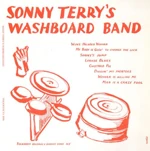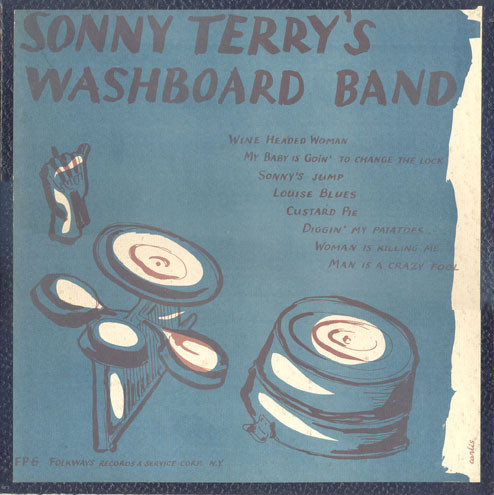
Sonny Terry's Washboard Band is a landmark 1955 Folkways Records album that captures the raw, communal energy of a traditional African American washboard band — an ensemble format rooted in the rural South that predates modern blues bands. Recorded by blind harmonica master Sonny Terry, the album is a vibrant document of street-level blues performance, featuring homemade percussion instruments and the signature "whooping and hollering" vocal style that made Terry one of the most distinctive voices in American music.
Recording Sessions & Production
Date: 1952 (recorded) / Released 1955
Location: New York City
Label: Folkways Records (catalog number FP 6 / FA 2006)
Producer: Harold Courlander — the renowned ethnomusicologist, folklorist, and author who produced numerous Folkways recordings and wrote the original liner notes for this album. Courlander was a key figure in documenting traditional American music for the emerging folk revival audience.
Label Founder: Moses Asch — the founder of Folkways Records (1947–1987), who was committed to recording "genuine" folk artists without commercial compromise. Asch's philosophy was to document artists in their natural style rather than mold them for popular tastes.
Recording Context: The album was recorded during the early years of the folk revival, when Terry was transitioning from his earlier R&B and street-performance career to becoming a folk-blues icon. Folkways was the perfect home for this material — a label that valued ethnographic authenticity over commercial polish. The original LP was a 10" record, later expanded and reissued in various formats.
The Washboard Band Concept
As the Smithsonian Folkways notes explain, "This recording features a washboard band—an ensemble that includes washboard, washtub bass (a development from the African earth bow), bones, and sometimes guitar, or as heard here, harmonica."
The washboard band was a traditional African American ensemble format that used household items as percussion instruments — a necessity born of poverty that became an art form. The instruments included:
-
Washboard — a metal washboard played with thimbles or spoons, providing rhythmic scratching and tapping
-
Washtub bass — a single string stretched from a broom handle to an overturned washtub, creating a distinctive hollow, booming bass sound
-
Bones — pairs of animal bones (or sometimes wooden spoons) held between the fingers and clacked together, a percussion tradition dating back to the 18th century
-
Frying pans — occasionally used as additional percussion
This was music made from the materials at hand — the blues as resourceful creativity.
Musicians
-
Sonny Terry (Saunders Terrell) — vocals, harmonica, washboard, washtub, bones, frying pans
-
J.C. Burris — harmonica, bones (Sonny Terry's nephew)
-
Washboard Doc (Joseph "Washboard Doc" Doctor) — washboard
-
Bob Harris — washtub bass
J.C. Burris was Terry's nephew and a talented harmonica player in his own right who would later record solo albums including One of These Mornings (1976) for Arhoolie Records. He frequently collaborated with Terry on Folkways recordings, also appearing on Sonny and Jaycee (1958), On the Road (1959), and Sonny's Story (1961).
Washboard Doc (Joseph Doctor) was a specialist in washboard percussion who played with numerous blues and folk artists. He later recorded with Big Joe Turner, Victoria Spivey, and led his own group Washboard Doc's Hep 3 in the late 1970s.
Bob Harris played washtub bass on this session, creating the distinctive "thump" that anchors the band's sound.
The Sound
The album's sound is raw, immediate, and rhythmic — what one reviewer called "a raw, energetic street band recording." The absence of guitar (Terry's usual partner Brownie McGhee does not appear) forces the harmonica to carry the melodic and harmonic weight, while the percussion ensemble creates a dense, syncopated groove that evokes the feel of a Saturday night country dance or a street corner performance.
Terry's vocal style — his trademark "whooping and hollering" — is in full effect. These are not polished stage performances but the sound of a bluesman communicating directly with his audience, using his voice as a rhythmic instrument as much as a melodic one.
Track-by-Track Breakdown
Side A
1. "The Woman Is Killin' Me" (2:27)
-
Songwriter: Traditional / Sonny Terry (arrangement)
-
Recording: 1952, New York City
-
Musicians: Sonny Terry (vocals, harmonica, washboard, washtub, bones, frying pans), J.C. Burris (harmonica, bones), Washboard Doc (washboard), Bob Harris (washtub bass)
-
Notes: The album opens with a blues lament about romantic suffering — a classic theme given Terry's unique treatment. The "syncopated rhythm gives it the feel of a deep south African-American fife and drum band, with Terry taking the part of the fife player," as one scholar noted. The full percussion ensemble creates a dense, polyrhythmic texture that is more African retentive than typical Chicago or Delta blues. Terry's harmonica wails and whoops over the percussion, while his voice conveys exhaustion and resignation.
2. "Custard Pie Blues" (2:51)
-
Songwriter: Traditional / Sonny Terry (arrangement)
-
Recording: 1952, New York City
-
Musicians: Sonny Terry (vocals, harmonica, washboard, washtub, bones, frying pans), J.C. Burris (harmonica, bones), Washboard Doc (washboard), Bob Harris (washtub bass)
-
Notes: A song Terry had been performing since at least the 1930s — it was a staple of his repertoire for decades. The "custard pie" is a classic blues double entendre, referring both to a dessert and to female anatomy. The washboard alternates between a "walking bass" pattern and accented slotted rhythms, while a vocal refrain (probably added by one of the percussionists) creates call-and-response interplay. This track demonstrates how Terry could build a complete musical world with minimal resources — just voice, harmonica, and homemade percussion.
3. "Diggin' My Potatoes" (2:57)
-
Songwriter: Traditional / Sonny Terry (arrangement)
-
Recording: 1952, New York City
-
Musicians: Sonny Terry (vocals, harmonica, washboard, washtub, bones, frying pans), J.C. Burris (harmonica, bones), Washboard Doc (washboard), Bob Harris (washtub bass)
-
Notes: Another blues with agricultural/sexual double meaning — "digging potatoes" being a euphemism for sexual activity. The track features the full washboard band in energetic form, with Terry's harmonica and voice leading the charge. The interplay between Terry's and Burris's harmonicas creates a duet texture unusual in Terry's recordings, while the percussion drives the song at a danceable tempo.
4. "Crazy Man Blues" (3:12)
-
Songwriter: Traditional / Sonny Terry (arrangement)
-
Recording: 1952, New York City
-
Musicians: Sonny Terry (vocals, harmonica, washboard, washtub, bones, frying pans), J.C. Burris (harmonica, bones), Washboard Doc (washboard), Bob Harris (washtub bass)
-
Notes: Also known as "Man Is a Crazy Fool" (as shown on the original LP cover illustration). This is a philosophical blues about the foolishness of men in love — a theme Terry returned to throughout his career. The track is notable for its slightly longer running time, allowing for more extended harmonica work. Terry's harp playing here demonstrates his mastery of the "cross-harp" technique, bending notes to create vocal-like cries that complement his singing.
Side B
5. "Wine-Headed Woman" (2:25)
-
Songwriter: Traditional / Sonny Terry (arrangement)
-
Recording: 1952, New York City
-
Musicians: Sonny Terry (vocals, harmonica, washboard, washtub, bones, frying pans), J.C. Burris (harmonica, bones), Washboard Doc (washboard), Bob Harris (washtub bass)
-
Notes: The title refers to a woman who drinks wine — a common blues archetype. At 2:25, this is the shortest track on the album, but it packs considerable energy. The tempo is upbeat, almost celebratory, with Terry's harmonica playing staccato riffs that mimic the rhythm of the washboard. This is blues as party music, demonstrating that Terry's repertoire was not all slow laments.
6. "My Baby Done Changed the Lock on That Door" (3:34)
-
Songwriter: Traditional / Sonny Terry (arrangement)
-
Recording: 1952, New York City
-
Musicians: Sonny Terry (vocals, harmonica, washboard, washtub, bones, frying pans), J.C. Burris (harmonica, bones), Washboard Doc (washboard), Bob Harris (washtub bass)
-
Notes: The longest track on the album at 3:34, this is a narrative blues about romantic rejection — the "baby" has literally locked the narrator out. The extended length allows Terry to stretch out vocally and instrumentally, with the washboard band creating a slow, menacing groove that underscores the lyrics' sense of betrayal. Terry's voice cracks and soars, using his entire range to convey emotional devastation.
7. "Sonny's Jump" (3:12)
-
Songwriter: Sonny Terry (original composition)
-
Recording: 1952, New York City
-
Musicians: Sonny Terry (vocals, harmonica, washboard, washtub, bones, frying pans), J.C. Burris (harmonica, bones), Washboard Doc (washboard), Bob Harris (washtub bass)
-
Notes: An instrumental showcase and one of the few original compositions on the album. "Sonny's Jump" is a harmonica feature that demonstrates Terry's technical mastery — rapid-fire note runs, train-whistle effects, and the "choking" technique that gives his playing its distinctive vocal quality. The percussion ensemble provides a driving shuffle rhythm that pushes Terry to his most energetic playing. This track is a precursor to the "Fox Chase" style of harmonica showpiece that Terry would perfect in later recordings.
8. "Louise" (4:14)
-
Songwriter: Traditional / Sonny Terry (arrangement)
-
Recording: 1952, New York City
-
Musicians: Sonny Terry (vocals, harmonica)
-
Notes: The album's longest track and the only one on which Terry performs solo — no washboard band accompaniment. This is a stark, intimate performance that reveals the emotional core of Terry's art. "Louise" is a classic blues ballad about lost love, and Terry's solo interpretation strips away all artifice to expose raw feeling. His harmonica weeps and moans in response to his vocal lines, creating a dialogue between voice and instrument that is the essence of blues expression. The track demonstrates why Terry was equally effective as a solo performer and as a bandleader — his musical personality was strong enough to fill any space.
Critical Reception & Legacy
The album has been described by one blues discographer as "a minor opus which we recommend rather to confirmed fans of Sonny Terry" — a fair assessment that acknowledges the album's specialized appeal. The repetitive nature of the washboard band format and the absence of guitar make this less accessible than Terry's work with Brownie McGhee.
However, for those interested in the roots of blues and folk music, Sonny Terry's Washboard Band is invaluable. It documents a transitional moment in Terry's career — the period when he was moving from street performer and R&B sideman to folk-blues icon. The album captures the sound of the rural South transplanted to urban New York, preserving a musical format (the washboard band) that was already disappearing by the 1950s.
The album's influence can be traced through:
-
The folk revival movement — Pete Seeger, Dave Van Ronk, and other folk musicians absorbed Terry's approach to traditional material
-
The blues revival — British and American blues-rock artists discovered Terry through Folkways recordings
-
J.C. Burris's career — the album launched Burris as a recording artist who would continue to work with Terry and eventually record solo material
-
Washboard Doc's later work — the album established him as a specialist in traditional percussion
Sonny Terry was inducted into the Blues Hall of Fame in 1986, the year of his death. Sonny Terry's Washboard Band remains a crucial document of his early Folkways period — a recording that preserves the sound of the streets, the sound of Saturday night dances, and the sound of a musical tradition built from the materials at hand.