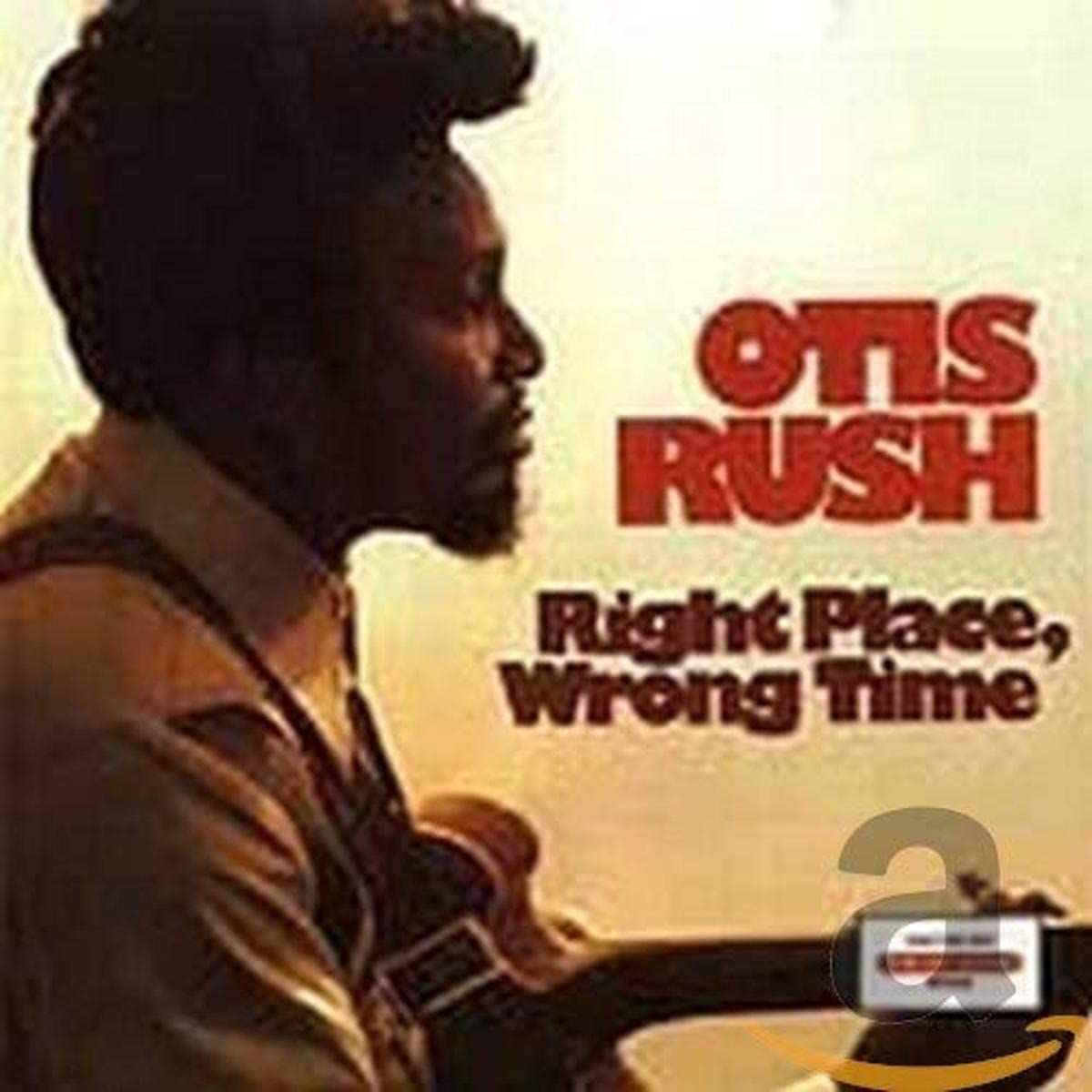
Released in 1976 on the independent Bullfrog label (catalog no. 301), Right Place, Wrong Time stands as one of the most celebrated—and most beleaguered—albums in blues history. Though it bears a 1976 release date, the music was actually recorded in February 1971 at Wally Heider's Studio in San Francisco for Capitol Records, who inexplicably shelved it for five years.
By the time it finally emerged, the moment had passed, and the album became yet another chapter in Otis Rush's long history of record-label misfortune. Yet despite the delays, Right Place, Wrong Time has since gained a reputation as some of the finest work of his career.
Recording Sessions & Production
The album was recorded in February 1971 at Wally Heider's Studio, located at 245 Hyde Street in San Francisco. Wally Heider, who already ran a successful studio in Los Angeles, had opened the San Francisco facility in early 1969; by 1971 it was one of the most prestigious recording destinations on the West Coast, having already hosted Crosby, Stills, Nash & Young's Déjà Vu and countless other landmark sessions.
Nick Gravenites produced the album, sharing production credit with Otis Rush himself. Gravenites was already a pivotal figure in the blues-rock world—he had previously produced Rush's 1969 Cotillion album Mourning in the Morning with Michael Bloomfield at FAME Studios in Muscle Shoals, and had written songs for Janis Joplin and the Electric Flag.
Stephen Barncard engineered the sessions.
The sessions were originally intended for Capitol Records, but the label declined to release the album—an act of corporate blindness that AllMusic's Eugene Chadbourne compared to Capitol's earlier decision to turn down The Doors on the grounds that Jim Morrison had "no charisma."
Chadbourne famously wrote: "One can imagine the tapes practically smoldering in their cases, the music is so hot."
Rush eventually purchased the master tapes from Capitol. Through the intercession of producer Dick Shurman (who also wrote the album's liner notes), the album was finally issued in 1976 on the tiny independent Bullfrog Records in the United States, with a simultaneous release on P-Vine Records in Japan.
In 1986, the rights were acquired by Hightone Records.
The Musicians
The album features a stellar San Francisco-based ensemble that bridges the worlds of blues, jazz, and rock:
-
Otis Rush — Lead vocals, lead guitar. A left-handed player who played a left-handed guitar strung upside down with the low E string on the bottom, Rush's sound is utterly unmistakable—soaring, emotionally piercing, and harmonically adventurous.
-
Fred Burton — Rhythm guitar
-
John Kahn — Bass guitar. A veteran of the San Francisco scene who would become Jerry Garcia's longtime musical partner.
-
Doug Killmer — Bass guitar. Credited alongside Kahn, suggesting dual bass duties on some tracks or alternate takes.
-
Bob Jones — Drums
-
Ira Kamin — Organ
-
Mark Naftalin — Piano. A former member of the Paul Butterfield Blues Band and a key figure in the white blues movement of the 1960s.
-
Hart McNee — Alto saxophone
-
Ron Stallings — Tenor saxophone
-
John Wilmeth — Trumpet
The horn section—McNee, Stallings, and Wilmeth—adds a soul-jazz dimension to Rush's West Side Chicago blues, while Kamin's organ and Naftalin's piano provide rich harmonic texture. The rhythm section of Kahn/Killmer and Jones locks into a groove that is simultaneously relaxed and propulsive.
Track-by-Track Breakdown
Side One
1. "Tore Up" (3:17)
Songwriters: Ralph Bass & Ike Turner
The album opens with a rousing up-tempo romp through this Ike Turner composition. Rush's guitar leads are precise and crisp, and his vocal authority is immediately apparent. The track gets off to a cannon-shot start—what one reviewer described as "the man they fire out of a cannon at the end of a circus, a perceived climax swaggeringly representing just the beginning."
The horn section punctuates the arrangement with soulful accents, and the rhythm section drives the track with relentless energy.
Songwriters: Ralph Bass & Ike Turner
The album opens with a rousing up-tempo romp through this Ike Turner composition. Rush's guitar leads are precise and crisp, and his vocal authority is immediately apparent. The track gets off to a cannon-shot start—what one reviewer described as "the man they fire out of a cannon at the end of a circus, a perceived climax swaggeringly representing just the beginning."
2. "Right Place, Wrong Time" (5:24)
Songwriter: Otis Rush
The title track and one of Rush's signature compositions. A slow-burning, minor-key blues that transitions from a rousing opening to a late-night, introspective vibe.
Rush's vocal is world-weary yet defiant, and his guitar solo is a masterclass in sustained, singing string bends. The track's title would prove prophetic for Rush's own career—always in the right place musically, but perpetually at the wrong time commercially. At over five minutes, it allows the band room to stretch and breathe.
Songwriter: Otis Rush
The title track and one of Rush's signature compositions. A slow-burning, minor-key blues that transitions from a rousing opening to a late-night, introspective vibe.
3. "Easy Go" (4:41)
Songwriter: Otis Rush
An instrumental showcase that functions as a muscular jam session. The soulful punctuation from the horn section—particularly McNee's alto and Stallings's tenor—amps up the energy, while Naftalin's piano and Kamin's organ create a rich, layered backdrop.
Rush's guitar work is fluid and exploratory, demonstrating his ability to expand the blues form with jazz-influenced chord progressions while never losing the emotional core.
Songwriter: Otis Rush
An instrumental showcase that functions as a muscular jam session. The soulful punctuation from the horn section—particularly McNee's alto and Stallings's tenor—amps up the energy, while Naftalin's piano and Kamin's organ create a rich, layered backdrop.
4. "Three Times a Fool" (3:11)
Songwriter: Otis Rush
A compact, mid-tempo blues that Rush had first recorded during his Cobra years in the late 1950s. Here it receives a more polished, full-band treatment. The track is built around Rush's stinging guitar riffs and impassioned vocal, with the rhythm section providing sympathetic support. The horn section is used more sparingly here, allowing Rush's guitar and voice to dominate.
5. "Rainy Night in Georgia" (3:55)
Songwriter: Tony Joe White
Rush's cover of Tony Joe White's 1967 classic is a departure from the straight Chicago blues template. Where Brook Benton's original hit version was a meditative R&B ballad, Rush transforms it into a blues opus—agile, urgent, and deeply felt.
It is the only non-blues-standard cover on the album, and Rush's interpretive skills shine through.
Songwriter: Tony Joe White
Rush's cover of Tony Joe White's 1967 classic is a departure from the straight Chicago blues template. Where Brook Benton's original hit version was a meditative R&B ballad, Rush transforms it into a blues opus—agile, urgent, and deeply felt.
Side Two
6. "Natural Ball" (3:30)
Songwriter: Albert King
A dynamic reading of Albert King's composition. The track percolates with energy, Rush's guitar and vocal phrasing fluid and constantly inventive.
The horn section adds brassy punctuation, and the rhythm section's interplay is particularly tight. Rush's left-handed, upside-down string technique gives his bends a unique vocal quality that distinguishes his interpretation from King's original.
Songwriter: Albert King
A dynamic reading of Albert King's composition. The track percolates with energy, Rush's guitar and vocal phrasing fluid and constantly inventive.
7. "I Wonder Why" (4:41)
Songwriter: Mel London
The second instrumental on the album, this Mel London composition is rendered as a showcase for the entire ensemble. The track is a slow blues that allows each musician space to contribute—Naftalin's piano, Kamin's organ, and the horn section all have moments in the spotlight, while Rush's guitar weaves through the arrangement with characteristic taste and restraint.
8. "Your Turn to Cry" (3:35)
Songwriters: Gil Caple & Deadric Malone (aka Dickey Malone)
A more conventional blues structure that is elevated by Rush's inimitable touch. The subtle key-shifting introduction and Mark Naftalin's percussive piano licks spice up the arrangement.
Rush's vocal is coarser and more urgent here, matching the group's intensity, while his guitar solo cuts through with razor-sharp precision.
Songwriters: Gil Caple & Deadric Malone (aka Dickey Malone)
A more conventional blues structure that is elevated by Rush's inimitable touch. The subtle key-shifting introduction and Mark Naftalin's percussive piano licks spice up the arrangement.
9. "Lonely Man" (2:50)
Songwriters: Milton Campbell & Bob Lyons
The shortest track on the album and one of its most intense. Rush explodes with emotional intensity, his urgent vocals matched by the band's driving rhythm.
The track is a compact burst of blues passion that demonstrates Rush's ability to convey profound loneliness without ever lapsing into self-pity.
Songwriters: Milton Campbell & Bob Lyons
The shortest track on the album and one of its most intense. Rush explodes with emotional intensity, his urgent vocals matched by the band's driving rhythm.
10. "Take a Look Behind" (5:40)
Songwriter: Otis Rush
The album closer and its longest track. A sprawling, five-minute-plus blues epic that allows the entire ensemble to stretch out. Rush's guitar playing is at its most expansive here—stripping the idea of the blues down to very simple gestures, as Chadbourne noted, "a bent string, but bent in such a subtle way that the seasoned blues listener will be surprised."
The track builds to a powerful climax, with the horn section adding sustained pads and the rhythm section driving relentlessly forward. It is a fitting conclusion to an album that represents Chicago blues at its most adventurous.
Songwriter: Otis Rush
The album closer and its longest track. A sprawling, five-minute-plus blues epic that allows the entire ensemble to stretch out. Rush's guitar playing is at its most expansive here—stripping the idea of the blues down to very simple gestures, as Chadbourne noted, "a bent string, but bent in such a subtle way that the seasoned blues listener will be surprised."
Buy This Album
Critical Assessment & Legacy
Right Place, Wrong Time is now universally regarded as one of Otis Rush's finest achievements. The five-year delay in release blunted its commercial impact, but the music itself has only grown in stature. As one reviewer noted, the album is "very much of the right time"—whereas some of Rush's earlier work looked back to an earlier era, this session found him squarely in the present moment, incorporating soul, jazz, and rock elements into his West Side blues foundation.
The stereo mix—remastered for audiophile vinyl reissues by Kevin Gray at Cohearent Sound—is notably well-balanced, with Rush's vocals and guitar always centered, while the horns, piano, and organ require volume to fully appreciate.
Robert Christgau, in his Record Guide: Rock Albums of the Seventies, captured what made Rush special: "Rush is a 'good singer' with a 'good instrument'—sweet, penetrating, slurred—but the words aren't where his soul goes. It goes into the form itself. Like B.B. King's, only less predictably by now, his solos expand upon the Chicago verities in almost jazzlike flights without ever transgressing against them."
Today, Right Place, Wrong Time stands as a testament to Otis Rush's genius and a cautionary tale about the music industry's capacity for self-sabotage. That an album of this caliber could be recorded by a major label, paid for, mastered, and then simply abandoned for five years is almost incomprehensible. Yet in a career marked by label disappointments—from Cobra's bankruptcy to Chess's neglect to Duke's indifference—Rush persevered, and the music ultimately found its audience. For blues fans who tire of the same old song structures, riffs, and rhythms, this album remains a revelation—proof that the blues could be traditional and innovative, raw and sophisticated, all at once.