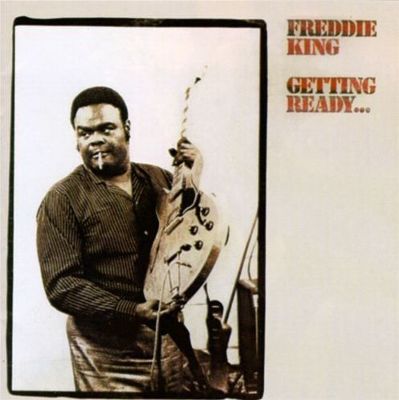
Released in 1971 on Shelter Records (catalog no. L-35625), Getting Ready...—sometimes issued simply as Getting Ready—marks a pivotal chapter in the career of the Texas-born guitar giant. It was the first of three albums Freddie King recorded for Leon Russell's independent Shelter label, and it introduced a harder, more rock-and-soul-inflected sound that would define the final phase of his career.
Recorded at the legendary Ter-Mar Chess Studios in Chicago and mixed at Ardent Studios in Memphis, the album pairs King with a formidable ensemble of rock, soul, and blues veterans, yielding what many consider his most creatively satisfying studio work.
Recording Sessions & Production
The album was produced by Leon Russell and Don Nix. Russell—already a star in his own right and the founder of Shelter Records—brought his signature honky-tonk piano and production sensibility to the sessions, while Nix—a Memphis songwriter, producer, and former member of the Mar-Keys—contributed several original compositions and co-production expertise.
John Fry engineered the sessions at Ter-Mar Chess Studios in Chicago, with remixing done at Ardent Studios in Memphis.
The choice of Chess Studios was significant: it placed King in the same room where Muddy Waters, Howlin' Wolf, and Little Walter had cut their immortal sides, lending an authentic Chicago blues atmosphere to the Texas guitarist's work.
King approached the sessions with a Gibson Les Paul, an instrument he favored for its violin-like sustain, achieved through his tendency to bend notes aggressively while avoiding full chords.
The production aesthetic was notably different from King's earlier Federal and King recordings—Russell and Nix pushed the rhythm section forward, incorporated soul-style backing vocals, and allowed the guitar interplay between King and Don Preston to take center stage.
The Musicians
The album features a powerhouse backing band drawn from Shelter's roster and the broader rock-soul session scene:
-
Freddie King — Lead vocals, electric guitar, acoustic guitar (on "Dust My Broom")
-
Leon Russell — Piano, guitar. The Oklahoma piano man and Shelter label head contributed his signature barrelhouse and gospel-tinged keyboard work.
-
Donald "Duck" Dunn — Bass. On loan from Stax Records, Dunn's in-the-pocket bass lines provided the album's rhythmic foundation.
-
Chuck Blackwell — Drums
-
Charles Myers — Drums (on select tracks)
-
Don Preston — Guitar. Preston's rhythm and lead guitar work complemented King's playing, and the two can be heard trading solos on several tracks.
-
Jon Gallie — Organ
-
Claudia Lennear — Backing vocals
-
Kathi McDonald — Backing vocals
-
Joey Cooper — Backing vocals
-
Don Preston — Also contributed backing vocals
The backing vocal quartet—Lennear, McDonald, Cooper, and Preston—added a soul-gospel sheen that was unusual for Freddie King's earlier work but became a hallmark of his Shelter-era sound.
Track-by-Track Breakdown
Side One
1. "Same Old Blues" (3:57)
Songwriter: Don Nix
Musicians: Freddie King (guitar, vocals), Leon Russell (piano), Don Preston (guitar), Jon Gallie (organ), Duck Dunn (bass), Chuck Blackwell (drums), plus backing vocals
The album opens with a Don Nix original that sets the template for the Shelter sound: a slow-grinding, gospel-like blues with Russell's piano anchoring the groove and the backing vocalists adding soulful uplift. King's guitar tone is thick and sustained, his vocal delivery world-weary yet defiant. The track establishes the album's identity as something more expansive than straight Chicago blues.
2. "Dust My Broom" (3:10)
Songwriter: Elmore James
Musicians: Freddie King (acoustic guitar, vocals)
A stark, stripped-down reading of Elmore James's slide-guitar anthem. For this track, King set aside his electric Gibson Les Paul and played acoustic Spanish guitar, accompanied only by his own voice.
The arrangement is low-fi and intimate, placing King's vocal and fingerpicked guitar in unadorned proximity. It is a deliberate contrast to the full-band attack of the surrounding tracks and a nod to the Delta roots of the electric blues form.
Songwriter: Elmore James
Musicians: Freddie King (acoustic guitar, vocals)
A stark, stripped-down reading of Elmore James's slide-guitar anthem. For this track, King set aside his electric Gibson Les Paul and played acoustic Spanish guitar, accompanied only by his own voice.
3. "Worried Life Blues" (2:50)
Songwriter: Big Maceo Merriweather (original LP back cover credits "Big Maco," likely a typo; some pressings also credit Willie Dixon)
Musicians: Freddie King (guitar, vocals), Leon Russell (piano), Don Preston (guitar), Jon Gallie (organ), Duck Dunn (bass), Chuck Blackwell (drums), plus backing vocals
One of the album's most powerful performances. King is at his most expressively intense here, tearing through lightning-fast solos while dueling with Don Preston's guitar.
The song—originally recorded by Big Maceo in 1941—was a Chicago blues staple, and King's version pushes it into hard-rocking territory without losing its blues foundation.
Songwriter: Big Maceo Merriweather (original LP back cover credits "Big Maco," likely a typo; some pressings also credit Willie Dixon)
Musicians: Freddie King (guitar, vocals), Leon Russell (piano), Don Preston (guitar), Jon Gallie (organ), Duck Dunn (bass), Chuck Blackwell (drums), plus backing vocals
One of the album's most powerful performances. King is at his most expressively intense here, tearing through lightning-fast solos while dueling with Don Preston's guitar.
4. "Five Long Years" (4:20)
Songwriter: Eddie Boyd
Musicians: Freddie King (guitar, vocals), Leon Russell (piano), Don Preston (guitar), Jon Gallie (organ), Duck Dunn (bass), Chuck Blackwell (drums), plus backing vocals
The Eddie Boyd classic receives a stately, mid-tempo treatment that allows King to stretch out both vocally and instrumentally. Boyd's original 1952 version was a piano-driven lament; King's guitar-centric interpretation transforms it into a showcase for his sustained, singing string bends. The track runs over four minutes, giving the ensemble room to breathe and build tension.
5. "Key to the Highway" (3:24)
Songwriters: Charles Segar & Bill Broonzy
Musicians: Freddie King (guitar, vocals), Leon Russell (piano), Don Preston (guitar), Jon Gallie (organ), Duck Dunn (bass), Chuck Blackwell (drums), plus backing vocals
A cover of the Big Bill Broonzy/Charles Segar standard that King had performed live for years. The studio version is notably more casual and groove-oriented than the rock-inflected arrangements he favored on stage.
Russell's piano rolls beneath King's vocal, and the rhythm section locks into a relaxed shuffle that emphasizes feel over flash.
Songwriters: Charles Segar & Bill Broonzy
Musicians: Freddie King (guitar, vocals), Leon Russell (piano), Don Preston (guitar), Jon Gallie (organ), Duck Dunn (bass), Chuck Blackwell (drums), plus backing vocals
A cover of the Big Bill Broonzy/Charles Segar standard that King had performed live for years. The studio version is notably more casual and groove-oriented than the rock-inflected arrangements he favored on stage.
Side Two
6. "Going Down" (3:21)
Songwriter: Don Nix
Musicians: Freddie King (guitar, vocals), Leon Russell (piano), Don Preston (guitar), Jon Gallie (organ), Duck Dunn (bass), Chuck Blackwell (drums), plus backing vocals
The album's most famous track and one of Freddie King's signature songs. Don Nix's composition became a staple of King's live shows and a blues-rock standard covered by Jeff Beck, Deep Purple, and countless others.
The track is built around a descending guitar riff and a hard, funky groove, with Russell's piano adding gospel-tinged urgency. King's vocal is raw and commanding, and his guitar solo is a masterclass in economical, powerful phrasing.
Songwriter: Don Nix
Musicians: Freddie King (guitar, vocals), Leon Russell (piano), Don Preston (guitar), Jon Gallie (organ), Duck Dunn (bass), Chuck Blackwell (drums), plus backing vocals
The album's most famous track and one of Freddie King's signature songs. Don Nix's composition became a staple of King's live shows and a blues-rock standard covered by Jeff Beck, Deep Purple, and countless others.
7. "Living on the Highway" (4:14)
Songwriters: Don Nix & Leon Russell
Musicians: Freddie King (guitar, vocals), Leon Russell (piano), Don Preston (guitar), Jon Gallie (organ), Duck Dunn (bass), Chuck Blackwell (drums), plus backing vocals
A co-write between Nix and Russell that captures the weariness and exhilaration of life on the road. The track has a slightly country-rock feel, with Russell's piano and the backing vocalists adding a touch of church-gospel atmosphere. At over four minutes, it is one of the longer cuts on the album, allowing for extended instrumental interplay between King and Russell.
8. "Walking by Myself" (2:50)
Songwriter: James Lane (Jimmy Rogers)
Musicians: Freddie King (guitar, vocals), Leon Russell (piano, tambourine)
A low-fi, intimate reading of Jimmy Rogers's classic. The production is deliberately sparse—just King's voice and guitar, Russell's honky-tonk piano ramblings, and a tambourine.
The track clocks in at under three minutes but packs enormous emotional weight, with King's vocal conveying a loneliness that transcends the simple lyric.
Songwriter: James Lane (Jimmy Rogers)
Musicians: Freddie King (guitar, vocals), Leon Russell (piano, tambourine)
A low-fi, intimate reading of Jimmy Rogers's classic. The production is deliberately sparse—just King's voice and guitar, Russell's honky-tonk piano ramblings, and a tambourine.
9. "Tore Down" (4:09)
Songwriter: Sonny Thompson (credited to Freddie King on the LP back cover; the original 1961 Federal single was credited to Thompson as "I'm Tore Down")
Musicians: Freddie King (guitar, vocals), Leon Russell (piano), Don Preston (guitar), Jon Gallie (organ), Duck Dunn (bass), Chuck Blackwell (drums), plus backing vocals
A reworking of the song King had first recorded for Federal in 1961. The Shelter version is harder and more aggressive, with the full band pushing King into overdrive. The backing vocalists add a soul-chorus effect that was absent from the original, and Russell's piano fills give the track a gospel-tinged urgency. The songwriting credit discrepancy—King on the sleeve, Thompson on the original single—remains unresolved.
10. "Palace of the King" (3:38)
Songwriters: Don Nix, Donald "Duck" Dunn & Leon Russell
Musicians: Freddie King (guitar, vocals), Leon Russell (piano), Don Preston (guitar), Jon Gallie (organ), Duck Dunn (bass), Chuck Blackwell (drums), plus backing vocals
The album closes with a collaborative original that functions as a declaration of King's status. The title evokes regal imagery appropriate for one of the "Three Kings" of blues guitar (alongside B.B. and Albert). The track is an uptempo stomper with a funky backbeat, Russell's piano driving the rhythm, and the backing vocalists adding a triumphant, almost celebratory feel. It is a fitting conclusion to an album that reintroduced Freddie King to a new generation of rock and soul listeners.
Buy This 3 Album Collection
 Buy from Amazon Getting Ready... / Texas Cannonball / Woman Across The River
Critical Assessment & Legacy
Getting Ready... established the template for Freddie King's Shelter Records trilogy (followed by Woman Across the River in 1973 and Burglar in 1974). AllMusic's review noted that the album set the tone for his work with the label: "competent electric blues with a prominent rock/soul influence."
The album's range—from the acoustic intimacy of "Dust My Broom" to the hard funk of "Going Down" to the gospel-tinged "Palace of the King"—demonstrated King's versatility while never sacrificing his identity as a bluesman.
"Going Down" in particular became a blues-rock standard, its descending riff and tough groove inspiring covers by Jeff Beck, Deep Purple, Stevie Ray Vaughan, and many others. The song's enduring popularity has ensured that Getting Ready... remains in print and in demand more than five decades after its release.
Though King would never again reach the commercial heights of his Federal-era hits like "Hide Away," the Shelter recordings—including this album—represent his mature artistic voice: tougher, more soulful, and more willing to experiment with rock and funk textures while remaining rooted in the blues. For fans of electric blues guitar, Getting Ready... is an essential document of one of the instrument's greatest practitioners operating at the peak of his powers.