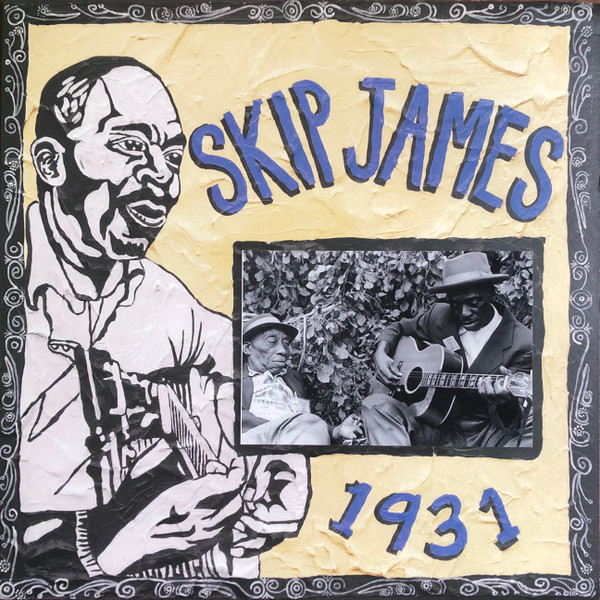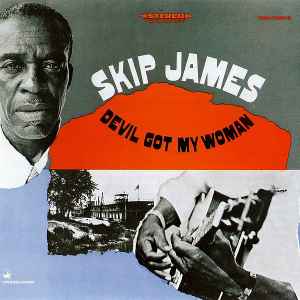
Released in 1968 on Vanguard Records (catalog no. VSD 79273), Devil Got My Woman is the fourth studio album by Nehemiah "Skip" James and the final record he released before his death in 1969. Capturing the most enigmatic figure of the Delta blues in stark, unaccompanied solitude, the album is a haunting document of an artist who had already lived several lifetimes of obscurity, rediscovery, and terminal illness by the time he entered the studio. The title track would later achieve cinematic immortality when it was featured in Terry Zwigoff's 2001 film Ghost World, introducing James's eerie falsetto to a new generation.
Recording Sessions & Production
The album was recorded over three days—March 22, 23, and 24, 1967—in New York City.
No specific producer is credited in the original documentation; the album was issued as a Vanguard Records production with photographs by David Gahr and liner notes attributed to "Anonymous."
By 1967, James was already living on borrowed time. Rediscovered in 1964 by blues enthusiasts John Fahey, Bill Barth, and Henry Vestine in a Tunica, Mississippi hospital, James had been spirited back into the public eye after 33 years of silence.
He made a celebrated appearance at the 1964 Newport Folk Festival, recorded for several labels in the intervening years, and by the time of these Vanguard sessions was already battling the cancer that would kill him in October 1969. The album is thus suffused with an awareness of mortality that no production decision could manufacture.
The sessions were stark in their simplicity: James alone with his guitar and piano, with no backing musicians, no overdubs, and no studio trickery. This was not a commercial choice but an artistic necessity—James's music was so idiosyncratic, so rooted in his unique open D-minor tuning and his keening falsetto, that accompaniment would have been not just unnecessary but intrusive.
The Musician
-
Skip James — Vocals, acoustic guitar, piano
James played in an open D-minor tuning (D–A–D–F–A–D), a tuning he had reportedly learned from his mentor Henry Stuckey, who in turn claimed to have acquired it from Bahamian soldiers during World War I.
The result was a dark, brooding sound that had more in common with the Piedmont fingerpicking tradition than with the Delta bottleneck style of his contemporaries. His voice—sliding between a keening falsetto and a heart-slain soprano—was unlike anything else in blues. As one critic noted, he sounded like "someone possessed, a one-man Southern Gothic drama."
On this album, James alternates between guitar and piano, showcasing the two instruments that had defined his 1931 Paramount sessions. His guitar work is characterized by intricate fingerpicking, heavy hypnotic bass lines, and a complete absence of full chords—he thinks in melodies over drones, bending notes to reach pitches that exist outside standard Western tuning.
His piano playing, heard on three tracks, is equally idiosyncratic—angular, percussive, and steeped in the church music of his father's Baptist ministry.
Track-by-Track Breakdown
Side One
1. "Good Road Camp Blues" (3:47)
Songwriter: Skip James
James opens the album with a song drawn from his early working life. The title refers to the road construction and levee-building crews where James labored in the 1920s before becoming a professional musician.
His guitar establishes the open D-minor drone that will permeate the album, while his vocal—already showing the strain of illness—conveys a lifetime of hard labor and harder luck.
Songwriter: Skip James
James opens the album with a song drawn from his early working life. The title refers to the road construction and levee-building crews where James labored in the 1920s before becoming a professional musician.
2. "Little Cow and Calf Is Gonna Die Blues" (3:20)
Songwriter: Skip James
One of James's most poetically complex compositions. In the blues tradition, the "cow" is a common metaphor for a woman or lover, but James subverts the convention by identifying himself as the cow, searching for his lost calf.
The lyric "Every cow and calf, I believe was born to die" carries a fatalism that is almost biblical in its acceptance of mortality. The track is a mid-tempo blues with James's fingerpicking creating a circular, hypnotic pattern beneath his vocal.
Songwriter: Skip James
One of James's most poetically complex compositions. In the blues tradition, the "cow" is a common metaphor for a woman or lover, but James subverts the convention by identifying himself as the cow, searching for his lost calf.
3. "Devil Got My Woman" (5:10)
Songwriter: Skip James
The title track and James's most famous composition. Originally recorded in February 1931 at his first Paramount session in Grafton, Wisconsin, the song was the very first track he cut after auditioning for talent scout H.C. Speir.
The 1968 version is more delicate than the 1931 original—musicologist Ethan Hein noted that it has "more string bends, and is more metrically asymmetrical... it sounds like James has a sly smile on his face as he's singing."
The song does not follow conventional blues form; each verse contains two or three phrases interspersed with guitar breaks of no fixed length, creating what Hein described as "one continuous hypnotic drone."
The original 1931 78 is one of the rarest blues records in existence, with only three known copies surviving and only one in playable condition.
Songwriter: Skip James
The title track and James's most famous composition. Originally recorded in February 1931 at his first Paramount session in Grafton, Wisconsin, the song was the very first track he cut after auditioning for talent scout H.C. Speir.
4. "Look at the People Standing at the Judgment" (2:58)
Songwriter: Skip James
A gospel-tinged blues that reflects James's complex relationship with religion. The son of a Baptist minister, James had himself been ordained in both Baptist and Methodist churches during his years away from the blues.
The track foreshadows his own deathbed scene, where he would indeed be surrounded by people standing at his bedside. The vocal is delivered with an almost conversational intimacy, as if James is recounting a vision he has already seen.
Songwriter: Skip James
A gospel-tinged blues that reflects James's complex relationship with religion. The son of a Baptist minister, James had himself been ordained in both Baptist and Methodist churches during his years away from the blues.
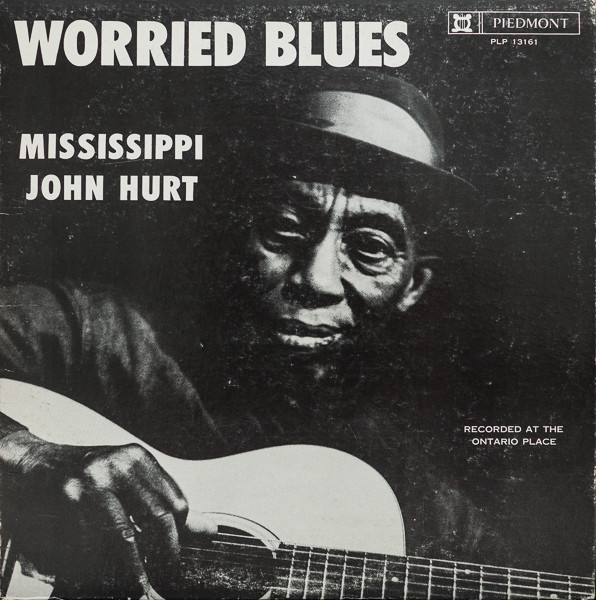
5. "Worried Blues" (5:55)
Songwriter: Skip James
The longest track on the album, a sprawling, five-minute-plus meditation on anxiety and dread. James's guitar work here is particularly intricate, with his thumb generating a relentless bass drone while his fingers dance across the higher strings. The vocal is delivered in his upper register, a falsetto that sounds less like a performance technique and more like a man pushed beyond the limits of his natural voice by the weight of his worries. The track is a masterclass in the "Bentonia" style—slow, minor-key, and spiritually unsettling.
6. "22-20 Blues" (3:50)
Songwriters: Skip James & Robert Johnson (album credit)
The only track on the album with a co-writing credit, and one of the most fascinating entries in James's catalog. James originally recorded this in 1931 after Paramount's Art Laibly challenged him to compose a gun-themed blues to rival Roosevelt Sykes's ".44 Blues."
James came up with the .22-20 caliber rifle, and the song became one of his most popular 78s. In 1936, Robert Johnson adapted it into his own "32-20 Blues," which in turn became far more famous than James's original. The 1968 album credits both men, acknowledging Johnson's adaptation even though James was the sole author of the original composition. The track is a piano piece on this recording, showcasing James's percussive, two-fisted keyboard style.
Songwriters: Skip James & Robert Johnson (album credit)
The only track on the album with a co-writing credit, and one of the most fascinating entries in James's catalog. James originally recorded this in 1931 after Paramount's Art Laibly challenged him to compose a gun-themed blues to rival Roosevelt Sykes's ".44 Blues."
Side Two
7. "Mistreating Child Blues" (3:54)
Songwriter: Skip James
A mid-tempo blues that finds James in a more conventional 12-bar structure than some of his other compositions. The "mistreating child" of the title is a lover who has done him wrong, a standard blues trope that James invests with unusual psychological complexity. His vocal delivery is coarser here, the falsetto giving way to a more grounded, almost spoken register that conveys resignation rather than rage.
8. "Sickbed Blues" (4:05)
Songwriter: Skip James
James composed this song in 1964 while literally lying in a hospital bed in Tunica, Mississippi, shortly before his rediscovery by John Fahey and his companions.
The lyric "I ain't got nobody to get me out of here" takes on devastating resonance when one considers that the blues enthusiasts who found him had to pay his medical bills and back rent to secure his release.
The 1968 recording is slower and more reflective than the 1964 version, the guitar lines tracing the contours of his physical frailty.
Songwriter: Skip James
James composed this song in 1964 while literally lying in a hospital bed in Tunica, Mississippi, shortly before his rediscovery by John Fahey and his companions.
9. "Catfish Blues" (4:35)
Songwriter: Skip James
A Delta blues standard that James made his own. The "catfish" is a traditional blues metaphor for a woman—slippery, elusive, and bottom-dwelling. James's version is notable for its metric irregularity; like "Devil Got My Woman," it refuses to settle into a predictable pattern, with vocal phrases and guitar breaks expanding and contracting according to James's own internal logic. The track builds to a climax of sustained falsetto that is almost unbearable in its intensity.
10. "Lorenzo Blues" (4:17)
Songwriter: Skip James
The title refers to Lorenzo Meeks, a woman James married late in life—reportedly on his deathbed, according to some accounts.
The song is a celebration of female beauty that stands in contrast to the darker themes dominating the album. James's guitar work is lighter here, with a touch of major-key brightness that is rare in his repertoire. The track demonstrates that even in his final years, James was capable of tenderness and romantic optimism.
Songwriter: Skip James
The title refers to Lorenzo Meeks, a woman James married late in life—reportedly on his deathbed, according to some accounts.
11. "Careless Love" (3:59)
Songwriters: W.C. Handy, Martha E. Koenig & Spencer Williams
The only track on the album not written by James. "Careless Love" is a standard of the blues and jazz repertoire, with roots going back to the early 20th century. James's interpretation strips away the New Orleans brass-band associations of the song and reduces it to its emotional essence—a lament for love that has been betrayed. His guitar accompaniment is sparse and deliberate, each note placed with the precision of a man who knows he has limited time.
12. "Illinois Blues" (3:15)
Songwriter: Skip James
The album closes with one of James's earliest compositions, written about his experiences as a laborer on road construction crews in Illinois during the 1920s.
It is a fitting conclusion to the album—a return to the beginning of his artistic life, delivered with the wisdom and weariness of a man who has seen the end. The track is taken at a slightly faster tempo than much of the album, with James's guitar generating a driving rhythm that suggests the physical labor the song describes. His vocal is clear and strong, a final assertion of his identity before the close.
Songwriter: Skip James
The album closes with one of James's earliest compositions, written about his experiences as a laborer on road construction crews in Illinois during the 1920s.
Buy This Album
Critical Assessment & Legacy
Devil Got My Woman received generally favorable reviews upon release. AllMusic critic Scott Yanow wrote: "One can easily hear the influence that Skip James' music had on the then flourishing folk music movement, and he still sang his country blues with great intensity."
The album's influence extends far beyond the blues world. Robert Johnson—who never met James but absorbed his 78s—based "Hell Hound on My Trail" on James's "Devil Got My Woman," transforming James's open D-minor tuning and descending melodic figures into his own masterpiece.
Cream's 1967 recording of "I'm So Glad" (from James's 1931 sessions) provided James with $10,000 in royalties—the only significant financial windfall of his career.
Today, Devil Got My Woman stands as an essential document of the Delta blues tradition and a haunting final statement from one of the music's most original voices. Recorded in the shadow of death, performed without accompaniment or artifice, it is the sound of a man stripping away everything nonessential to reveal the bare, terrible beauty of the blues. As James himself once said, it was "a great privilege and honor and courtesy at this time and at this age, to be able to confront you with something that may perhaps go down in your hearing and may be in history after I'm gone."
He was right.