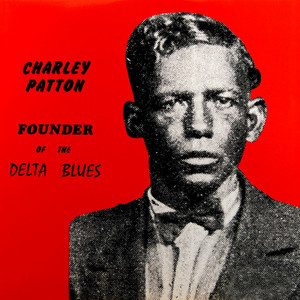
Released originally in 1970 on Yazoo Records as Founder of the Delta Blues (catalog no. L-1020), this compilation—subsequently reissued under the variant title Father of the Delta Blues on CD and digital platforms—stands as the definitive introduction to the most important figure in prewar American blues. The album was the first attempt to gather Charley Patton's essential recordings into a single, carefully curated package, and it remains a cornerstone of any serious blues collection.
Recording Sessions & Production
Father of the Delta Blues is not a studio album but a compilation drawn from Patton's complete recorded works, cut during five sessions between June 1929 and February 1934. The recordings span three distinct locations and three different record companies:
-
June 14, 1929 — Gennett Studios, Richmond, Indiana (Paramount Records)
-
November–December 1929 — Paramount Studios, Grafton, Wisconsin
-
May 28, 1930 — Paramount Studios, Grafton, Wisconsin
-
January 30–31 & February 1, 1934 — New York City (American Record Company/Vocalion)
The June 1929 Richmond session was Patton's recording debut. Talent scout H.C. Speir of Jackson, Mississippi, had auditioned Patton on the Dockery Plantation and sent him a train ticket to Richmond, where Gennett Records was temporarily recording Paramount artists while the company's Grafton studio was being completed.
In a single day, Patton cut 14 sides—an astonishing burst of creativity that established the Delta blues on record.
The album was compiled, produced, and mastered by Nick Perls, the founder of Yazoo Records and one of the most important archivists of prewar blues. The elaborate packaging included a gatefold sleeve with an attached 8-page booklet containing notes and lyric transcriptions by Stephen Calt, Jerry Epstein, John Fahey, Don Kent, Nick Perls, Michael Stewart, and Alan Wilson—a virtual who's who of 1960s blues scholarship.
The original 1970 2LP contained 28 tracks. A 1995 CD reissue (Yazoo CD 2010) trimmed this to 26 tracks, while a 1989 CD (Yazoo CD 1020) contained 24.
The Musicians
Patton's recordings feature him as the central figure, but several tracks include accompaniment from other Delta musicians:
-
Charley Patton — Vocals, guitar (all tracks)
-
Henry "Son" Sims — Fiddle, vocals (1929 Grafton sessions). A Delta fiddler who recorded both as Patton's accompanist and as a leader in his own right.
-
Willie Brown — Second guitar (May 1930 Grafton session). The legendary guitarist immortalized in Robert Johnson's "Cross Road Blues."
-
Louise Johnson — Piano (May 1930 Grafton session). A formidable barrelhouse pianist who was romantically involved with Patton at the time.
-
Bertha Lee — Vocals (January–February 1934 New York sessions). Patton's common-law wife, who recorded several duets with him during his final sessions.
Track-by-Track Breakdown
June 14, 1929 — Gennett Studios, Richmond, Indiana
1. "Mississippi Boweavil Blues" (3:08)
Songwriter: Charley Patton
Musicians: Charley Patton (vocals, guitar)
Patton's recording debut and one of his most topical compositions, addressing the boll weevil infestation that devastated Southern cotton crops. The track announces his arrival with a thunderous, rhythmic guitar attack and a voice that sounds like gravel and thunder. It was released as the B-side of Paramount 12805.
2. "Screamin' and Hollerin' the Blues" (3:07)
Songwriter: Charley Patton
Musicians: Charley Patton (vocals, guitar)
The A-side of Paramount 12805. A frenetic, almost chaotic performance that showcases Patton's ability to generate immense rhythmic drive from a single guitar. His vocal is a raw holler, pushed to the edge of distortion by the primitive recording equipment.
3. "Down the Dirt Road Blues" (2:57)
Songwriter: Charley Patton
Musicians: Charley Patton (vocals, guitar)
Released on Paramount 12854. A mid-tempo blues with one of Patton's most memorable guitar intros—a descending figure that Robert Johnson would later adapt for "Terraplane Blues." The lyric paints a vivid picture of Delta life: "I'm goin' away, to a world unknown."
4. "Pony Blues" (3:01)
Songwriter: Charley Patton
Musicians: Charley Patton (vocals, guitar)
Patton's signature song and arguably the most important single track in the Delta blues canon. Released on Paramount 12792, it features his most celebrated guitar figure: a stuttering, rhythmic vamp that mimics the gait of a pony. The song became the template for countless Delta blues adaptations, including Muddy Waters's "I Feel Like Going Home."
5. "Banty Rooster Blues" (3:05)
Songwriter: Charley Patton
Musicians: Charley Patton (vocals, guitar)
The B-side of Paramount 12792. A boastful, sexually charged blues with Patton declaring his dominance like a banty rooster in a henhouse. The guitar work is lighter and more playful than "Pony Blues," with a skipping rhythm that anticipates rock and roll.
6. "It Won't Be Long" (3:24)
Songwriter: Charley Patton
Musicians: Charley Patton (vocals, guitar)
Released on Paramount 12854. A spiritual-tinged blues that finds Patton in a more reflective mood. The title phrase serves as both a promise and a warning, delivered with the urgency of a man who knows his time is limited.
Songwriter: Charley Patton
Musicians: Charley Patton (vocals, guitar)
Released on Paramount 12854. A spiritual-tinged blues that finds Patton in a more reflective mood. The title phrase serves as both a promise and a warning, delivered with the urgency of a man who knows his time is limited.
7. "Tom Rushen Blues" (3:08)
Songwriter: Charley Patton
Musicians: Charley Patton (vocals, guitar)
A tribute to Tom Rushing, a Leland, Mississippi, lawman who reportedly arrested Patton on more than one occasion. The song is a sly, almost affectionate portrait of the man who kept him in line: "Tom Rushen, Tom Rushen, tell me what you want me to do."
8. "A Spoonful Blues" (3:14)
Songwriter: Charley Patton
Musicians: Charley Patton (vocals, guitar)
A dark, hypnotic blues built around a single repeated guitar figure. The "spoonful" refers to cocaine, and the song's trance-like quality mirrors the drug's effect. Patton's vocal is slurred and menacing, one of his most unsettling performances.
9. "Shake It and Break It (But Don't Let It Fall Mama)" (3:11)
Songwriter: Charley Patton
Musicians: Charley Patton (vocals, guitar)
A dance-oriented number with a more upbeat feel than much of Patton's work. Released on Paramount 12869, it demonstrates his range as an entertainer—able to move from deep blues to party music without breaking stride.
Songwriter: Charley Patton
Musicians: Charley Patton (vocals, guitar)
A dance-oriented number with a more upbeat feel than much of Patton's work. Released on Paramount 12869, it demonstrates his range as an entertainer—able to move from deep blues to party music without breaking stride.
November–December 1929 — Paramount Studios, Grafton, Wisconsin
10. "Elder Green Blues" (3:04)
Songwriter: Charley Patton
Musicians: Charley Patton (vocals, guitar)
A narrative blues about a church deacon whose moral authority is undermined by his worldly behavior. The track showcases Patton's storytelling ability and his gift for character-driven blues.
Songwriter: Charley Patton
Musicians: Charley Patton (vocals, guitar)
A narrative blues about a church deacon whose moral authority is undermined by his worldly behavior. The track showcases Patton's storytelling ability and his gift for character-driven blues.
11. "Some of These Days" (3:18)
Songwriter: Charley Patton
Musicians: Charley Patton (vocals, guitar)
A declaration of future triumph delivered with characteristic swagger. The lyric—"Some of these days, I'm gonna leave this town"—would resonate through the blues tradition, echoed by countless later artists.
Songwriter: Charley Patton
Musicians: Charley Patton (vocals, guitar)
A declaration of future triumph delivered with characteristic swagger. The lyric—"Some of these days, I'm gonna leave this town"—would resonate through the blues tradition, echoed by countless later artists.
12. "Hammer Blues" (3:16)
Songwriter: Charley Patton
Musicians: Charley Patton (vocals, guitar)
A levee-camp blues that draws on Patton's experiences working on the Mississippi River. The "hammer" refers to the heavy mallets used to drive stakes, and Patton's guitar mimics the rhythmic pounding of labor.
Songwriter: Charley Patton
Musicians: Charley Patton (vocals, guitar)
A levee-camp blues that draws on Patton's experiences working on the Mississippi River. The "hammer" refers to the heavy mallets used to drive stakes, and Patton's guitar mimics the rhythmic pounding of labor.
13. "When Your Way Gets Dark" (3:07)
Songwriter: Charley Patton
Musicians: Charley Patton (vocals, guitar)
A spiritual-tinged blues that draws on Patton's deep knowledge of church music. The track is slower and more meditative than his dance-oriented numbers, with a guitar figure that seems to emerge from the darkness it describes.
Songwriter: Charley Patton
Musicians: Charley Patton (vocals, guitar)
A spiritual-tinged blues that draws on Patton's deep knowledge of church music. The track is slower and more meditative than his dance-oriented numbers, with a guitar figure that seems to emerge from the darkness it describes.
14. "High Water Everywhere—Part 1" (3:08)
Songwriter: Charley Patton
Musicians: Charley Patton (vocals, guitar)
The first half of Patton's epic account of the 1927 Mississippi River flood, the most devastating natural disaster in American history at the time. Released on Paramount 12909, the song is a masterpiece of reportage and empathy, with Patton describing the destruction with the detail of a journalist and the pain of a survivor: "Backwater done rose, come in around my door."
15. "High Water Everywhere—Part 2" (3:07)
Songwriter: Charley Patton
Musicians: Charley Patton (vocals, guitar)
The conclusion of the flood narrative. The two parts together form a six-minute epic that stands as one of the most ambitious compositions in prewar blues. Patton's guitar creates a sense of rushing water and impending doom that no other blues artist could match.
16. "Green River Blues" (3:10)
Songwriter: Charley Patton
Musicians: Charley Patton (vocals, guitar)
A melancholy blues named for the Green River in Kentucky. The track features some of Patton's most intricate fingerpicking, with a descending bass line that creates a sense of inexorable sadness.
Songwriter: Charley Patton
Musicians: Charley Patton (vocals, guitar)
A melancholy blues named for the Green River in Kentucky. The track features some of Patton's most intricate fingerpicking, with a descending bass line that creates a sense of inexorable sadness.
17. "Going to Move to Alabama" (3:01)
Songwriter: Charley Patton
Musicians: Charley Patton (vocals, guitar); Henry "Son" Sims (fiddle)
One of the tracks from the Grafton sessions featuring Henry "Son" Sims on fiddle. The addition of the violin gives the track a slightly more country feel, with Sims's bow adding a mournful counterpoint to Patton's vocal.
18. "Devil Sent the Rain Blues" (3:08)
Songwriter: Charley Patton
Musicians: Charley Patton (vocals, guitar)
A dark, supernaturally tinged blues that finds Patton in apocalyptic territory. The lyric suggests that the rain itself is a punishment from the devil, a theme that connects Patton's blues to the older tradition of spirituals and sermon songs.
May 28, 1930 — Paramount Studios, Grafton, Wisconsin
19. "Dry Well Blues" (3:21)
Songwriter: Charley Patton
Musicians: Charley Patton (vocals, guitar)
Recorded during the session that also produced "Moon Going Down" and "Bird Nest Bound." The song addresses the drought conditions that plagued the Delta, with Patton's guitar creating a parched, desolate atmosphere.
Songwriter: Charley Patton
Musicians: Charley Patton (vocals, guitar)
Recorded during the session that also produced "Moon Going Down" and "Bird Nest Bound." The song addresses the drought conditions that plagued the Delta, with Patton's guitar creating a parched, desolate atmosphere.
20. "Moon Going Down" (3:18)
Songwriter: Charley Patton
Musicians: Charley Patton (vocals, guitar)
A nocturnal blues with one of Patton's most atmospheric guitar figures. The descending bass line seems to trace the moon's fall below the horizon, while Patton's vocal conveys a loneliness that is almost cosmic in its scope.
Songwriter: Charley Patton
Musicians: Charley Patton (vocals, guitar)
A nocturnal blues with one of Patton's most atmospheric guitar figures. The descending bass line seems to trace the moon's fall below the horizon, while Patton's vocal conveys a loneliness that is almost cosmic in its scope.
21. "Bird Nest Bound" (3:13)
Songwriter: Charley Patton
Musicians: Charley Patton (vocals, guitar)
A lighter, more upbeat number that finds Patton in a playful mood. The "bird nest" is a metaphor for home and domesticity, and the track's skipping rhythm suggests a man content with his lot—at least for the moment.
Songwriter: Charley Patton
Musicians: Charley Patton (vocals, guitar)
A lighter, more upbeat number that finds Patton in a playful mood. The "bird nest" is a metaphor for home and domesticity, and the track's skipping rhythm suggests a man content with his lot—at least for the moment.
January 30–31 & February 1, 1934 — New York City (Vocalion/ARC)
22. "High Sheriff Blues" (3:12)
Songwriter: Charley Patton
Musicians: Charley Patton (vocals, guitar)
From Patton's final recording sessions, cut in New York City just months before his death. The track reflects Patton's ongoing troubles with the law, delivered with a world-weariness that was absent from his earlier, more defiant blues.
23. "Stone Pony Blues" (2:53)
Songwriter: Charley Patton
Musicians: Charley Patton (vocals, guitar)
A reworking of his signature "Pony Blues," recorded with a slightly different guitar figure and a more subdued vocal. The 1934 version lacks the explosive energy of the 1929 original but gains in gravitas and emotional depth.
Songwriter: Charley Patton
Musicians: Charley Patton (vocals, guitar)
A reworking of his signature "Pony Blues," recorded with a slightly different guitar figure and a more subdued vocal. The 1934 version lacks the explosive energy of the 1929 original but gains in gravitas and emotional depth.
24. "34 Blues" (2:59)
Songwriter: Charley Patton
Musicians: Charley Patton (vocals, guitar)
A cryptic, almost surreal blues whose title has been variously interpreted. Some scholars suggest it refers to U.S. Highway 34; others hear it as a reference to age or a personal code. The track is one of Patton's most harmonically adventurous, with chord changes that hint at jazz influences.
25. "Poor Me" (2:59)
Songwriter: Charley Patton
Musicians: Charley Patton (vocals, guitar)
The final song Patton recorded, cut on February 1, 1934. A stark, self-pitying blues that serves as an unintended epitaph: "Poor me, poor me, Lord, I believe I'll die."
Patton died of a heart condition on April 28, 1934, just three months after this session.
Songwriter: Charley Patton
Musicians: Charley Patton (vocals, guitar)
The final song Patton recorded, cut on February 1, 1934. A stark, self-pitying blues that serves as an unintended epitaph: "Poor me, poor me, Lord, I believe I'll die."
Buy This Album
 Buy from Amazon Founder of the Delta Blues (Original Yazoo LP)
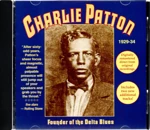 Buy from Amazon Founder of the Delta Blues (Yazoo Reissue)
Critical Assessment & Legacy
Father of the Delta Blues / Founder of the Delta Blues was revolutionary in its scope and presentation. Before this 1970 compilation, Patton's recordings had been scattered across dozens of rare 78s and a few haphazard reissues. Nick Perls's careful mastering and the scholarly liner notes transformed Patton from a collector's obsession into a figure accessible to serious students of American music.
The album's influence extends far beyond the blues world. Robert Johnson, who never met Patton but absorbed his 78s, transformed "Pony Blues" into "Terraplane Blues" and drew on Patton's guitar style for his own masterpieces. Muddy Waters and Howlin' Wolf, both Delta natives, carried Patton's rhythmic intensity to Chicago. Eric Clapton, the Rolling Stones, and countless British Invasion bands traced their lineage back to these recordings.
As one critic noted, calling Patton the "Father" or "Founder" of the Delta Blues is not hyperbole but "flat objectivity"—while others recorded Delta blues before him, none possessed his combined talents as vocalist, guitarist, songwriter, and entertainer, nor his sheer reach of repertoire.
Today, Father of the Delta Blues remains an essential document of American music—the sound of the Mississippi Delta being etched into shellac for the first time, by a man who was simultaneously its greatest practitioner and its most passionate advocate.