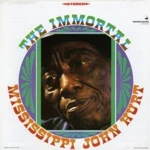
The title on the Vanguard jacket is a kind of courtesy and a kind of claim. The Immortal Mississippi John Hurt reached shops in 1967, months after John Smith Hurt died of a heart attack in Grenada, Mississippi, on November 2, 1966. He was in his seventies. He had been a recording artist, in any public sense, for only two brief seasons of his life: a handful of OKeh 78s cut in Memphis and New York in 1928, then three crowded years after Tom Hoskins found him in Avalon in 1963. Vanguard had already issued Today! while he was alive. This second studio album is the one the living man never held. The word “immortal” can sound like marketing. Listen to the record and it starts to sound like a practical description. The voice is unforced, the thumb is steady, and nothing on the tape is straining to become a monument. That is why it lasts.
Collectors sometimes file the set next to Yazoo’s 1928 Sessions, and the confusion is understandable. Yazoo L-1065 gathers the OKeh sides that made Hurt a rumor among 78 collectors. The Immortal is a different object: a mid-sixties New York studio album, issued as Vanguard VSD-79248 in stereo and VRS-9248 in mono, designed by Jules Halfant, photographed by John Launois, annotated by Dick Waterman, and supervised by the folk singer Patrick Sky. Hurt sings and plays guitar throughout. Sky adds a second guitar on two titles only. There is no bass, no drums, no harmonica player brought in to certify the blues. The entire argument of the record is that a man, a guitar, and a well-chosen book of songs are enough.
How the Sessions Came to Be
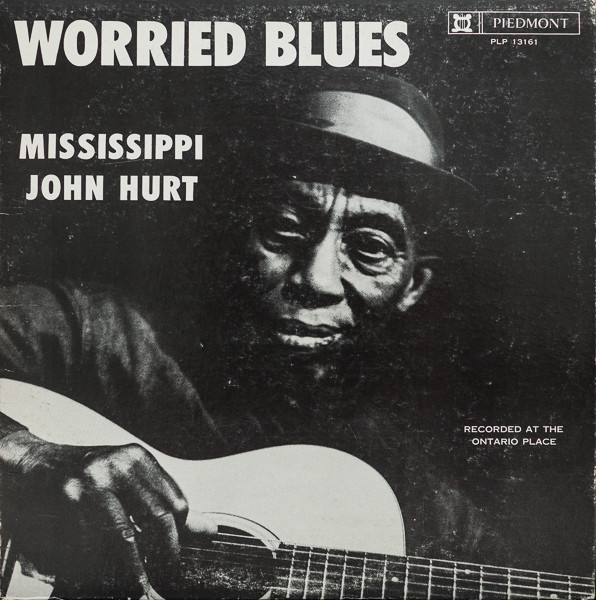
Hurt’s path to Vanguard is part of the larger folk-revival story and also slightly to one side of it. After Hoskins and the Piedmont circle brought him north, he recorded the informal, much-loved Folk Songs and Blues for Piedmont in 1963, played Newport, sat for the Library of Congress, and learned that coffeehouse owners could pay more in a night than a week of farm work. Vanguard, already home to Joan Baez and a growing blues catalog, signed him for proper studio work. Sky, a younger southerner on the same label, became the man in the booth. Accounts of those dates agree on the social weather even when they disagree on the calendar. Hurt liked company. Dave Van Ronk and other Village regulars drifted through. Sky’s job, as later retellings have it, was to clear the room enough for Hurt to settle, then stay out of the way of a style that did not need arranging.
Exact session logs for The Immortal have never been published with the neatness collectors want. Today! appeared in 1966 from the first concentrated Vanguard work. Last Sessions, issued in 1972, is documented as February 1966 at the Manhattan Towers Hotel and July 1966 at Vanguard’s 23rd Street studio. The Immortal sits between those poles: studio performances from the same 1965–66 New York period, held back while Today! had the market, then assembled after the funeral. Some discographies float a 1964 date; the jacket itself is silent. What the ear can say is simpler. These are not hotel-room scraps and not concert tapes. The guitar is close, the voice is dry and present, and the stereo image is the polite, slightly formal Vanguard sound of the mid-sixties—the same house style that made Today! feel like a living room with good microphones.
Jeff Zaraya is credited as engineer on Vanguard’s later Complete Studio Recordings box that contains this album; whether he sat every Immortal reel or the credit covers the campaign, the aesthetic is consistent. Nobody dressed Hurt in echo. Nobody asked him to update the thumb. Sky’s credit reads “production supervised by,” which is honest. You do not produce Mississippi John Hurt in the Phil Spector sense. You get a usable take before the conversation starts again.
Waterman’s liner notes matter because Waterman was not a publicist who had just met the catalog. He managed and photographed revival elders, and he understood that Hurt’s gentleness was not naivety. The face on the cover, in Launois’s photograph, matches the records: amused, unhurried, not performing poverty for the camera.
Who Wrote What, and What That Question Means
The label credits are a period document in themselves. Wynwood Music published the set. BMI is on the dead wax world of the Pitman pressings. “Written-By” splits the program between John Hurt and Traditional, and the split is only a first approximation.
Hurt is credited on the dance and original-leaning pieces: “Buck Dance” (the label also calls it “Stocktime (Buck Dance)”), “Lazy Blues,” “Richland Women Blues” (or “Richland Woman Blues”), “Tender Virgins” (or “Wise and Foolish Virgins (Tender Virgins)”), “Hop Joint,” “I’ve Got the Blues and I Can’t Be Satisfied,” “Keep On Knocking,” and “Stagolee.” Traditional is printed on “Since I’ve Laid My Burden Down,” “Moaning the Blues,” and “Nearer My God to Thee.” “Monday Morning Blues” and “Chicken” sit in the cracks of that accounting, as revival labels often let them.
Anyone who lives with prewar songsters knows the deeper truth. Hurt was a carrier as much as a composer. He absorbed hymns, ballads, ragtime tags, medicine-show jokes, and floating blues verses in Carroll County and then organized them with a right-hand pattern so personal that the song became his even when the plot was public property. “Stagolee” is a traditional ballad. “I’ve Got the Blues and I Can’t Be Satisfied” is his own 1928 OKeh remake. “Richland Woman Blues” is as close as the album comes to a Hurt lyric you would not mistake for anyone else’s. The credits are a legal map. The music is a watershed.
The only other musician is Sky, fingerpicking beside Hurt on “Moaning the Blues” and “Monday Morning Blues.” Sky was a capable player and a tactful one. He does not solo. He thickens the midrange and leaves the vocal and the bass thumb alone. Some listeners find the extra guitar unnecessary. That reaction is a compliment to Hurt. The duo tracks still belong to one man’s time.
The Shape of the Album
Thirteen performances, a little under forty minutes. The sequence is not chronological and not thematic in a textbook way, but it is considered. Side one opens with a spiritual and closes with a hop-joint threat. Side two opens with a Monday hangover and closes with a hymn. In between sit an instrumental dance, a fashion parade, a parable, a 1928 remake, a knocking song, a children’s spelling game, and the longest, darkest ballad Hurt ever put on a Vanguard LP. The record keeps refusing to be only a blues album. That refusal is the point. Hurt was a songster. Vanguard, to its credit, let the hymn and the buck dance sit beside the .44.
What follows is a walk through the sides in order, with the musicians, the writing, and the particular work of each track. The personnel, unless noted, is Hurt alone: vocal and acoustic guitar.
Side One
“Since I’ve Laid My Burden Down” (traditional; 2:43) is the door into the house. The song is older than Hurt’s recording career and wider than any one denomination. It travels as “Glory, Glory,” “When I Lay My Burden Down,” and a dozen close cousins, a spiritual about release that Black and white congregations have shared and reshaped. Hurt does not shout it. He fingers a rolling pattern that could undersell a dance tune and sings as if the burden were already on the ground and he were simply confirming the fact. Starting a posthumous album with a death-haunted hymn could have been ghoulish. It is not, because he recorded it as living devotion, not as a last will. No second guitar. No extra voice. The immortality in the title starts here as something practical: a church song that does not need the singer to stay in the world in order to keep working.
“Moaning the Blues” (traditional; 3:15) is the first of the two Sky appearances. The title promises a conventional 12-bar complaint. What arrives is slower and more vocally ornamental than Hurt’s dance pieces, the guitar leaning on a low string that some ears hear as the “swamp” in a man who is often described as if he had never seen a Delta. Hurt was from Avalon, in the hills east of the cotton flat, and his touch was always closer to ragtime and Piedmont sparkle than to Charley Patton’s stomp. Here the moan is real, but it is a crafted moan. Sky’s guitar is a shadow on the right or left of the stereo picture, depending on the pressing, doubling texture rather than answering phrases. If you came to Hurt through the solo Piedmont tapes, the extra instrument can feel like a visitor in a kitchen. If you accept the session as a New York date with a friend in the room, it plays as hospitality.
“Buck Dance,” labeled “Stocktime (Buck Dance)” on the record itself (John Hurt; 2:02), is almost all hands. Stock-time or buck dancing is body percussion and show dancing from plantation and medicine-show culture, the human equivalent of a drum break. Hurt’s guitar version is a demonstration piece: alternating bass, syncopated treble, the kind of etude younger revival players learned because it teaches independence without teaching despair. He is credited as writer because the arrangement is his workshop, not because buck dancing waited for 1966 to be invented. The shortness is part of the charm. He shows you the step and sits down.
“Lazy Blues” (John Hurt; 1:27) is even briefer, a sketch more than a chapter. The title is accurate. The tempo sits back, the vocal is half spoken, and the guitar declines to develop a second theme. On a lesser album this would be filler. On this one it functions like a breath between the dance and the longest original on the side. Hurt’s Vanguard producers were not afraid of short tracks. They understood that his unit of meaning was the verse and the pattern, not the four-minute radio cut.
“Richland Women Blues,” or “Richland Woman Blues” (John Hurt; 4:00), is the album’s secular masterpiece and one of the essential Hurt performances in any decade. He did not cut it for OKeh in 1928. It belongs to the rediscovery years, a portrait of small-town display that is funny, specific, and quietly erotic without a single blues-club cliché. Rosy red garters, pink hose, turkey-red bloomers “with a rumble seat,” red lipstick, purple rouge, a shingle bob, a shot of good booze: the catalog of clothes is the plot. The refrain tells the sweet daddy to hurry down blowing his horn or arrive too late. Hurt sings it with affection rather than leer. That tone is why the song survives fashion. A younger singer can cover the words and still miss the hospitality in the voice. Guitar and vocal only; the thumb keeps a soft clock while the fingers embroider. Four minutes is long for him. He uses the time to walk around the woman as if around a car he admires.
“Tender Virgins,” also “Wise and Foolish Virgins (Tender Virgins)” (credited to John Hurt; 2:55), returns to scripture by way of the parlor. The parable in Matthew of the bridesmaids who did or did not keep oil in their lamps has been a white and Black sacred piece for generations. Hurt’s title on the jacket is the tender one; the label restores the biblical frame. Crediting him as writer is revival-business shorthand for “his version.” He sings it without pulpit thunder. The guitar could have wandered in from a love song. That blur—sacred story in a dance man’s hands—is the Hurt method in miniature.
“Hop Joint” (John Hurt; 2:07) ends the side in a different room entirely. A hop joint is a juke, a place raising sand. The singer goes looking for a man, mentions a brand-new razor and a .44, and offers the classic split of American violence: cut you if you stay, shoot you if you run. The refrain, “Oh my babe, why don’t you come home,” could be tenderness or a threat, and Hurt does not decide for you. Two minutes is enough. He had lived long enough to know that the hop joint and the church were not separate countries. Side one has already visited both.
Side Two
“Monday Morning Blues” (typically treated as a Hurt song; 3:55) opens the second side with Sky back on second guitar. Hurt had the piece in his working book well before Vanguard. An OKeh attempt at “Monday Morning Blues” from the 1928 Memphis date went unissued; Library of Congress and live tapes from the sixties show him returning to the hangover and the empty-pocket daylight that the title names. The Vanguard take is among the most finished. The extra guitar makes the groove a little more literal, a little less like a man talking to himself. Hurt’s vocal still leads. Monday, in his calendar, is not an abstraction. It is the morning after Saturday’s hop joint and Sunday’s hymn.
“I’ve Got the Blues and I Can’t Be Satisfied” (John Hurt; 2:47) is a conversation with his younger self. In December 1928, for OKeh in New York, he recorded “Got the Blues Can’t Be Satisfied,” a dry, drifting complaint that collectors still rank among the finest prewar guitar records. Nearly forty years later he does not try to reproduce the 78’s hiss or its slightly stiffer meter. The words and the stance return; the hands are those of a man who has played the song on a hundred coffeehouse stages. Satisfaction is still unavailable. The voice is kinder to itself. For listeners who come to The Immortal first, this is simply a strong original. For listeners who own the Yazoo or the Columbia/Legacy 1928 set, it is the album’s most explicit bridge between the two Hurt careers.
“Keep On Knocking” (John Hurt; 2:05) belongs to a large family of knocking songs—doors that will not open, lovers who will not answer, the comic and bitter refrain that Lil Johnson, James “Stump” Johnson, and later New Orleans R&B all touched in different clothes. Hurt’s two minutes are light-footed. He is credited as writer in the Vanguard manner; the knock itself is folk property. What is his is the courtesy of the rhythm. Even a locked door, in his syncopation, sounds neighborly.
“Chicken,” sometimes “The Chicken” or the spelling routine “C-H-I-C-K-E-N” (folk piece associated with Hurt; 1:05), is the record’s grin. It is a children’s lesson and a stage bit, the kind of thing a songster keeps to reset a room after darker material. One minute is exactly the right length. Purists who want every Hurt track to be “Avalon Blues” have always been wrong about this side of him. He liked to please a crowd. Vanguard left the pleasure in.
“Stagolee” (traditional ballad, Hurt’s version credited to him; 5:33) is the center of gravity on side two and the longest track on the LP. The story of Stack Lee Shelton and Billy Lyons, a St. Louis murder in 1895 over a Stetson hat, is one of the core American ballads. Hurt’s 1928 OKeh “Stack O’ Lee Blues” is already a classic: concise, almost sweet of tone, morally clear without lecturing. The Vanguard “Stagolee” gives him room to narrate. Five and a half minutes is an epic in his catalog. He does not turn it into a protest piece or a rock murder ballad. He tells it the way he told it in rooms where people still knew the verses. The guitar pattern is related to the old one and not a copy. If the album has a single performance that justifies the solemn title, it may be this—not because a man dies in the lyric, but because the telling has the patience of someone who knows the story will outlive every singer who borrows it.
“Nearer My God to Thee” (traditional hymn, words by Sarah Flower Adams, 1841; 3:25) closes the record the way a country funeral closes, with a song the whole town already knows. Adams’s poem, usually sung to Lowells Mason’s “Bethany” or other tunes, is Victorian English in origin and thoroughly American in use. It is the hymn popular memory ties to the Titanic, to countless gravesides, to the idea of approach rather than arrival. Hurt plays it as he plays spirituals: no choir, no tremolo of public grief, a guitar line that might have undersold a blues if the words were different. Traditional credit on the label is correct. Ending with it, after “Stagolee” and the chicken-spelling joke, is the same wisdom as beginning with “Burden Down.” The album is framed by the church so that everything in the middle—garters, razors, Monday mornings—can be heard as the life those hymns had to live beside.
Buy This Album
 Buy from Amazon The Immortal Mississippi John Hurt
After the Needle Lifts
Taken as a whole, The Immortal Mississippi John Hurt is not a greatest-hits reconstruction and not a vault-clearing afterthought. It is the second half of a studio portrait that Today! began, issued under a title the company would not have printed while he could still joke about it. The musicianship is deliberately narrow: Hurt, and twice Sky. The writing credits are a mixture of legal convenience and real authorship. The sessions belong to the last New York chapter, produced by a younger friend who knew when to stop helping.
What the record offers blues listeners, especially those who came up on harsher Delta and Chicago sounds, is a reminder that intensity and volume are not the same thing. Hurt’s thumb is a rhythm section. His voice declines to advertise pain and therefore makes certain kinds of pain more believable. He can spell “chicken,” describe a pair of bloomers, shoot a man in a ballad, and put a burden down, and it is all the same musician. That range is the songster’s art. Vanguard, Sky, Waterman, Halfant, and Launois got out of its way often enough for the art to be audible.
The immortality in the title has turned out to be ordinary and specific. Guitarists still learn the buck dance. Singers still borrow the Richland woman. The 1928 “Stack O’ Lee” and this longer “Stagolee” keep each other honest. And the hymns at either end of the album continue to do the work hymns do, whether or not the listener shares the faith. Hurt is not in the room. The room, somehow, is still his.