<
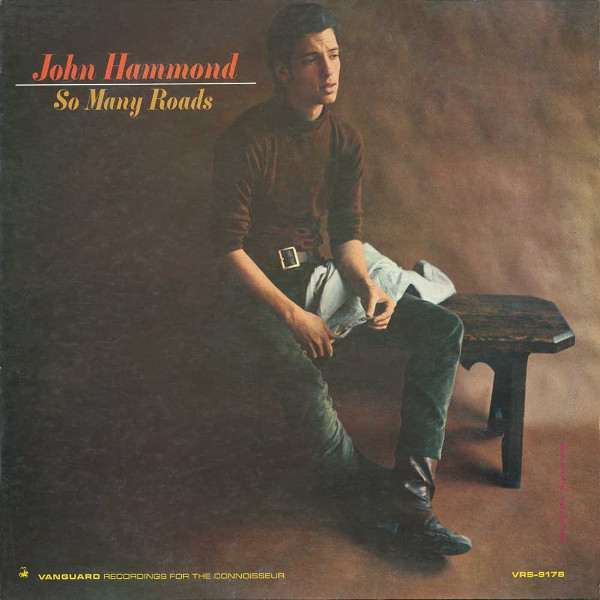
Released in 1965 on Vanguard Records (catalog no. VSD-79178), So Many Roads is the third studio album by John Paul Hammond—son of legendary Columbia Records producer and talent scout John H. Hammond—and the record that stands as his most celebrated and historically significant work. While Hammond had already established himself as one of the first white artists to sing the blues with conviction, So Many Roads transcended his solo acoustic coffeehouse reputation by placing him at the center of one of the most explosive session bands ever assembled.
Recording Sessions & Production
The album was recorded in 1965 in a single three-hour session—a remarkably tight window given the caliber of musicians involved.
The session took place shortly after Ronnie Hawkins's backing band, the Hawks, had struck out on their own. Hammond had seen the Hawks while gigging in Toronto and formed a friendship with the band members. When the group toured America's East Coast, they were able to easily show up at the New York studio.
This was the first time the Hawks had recorded without Ronnie Hawkins.
Hammond wanted the entire Hawks lineup—including bassist Rick Danko and keyboardist Richard Manuel—but Vanguard Records denied his request, insisting that veteran jazz bassist Jimmy Lewis appear instead, having played on Hammond's previous recordings.
Hammond also brought in Chicago blues friends Mike Bloomfield and Charlie Musselwhite to round out the recording.
No individual producer is credited; the album was issued as a Vanguard Records production. Barry Feinstein handled photography, Jules Halfant designed the package, and Barry Kittleson wrote the liner notes.
In the months after the album's release, Hammond was informed that a young Jimi Hendrix—who had recently relocated to New York City—was playing songs from So Many Roads. Hammond went to see him live and immediately introduced him to his father, John H. Hammond.
The Musicians
The session band represents a crossroads of blues and rock history:
-
John P. Hammond — Vocals, guitar, harmonica
-
Robbie Robertson — Guitar, backing vocals (credited on the sleeve as "Jaime R. Robertson"). Then just 21 years old and still years away from fame with The Band, Robertson delivered what Greil Marcus described as "all rough edges, jagged bits of metal ripping through the spare rhythm section."
-
Levon Helm — Drums, backing vocals (credited as "Mark Levon Helm"). Helm's Arkansas swing and spartan simplicity provided the rhythmic foundation.
-
Garth Hudson — Hammond organ, backing vocals (credited as "Eric Hudson"). Hudson added his trademark swirling organ textures.
-
Mike Bloomfield — Piano, guitar, backing vocals. In a notable departure from his usual instrument, Bloomfield played piano on this session rather than guitar.
-
Charlie Musselwhite — Harmonica, backing vocals. The Chicago harp master added his frantic, high-energy blowing to the mix.
-
Jimmy Lewis — Bass guitar, drums. The veteran jazz bassist imposed by Vanguard.
-
Donald Cook — Piano on "Judgement Day" and "So Many Roads, So Many Trains"
Track-by-Track Breakdown
Side One
1. "Down in the Bottom" (3:01)
Songwriter: Willie Dixon
Musicians: John Hammond (vocals, guitar, harmonica), Robbie Robertson (guitar), Mike Bloomfield (piano), Garth Hudson (organ), Jimmy Lewis (bass), Levon Helm (drums), Charlie Musselwhite (harmonica)
The album opens with a Willie Dixon composition delivered as a chugging, locomotive blues. Robertson's guitar on this track has been described as bringing to mind Bob Dylan's long-sought "wild mercury sound"—raw, electric, and unpredictable.
Musselwhite's harp and Helm's drummimg lock into a groove that sets the template for the entire album.
Songwriter: Willie Dixon
Musicians: John Hammond (vocals, guitar, harmonica), Robbie Robertson (guitar), Mike Bloomfield (piano), Garth Hudson (organ), Jimmy Lewis (bass), Levon Helm (drums), Charlie Musselwhite (harmonica)
The album opens with a Willie Dixon composition delivered as a chugging, locomotive blues. Robertson's guitar on this track has been described as bringing to mind Bob Dylan's long-sought "wild mercury sound"—raw, electric, and unpredictable.
2. "Long Distance Call" (3:18)
Songwriter: Muddy Waters (McKinley Morganfield)
Musicians: Same as above
A cover of Muddy Waters's classic, transformed into a showcase of vocal overkill and wildcat guitar.
Hammond's vocal is delivered with his characteristic growl and spittle, while Robertson's guitar slashes through the arrangement with unfettered ferocity.
Songwriter: Muddy Waters (McKinley Morganfield)
Musicians: Same as above
A cover of Muddy Waters's classic, transformed into a showcase of vocal overkill and wildcat guitar.
3. "Who Do You Love?" (3:00)
Songwriter: Ellas McDaniel (Bo Diddley)
Musicians: Same as above
The ubiquitous Bo Diddley number receives a hair-raising treatment. Levon Helm bangs out the beat while Robertson plays a short but electrifying solo.
The track demonstrates the Hawks' intuitive grasp of the Bo Diddley beat—something they would later refine during their years with Dylan.
Songwriter: Ellas McDaniel (Bo Diddley)
Musicians: Same as above
The ubiquitous Bo Diddley number receives a hair-raising treatment. Levon Helm bangs out the beat while Robertson plays a short but electrifying solo.
4. "I Want You to Love Me" (4:05)
Songwriter: Muddy Waters (McKinley Morganfield)
Musicians: Same as above
A slower, more deliberate blues that finds Hammond at his most mannered. One critic noted that on this track he sounds like he's swallowed his tongue, dragging out the word "me" across two counties.
Robertson's guitar is more restrained here, adding stinging fills rather than full-bore soloing.
Songwriter: Muddy Waters (McKinley Morganfield)
Musicians: Same as above
A slower, more deliberate blues that finds Hammond at his most mannered. One critic noted that on this track he sounds like he's swallowed his tongue, dragging out the word "me" across two counties.
5. "Judgment Day" (3:22)
Songwriters: John Hammond & Robert Johnson
Musicians: John Hammond (vocals, guitar), Donald Cook (piano), Robbie Robertson (guitar), Mike Bloomfield (piano/guitar), Garth Hudson (organ), Jimmy Lewis (bass), Levon Helm (drums), Charlie Musselwhite (harmonica)
A Robert Johnson adaptation credited to both Hammond and Johnson. The track features Donald Cook on piano, sharing keyboard duties with Bloomfield. The song is based on Johnson's "If I Had Possession Over Judgment Day," and the full-band treatment gives it a punch that Johnson's solo original could not have achieved.
6. "So Many Roads, So Many Trains" (2:40)
Songwriter: Marshall Paul
Musicians: John Hammond (vocals, guitar), Donald Cook (piano), Robbie Robertson (guitar), Mike Bloomfield (piano), Garth Hudson (organ), Jimmy Lewis (bass), Levon Helm (drums), Charlie Musselwhite (harmonica)
The title track and another appearance by Donald Cook on piano. A mid-tempo blues shuffle that has drawn criticism for Hammond's vocal mannerisms—one reviewer likened his delivery to "an Al Jolson for the Greenwich Village coffeehouse set."
The band's playing, however, is impeccable, with Hudson's organ providing a rich harmonic bed.
Songwriter: Marshall Paul
Musicians: John Hammond (vocals, guitar), Donald Cook (piano), Robbie Robertson (guitar), Mike Bloomfield (piano), Garth Hudson (organ), Jimmy Lewis (bass), Levon Helm (drums), Charlie Musselwhite (harmonica)
The title track and another appearance by Donald Cook on piano. A mid-tempo blues shuffle that has drawn criticism for Hammond's vocal mannerisms—one reviewer likened his delivery to "an Al Jolson for the Greenwich Village coffeehouse set."
Side Two
7. "Rambling Blues" (3:15)
Songwriter: Robert Johnson
Musicians: John Hammond (vocals, guitar, harmonica), Robbie Robertson (guitar), Mike Bloomfield (piano), Garth Hudson (organ), Jimmy Lewis (bass), Levon Helm (drums), Charlie Musselwhite (harmonica)
A full-band reading of Robert Johnson's "Rambling on My Mind." The track is one of two Johnson compositions on the album (alongside "Judgment Day"), reflecting Hammond's deep devotion to the Delta master. The arrangement is tougher and more electric than Johnson's original, with Robertson's guitar adding a rock edge that would have been unthinkable in 1936.
8. "O Yea!" (3:32)
Songwriter: Ellas McDaniel (Bo Diddley)
Musicians: Same as above
The second Bo Diddley cover on the album, taken at a brisk tempo with the full band in overdrive. Hudson's organ is particularly prominent here, swirling around Hammond's vocal and Musselwhite's harp.
Songwriter: Ellas McDaniel (Bo Diddley)
Musicians: Same as above
The second Bo Diddley cover on the album, taken at a brisk tempo with the full band in overdrive. Hudson's organ is particularly prominent here, swirling around Hammond's vocal and Musselwhite's harp.
9. "You Can't Judge a Book by the Cover" (3:28)
Songwriter: Willie Dixon
Musicians: Same as above
Another Willie Dixon composition, this one later becoming a rock standard through Bo Diddley's version. The track is a mid-tempo shuffle with Robertson tossing off short, sharp shards of electricity.
Songwriter: Willie Dixon
Musicians: Same as above
Another Willie Dixon composition, this one later becoming a rock standard through Bo Diddley's version. The track is a mid-tempo shuffle with Robertson tossing off short, sharp shards of electricity.
10. "Gambling Blues" (3:10)
Songwriter: Melvin "Lil' Son" Jackson
Musicians: Same as above
A cover of the Texas bluesman's composition that one critic compared to a cut from the Rolling Stones' Exile on Main Street.
Musselwhite's harmonica is the dominant instrumental voice here, hammering home the melody while Helm beats a savage tattoo on the drums.
Songwriter: Melvin "Lil' Son" Jackson
Musicians: Same as above
A cover of the Texas bluesman's composition that one critic compared to a cut from the Rolling Stones' Exile on Main Street.
11. "Baby, Please Don't Go" (2:19)
Songwriter: Big Joe Williams
Musicians: Same as above
The Big Joe Williams classic receives a taut, two-minute reading. Robertson's guitar is again the focal point, tossing off short, sharp shards of electricity.
Hudson's organ swirls add an atmospheric depth that lifts the track beyond standard blues-bar fare.
Songwriter: Big Joe Williams
Musicians: Same as above
The Big Joe Williams classic receives a taut, two-minute reading. Robertson's guitar is again the focal point, tossing off short, sharp shards of electricity.
12. "Big Boss Man" (2:40)
Songwriters: Luther Dixon & Al Smith
Musicians: Same as above
The album closes with the Jimmy Reed classic. Robertson's guitar is concise and cutting, and the rhythm section locks into a groove that demonstrates why these musicians would soon become the most sought-after backing band in rock. The track ends the album on a note of swaggering confidence.
Buy This Album
Critical Assessment & Legacy
AllMusic's Richie Unterberger awarded the album four out of five stars, calling it "Hammond's most notable mid-'60s Vanguard album" and "one of the first fully realized blues-rock albums."
He noted, however, that the repertoire was heavy on familiar Chicago blues classics and that the interpretations were "so reverent and close to the originals in arrangement"—factors that led some revisionist critics to downgrade the record. But in the context of 1965, when songs like "Down in the Bottom," "Long Distance Call," "Big Boss Man," and "You Can't Judge a Book By the Cover" were not as well known as they would later become, it was "a punchy, well-done set of electric blues with a rock touch."
The album's true significance lies in its role as a Rosetta Stone for understanding why Bob Dylan turned to the Hawks when assembling his first touring rock and roll band.
Robertson's ferocious, unrestrained guitar playing; Helm's Arkansas swing; and Hudson's organ textures all pointed toward the sound that would define Music from Big Pink and The Band just three years later.
For fans of The Band, So Many Roads is an essential document of the Hawks in their raw, pre-Dylan incarnation—an obscure bar band from Toronto playing with a white-knuckle intensity that belies their anonymity. For blues fans, it is one of the best early white electric blues albums, a bridge between the coffeehouse folk-blues revival and the full-throttle blues-rock explosion that would follow. And for John Hammond, it remains the one indispensable album in a long and uneven career—the moment when his passion for the blues found its perfect instrumental counterpart.