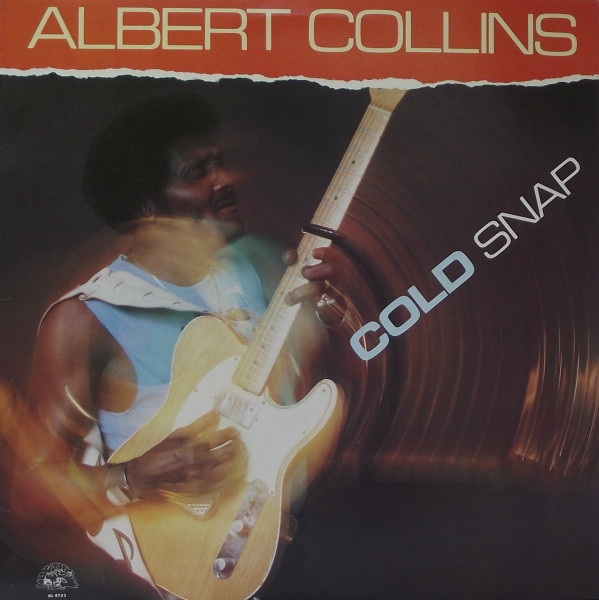
Cold Snap is the seventh studio album by Albert Collins, released in 1986 on Alligator Records. It was his twelfth overall album and his final release with the label before signing to Virgin/Pointblank Records. The album earned a Grammy nomination for Best Traditional Blues Recording and stands as a pivotal work in Collins' career, blending his signature "icy" Texas blues with jazz, funk, and R&B influences through an all-star ensemble.
Recording Sessions & Production
Date: 1986 (specific recording dates not documented in available sources)
Location: Streeterville Studios, Chicago, Illinois
Label: Alligator Records (catalog number AL 4752)
Producers: Albert Collins, Bruce Iglauer, and Dick Shurman — a three-way production team combining the artist's vision, the label founder's expertise, and a respected blues historian's perspective.
Engineer & Mixer: Justin Niebank — who captured and mixed the album with assistance from J. Dawson Miller
Mastering: Tom Coyne at Frankford/Wayne, New York, NY
Cover Design: Skip Williamson
Photography: Paul Natkin (cover and liner photos), Susan Mattes (back cover photos)
Horn Arrangements: The Uptown Horns and Albert Collins
Recording Context: The album was recorded at the height of Collins' career resurgence. In the eighteen months preceding the album, he had performed at Live Aid with George Thorogood (reaching an estimated 1.5 billion viewers), barnstormed across Europe twice, toured Australia, played for 50,000 people at the Texas State House in Austin, received the key to the city of Houston, and recorded the Grammy-winning Showdown! with Robert Cray and Johnny Copeland. As Bruce Iglauer noted in the original liner notes, "It's been a pretty amazing year and a half for Albert Collins."
The Musicians
The album features a "dream team" of blues, jazz, and funk players that Collins assembled for the sessions:
Core Band:
-
Albert Collins — guitar, vocals
-
Mel Brown — rhythm guitar
-
Johnny B. Gayden — bass
-
Morris Jennings — drums, percussion
Keyboards:
-
Jimmy McGriff — organ (tracks 1, 3, 4, 6, 8, 9)
-
Allen Batts — keyboards (tracks 2, 5, 7)
The Uptown Horns:
-
Crispin Cioe — alto and baritone saxophone
-
Arno Hecht — tenor saxophone
-
Bob Funk — trombone
-
Hollywood Paul Litteral — trumpet
Mel Brown was a longtime collaborator who had played with Collins many times at Antone's in Austin. His funky jazz guitar style added a seamless, energetic undercurrent to the sessions.
Jimmy McGriff was a particularly significant addition — a famed jazz organist who had been an idol of Collins' for years and a major influence on his guitar style. They hadn't jammed together in over a decade, but as Collins noted, "Jimmy locked in behind Albert's guitar like they'd played together every day." McGriff appeared courtesy of Milestone Records.
Johnny B. Gayden was the "sparkplug of The Icebreakers," Collins' award-winning touring band, and his bass playing provided the driving lines that propelled the tracks forward.
Morris Jennings was a powerhouse drummer whose extensive session work (including Roy Buchanan's recent Alligator albums) brought dynamic grooves to the album.
The Uptown Horns were a New York-based brass section whose "crackling sound" had been heard with everyone from Robert Plant to James Brown to Twisted Sister. Their arrangements, co-created with Collins, brought an uptown R&B edge to the raw Texas blues.
The Sound
Cold Snap represents a deliberate expansion of Collins' sound beyond the raw electric Texas blues that had defined his earlier work. The addition of jazz organ (McGriff), funk rhythm guitar (Brown), and a full horn section created a richer, more polished production than his previous Alligator albums. Critics noted this shift — Robert Christgau called it "an obvious attempt by Alligator to win for Collins a Grammy," while The Globe and Mail observed that "Jimmy McGriff and the Uptown Horns contribute more smooth edges to music that has the usual Collins power but not the usual Collins urgency."
The album maintains Collins' signature "icy" guitar tone — sharp, staccato Telecaster notes that earned him the nickname "The Master of the Telecaster" and "The Iceman" — but frames it within a more sophisticated, jazz-influenced context. The result is a hybrid sound that blurs the lines between blues, rock, funk, and jazz.
Track-by-Track Breakdown
Side A
1. "Cash Talkin' (The Workingman's Blues)" (4:30)
-
Songwriter: Odell McLeod
-
Recording: 1986, Streeterville Studios, Chicago
-
Musicians: Albert Collins (guitar, vocals), Mel Brown (rhythm guitar), Johnny B. Gayden (bass), Morris Jennings (drums), Jimmy McGriff (organ), The Uptown Horns (Crispin Cioe, Arno Hecht, Bob Funk, Hollywood Paul Litteral)
-
Notes: The album opens with a cover of Odell McLeod's composition — a blues about the struggles of working-class life. The track establishes the album's expanded sound immediately: McGriff's organ swells beneath Collins' piercing guitar, while the Uptown Horns add brassy punctuation. Collins' vocal is world-weary but defiant — the workingman's blues delivered with the authority of someone who has lived it. The track sets the template for the album: Texas blues grit meets Chicago R&B polish.
2. "Bending Like a Willow Tree" (4:23)
-
Songwriter: Lowell Fulson
-
Recording: 1986, Streeterville Studios, Chicago
-
Musicians: Albert Collins (guitar, vocals), Mel Brown (rhythm guitar), Johnny B. Gayden (bass), Morris Jennings (drums), Allen Batts (keyboards)
-
Notes: A cover of Lowell Fulson's song, this track features Allen Batts on keyboards rather than McGriff, giving it a slightly different texture — more piano-driven and less organ-drenched than the McGriff tracks. The title metaphor — bending like a willow tree — suggests resilience and flexibility in the face of life's storms. Collins' guitar bends and weaves through the arrangement, demonstrating the fluidity that the title describes. The track is a mid-tempo blues with a relaxed, almost jazzy feel, showcasing Collins' ability to play with subtlety as well as power.
3. "A Good Fool Is Hard to Find" (4:15)
-
Songwriters: Gloria Houston, Nina Shackleford
-
Recording: 1986, Streeterville Studios, Chicago
-
Musicians: Albert Collins (guitar, vocals), Mel Brown (rhythm guitar), Johnny B. Gayden (bass), Morris Jennings (drums), Jimmy McGriff (organ), The Uptown Horns
-
Notes: A playful blues that flips the gender of the traditional "good woman is hard to find" trope. Collins' vocal is sly and knowing, his guitar adding wry commentary between phrases. McGriff's organ is particularly prominent here, adding a churchy, gospel-tinged flavor that complements the song's humorous tone. The Uptown Horns provide punchy, call-and-response figures that make the track feel like a party. This is Collins at his most charming — a bluesman who could make you laugh while he made you dance.
4. "Lights Are On but Nobody's Home" (5:59)
-
Songwriter: Albert Collins (original composition)
-
Recording: 1986, Streeterville Studios, Chicago
-
Musicians: Albert Collins (guitar, vocals), Mel Brown (rhythm guitar), Johnny B. Gayden (bass), Morris Jennings (drums), Jimmy McGriff (organ), The Uptown Horns
-
Notes: At nearly six minutes, the longest track on the album and one of Collins' most popular compositions. The title is a classic blues metaphor for being spaced out, intoxicated, or emotionally absent — "the lights are on but nobody's home." Collins' original composition gives him room to stretch out instrumentally, with extended guitar solos that demonstrate his "icy" technique at its most expansive. McGriff's organ provides a swirling, psychedelic backdrop, while the horns add dramatic accents. The track builds gradually, with Collins' guitar becoming more intense and distorted as the song progresses. This is the album's centerpiece — a slow-burning blues that showcases everything that made Collins unique: the piercing tone, the sustained bends, the conversational phrasing that made his guitar sound like a voice.
5. "I Ain't Drunk" (4:06)
-
Songwriter: Joe Liggins
-
Recording: 1986, Streeterville Studios, Chicago
-
Musicians: Albert Collins (guitar, vocals), Mel Brown (rhythm guitar), Johnny B. Gayden (bass), Morris Jennings (drums), Allen Batts (keyboards)
-
Notes: A cover of Joe Liggins' song, this track became one of Collins' most popular and enduring numbers. The lyrics — "I ain't drunk, I'm just drinkin'" — are a classic blues denial, delivered with Collins' characteristic wry humor. The track is an uptempo shuffle with a driving rhythm that makes it impossible to sit still. Allen Batts' keyboards provide a bright, piano-bar feel that contrasts with the organ-drenched tracks. Collins' guitar solo is a masterclass in economic phrasing — every note placed with precision, nothing wasted. The song became a staple of Collins' live shows and is often cited as a highlight of his repertoire.
Side B
6. "Hooked on You" (4:23)
-
Songwriter: John George Brady
-
Recording: 1986, Streeterville Studios, Chicago
-
Musicians: Albert Collins (guitar, vocals), Mel Brown (rhythm guitar), Johnny B. Gayden (bass), Morris Jennings (drums), Jimmy McGriff (organ), The Uptown Horns
-
Notes: A blues about addiction — not to drugs or alcohol, but to a person. "I'm hooked on you, baby, like a junkie to his dope" — the metaphor is direct and effective. McGriff's organ is soulful and church-like, adding a spiritual dimension to the secular subject. The Uptown Horns provide a smooth, R&B-flavored backing that makes the track feel more like a Stax Records production than a Chicago blues session. Collins' vocal is pleading and vulnerable, a departure from his usual tough-guy persona. The guitar work is restrained, with Collins choosing to serve the song rather than showcase his technique.
7. "Too Many Dirty Dishes" (6:52)
-
Songwriter: John Newton
-
Recording: 1986, Streeterville Studios, Chicago
-
Musicians: Albert Collins (guitar, vocals), Mel Brown (rhythm guitar), Johnny B. Gayden (bass), Morris Jennings (drums), Allen Batts (keyboards)
-
Notes: The album's longest track and one of its most unusual — a blues about domestic drudgery that became a fan favorite. The Chicago Tribune wrote: "The skeptical should head directly to 'Too Many Dirty Dishes', where Collins' riffs seem to be literally scrubbing the pots and pans." The song is a slow, grinding blues with Collins' guitar mimicking the repetitive motion of washing dishes — a brilliant example of his ability to make his instrument describe physical actions. The lyrics are wry and domestic, a departure from the usual blues themes of travel and romantic betrayal. Allen Batts' keyboards add a subtle, almost cocktail-lounge atmosphere that makes the track feel intimate and conversational. At nearly seven minutes, the song allows for extended instrumental exploration, with Collins' guitar gradually building in intensity until it sounds like the dishes are being smashed rather than washed.
8. "Snatchin' It Back" (3:33)
-
Songwriters: Clarence Carter, George Jackson
-
Recording: 1986, Streeterville Studios, Chicago
-
Musicians: Albert Collins (guitar, vocals), Mel Brown (rhythm guitar), Johnny B. Gayden (bass), Morris Jennings (drums), Jimmy McGriff (organ), The Uptown Horns
-
Notes: At 3:33, the shortest track on the album — a compact, high-energy burst of funk-blues. The song was originally recorded by Clarence Carter and became a Southern soul classic. Collins' version brings his Texas guitar fire to the material, with McGriff's organ and the Uptown Horns creating a dense, propulsive groove. The title refers to reclaiming something that was taken — a relationship, dignity, money — and Collins' vocal is defiant and triumphant. The track is a reminder that Collins could play funk as convincingly as blues, and the horn section's tight arrangements show the influence of James Brown's bands. This is the album's most danceable moment — music designed to fill the floor.
9. "Fake I.D." (3:46)
-
Songwriter: Albert Collins (original composition)
-
Recording: 1986, Streeterville Studios, Chicago
-
Musicians: Albert Collins (guitar, vocals), Mel Brown (rhythm guitar), Johnny B. Gayden (bass), Morris Jennings (drums), Jimmy McGriff (organ), The Uptown Horns
-
Notes: The album's closer and a Collins original — a blues about deception and false identity. The "fake I.D." is both literal (a counterfeit identification card) and metaphorical (a false persona, a dishonest relationship). Collins' guitar is particularly sharp and biting on this track, as if the very notes are cutting through deception. McGriff's organ adds a noir-ish, cinematic quality, while the horns provide dramatic stabs that heighten the tension. The track ends the album on a note of unresolved mystery — the blues as detective story, with Collins as the investigator who knows he's being lied to but can't prove it. At under four minutes, it's a concise, powerful statement that leaves the listener wanting more.
Buy the Album
 Buy from Amazon>
Critical Reception & Legacy
Cold Snap received generally positive reviews, though critics were divided on the slicker production approach. AllMusic's Thom Owens described it as taking "a stronger R&B direction with slicker production compared to Collins' prior Alligator releases," noting that "this approach did not suit him particularly well, as he excels more at raw blues instrumentation than singing." However, Owens commended Collins for delivering "a number of gripping solos that elevated the material and prevented the record from becoming a major disappointment."
Robert Christgau assigned the album a B grade, acknowledging that the "expansive big-band arrangement — featuring organist Jimmy McGriff, guitarist Mel Brown, and the Uptown Horns — proved effective overall." He observed, however, that Collins lacked "the powerful, built-in vocal presence of singers like Jimmy Witherspoon or Jimmy Rushing to fully command such a setup," though he suggested the polished sound might appeal to Grammy voters.
Other critics were more enthusiastic. The Providence Journal-Bulletin declared that "what really strikes the listener this time is the masterful, ice-blue singing — tasty as a snow cone and brutal as frostbite — and the wry, semi-detached lyrics." The St. Petersburg Times deemed it "a hefty dose of Texas-style blues, augmented by the sounds of Chicago's south side."
The album earned a Grammy nomination for Best Traditional Blues Recording in 1987 (though it lost to the competition that year). It also received a W.C. Handy Award nomination for Contemporary Blues Album of the Year. Commercially, it sold over 100,000 copies in the United States — a significant achievement for an independent blues release in the 1980s.
Cold Snap was Collins' seventh and final album for Alligator. He signed with Virgin/Pointblank Records in 1991, hoping for greater commercial reach. He recorded two studio albums for them — Iceman (1991) and Live '92/'93 (released posthumously) — before his death from lung cancer on November 24, 1993, at age 61.
The album remains a crucial document of Collins' career — the moment when the "Master of the Telecaster" expanded his sound beyond raw Texas blues into a more sophisticated, jazz- and R&B-influenced territory. While some fans prefer the stripped-down intensity of his earlier Alligator work, Cold Snap demonstrates that Collins was capable of growth and experimentation even in his mid-50s. The album's influence can be heard in the work of subsequent blues artists who have incorporated horn sections and jazz elements into their sound, and it stands as a testament to Collins' status as one of the most innovative and influential electric blues guitarists of the 20th century.