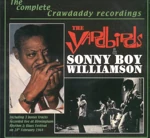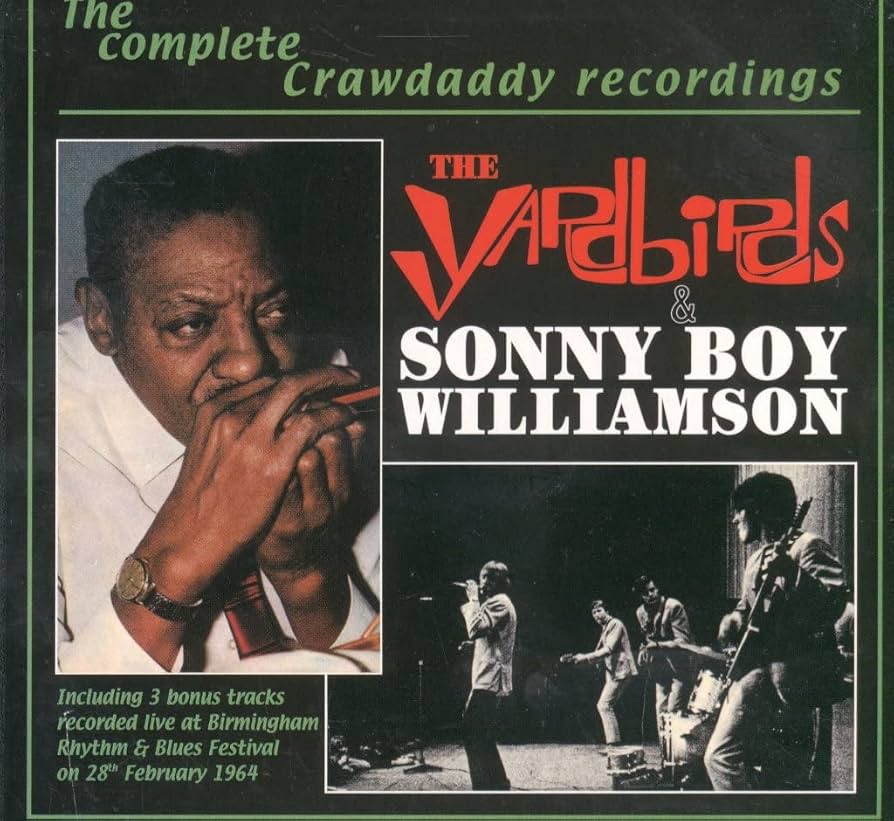
Sonny Boy Williamson & the Yardbirds is a landmark 1966 live album that captures a pivotal moment in music history — the collision of American Delta blues and British rock 'n' roll. Recorded at the Crawdaddy Club in Richmond, Surrey on December 8, 1963, it features Chicago blues legend Sonny Boy Williamson II backed by a young English band whose members included a 18-year-old Eric Clapton on lead guitar. The album was not released until January 1966 in the UK (Fontana Records) and February 1966 in the US (Mercury Records) — over two years after the recording — by which time the Yardbirds had become chart-topping stars, making the album what critic Richie Unterberger called "an exploitative album."
Recording Sessions & Production
Date: December 7–8, 1963 (with additional material recorded February 28, 1964)
Location: Crawdaddy Club, Richmond Athletic Ground, Richmond-upon-Thames, Surrey, England (with a rehearsal/pre-recording session at the Star Hotel, Croydon on December 7)
Label: Fontana Records (UK, January 7, 1966) / Mercury Records (US, February 7, 1966)
Producer: Horst Lippmann (supervised, co-producer) — German music impresario who, with Fritz Rau, had organized the American Folk Blues Festival tours in Europe. Lippmann arranged for Williamson's extended UK club tour after the second festival and financed the recording.
Project Coordinator: Giorgio Gomelsky — the Yardbirds' manager and producer who had previously managed the Rolling Stones and founded the Crawdaddy Club. Gomelsky was the crucial link between Williamson and the Yardbirds, having promoted some of the early American Folk Blues Festivals in England. As he recalled in a 2004 interview, "I took him in my car and we went to all these places where there were blues bands... I convinced [engineer] Phillip Wood to come to the next venue... I did a big thing on February 28th (which was my birthday) in 1964, in Birmingham."
Engineer: Keith Grant — a BBC engineer who worked at Olympic Sound Studios in London. Gomelsky convinced Grant to "drag half the studio out of the synagogue and to bring it down to my place in Richmond to record The Yardbirds with Sonny Boy Williamson, and he set up his control room in the kitchen."
Recording Context: The album was born from the second annual American Folk Blues Festival tour in 1963. Williamson had been one of the standout performers, and at the conclusion of the festival, he remained in England for an extensive club tour. Gomelsky, who had seen the Yardbirds' potential, arranged for them to back Williamson at several dates between December 1963 and February 1964. The December 8 recording at the Crawdaddy Club captured the full concert — both the Yardbirds' solo set and their backing of Williamson.
The "Exploitative" Release
The album's delayed release was a commercial strategy. By January 1966, the Yardbirds had scored a string of Top 40 hits including "For Your Love," "Heart Full of Soul," and "Evil Hearted You." The album cover prominently featured Williamson's name and photo, but used a more recent image of the Yardbirds with Jeff Beck (who had replaced Clapton in March 1965) in the foreground — despite Clapton being the guitarist on the recording. As Wikipedia notes, "Although Williamson's photo and name were prominently displayed on the album cover, a more recent photo of the Yardbirds with Jeff Beck (who replaced Clapton in March 1965) in the foreground was used."
The Musicians
Sonny Boy Williamson II (Aleck "Rice" Miller) — vocals, harmonica
The Yardbirds:
-
Eric Clapton — lead guitar
-
Chris Dreja — rhythm guitar
-
Paul Samwell-Smith — bass
-
Jim McCarty — drums
-
Keith Relf — handclapping, shouting, foot-tapping (occasional harmonica)
Sonny Boy Williamson II was already a blues legend by 1963. Born Aleck Miller in Glendora, Mississippi around 1912, he had adopted the name "Sonny Boy Williamson" (the original being John Lee Williamson, who was murdered in 1948) and built a career as one of the most distinctive harmonica players and vocalists in blues history. His songs — "Don't Start Me Talkin'," "Help Me," "Checkin' Up on My Baby," "Bring It On Home" — became standards. He had toured Europe with the American Folk Blues Festival and developed a taste for the continent, having a custom-made two-tone suit, bowler hat, matching umbrella, and attaché case for his harmonicas tailored for him in London. He would die of a heart attack on May 25, 1965, less than two years after this recording, making this album one of his final documents.
Eric Clapton was just 18 years old at the time of this recording, having joined the Yardbirds in October 1963 to replace Top Topham. This album captures him at his most raw and elemental — "extremely green" and "tentative" by his own later standards, but already displaying the blues obsession that would define his career. The famous first meeting between Clapton and Williamson set the tone for their relationship: Clapton, eager to impress, asked "Isn't your real name Rice Miller?" Williamson "slowly pulled out a small penknife and glared at me. It went downhill from there."
The Rehearsal Disaster: According to Chris Dreja, the band spent "a very cold afternoon in the club working out stops, breaks, numbers and tempos. Then we recorded that night with Sonny Boy getting more and more pissed [drunk on Scotch whiskey that he carried with him]. When we got on stage it was nothing like the rehearsal, so none of the songs on the album have the band starting or finishing at the same time."
Williamson's Verdict: The album is famously associated with Williamson's devastating assessment of British blues musicians: "Those English kids want to play the blues real bad, and they do." The quote is often attributed to the Yardbirds specifically, though Williamson may have been referring to British backing bands in general. As David French noted in his biography of Keith Relf, "the band [were] giving it their best but sounding extremely tentative behind Williamson (generally coming in one member at a time as each song begins). If anything, the recording illustrates the divide between real American blues and the thinned down and revved up version the British R&B bands had evolved."
Track-by-Track Breakdown
Original Fontana UK Release (January 1966)
Side A
1. "Bye Bye Bird" (2:23)
-
Songwriters: Willie Dixon, Sonny Boy Williamson II
-
Recording: December 8, 1963, Crawdaddy Club, Richmond
-
Musicians: Sonny Boy Williamson II (vocals, harmonica), Eric Clapton (lead guitar), Chris Dreja (rhythm guitar), Paul Samwell-Smith (bass), Jim McCarty (drums)
-
Notes: The album opens with a Williamson original co-written with Willie Dixon. The song is a blues farewell — "bye bye bird" being a euphemism for death or departure. Williamson's harmonica is piercing and authoritative, while the Yardbirds struggle to keep up with his unpredictable timing. Clapton's guitar is already distinctive — clean-toned but searching, trying to find the right notes to complement Williamson's vocal. The track is short and punchy, establishing the album's raw, live atmosphere.
2. "Mister Downchild" (3:56)
-
Songwriter: Sonny Boy Williamson II
-
Recording: December 8, 1963, Crawdaddy Club, Richmond
-
Musicians: Sonny Boy Williamson II (vocals, harmonica), Eric Clapton (lead guitar), Chris Dreja (rhythm guitar), Paul Samwell-Smith (bass), Jim McCarty (drums)
-
Notes: A Williamson original that showcases his storytelling ability. "Mister Downchild" is a character study — the downchild being a man who has lost everything and is at the bottom of the world. Williamson's vocal is world-weary and knowing, his harmonica adding commentary between verses. The Yardbirds' backing is more confident here, with Clapton finding spaces for brief, tasteful fills. The track's nearly four-minute length allows for extended harmonica work, with Williamson demonstrating why he was considered one of the greatest blues harp players of all time.
3. "23 Hours Too Long" (5:04)
-
Songwriter: Sonny Boy Williamson II
-
Recording: December 8, 1963, Crawdaddy Club, Richmond
-
Musicians: Sonny Boy Williamson II (vocals, harmonica), Eric Clapton (lead guitar), Chris Dreja (rhythm guitar), Paul Samwell-Smith (bass), Jim McCarty (drums)
-
Notes: At over five minutes, the longest track on the original album. The title refers to a relationship that has lasted one hour too long — "23 hours too long" being Williamson's hyperbolic way of saying it's over. The song is a slow blues with a dragging, heavy groove that tests the Yardbirds' ability to play behind a master. Clapton's guitar is tentative but occasionally inspired, finding moments of genuine blues feeling. Williamson's harmonica is the star here — long, sustained notes that bend and cry, creating a sound that is almost vocal in its expressiveness. The track demonstrates the gap between American blues maturity and British youth — Williamson sounds like a man who has lived every word, while the Yardbirds sound like talented students trying to keep up.
4. "Out on the Water Coast" (3:00)
-
Songwriter: Sonny Boy Williamson II
-
Recording: December 8, 1963, Crawdaddy Club, Richmond
-
Musicians: Sonny Boy Williamson II (vocals, harmonica), Eric Clapton (lead guitar), Chris Dreja (rhythm guitar), Paul Samwell-Smith (bass), Jim McCarty (drums)
-
Notes: A travel blues with nautical imagery — "out on the water coast" suggesting both literal travel and the metaphorical journey of the blues. Williamson's vocal is more relaxed here, almost conversational, as if he's telling a story to friends. The Yardbirds' backing is appropriately subdued, with Clapton's rhythm guitar providing a steady pulse. The track is one of the album's more successful collaborations — the band sounds comfortable, and Williamson seems to be enjoying himself.
5. "Baby Don't Worry" (4:28)
-
Songwriter: Sonny Boy Williamson II
-
Recording: December 8, 1963, Crawdaddy Club, Richmond (solo performance, minimal Yardbirds accompaniment)
-
Musicians: Sonny Boy Williamson II (vocals, harmonica) [with minimal or no Yardbirds backing]
-
Notes: Essentially a solo performance by Williamson, with little or no Yardbirds participation. The track is a tender blues reassurance — "Baby don't worry, everything's gonna be alright." Williamson's voice is warm and comforting, his harmonica adding gentle melodic fills. This is the blues as lullaby, a side of Williamson rarely heard on his more aggressive recordings. The absence of the band allows the listener to focus entirely on Williamson's artistry — his vocal control, his harmonica technique, his ability to convey deep emotion with minimal accompaniment. Some reissues omit this track, as it features "little or no Yardbirds backing."
Side B
6. "Pontiac Blues" (3:45)
-
Songwriter: Sonny Boy Williamson II
-
Recording: December 8, 1963, Crawdaddy Club, Richmond
-
Musicians: Sonny Boy Williamson II (vocals, harmonica), Eric Clapton (lead guitar), Chris Dreja (rhythm guitar), Paul Samwell-Smith (bass), Jim McCarty (drums)
-
Notes: A blues named after the Pontiac automobile — a symbol of American mobility and freedom. The song is an uptempo boogie that gives the Yardbirds a chance to show their energy. Clapton's guitar is more prominent here, with brief solos that hint at the player he would become. Williamson's harmonica drives the track with a propulsive, train-like rhythm. The song became one of the album's better-known tracks and was included on various compilations. The interplay between Williamson's harp and Clapton's guitar is one of the album's most successful moments — two generations of blues musicians finding common ground.
7. "Take It Easy Baby" (4:09)
-
Songwriter: Sonny Boy Williamson II
-
Recording: December 8, 1963, Crawdaddy Club, Richmond (version 2; version 1 recorded December 7 at Star Hotel, Croydon)
-
Musicians: Sonny Boy Williamson II (vocals, harmonica), Eric Clapton (lead guitar), Chris Dreja (rhythm guitar), Paul Samwell-Smith (bass), Jim McCarty (drums)
-
Notes: The title is Williamson's advice to himself — and to the listener — to slow down, to take it easy, to not let life rush by too fast. The song is a medium-tempo blues with a relaxed, almost lazy groove. Williamson's vocal is conversational and intimate, his harmonica adding commentary between phrases. The Yardbirds' backing is appropriately restrained, with Clapton's guitar providing subtle fills rather than flashy solos. This is the blues as meditation — music that encourages the listener to slow down and listen. The track exists in two versions from the sessions; the Crawdaddy Club version (version 2) is the one included on the original album.
8. "I Don't Care No More" (3:18)
-
Songwriter: Sonny Boy Williamson II
-
Recording: December 8, 1963, Crawdaddy Club, Richmond (solo performance, minimal Yardbirds accompaniment)
-
Musicians: Sonny Boy Williamson II (vocals, harmonica) [with minimal or no Yardbirds backing]
-
Notes: Another essentially solo performance by Williamson, similar to "Baby Don't Worry." The title — "I Don't Care No More" — suggests resignation and emotional exhaustion, but Williamson's delivery is more defiant than defeated. This is the blues as declaration of independence — the narrator has been pushed too far and is now beyond caring. Williamson's harmonica is particularly effective here, with long, wailing notes that express the inexpressible. Like "Baby Don't Worry," this track has been omitted from some reissues due to the minimal Yardbirds presence.
9. "Do the Weston" (4:00)
-
Songwriter: Sonny Boy Williamson II (also known as "Western Arizona")
-
Recording: December 8, 1963, Crawdaddy Club, Richmond (version 2; version 1 recorded December 7 at Star Hotel, Croydon)
-
Musicians: Sonny Boy Williamson II (vocals, harmonica), Eric Clapton (lead guitar), Chris Dreja (rhythm guitar), Paul Samwell-Smith (bass), Jim McCarty (drums)
-
Notes: The album's closer and one of its most energetic tracks. "Do the Weston" (also titled "Western Arizona" on some releases) is a dance blues — Williamson instructing the listener on how to do a particular dance. The song is uptempo and celebratory, with the Yardbirds finally sounding comfortable and confident. Clapton's guitar takes a more prominent role, with solos that show his growing confidence. The track ends the album on a note of communal joy — the blues not as a music of sadness but as a music of celebration and togetherness. Like "Take It Easy Baby," this exists in two versions from the sessions.
The Yardbirds' Solo Set (Not on Original Album)
The December 8 recording also captured the Yardbirds' solo set, performed without Williamson. These tracks have appeared on various reissues and box sets:
-
"Smokestack Lightning"
-
"Let It Rock"
-
"Honey in Your Hips"
-
"I Wish You Would"
-
"You Can't Judge a Book by Its Cover"
-
"Who Do You Love?"
These tracks are valuable documents of the early Yardbirds — a band still finding its voice but already displaying the "rave-up" energy that would become their trademark. "Smokestack Lightning" and "I Wish You Would" would become staples of their live repertoire, while "Honey in Your Hips" shows Keith Relf's vocal range.
Additional Recordings (February 28, 1964)
A second recording session took place at Birmingham Town Hall on February 28, 1964, Gomelsky's birthday. This produced additional material that has appeared on various reissues:
-
"Slow Walk" (only the last minute survives)
-
"Highway 49" (a.k.a. "Pontiac Blues")
-
"My Little Cabin"
-
"Bye Bye Bird" (solo version)
Critical Reception & Legacy
AllMusic's Richie Unterberger gave the album three out of five stars, calling it "an exploitative album" but noting that "Sonny Boy Williamson sings well" and that the album should be seen as a Williamson release "in the manner of the sides the Beatles cut in Hamburg supporting Tony Sheridan." He described the Yardbirds' and Clapton's playing as "extremely green" and "tentative." The album did not chart in either the UK or US.
David French, in his biography of Keith Relf, was more critical: "the band [were] giving it their best but sounding extremely tentative behind Williamson (generally coming in one member at a time as each song begins). If anything, the recording illustrates the divide between real American blues and the thinned down and revved up version the British R&B bands had evolved."
However, Chris Dreja offered a more nuanced perspective in a 2008 interview: "Well, he was right, really. The thing was, when artists like Sonny Boy were brought over here by the National Jazz Federation, it was a very special time, because those black artists weren't used to playing for white audiences in America. So, coming over to Europe and being backed by groups like The Yardbirds and The Animals, although maybe badly at times, but with a lot of spirit, it was not only a coup for us, but it also helped the black musicians back in America to get some recognition. It's wasn't until the white Americans got turned on to bands like The Yardbirds and The Rolling Stones, that they even had a clue where the music came from. That's the whole irony of it."
The album's historical significance is immense:
-
Eric Clapton's earliest surviving recordings — This is the first document of the guitarist who would become one of the most influential musicians in rock history. While his playing is raw and tentative, the seeds of his later style are audible.
-
The British Blues Boom — The album captures the moment when young British musicians discovered American blues and began the process of translating it for a new audience. The "failure" of the Yardbirds to match Williamson's mastery is itself instructive — it shows the gap that existed and the journey British musicians would undertake to close it.
-
Sonny Boy Williamson's final documents — Williamson died in May 1965, before the album's release. This recording captures him near the end of his life, still performing with undiminished power and authority.
-
The Crawdaddy Club — The album documents the venue that launched the Rolling Stones and the Yardbirds, a crucial location in British rock history.
The album has been reissued numerous times, with various combinations of the original tracks, the Yardbirds' solo set, and the February 1964 Birmingham recordings. The 2004 Yardbirds Story box set and the 2015 remaster on Charly Records have attempted to present the complete picture of these historic sessions.
As Chris Dreja reflected: "Obviously some of it's a bit cringey in terms of the music (laughs). The backing is, to my mind, a very young and raw band, but it was an interesting combination. I mean, Sonny Boy is actually outstanding on that album, even though the crowd wasn't that interested in an 'old black geezer' blowing a harmonica. They wanted to get back to The Yardbirds' rave-ups, and sort of blow their tops off."
Sonny Boy Williamson & the Yardbirds is not a great album in the conventional sense. It is a document — a recording of a moment when two musical worlds collided, when a blues master met a group of eager students, when the past and future of popular music shared a stage for one brief, chaotic, beautiful evening. The album's value lies not in perfection but in authenticity — the sound of musicians learning, struggling, and occasionally transcending their limitations to create something genuine and alive.