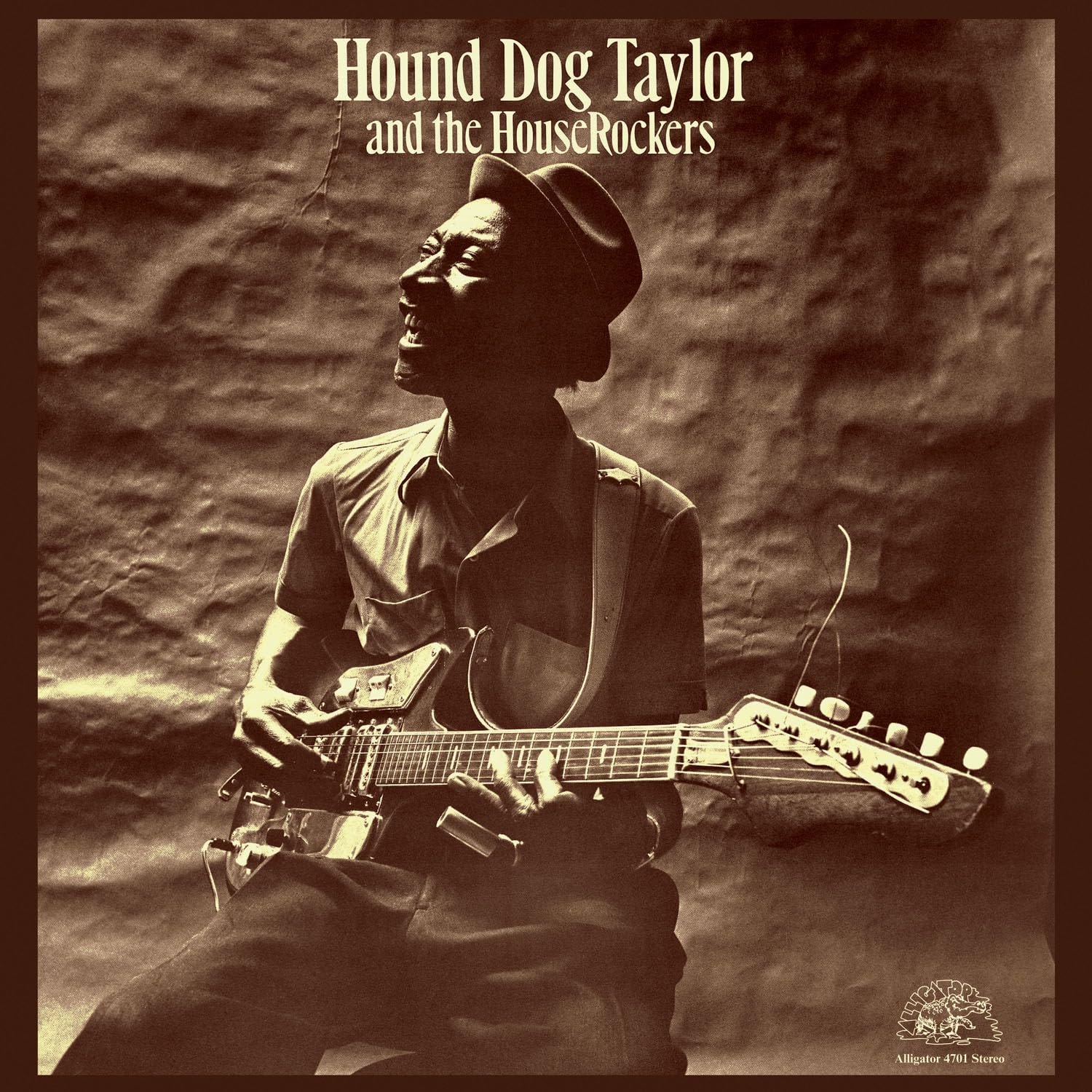
Hound Dog Taylor and the HouseRockers is the explosive 1971 debut album by Hound Dog Taylor (Theodore Roosevelt Taylor) and his band, released on the newly founded Alligator Records. It is the album that launched both an artist's career and an entire record label — a raw, raucous document of Chicago's South Side blues scene that remains one of the most electrifying blues recordings ever made. The album was recorded with a $2,500 inheritance and a dream, and it became the foundation of what is now the largest independent blues label in the world.
Recording Sessions & Production
Dates: May 25 and June 1971
Location: Sound Studios, Chicago, Illinois
Label: Alligator Records (catalog number AL 4701) — the very first release on the label
Producer: Bruce Iglauer — a 23-year-old white hippie and former shipping clerk at Delmark Records who had been so moved by Hound Dog Taylor's live performances that he started his own label specifically to record him. Iglauer co-produced with Wesley Race and Hound Dog Taylor himself.
Engineer: Not documented in available sources, but the recording was done at Sound Studios, a professional facility in Chicago.
Cover Photos: Peter Amft
Liner Notes: Wesley Race
The Alligator Records Story: Iglauer had been working at Delmark Records and the Jazz Record Mart in Chicago, where he met Bob Koester, who became his mentor. He had been going to South Side blues clubs and kept running into Hound Dog Taylor. When he finally saw Taylor's Sunday afternoon gig at Florence's Lounge with his full band — Brewer Phillips on second guitar and Ted Harvey on drums, playing on the floor with no bandstand, people dancing in the aisles, shooting dice outside — he was thunderstruck. He tried to convince Delmark to sign Taylor, but Koester passed. So Iglauer used $2,500 inherited from his grandfather to start Alligator Records. As he recalled: "When I approached Hound Dog about recording, he'd already seen me 50 times at his gigs... He didn't express any concerns that I had never run a record company before, and that I had no distribution and I was the whole company. He didn't have other opportunities, so he just said, 'I'm with you, baby, I'm with you.' And then we shook hands."
Recording Approach: The album was recorded live and direct — two guitars and drums, no bass, no overdubs, no studio polish. Iglauer's philosophy was to capture the band as they sounded in the clubs: raw, raucous, and ready to party. The sessions were spread over two days in May and June 1971, with the band playing essentially as they would at Florence's Lounge.
The Musicians
-
Hound Dog Taylor (Theodore Roosevelt Taylor) — vocals, lead guitar, slide guitar
-
Brewer Phillips — second guitar
-
Ted Harvey — drums
Hound Dog Taylor was born in Mississippi in 1915 (or 1916, or 1917 — even his birth date was uncertain). He didn't start playing guitar until he was 20, worked as a sharecropper by day and played Delta juke joints by night. After a terrifying encounter with the Ku Klux Klan in 1942 — they burned a cross in his yard — he moved north to Chicago. He played Maxwell Street, competing for tips with Muddy Waters and Robert Nighthawk, worked a factory job while playing ghetto bars at night, and didn't become a full-time musician until the late 1950s. He recorded a few singles in the early 1960s, but they went largely unnoticed outside Chicago. He was 55 or 56 years old when this album was recorded — a lifetime in the blues before anyone outside his neighborhood knew his name.
Brewer Phillips was Taylor's longtime musical partner and second guitarist. Their two-guitar attack was the foundation of the HouseRockers' sound — no bass player, because as Taylor explained, bass players couldn't keep up. Phillips played bass lines on his guitar while Taylor handled lead and slide. The two had a telepathic musical relationship developed over years of playing together in Chicago clubs.
Ted Harvey on drums provided the propulsive, danceable groove that drove the band. His drumming was straightforward and relentless — the perfect foundation for the two-guitar attack.
The Six-Fingered Man: Taylor was born with six fingers on each hand. He reportedly cut off the extra finger on his left hand one drunken night with a razor blade, but the sixth finger on his right hand remained. He had enormous thumbs and could bar all six strings with them. This physical anomaly contributed to his unique guitar sound — he could fret chords and play slide in ways that conventional guitarists could not.
The Equipment: Taylor played cheap Japanese guitars (Kingston models costing around $50) through Sears Roebuck amplifiers with cracked speakers. The resulting sound was distorted, raw, and explosive — "so raw and distorted" that it sounded like nothing else in blues. As Taylor himself said, "When I die they'll say, 'He couldn't play shit, but he sure made it sound good!'"
The Sound
The album's sound is like nothing else in recorded blues — "wild, raucous, crazy music straight out of the South Side clubs" (Cub Koda, AllMusic). Robert Christgau called it "electronic gutbucket from the Chicago blues bars, the rawest record I've heard in years." The Penguin Guide to Blues Recordings described it as "loud, harsh, boxy and exciting."
The absence of bass is crucial to the sound. With two guitars and drums, the music has a lean, hungry quality — there's no fat, no filler, just the essential elements of blues reduced to their rawest form. Taylor's guitar is drenched in distortion, his slide work is ferocious, and his vocals are shouted more than sung — a raucous, party-hearty holler that makes every song feel like a Saturday night at Florence's Lounge.
The album sold 9,000 copies in its first year — a remarkable number for a blues record on an independent label with no distribution and no promotional budget. By 1998, it had sold around 100,000 copies. The success enabled Taylor to tour nationally and internationally, and it established Alligator Records as a viable enterprise.
Track-by-Track Breakdown
Side A
1. "She's Gone" (3:46)
-
Songwriter: Hound Dog Taylor (Theodore Roosevelt Taylor)
-
Recording: May 25/June 1971, Sound Studios, Chicago
-
Musicians: Hound Dog Taylor (vocals, lead guitar), Brewer Phillips (second guitar), Ted Harvey (drums)
-
Notes: The album opens with a Taylor original — a blues lament about a woman who has left. Taylor's vocal is a ragged shout, his guitar a distorted roar. The song establishes the album's template: simple, repetitive, hypnotic. The two guitars create a dense, interlocking texture — Phillips' rhythm figures lock in with Harvey's drums while Taylor's lead guitar snakes and slides over the top. The song is not about virtuosity; it's about feel, about the groove, about making people move. The track is a perfect introduction to the HouseRockers' sound — no-frills, high-energy, and utterly infectious.
2. "Walking the Ceiling" (3:12)
-
Songwriter: Hound Dog Taylor (instrumental)
-
Recording: May 25/June 1971, Sound Studios, Chicago
-
Musicians: Hound Dog Taylor (lead guitar), Brewer Phillips (second guitar), Ted Harvey (drums)
-
Notes: An instrumental showcase that demonstrates Taylor's slide guitar mastery. The title is pure blues poetry — "walking the ceiling" suggesting both the dizzying effect of the music and the way Taylor's guitar seems to defy gravity. The track is a fast boogie with Taylor's slide guitar taking center stage, creating a sound that is part human voice, part train whistle, part pure electricity. Phillips' rhythm guitar keeps the groove anchored while Harvey's drums push the tempo relentlessly forward. This is the HouseRockers at their most danceable — music designed to make people get up and move.
3. "Held My Baby Last Night" (4:14)
-
Songwriter: Elmore James
-
Recording: May 25/June 1971, Sound Studios, Chicago
-
Musicians: Hound Dog Taylor (vocals, lead guitar), Brewer Phillips (second guitar), Ted Harvey (drums)
-
Notes: The first of three Elmore James covers on the album, and a demonstration of Taylor's deep roots in the Mississippi slide guitar tradition. Elmore James was Taylor's primary influence — the "King of the Slide Guitar" who had pioneered the electric slide blues sound that Taylor would push to even more extreme lengths. This song is a slow blues, and Taylor's vocal is more subdued than on the uptempo tracks — a man reflecting on a lost love, holding his baby last night but not tonight. The slide guitar is mournful and crying, but even in sadness, Taylor's sound has an edge of aggression that keeps the track from becoming sentimental. The extended length (over four minutes) allows for extended guitar explorations, with Taylor and Phillips weaving their guitars together in a dialogue of loss and longing.
4. "Taylor's Rock" (3:50)
-
Songwriter: Hound Dog Taylor (instrumental)
-
Recording: May 25/June 1971, Sound Studios, Chicago
-
Musicians: Hound Dog Taylor (lead guitar), Brewer Phillips (second guitar), Ted Harvey (drums)
-
Notes: Another instrumental, this one an uptempo rocker that showcases the band's ability to create complex, interlocking guitar patterns. The song is built around a simple, repetitive riff — the kind of figure that Taylor would have developed over years of playing in clubs, evolving and mutating with each performance. "Taylor's Rock" is not a composition in the conventional sense; it's a groove, a feel, a way of playing that Taylor had refined to perfection. The track demonstrates why Iglauer was so determined to record this band — the music is not about individual virtuosity but about collective energy, about three musicians breathing together and creating something larger than themselves.
5. "It's Alright" (3:10)
-
Songwriter: Hound Dog Taylor
-
Recording: May 25/June 1971, Sound Studios, Chicago
-
Musicians: Hound Dog Taylor (vocals, lead guitar), Brewer Phillips (second guitar), Ted Harvey (drums)
-
Notes: A mid-tempo blues with a relaxed, almost celebratory feel. The title phrase — "It's alright" — is repeated like a mantra, a declaration that despite the troubles of life, everything is going to be okay. Taylor's vocal is warm and inviting, his guitar playing more restrained than on some of the wilder tracks. This is the HouseRockers as a party band, playing music that makes people feel good. The track would later become a staple of their live shows and was included on the posthumous live album Beware of the Dog (1976). The song demonstrates that Taylor was not just a wildman — he could also play with subtlety and charm when the mood struck him.
6. "Phillips' Theme" (5:27)
-
Songwriter: Hound Dog Taylor (instrumental, dedicated to Brewer Phillips)
-
Recording: May 25/June 1971, Sound Studios, Chicago
-
Musicians: Hound Dog Taylor (lead guitar), Brewer Phillips (second guitar), Ted Harvey (drums)
-
Notes: At 5:27, the longest track on the album and a showcase for the entire band. The title is a dedication to Brewer Phillips, Taylor's musical partner, and the track demonstrates the deep musical bond between the two guitarists. As one reviewer noted, Taylor "could conjure up the spirit of Hendrix if Jimi had worked the same tough circuit: Taylor could stagger and bend notes, pile them up in a rush or pull a single sustain that seemed to last until the ice melted in your tumbler." This is the HouseRockers at their most expansive — a long, slow-building instrumental that allows both guitarists to stretch out and explore. The track is a blues in the truest sense — not a 12-bar structure but a feeling, a mood, a slow unfolding of emotion through guitar tone and rhythmic persistence. Harvey's drumming is particularly effective here, maintaining a steady, unwavering pulse that allows the guitars to roam freely.
Side B
7. "Wild About You, Baby" (3:35)
-
Songwriter: Elmore James
-
Recording: May 25/June 1971, Sound Studios, Chicago
-
Musicians: Hound Dog Taylor (vocals, lead guitar), Brewer Phillips (second guitar), Ted Harvey (drums)
-
Notes: The second Elmore James cover, and one of the album's most intense tracks. "Wild About You, Baby" is a declaration of obsessive love — the narrator is so wild about his baby that he can't sleep, can't eat, can't think straight. Taylor's vocal is a ragged shout of desire, his guitar a distorted cry of need. The track is faster and more aggressive than "Held My Baby Last Night," demonstrating the range of Taylor's approach to the Elmore James repertoire. As one reviewer noted, Taylor threw in "three pieces by Elmore James (including a white heat version of Wild About You Baby)." The song is a reminder that the blues is not just about sadness — it's also about passion, about desire, about the wildness of human emotion. The two-guitar attack is at its most ferocious here, with Taylor and Phillips creating a wall of sound that anticipates punk rock by several years.
8. "I Just Can't Make It" (3:15)
-
Songwriter: Hound Dog Taylor
-
Recording: May 25/June 1971, Sound Studios, Chicago
-
Musicians: Hound Dog Taylor (vocals, lead guitar), Brewer Phillips (second guitar), Ted Harvey (drums)
-
Notes: A slow blues that finds Taylor in a mood of resignation and despair. The title — "I Just Can't Make It" — is a classic blues sentiment, the feeling that the world is too much, that the struggle is too hard, that giving up is the only option. But Taylor's delivery is not defeated — there's a defiance in his voice, a refusal to be beaten down. The guitar playing is particularly effective here, with Taylor's slide creating long, sustained notes that seem to hang in the air like unanswered questions. Phillips' rhythm guitar is sparse and supportive, giving Taylor the space he needs to express his emotions. This is the blues as catharsis — music that takes pain and transforms it into something beautiful and powerful.
9. "It Hurts Me Too" (3:47)
-
Songwriter: Elmore James (based on Tampa Red's 1940 original)
-
Recording: May 25/June 1971, Sound Studios, Chicago
-
Musicians: Hound Dog Taylor (vocals, lead guitar), Brewer Phillips (second guitar), Ted Harvey (drums)
-
Notes: The third Elmore James cover and one of the most famous tracks on the album. "It Hurts Me Too" is a blues standard that has been recorded by countless artists, but Taylor's version is unique — a "deep" interpretation that John Mayall had brought to the attention of white audiences in the British blues boom of the mid-1960s. The song is a meditation on empathy — the narrator sees his baby crying and knows that her pain is his pain too. Taylor's vocal is surprisingly tender for such a rough-hewn singer, and his guitar playing is restrained and lyrical. The track demonstrates that Taylor was not just a wildman — he could also play with sensitivity and emotional depth when the song demanded it. The slide guitar is particularly beautiful here, creating a sound that is part human voice, part weeping violin.
10. "44 Blues" (2:52)
-
Songwriter: Hound Dog Taylor (instrumental, based on the traditional "44 Blues" or "Forty-Four")
-
Recording: May 25/June 1971, Sound Studios, Chicago
-
Musicians: Hound Dog Taylor (lead guitar), Brewer Phillips (second guitar), Ted Harvey (drums)
-
Notes: An instrumental based on the traditional blues figure "44" — a number with deep significance in African American folklore, associated with the .44 caliber pistol and the train that runs on the 44 track. The track is a fast, driving instrumental that showcases Taylor's ability to create excitement without vocals. The two guitars lock into a propulsive groove that drives the song forward with relentless energy. This is music for dancing — the kind of track that would have filled the dance floor at Florence's Lounge. The track's short length (under three minutes) makes it a compact burst of energy, a palate cleanser before the album's final two tracks.
11. "Give Me Back My Wig" (3:31)
-
Songwriter: Hound Dog Taylor
-
Recording: May 25/June 1971, Sound Studios, Chicago
-
Musicians: Hound Dog Taylor (vocals, lead guitar), Brewer Phillips (second guitar), Ted Harvey (drums)
-
Notes: One of Taylor's most famous compositions and a highlight of the album. The song is a comic blues — the narrator demands that his woman give back his wig, presumably because she's leaving or because he's done with her. The humor is typical of Taylor's approach to the blues — he took the troubles of life and turned them into party music. The track is an uptempo boogie with a driving rhythm and a catchy, repetitive chorus. Taylor's vocal is playful and exaggerated, his guitar playing full of the quirky bends and slides that made his sound so distinctive. The song became a staple of Taylor's live shows and was covered by numerous artists, including on the 1997 tribute album Hound Dog Taylor: A Tribute. The track is a perfect example of Taylor's ability to find joy in adversity — the blues not as a music of despair but as a music of survival and celebration.
12. "55th Street Boogie" (2:59)
-
Songwriter: Hound Dog Taylor (instrumental)
-
Recording: May 25/June 1971, Sound Studios, Chicago
-
Musicians: Hound Dog Taylor (lead guitar), Brewer Phillips (second guitar), Ted Harvey (drums)
-
Notes: The album's closer and another instrumental, this one named after 55th Street in Chicago — presumably a location significant to Taylor or the band. The track is a fast boogie that brings the album to a rousing, celebratory conclusion. The two guitars and drums create a dense, interlocking groove that is impossible to resist — music that demands movement, that compels the listener to get up and dance. The track is a perfect ending to the album, summarizing everything that makes the HouseRockers special: the raw energy, the telepathic interplay, the joy of making music together. As the final notes fade, the listener is left with the feeling of having been at a great party — exhausted, exhilarated, and ready to do it all again.
Unissued Tracks from the Sessions
The recording sessions also produced several alternate takes that were not included on the original album:
-
"Give Me Back My Wig" (take 1) — an alternate version of the album track
-
"Give Me Back My Wig" (take 2) — a second alternate version
-
"Phillips' Theme" (take 1) — an alternate version of the album track
These outtakes have appeared on various reissues and compilations, giving fans a glimpse into the recording process and the different approaches the band took to these songs.
Buy the Album
Critical Reception & Legacy
Hound Dog Taylor and the HouseRockers was immediately recognized as something special. Living Blues raved: "Nobody but nobody brings the house down with a frenzy and madness like these cats." Guitar Player called it "deliciously raucous." Rolling Stone praised its "live wire exuberance and hard-as-nails force." Robert Christgau, writing in Christgau's Record Guide, called it "electronic gutbucket from the Chicago blues bars, the rawest record I've heard in years" and noted that "Taylor makes a neoprimitivist showboat like James Cotton sound like a cross between Don Nix and the Harmonicats."
Cub Koda, writing for AllMusic, described it as "wild, raucous, crazy music straight out of the South Side clubs" and "one of the greatest slide guitar albums of all time." The Penguin Guide to Blues Recordings described its sound as "loud, harsh, boxy and exciting."
The album's influence extends across multiple generations:
-
The Ramones of the Blues: Robert Christgau's description of the band as "the Ramones of the blues" — meaning they stripped the music to its essence, playing with minimal technique but maximum energy — has become the standard characterization of Taylor's approach. Like the Ramones, Taylor and the HouseRockers proved that you didn't need to be a virtuoso to make great music — you just needed passion, commitment, and a willingness to play loud and raw.
-
Punk Rock Connection: The album's raw, distorted sound and DIY ethos anticipated punk rock by several years. Bands like The Cramps and George Thorogood & The Destroyers (who covered Taylor's songs) drew direct inspiration from this album.
-
The Alligator Records Legacy: The album's success enabled Alligator Records to survive and eventually thrive. As Iglauer noted, "I only had enough money to record and manufacture 1000 LPs. If I wanted Alligator to have a future, I had to learn the record business." The album's sales allowed Iglauer to release about one record a year until 1975, when Koko Taylor's first album garnered the label's first Grammy nomination and allowed Iglauer to hire his first employee. Today, Alligator is the largest independent blues label in the world.
-
The Hound Dog Taylor Tribute Album: In 1997, Alligator released Hound Dog Taylor: A Tribute, featuring Luther Allison, Son Seals, George Thorogood, Elvin Bishop, Vernon Reid, and many others covering Taylor's songs — a testament to his enduring influence on the blues community.
Hound Dog Taylor passed away from lung cancer on December 17, 1975, at age 60 (or 58, depending on which birth year you accept). He was just beginning to achieve the recognition he deserved — the album had opened doors to national touring, college concerts, and international festivals. But he never changed his approach: "He played what he played. His music didn't really change between when I met him and when he died. Like a lot of blues musicians, he was what he was. I loved what he was so that was fine with me."
Hound Dog Taylor and the HouseRockers remains one of the most important albums in blues history — not because it was polished or perfect, but because it was real. It captured the sound of a South Side Chicago bar on a Sunday afternoon, the sound of three musicians who had played together for years and knew each other's moves by heart, the sound of a 56-year-old man who had spent his life in the blues and was finally getting his chance to be heard. As Bruce Iglauer said, "I try to capture the music as though it was the very best gig that anybody ever played." On this album, he succeeded beyond his wildest dreams.