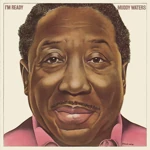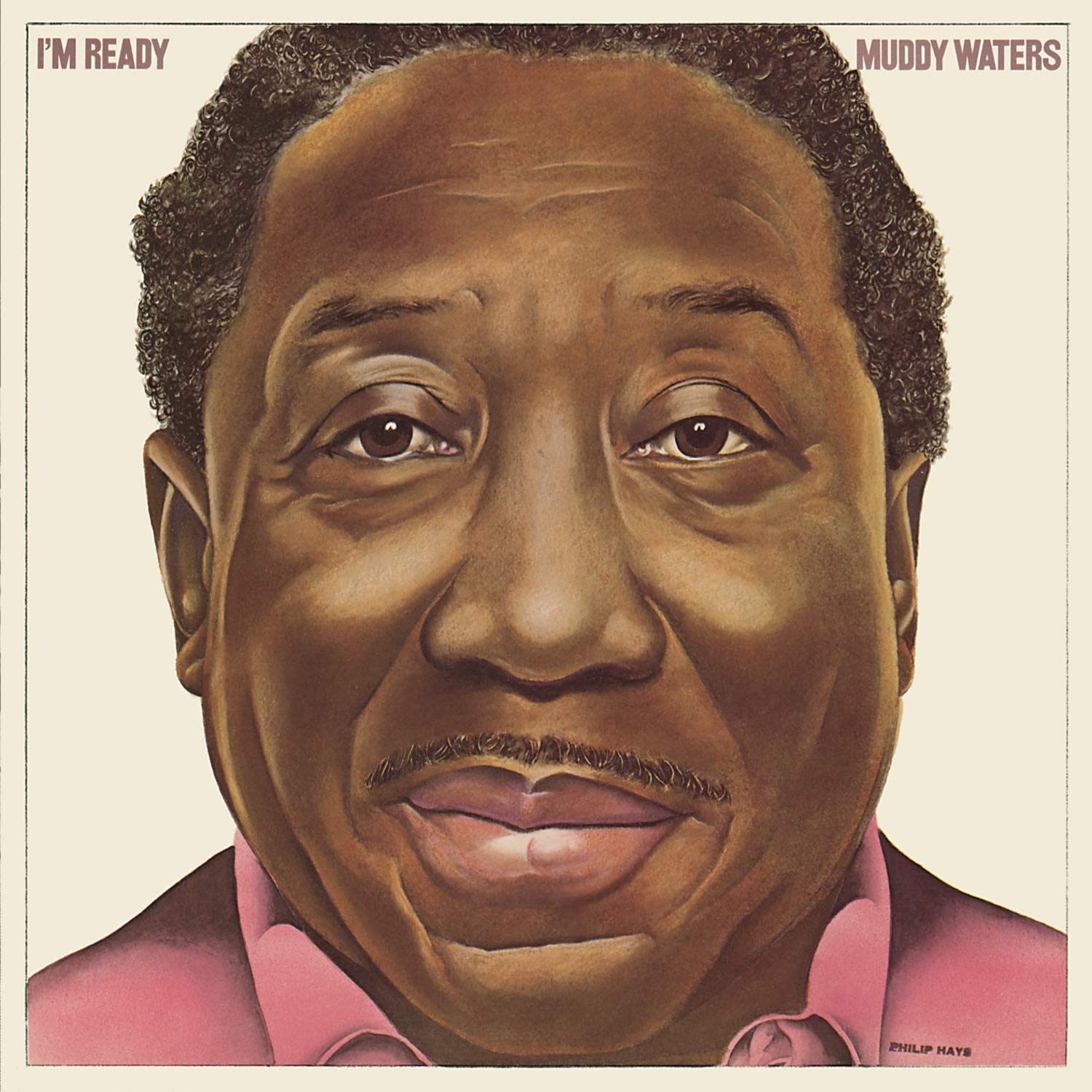
I'm Ready is the second of three Grammy-winning studio albums that Muddy Waters recorded with Texas blues-rock guitarist Johnny Winter for Blue Sky Records in the late 1970s. Released in January 1978, it followed the triumph of Hard Again (1977) and continued the raw, electric Chicago blues sound that revitalized Waters' career in his final years. The album won the Grammy Award for Best Ethnic or Traditional Folk Recording in 1978 — Waters' second consecutive Grammy with Winter.
Recording Sessions & Production
Dates: October–November 1977
Location: The Schoolhouse, Westport, Connecticut — the same intimate studio (located in guitarist Dan Hartman's home) where Hard Again had been recorded the previous year
Label: Blue Sky Records (a subsidiary of Columbia/CBS, catalog number JZ 34905)
Producer: Johnny Winter — returning for his second collaboration with Waters. Winter's production philosophy remained consistent: record the band live in the same room, capture the spontaneous energy of a club performance, and let Waters' commanding presence dominate. As one reviewer noted, Winter mixed the tracks "close to mono" to evoke the vintage Chess Records feel while satisfying modern label requirements.
Engineer: Dave Still — who had engineered Hard Again and returned to capture the same raw, immediate sound
Recording Approach: The sessions emphasized live, communal playing with minimal overdubs. Winter's directive was to foster a "joyful, unhurried vibe" that honored Waters' commanding presence. Tracks were typically nailed in one or two takes, with the musicians often staying together at the studio to maintain creative flow. The informal setup — living and working together during the sessions — contributed to the album's spontaneous, party-like atmosphere.
The Musicians
The album features a dream team of Chicago blues veterans, with some key changes from the Hard Again lineup:
-
Muddy Waters (McKinley Morganfield) — vocals, guitar, slide guitar
-
Johnny Winter — lead guitar (tracks 1, 3–5, 7, 9)
-
Jimmy Rogers — guitar, vocals (track 11)
-
Bob Margolin — bass guitar (switching from rhythm guitar on Hard Again)
-
Pinetop Perkins — piano
-
Willie "Big Eyes" Smith — drums
-
Big Walter Horton — harmonica
-
Jerry Portnoy — harmonica (tracks 1, 4, 5, 7, 9)
Jimmy Rogers was the most significant addition — Waters' original guitarist from his formative Chicago band in the late 1940s and early 1950s, who had not recorded with him in over two decades. Rogers had played on the original 1954 Chess recording of the title track "I'm Ready," making his presence on this remake a full-circle moment. As one reviewer noted, "the way Muddy and Jimmy weave together their guitars, much like Keith Richards and Ronnie Wood do, is mesmerizing."
Bob Margolin's move to bass was forced by the presence of three guitarists (Waters, Winter, and Rogers). Margolin had played guitar on Hard Again but switched to bass at Waters' suggestion, creating a "pretty amazing trio of axes" up front.
Big Walter Horton replaced James Cotton (who had played on Hard Again) on harmonica. Horton's sound was "a little less overdriven" than Cotton's — more subtle and sweet-toned, though still "satisfyingly grungy." Jerry Portnoy contributed harmonica on selected tracks, adding additional texture.
Pinetop Perkins and Willie "Big Eyes" Smith returned from Hard Again, with one reviewer noting that Perkins' piano sounded as if he "may have hired a piano tuner in the interim" — a slight improvement in tuning from the previous album's raw sound.
The Sound
I'm Ready continues the "big ball of sound" approach established on Hard Again — loud, raw, and immediate. The sound is described as "slightly more balanced and refined" than its predecessor, with the same near-mono mix that prioritizes authenticity over stereo separation. Waters' stock-in-trade — the classic 12-bar slow blues — dominates the album, with most songs following that format. The overall feel is "good time, happy vibe" — a continuation of the party atmosphere that made Hard Again so successful.
Track-by-Track Breakdown
Side A
1. "I'm Ready" (3:26)
-
Songwriter: Willie Dixon
-
Recording: October–November 1977, The Schoolhouse, Westport, CT
-
Musicians: Muddy Waters (vocals, guitar), Johnny Winter (guitar), Jimmy Rogers (guitar), Bob Margolin (bass), Pinetop Perkins (piano), Willie "Big Eyes" Smith (drums), Jerry Portnoy (harmonica)
-
Notes: The album opens with Dixon's classic 1954 composition — the song that launched Waters' career as a sexual colossus. The original Chess recording featured Little Walter on harmonica, Jimmy Rogers on guitar, Otis Spann on piano, Willie Dixon on bass, and Fred Below on drums. This 1978 remake reunites Waters with Rogers and brings in Winter's fiery lead guitar. The "punk-blues" anthem quality of the original is maintained — the hookline "I'm ready for you, I hope you're ready for me" delivered with Waters' gravelly authority. Dixon's lyrics are filled with hoodoo imagery: "I got an axe handle pistol on a graveyard frame / That shoots tombstone bullets, wearing balls and chain." Winter's production gives the track a driving, urgent energy that matches the original's intensity.
2. "33 Years" (5:20)
-
Songwriters: Muddy Waters (McKinley Morganfield), Charles Edward Williams
-
Recording: October–November 1977, The Schoolhouse, Westport, CT
-
Musicians: Muddy Waters (vocals, guitar), Johnny Winter (guitar), Jimmy Rogers (guitar), Bob Margolin (bass), Pinetop Perkins (piano), Willie "Big Eyes" Smith (drums), Big Walter Horton (harmonica)
-
Notes: A standout blues track and one of the album's highlights. The song is a slow blues that finds Waters reflecting on a long relationship — "33 years" of love, trouble, and endurance. The extended length (over five minutes) allows for extended instrumental interplay, with Winter, Rogers, and Horton all taking solo turns. The songwriting collaboration with Charles Edward Williams (a.k.a. "Chico") brings a contemporary lyric to Waters' classic sound. The track demonstrates the album's primary strength — the classic 12-bar slow blues format executed by masters.
3. "Who Do You Trust" (5:00)
-
Songwriter: Muddy Waters (McKinley Morganfield)
-
Recording: October–November 1977, The Schoolhouse, Westport, CT
-
Musicians: Muddy Waters (vocals, guitar), Johnny Winter (guitar), Jimmy Rogers (guitar), Bob Margolin (bass), Pinetop Perkins (piano), Willie "Big Eyes" Smith (drums)
-
Notes: An original composition by Waters that addresses the classic blues theme of romantic betrayal and suspicion. The title question — "Who do you trust?" — is delivered with Waters' characteristic world-weariness. The track features the three-guitar attack of Waters, Winter, and Rogers, with Winter's lead guitar adding a rock-edged bite to the traditional blues structure. The song maintains the slow, grinding tempo that dominates the album, with Perkins' piano providing rolling fills between vocal lines.
4. "Copper Brown" (4:58)
-
Songwriters: Muddy Waters (McKinley Morganfield), Marva Brooks
-
Recording: October–November 1977, The Schoolhouse, Westport, CT
-
Musicians: Muddy Waters (vocals, guitar), Johnny Winter (guitar), Jimmy Rogers (guitar), Bob Margolin (bass), Pinetop Perkins (piano), Willie "Big Eyes" Smith (drums), Jerry Portnoy (harmonica)
-
Notes: A co-write with Marva Brooks, "Copper Brown" is a character study — the title referring to a woman with copper-colored skin. The song demonstrates Waters' continued ability to write original material that fits seamlessly into his classic repertoire. Jerry Portnoy's harmonica adds a piercing, modern edge to the track, while the three-guitar interplay creates a dense, layered texture. The track is slightly faster than the album's slow blues norm, providing variety to Side A's pacing.
Side B
5. "(I'm Your) Hoochie Coochie Man" (3:59)
-
Songwriter: Willie Dixon
-
Recording: October–November 1977, The Schoolhouse, Westport, CT
-
Musicians: Muddy Waters (vocals, guitar), Johnny Winter (guitar), Jimmy Rogers (guitar), Bob Margolin (bass), Pinetop Perkins (piano), Willie "Big Eyes" Smith (drums), Jerry Portnoy (harmonica)
-
Notes: The definitive Dixon composition and Waters' signature song — "the song which, in my mind, best defines this attitude" (as one critic noted). Originally recorded on January 7, 1954, with Little Walter, Jimmy Rogers, Otis Spann, Willie Dixon, and Fred Below, this 1978 version brings Rogers full circle. The "stop-time" structure — where the band hits a chord and pauses while Waters delivers a line — is executed with precision. The lyrics — "I got a black cat bone, I got a mojo too / I got the Johnny Concheroo, I'm gonna mess with you" — are delivered with the same swagger that made the original a hit 24 years earlier. Winter's guitar adds a contemporary edge without sacrificing the song's classic feel. Jerry Portnoy's harmonica fills the space that Little Walter once occupied. This is the blues as ritual — a song that has been performed thousands of times but still feels vital.
6. "Mamie" (5:35)
-
Songwriters: Muddy Waters (McKinley Morganfield), Jimmy Rogers
-
Recording: October–November 1977, The Schoolhouse, Westport, CT
-
Musicians: Muddy Waters (vocals, guitar), Johnny Winter (guitar), Jimmy Rogers (guitar), Bob Margolin (bass), Pinetop Perkins (piano), Willie "Big Eyes" Smith (drums), Big Walter Horton (harmonica)
-
Notes: The longest track on the original album and a songwriting collaboration between Waters and Rogers — a testament to their renewed partnership. "Mamie" is a slow blues ballad that showcases the interplay between Waters' and Rogers' guitars. The song's extended length allows for multiple solo exchanges, with Big Walter Horton's harmonica adding mournful commentary. The title refers to a woman's name — a classic blues subject — and the lyrics trace the narrator's devotion and heartbreak. This is the blues as slow-burning intensity, with the band locked into a groove that seems to stretch time itself.
7. "Rock Me" (3:54)
-
Songwriter: Muddy Waters (McKinley Morganfield)
-
Recording: October–November 1977, The Schoolhouse, Westport, CT
-
Musicians: Muddy Waters (vocals, guitar), Johnny Winter (guitar), Jimmy Rogers (guitar), Bob Margolin (bass), Pinetop Perkins (piano), Willie "Big Eyes" Smith (drums)
-
Notes: A slightly faster-than-most track and one of the album's highlights. Originally recorded by Waters for Chess in 1956, "Rock Me" is a rocking blues that breaks the album's slow-blues dominance with a "loosely rolling" groove. The song is a plea for physical affection — "Rock me baby, rock me all night long" — delivered with Waters' characteristic blend of menace and charm. The three-guitar attack is in full force here, with Winter's lead guitar taking a more prominent role than on the slow blues tracks. This is the closest the album comes to the uptempo energy of Hard Again's "Mannish Boy."
8. "Screamin' and Cryin'" (5:04)
-
Songwriter: Muddy Waters (McKinley Morganfield)
-
Recording: October–November 1977, The Schoolhouse, Westport, CT
-
Musicians: Muddy Waters (vocals, guitar), Johnny Winter (guitar), Jimmy Rogers (guitar), Bob Margolin (bass), Pinetop Perkins (piano), Willie "Big Eyes" Smith (drums), Jerry Portnoy (harmonica)
-
Notes: A slow blues that finds Waters in emotional extremis — "screamin' and cryin'" over a lost love or a hard-luck situation. The track is a masterclass in blues dynamics, with the band building tension through gradual volume and intensity increases. Jerry Portnoy's harmonica wails behind Waters' vocal, echoing the "screamin'" of the title. The song demonstrates that even in his mid-60s, Waters could still convey the raw emotion that made him the "father of modern Chicago blues." The track is one of the album's most powerful performances — a reminder of why Waters was the standard by which all other blues singers were measured.
9. "Good Morning Little School Girl" (3:27)
-
Songwriter: Sonny Boy Williamson (John Lee Williamson)
-
Recording: October–November 1977, The Schoolhouse, Westport, CT
-
Musicians: Muddy Waters (vocals, guitar), Johnny Winter (guitar), Jimmy Rogers (guitar), Bob Margolin (bass), Pinetop Perkins (piano), Willie "Big Eyes" Smith (drums), Big Walter Horton (harmonica)
-
Notes: The album's closer and the only cover of a non-Waters/Dixon song. Originally recorded by Sonny Boy Williamson I in 1937, this blues standard has been covered by everyone from Junior Wells to the Grateful Dead. Waters' version is an "up-tempo, chugging four-to-the-floor rocker with a slight syncopation that makes for a nice groove." The lyrics — "Good morning little school girl, can I come home with you?" — are delivered with a sly, knowing charm that only Waters could bring to such material. Big Walter Horton's harmonica drives the track with a propulsive, train-like rhythm. As one reviewer noted, "the lyrical content would certainly raise some eyebrows if attempted today, but it's an up-tempo, chugging four-to-the-floor rocker." This track provides a celebratory, party-like ending to an album that is otherwise dominated by slow, intense blues.
CD Reissue Bonus Tracks (2004 Epic/Legacy)
10. "No Escape from the Blues" (6:18)
-
Songwriters: Muddy Waters (McKinley Morganfield), Charles Edward Williams
-
Recording: October–November 1977, The Schoolhouse, Westport, CT (outtake)
-
Musicians: Muddy Waters (vocals, guitar), Johnny Winter (guitar), Jimmy Rogers (guitar), Bob Margolin (bass), Pinetop Perkins (piano), Willie "Big Eyes" Smith (drums), Big Walter Horton (harmonica)
-
Notes: The longest track in the entire I'm Ready sessions, this outtake was included on the 2004 remastered CD. The song is a slow blues that lives up to its title — there is "no escape from the blues" for the narrator. The extended length allows for extensive instrumental exploration, with Horton's harmonica and Winter's guitar trading extended solos. This track demonstrates the wealth of material recorded during these sessions — material that couldn't fit on the original LP but deserved release.
11. "That's Alright" (4:58)
-
Songwriter: Jimmy Rogers
-
Recording: October–November 1977, The Schoolhouse, Westport, CT (outtake)
-
Musicians: Jimmy Rogers (vocals, guitar), Muddy Waters (guitar), Johnny Winter (guitar), Bob Margolin (bass), Pinetop Perkins (piano), Willie "Big Eyes" Smith (drums)
-
Notes: A rare vocal feature for Jimmy Rogers, who takes the lead on this track while Waters plays supporting guitar. The song is a Rogers original — a relaxed, good-time blues that provides a different flavor from Waters' material. Rogers' voice is smoother and more conversational than Waters', and his guitar style — the "walking by myself" approach that made him famous — is prominently featured. This track is a valuable document of Rogers' artistry and a testament to the collaborative spirit of the sessions.
12. "Lonely Man Blues" (4:19)
-
Songwriters: Muddy Waters (McKinley Morganfield), Bob Margolin
-
Recording: October–November 1977, The Schoolhouse, Westport, CT (outtake)
-
Musicians: Muddy Waters (vocals, guitar), Johnny Winter (guitar), Jimmy Rogers (guitar), Bob Margolin (bass), Pinetop Perkins (piano), Willie "Big Eyes" Smith (drums)
-
Notes: A songwriting collaboration between Waters and Bob Margolin, this outtake finds Waters in a reflective, melancholy mood. The "lonely man" of the title is a classic blues archetype, and Waters' vocal conveys the isolation and longing with heartbreaking sincerity. Margolin's bass is particularly prominent on this track, providing a sympathetic counterpoint to Waters' vocal. The song is a fitting addition to the album's emotional range — another shade of the blues from a master painter.
Critical Reception & Legacy
I'm Ready was immediately hailed as a blues classic. It earned Waters his second consecutive Grammy Award (following Hard Again), solidifying the late-career renaissance that Johnny Winter had orchestrated. The album peaked at #157 on the Billboard 200 — a respectable showing for a blues album by a 64-year-old artist.
Critics praised the album's consistency and the guitar interplay between Waters, Rogers, and Winter. Robert Christgau gave it a favorable review, and The Penguin Guide to Blues Recordings included it in their essential discography. The Bay State Banner noted that "the sharp distinctive tuning and chromatic slurs that mark his playing are still here, even though Waters now takes few slide guitar solos."
Some critics and fans actually prefer I'm Ready to Hard Again. As one blogger wrote: "Hard Again gets all the attention, but I almost like I'm Ready better. The way Muddy and Jimmy weave together their guitars, much like Keith Richards and Ronnie Wood do, is mesmerizing." The reunion with Rogers added a historical depth that Hard Again lacked — the sound of the original Chess band reconvened after two decades.
The album's influence extends through the continued reverence for Waters' late-period work. The three Winter-produced albums (Hard Again, I'm Ready, and King Bee) demonstrated that blues could be both authentic and vital in the rock era — that an artist in his 60s could still create music that mattered. The template established here — veteran artists working with younger producers, recording live with minimal overdubs — would be adopted by countless blues and roots music projects in subsequent decades.
Muddy Waters passed away on April 30, 1983, but I'm Ready remains a testament to his enduring power. As B.B. King said after Waters' death: "It's going to be years and years before most people realize how greatly he contributed to American music." I'm Ready is a crucial part of that contribution — the sound of a master at the height of his powers, surrounded by friends and collaborators, making the blues sound as fresh and urgent as it had in 1954.