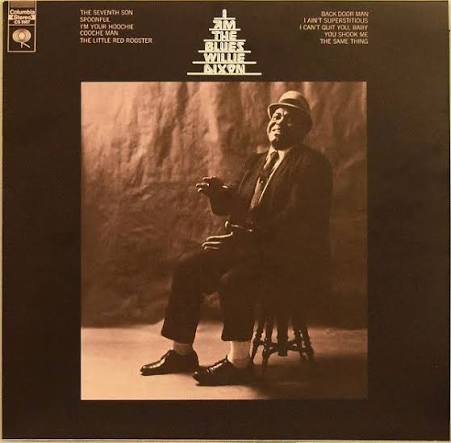
I Am the Blues is the sixth studio album by Chicago blues legend Willie Dixon (William James Dixon), released by Columbia Records in 1970. It is also the title of Dixon's autobiography, edited by Don Snowden. The album represents a landmark moment in Dixon's career — the first time he recorded definitive versions of his own compositions, songs that had already become classics in the hands of Howlin' Wolf, Muddy Waters, and other Chess Records artists. The album was inducted into the Blues Hall of Fame in 1986.
Recording Session & Production
Date: 1970 (specific recording dates not documented in available sources)
Location: Columbia Records studios, New York City or Chicago (exact studio not specified)
Label: Columbia Records (catalog number CS-9987)
Producer: Abner Spector — a veteran record producer who had worked in various genres. Spector's production approach was described as "smoothly professional" and "immaculate" — capturing drums, bass, guitars, piano, and vocals "with vivid clarity." The sound quality was notably superior to many contemporary blues recordings, with one reviewer noting that "the production on I AM THE BLUES is immaculate."
Cover Design: Virginia Team Photography: Peter Amft Liner Notes: Pete Welding (for reissues)
Recording Context: By 1970, Dixon had already established himself as the most prolific songwriter in Chicago blues history. His compositions — "Hoochie Coochie Man," "Spoonful," "Back Door Man," "Little Red Rooster," "I Can't Quit You Baby," and dozens more — had been recorded by virtually every major blues artist on the Chess roster. I Am the Blues was Dixon's opportunity to reclaim these songs as his own, performing them with a hand-picked band of Chicago veterans. The album was his first for Columbia after years of recording primarily for Chess and its subsidiary labels.
The Musicians
The album features a stellar lineup of Chicago blues veterans billed as the Chicago Blues All Stars:
-
Willie Dixon — vocals, bass
-
Walter "Shakey" Horton — harmonica
-
Lafayette Leake — piano
-
Sunnyland Slim (Albert Luandrew) — piano
-
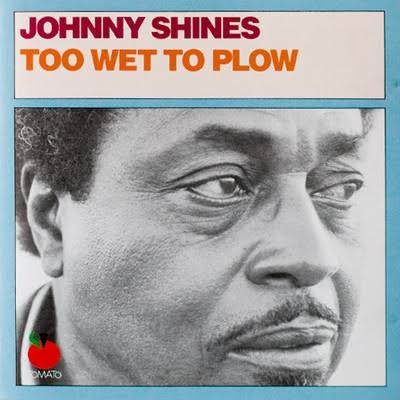
Johnny Shines — guitar
-
Clifton James — drums
Walter Horton was widely regarded as one of the greatest blues harmonica players of all time. Dixon himself said that the shy, gentle Horton was "the best harmonica player he ever heard." Horton's expressive, sweet-toned harmonica "weaves in and out of the songs expertly," providing a perfect counterpoint to Dixon's vocals.
Lafayette Leake and Sunnyland Slim shared piano duties, each bringing a distinct style to the sessions. Leake was a versatile pianist who had worked with both blues and jazz artists, while Sunnyland Slim was a Chicago blues institution in his own right — a singer, pianist, and bandleader who had mentored Muddy Waters when he first arrived in Chicago. Their dual piano approach gave the album a richer, more varied keyboard texture than typical blues recordings of the era.
Johnny Shines was a Delta blues veteran who had traveled with Robert Johnson in the 1930s. His guitar work on this album is particularly notable on "I Can't Quit You Baby" and "The Same Thing," where he adds subtle, tasteful fills that complement Dixon's bass and vocals without overwhelming them.
Clifton James on drums provided solid, unflashy timekeeping that anchored the band's groove. His drumming was described as part of the "immaculate" production that captured every instrument with "vivid clarity."
The Willie Dixon Songbook
What makes I Am the Blues historically significant is that it collects nine of Dixon's most important compositions — songs that had already been recorded by other artists and become blues standards. As Wikipedia notes, "Four of the nine songs on I Am the Blues — 'Back Door Man,' 'Spoonful,' 'I Ain't Superstitious,' 'The Little Red Rooster' — were originally performed by Howlin' Wolf." The songs "You Shook Me," "I'm Your Hoochie Coochie Man," and "The Same Thing" were first recorded by Muddy Waters. "The Seventh Son" was recorded by Willie Mabon in 1955. "I Can't Quit You Baby" was recorded and released by Otis Rush on the Cobra record label.
This makes the album a kind of self-portrait — Dixon as the author of the Chicago blues canon, performing his own greatest hits with the authority of the creator rather than the interpreter.
Track-by-Track Breakdown
Side One
1. "Back Door Man" (6:08)
-
Songwriter: Willie Dixon
-
Recording: 1970, Columbia Studios
-
Musicians: Willie Dixon (vocals, bass), Walter Horton (harmonica), Lafayette Leake (piano), Johnny Shines (guitar), Clifton James (drums)
-
Notes: The album opens with one of Dixon's most famous compositions, originally recorded by Howlin' Wolf in June 1960. Dixon's version is slower and more deliberate than Wolf's ferocious original — he "arrives growling, Howlin' Wolf-style" but with a more controlled, conversational delivery. The extended length (over six minutes) allows for extended instrumental interplay, particularly between Horton's harmonica and Leake's piano. The lyrics — "I am a back door man / The men don't know, but the little girls understand" — are a classic Dixon double entendre, referring both to a man who sneaks around with married women and to the sexual prowess that makes him desirable. The song was later covered by The Doors on their 1967 debut album.
2. "I Can't Quit You Baby" (6:40)
-
Songwriter: Willie Dixon
-
Recording: 1970, Columbia Studios
-
Musicians: Willie Dixon (vocals, bass), Walter Horton (harmonica), Lafayette Leake (piano), Johnny Shines (guitar), Clifton James (drums)
-
Notes: The longest track on the album and one of Dixon's most emotionally powerful performances. Originally recorded by Otis Rush for Cobra Records in 1956, this is a slow blues about addiction — not to drugs, but to a toxic relationship. Dixon's vocal shows "fine control" as he navigates the song's emotional terrain, from resignation to desperation. Johnny Shines' guitar work is particularly prominent here, adding delicate fills that underscore the vulnerability of the lyrics. The song became a staple of Led Zeppelin's early repertoire, appearing on their 1969 debut album.
3. "The Seventh Son" (4:15)
-
Songwriter: Willie Dixon
-
Recording: 1970, Columbia Studios
-
Musicians: Willie Dixon (vocals, bass), Walter Horton (harmonica), Sunnyland Slim (piano), Johnny Shines (guitar), Clifton James (drums)
-
Notes: Originally recorded by Willie Mabon in 1955, this is one of Dixon's most playful compositions. The lyrics draw on African American folk beliefs about the seventh son of a seventh son — a figure endowed with supernatural powers: "I can tell your future before it comes to pass / I can do things for you that make your heart feel glad." Dixon's delivery "adds a playful note" to the proceedings, with Sunnyland Slim's piano providing a jaunty, almost vaudevillian accompaniment. The song was later covered by Muddy Waters, George Thorogood, and many others.
4. "Spoonful" (4:56)
-
Songwriter: Willie Dixon
-
Recording: 1970, Columbia Studios
-
Musicians: Willie Dixon (vocals, bass), Walter Horton (harmonica), Lafayette Leake (piano), Johnny Shines (guitar), Clifton James (drums)
-
Notes: One of Dixon's most celebrated compositions and a blues standard of the highest order. Originally recorded by Howlin' Wolf in June 1960, "Spoonful" uses the metaphor of a spoonful of various substances — coffee, tea, water, sugar — to represent the small pleasures and temptations that drive human behavior: "It could be a spoonful of coffee / It could be a spoonful of tea / But one little spoon of your precious love / Is good enough for me." The song's central refrain — "Men lie about that spoonful / Some cry about that spoonful / Some die about that spoonful / Everybody fight about a spoonful" — is a Dixon masterpiece of compressed meaning. Cream recorded the definitive rock version on their 1966 debut Fresh Cream, including a legendary 17-minute live version on Wheels of Fire (1968).
Side Two
5. "I Ain't Superstitious" (4:03)
-
Songwriter: Willie Dixon
-
Recording: 1970, Columbia Studios
-
Musicians: Willie Dixon (vocals, bass), Walter Horton (harmonica), Lafayette Leake (piano), Johnny Shines (guitar), Clifton James (drums)
-
Notes: Originally recorded by Howlin' Wolf in December 1961, this is a comic blues about superstition and folk beliefs. The lyrics — "I ain't superstitious, black cat just cross my trail / Don't sweep me with no broom, I might get put in jail" — are delivered with Dixon's characteristic wit. The song's irony is that the narrator denies being superstitious while listing every superstition he believes in. Jeff Beck recorded a famous hard-rock version on his 1968 album Truth, transforming the blues into heavy metal. Dixon's original version here is more relaxed and humorous, with Horton's harmonica adding a playful, mocking tone.
6. "You Shook Me" (4:15)
-
Songwriters: Willie Dixon, J.B. Lenoir
-
Recording: 1970, Columbia Studios
-
Musicians: Willie Dixon (vocals, bass), Walter Horton (harmonica), Lafayette Leake (piano), Johnny Shines (guitar), Clifton James (drums)
-
Notes: Originally recorded by Muddy Waters on June 27, 1962, this is one of Dixon's most sensual compositions. The lyrics — "You know you shook me, you shook me all night long" — describe sexual pleasure with the same vocabulary used for earthquakes and hurricanes: "You move me, pretty mama, just like a hurricane." The song is a collaboration with J.B. Lenoir, another Chicago blues songwriter. Led Zeppelin covered this on their 1969 debut album, and it became a staple of their early live shows. Dixon's version is more restrained than Zeppelin's bombastic interpretation, with a slow, grinding tempo that emphasizes the physicality of the lyrics.
7. "(I'm Your) Hoochie Coochie Man" (4:48)
-
Songwriter: Willie Dixon
-
Recording: 1970, Columbia Studios
-
Musicians: Willie Dixon (vocals, bass), Walter Horton (harmonica), Lafayette Leake (piano), Johnny Shines (guitar), Clifton James (drums)
-
Notes: Dixon's most famous composition and the song that launched his career as Chess's top songwriter. Originally recorded by Muddy Waters on January 7, 1954, "Hoochie Coochie Man" became Waters' biggest hit and established the "stop-time" blues pattern — where the band hits a chord and pauses while the vocalist delivers a line — as a Chicago blues staple. The lyrics draw on African American folk magic: "I got a black cat bone / I got a mojo too / I got the Johnny Concheroo / I'm gonna mess with you." Dixon's own version here brings a different feel — "the piano and bass driving Hoochie Coochie Man gives it a slightly different feel from the Muddy Waters version, and provides a nice counterpoint to the harmonica riff." The song has been covered by virtually every blues and rock artist, including Jimi Hendrix, Eric Clapton, and Stevie Ray Vaughan.
8. "The Little Red Rooster" (3:36)
-
Songwriter: Willie Dixon
-
Recording: 1970, Columbia Studios
-
Musicians: Willie Dixon (vocals, bass), Walter Horton (harmonica), Sunnyland Slim (piano), Johnny Shines (guitar), Clifton James (drums)
-
Notes: Originally recorded by Howlin' Wolf in June 1961, this is one of Dixon's most unusual compositions — a slow, lazy blues that became the only pure 12-bar blues ever to reach #1 on the UK Singles Chart (via The Rolling Stones' 1964 cover). Dixon's version "gives The Little Red Rooster a nice barnyard feel," with his vocal mimicking the strut of a rooster. The lyrics — "I had a little red rooster, too lazy to crow for day / Keep everything in the barnyard, upset in every way" — are filled with sexual innuendo and barnyard humor. Sam Cooke also had a major hit with his smoother version in 1963. The song's minimal, repetitive structure was revolutionary for its time — it barely changes chords, creating a hypnotic, almost trance-like atmosphere.
9. "The Same Thing" (4:40)
-
Songwriter: Willie Dixon
-
Recording: 1970, Columbia Studios
-
Musicians: Willie Dixon (vocals, bass), Walter Horton (harmonica), Lafayette Leake (piano), Johnny Shines (guitar), Clifton James (drums)
-
Notes: Originally recorded by Muddy Waters on April 9, 1964, this is a philosophical blues that asks why men and animals behave the way they do: "What makes you men go crazy when the woman wear her dress so tight? / Must be the same old thing that makes the tomcats fight all night." The song's central insight — that human and animal behavior are driven by the same fundamental urges — is pure Dixon: earthy, humorous, and unsparingly honest. Johnny Shines' guitar work is particularly effective here, adding subtle commentary to Dixon's vocal. The song was later covered by George Thorogood and the Delaware Destroyers.
Critical Reception & Legacy
I Am the Blues received generally positive reviews, though some critics noted that the original versions by Howlin' Wolf and Muddy Waters remained definitive. AllMusic's Bruce Eder wrote that "the material is superb, consisting of some of Willie Dixon's best-known songs of the 1960s, and the production is smoothly professional, but none of the performances here are likely to make you forget the hits by Howlin' Wolf, Muddy Waters, and others." Robert Christgau was more critical of Dixon's vocal abilities, suggesting that "Dixon's singing ability on the album is not as good as it could be, because he doesn't need to be a good singer since he's a good composer and producer."
However, the album's historical significance is undeniable. As one reviewer noted, "Dixon proves himself to be a fine blues vocalist throughout" — his voice may lack the raw power of Wolf or the smooth sophistication of Waters, but it possesses a "dryly charming" quality and an authority that comes from being the songs' creator. The arrangements "give room for each of the fine instrumentalists," with Walter Horton's harmonica, the dual pianos of Leake and Sunnyland Slim, and Johnny Shines' guitar all contributing to a rich, collaborative sound.
The album was inducted into the Blues Hall of Fame in 1986, recognized as a "Classic of Blues Recording." It has been reissued multiple times, including a Mobile Fidelity Sound Lab CD in 1990 and a Columbia/Legacy CD in 1993. The original vinyl pressings are prized by audiophiles for their "Tubey Magical Midrange" and "big, immediate staging."
The album's influence extends far beyond blues circles:
-
Led Zeppelin covered "I Can't Quit You Baby" and "You Shook Me" on their 1969 debut
-
Cream made "Spoonful" a rock standard
-
The Rolling Stones took "Little Red Rooster" to #1 in the UK
-
Jeff Beck transformed "I Ain't Superstitious" into hard rock
-
The Doors covered "Back Door Man" on their debut album
-
Muddy Waters and Howlin' Wolf continued to perform these songs throughout their careers, cementing their status as blues standards
Willie Dixon passed away on January 29, 1992, at age 76. He was posthumously inducted into the Rock and Roll Hall of Fame in 1994 and honored with a marker on the Mississippi Blues Trail in 2007. His autobiography, also titled I Am the Blues, was published in 1989. The album remains a crucial document of his artistry — not just as a songwriter, but as a performer who could hold his own with the legends who had made his songs famous. As Dixon himself once said, "The blues are the roots and the other musics are the fruits... As long as American music survives, so will the blues."
Buy the Album
 Buy from Amazon I Am the Blues