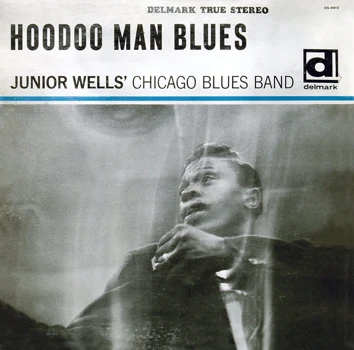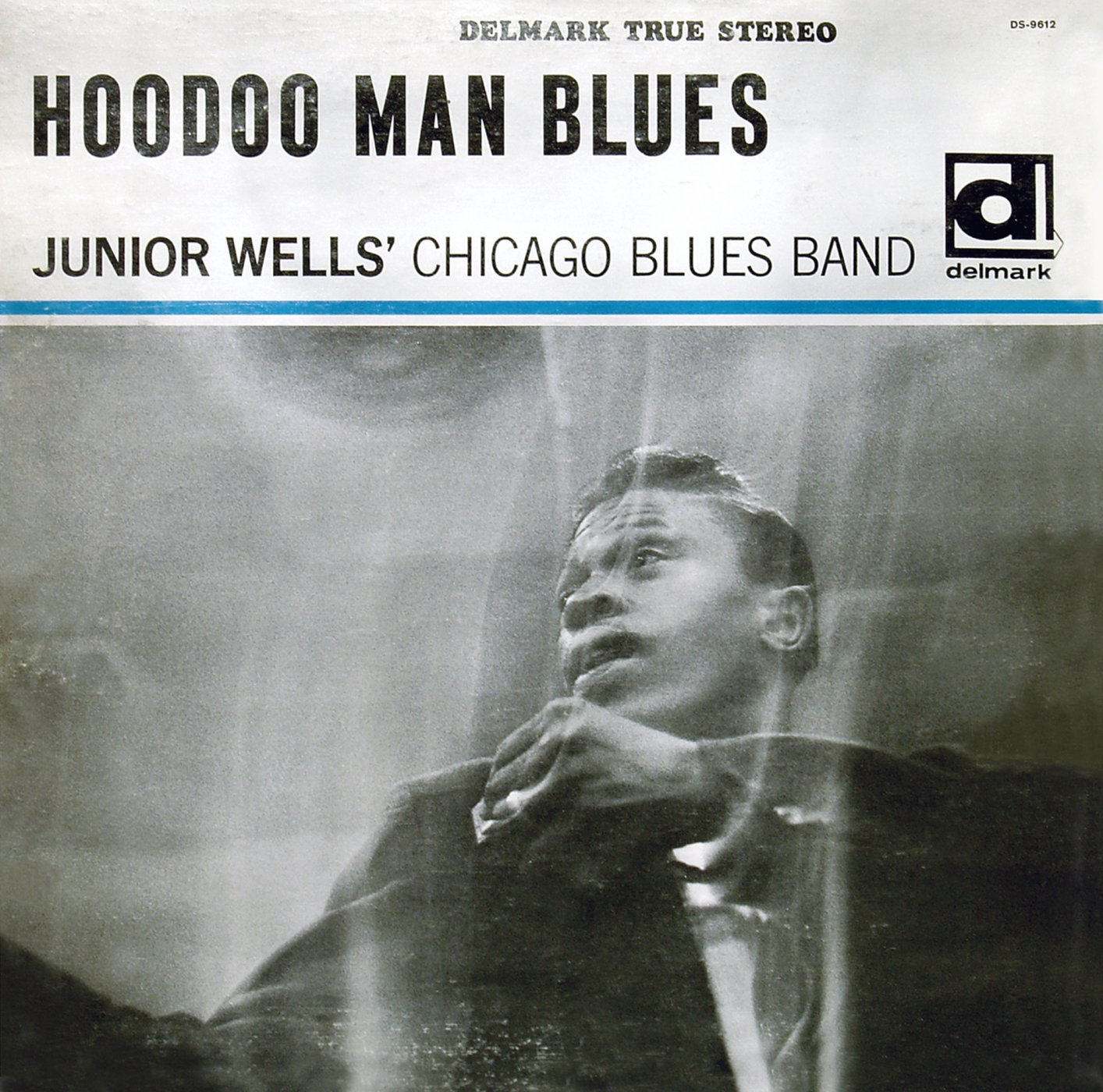
Hoodoo Man Blues is the landmark 1965 debut album by Junior Wells' Chicago Blues Band, recorded for Bob Koester's Delmark Records. It is widely regarded as one of the greatest blues albums ever recorded — a raw, spontaneous document of Chicago's South Side club scene that captured lightning in a bottle. The album was added to the Library of Congress National Recording Registry in 2012, recognized for capturing "the emotional essence of what real electric blues, played live, sounds like."
Recording Sessions & Production
Dates: September 22–23, 1965
Location: Sound Studios, 230 North Michigan Avenue, Chicago, Illinois (second floor of an office building)
Label: Delmark Records (catalog number DS-612)
Producer: Bob Koester — founder of Delmark Records, who had moved the label from St. Louis to Chicago in 1958. Koester gave Wells unprecedented creative freedom, allowing him to choose his own band, select his own material, and record without the three-minute constraints of commercial singles. As Koester recalled, "I liked the music too much to resist."
Engineer: Stu Black — who captured the sessions using tube gear, recording direct to two-track tape. Black would go on to engineer classic recordings for Delmark, Chess, and Alligator Records. The entire album was recorded in approximately seven hours over two sessions, with many tracks captured in single takes.
Cover Design: Zbigniew Jastrzebski Photography: Greg Roberts (a.k.a. Bob Koester)
The "Friendly Chap" Story: Because Koester mistakenly believed Buddy Guy was still under contract to Leonard Chess, he called Chess for permission. Chess reportedly said: "OK, use the sonofabitch but you don't use his name and he doesn't sing." Guy was credited as "Friendly Chap" on initial pressings — a name proposed by Peter Brown with the explanation that "a buddy is a friend, and a guy is a chap." Koester later discovered Guy was not actually under contract, and subsequent pressings restored his proper name with Guy's blessing.
The "Less Cats, More Money" Philosophy: When Guy asked Wells why there was no piano player, Wells replied: "Less cats, more money. You in?" This stripped-down quartet approach — harmonica, guitar, bass, drums — was revolutionary for the time and became the template for countless blues bands.
The "Guitar-Organ" Sound
One of the album's most distinctive sonic features came about by accident. During parts of the session, Buddy Guy's guitar amplifier stopped working. Rather than halt the recording, his guitar was wired through the Leslie speaker of the studio's Hammond B3 organ — creating the swirling, tremolo-drenched guitar-organ sound that became one of the album's signatures. As Buddy Guy recalled, "Junior heard the sound and smiled. 'Hey man,' he said, 'why not?'" Koester later noted: "I've always been amazed at how rarely reviewers commented on the guitar-organ tracks."
Lost Tapes
Tragically, approximately 15 minutes of "releasable music" was lost from these sessions. According to Koester, a musician accidentally took a tape that contained one solo tune by Buddy Guy, one by Junior Wells, and a duet of them both singing. Koester had hoped to release this material on a Buddy Guy LP.
The Musicians
-
Junior Wells (Amos Wells Blakemore Jr.) — harmonica, vocals
-
Buddy Guy (credited as "Friendly Chap" on early pressings) — guitar
-
Jack Myers — double bass
-
Bill Warren (also known as Billy Warren) — drums
Junior Wells was 30 years old at the time of recording — a veteran of the Chicago scene who had first recorded in 1953, replacing Little Walter in Muddy Waters' band in 1952 (that's Wells' harmonica on Waters' "Mannish Boy"). Despite his experience, he hadn't recorded in over two and a half years. His harmonica style combined the piercing attack of Little Walter with a more vocal, conversational approach. His singing was raw, earthy, and spellbinding — "smoother than Howlin' Wolf, as sexy as Muddy in his prime."
Buddy Guy was 28 and already known in Chicago, having recorded for Chess with some success. But Hoodoo Man Blues was his album debut as well, and his playing here is extraordinary — "stinging single note lines and small pieces of chords that moved effortlessly from backing Wells to countering him to seizing the reins." As one reviewer noted, "this is one of the great blues guitar performances on record." Guy's style on this album — clean Stratocaster tone, muscular minor-key partial chords, featherlight leads — would influence Eric Clapton, Jimi Hendrix, and virtually every blues-rock guitarist who followed.
Jack Myers on bass and Bill Warren on drums formed what one reviewer called "a heartbeat to this recording that change rhythms with the mood and never gets in the way." Warren's jazz-schooled drumming and Myers' solid bass lines provided the foundation that allowed Wells and Guy to soar.
Historical Significance
Hoodoo Man Blues was revolutionary for several reasons:
-
First Chicago blues album recorded as an album — not a compilation of singles. Up until this point, electric blues albums on Chess and Checker were mostly greatest hits collections or live recordings. Hoodoo Man Blues was conceived and recorded as a unified artistic statement.
-
First time a Chicago artist chose his own band — Wells selected musicians he played with regularly at Theresa's Lounge, creating the chemistry of a working band rather than assembled session players.
-
First attempt to capture South Side club sound in the studio — the raw, spontaneous energy of a Friday night at Theresa's transplanted to a recording studio.
-
Delmark's best-selling album — it outsold every other Delmark release in its first year and has never gone out of print (except briefly when Delmark moved offices).
Despite its eventual success, the album received only two stars from DownBeat magazine — critic Peter Welding reportedly didn't care for James Brown and thought Junior was too much like him.
Track-by-Track Breakdown
Side One
1. "Snatch It Back and Hold It" (2:53)
-
Songwriter: Junior Wells
-
Recording: September 22–23, 1965, Sound Studios, Chicago
-
Musicians: Junior Wells (harmonica, vocals), Buddy Guy (guitar), Jack Myers (bass), Bill Warren (drums)
-
Notes: The album opens with a track that bursts out of the speakers with furious energy. Warren's "funky fat-back beat" drives the band at a breakneck tempo, while Wells' harmonica and Guy's guitar engage in a spirited sparring match. Wells' vocal is "as urban as the blues gets" — tight, taut, and full of attitude. If you didn't know who you were listening to, you might think James Brown had made a blues album. The track establishes the album's live, uninhibited feel from the first note.
2. "Ships on the Ocean" (4:07)
-
Songwriter: Junior Wells
-
Recording: September 22–23, 1965, Sound Studios, Chicago
-
Musicians: Junior Wells (harmonica, vocals), Buddy Guy (guitar), Jack Myers (bass), Bill Warren (drums)
-
Notes: A slower, more atmospheric blues that gives Guy room to stretch out. His guitar moves from "mandolin-style licks to his now characteristic spidering repetition on the frets," while Wells' harmonica plays the "horn" part — filling the space that a saxophone would occupy in a larger band. The extended length (over four minutes) demonstrates the freedom Koester gave the band, allowing them to develop themes beyond the constraints of radio-friendly singles. The song's nautical imagery — ships, oceans, distance — is a classic blues metaphor for romantic separation.
3. "Good Morning Schoolgirl" (3:50)
-
Songwriter: Traditional (public domain) — first recorded by Sonny Boy Williamson I in 1937
-
Recording: September 22–23, 1965, Sound Studios, Chicago
-
Musicians: Junior Wells (harmonica, vocals), Buddy Guy (guitar), Jack Myers (bass), Bill Warren (drums)
-
Notes: A blues standard that Wells makes his own. The song is a come-on to a schoolgirl — "Good morning little schoolgirl, can I come home with you?" — with Wells delivering the lyrics with a sly, knowing charm. The harmonica work is particularly impressive here, with Wells using the full range of his instrument from low, rumbling chords to piercing high notes. The track "doesn't cut any new ground, but it sounds just right" — a testament to the band's ability to make even familiar material feel fresh.
4. "Hound Dog" (2:12)
-
Songwriter: Big Mama Thornton (though commonly credited to Jerry Leiber and Mike Stoller)
-
Recording: September 22–23, 1965, Sound Studios, Chicago
-
Musicians: Junior Wells (harmonica, vocals), Buddy Guy (guitar), Jack Myers (bass), Bill Warren (drums)
-
Notes: Wells' interpretation of the song that launched Elvis Presley to superstardom — but here returned to its blues roots. Big Mama Thornton's 1953 original was raw and threatening; Wells' version maintains that edge while adding his own harmonica flourishes. At just 2:12, it's the shortest track on the album — a compact burst of energy that demonstrates the band's ability to say everything necessary in minimal time.
5. "In the Wee Wee Hours" (3:42)
-
Songwriters: Junior Wells, Buddy Guy (based on Big Bill Broonzy's "Wee Wee Hours Blues," 1941)
-
Recording: September 22–23, 1965, Sound Studios, Chicago
-
Musicians: Junior Wells (harmonica, vocals), Buddy Guy (guitar), Jack Myers (bass), Bill Warren (drums)
-
Notes: The emotional centerpiece of the album and its standout track. A slow-burning blues that "dims the lights for the soloists to stretch out." Wells' harmonica sets the scene with "mournful, lingering trills" while Guy "alternates muscular minor-key partial chords with featherlight lead, barely touching the strings." The cymbal roll opening and delicate filigree of guitar build behind a "half-wail, half-whispered voice" that evokes "the feeling of being in a small, dark club late at night, the sting of cigarette smoke in the air, drinks leaving wet rings on the tables." This is the blues as atmosphere — music that transports the listener to another time and place. The track was later used as the title for an alternate take released as "This Is the Blues Harmonica" on various compilations.
6. "Hey Lawdy Mama" (3:10)
-
Songwriter: Traditional (public domain) — first recorded by Buddy Moss in 1934 as "Oh Lordy Mama"
-
Recording: September 22–23, 1965, Sound Studios, Chicago
-
Musicians: Junior Wells (harmonica, vocals), Buddy Guy (guitar), Jack Myers (bass), Bill Warren (drums)
-
Notes: Another blues standard given the Wells-Guy treatment. The song's call-and-response structure is perfect for the quartet format, with Guy's guitar answering Wells' vocal lines and harmonica phrases. The track has a relaxed, after-hours feel — the sound of musicians who have played together hundreds of times and know exactly how to complement each other.
Side Two
7. "Hoodoo Man Blues" (2:49)
-
Songwriter: Junior Wells (based on Sonny Boy Williamson I's "Hoodoo Hoodoo," 1946)
-
Recording: September 22–23, 1965, Sound Studios, Chicago
-
Musicians: Junior Wells (harmonica, vocals), Buddy Guy (guitar), Jack Myers (bass), Bill Warren (drums)
-
Notes: The title track and one of the album's most powerful performances. Wells had recorded this song years earlier on a 78 rpm record, but when he presented it to radio personnel they "rejected it violently, throwing it on the floor and stomping on it." Wells was too disappointed to try again, but Koester's encouragement resulted in this definitive version. The song has "a little more of that 'macho' bluesman quality for which Muddy Waters was famous when he invoked the supernatural" — Wells casts himself as a hoodoo man, a practitioner of folk magic, using his music as a spell. The track was later included on the Atlantic album Buddy Guy & Junior Wells Play the Blues (1972).
8. "Early in the Morning" (4:44)
-
Songwriter: Traditional (public domain) — first recorded by Sonny Boy Williamson I in 1937
-
Recording: September 22–23, 1965, Sound Studios, Chicago
-
Musicians: Junior Wells (harmonica, vocals), Buddy Guy (guitar), Jack Myers (bass), Bill Warren (drums)
-
Notes: At 4:44, the longest track on the original album. A slow blues that gives the band maximum space to stretch out. Wells' vocal is world-weary and resigned — "Early in the morning, when the blues come falling down" — while Guy's guitar provides sympathetic counterpoint. The extended length allows for multiple harmonica and guitar exchanges, with Wells and Guy trading phrases like old friends finishing each other's sentences. This is the blues as meditation, a slow unfolding of emotion that rewards patient listening.
9. "We're Ready" (3:33)
-
Songwriters: Buddy Guy, Junior Wells
-
Recording: September 22–23, 1965, Sound Studios, Chicago
-
Musicians: Junior Wells (harmonica), Buddy Guy (guitar), Jack Myers (bass), Bill Warren (drums)
-
Notes: An instrumental showcase that finds Wells and Guy "trying to outdo each other by coaxing unexpected tones and phrasing" from their instruments. This is the album's most overtly competitive track — a friendly battle of wits and technique that demonstrates the telepathic musical communication between the two leaders. Guy's guitar is by turns muscular and delicate, while Wells' harmonica explores the full sonic palette of the instrument. The track is a blueprint for the instrumental blues that would influence the Allman Brothers Band and other rock-blues fusion artists.
10. "You Don't Love Me, Baby" (2:58)
-
Songwriter: Junior Wells (based on Willie Cobbs' 1960 recording)
-
Recording: September 22–23, 1965, Sound Studios, Chicago
-
Musicians: Junior Wells (harmonica, vocals), Buddy Guy (guitar), Jack Myers (bass), Bill Warren (drums)
-
Notes: A "blueprint for the later version on which the Allman Brothers rode to fame on their live At Fillmore East" (1971). Wells' original is leaner and more urgent than the Allmans' extended jam, but the seeds of their interpretation are clearly audible — the insistent guitar riff, the call-and-response between voice and instrument, the building intensity. This track demonstrates how Wells and Guy were creating the vocabulary that rock musicians would later adopt and expand.
11. "Chitlins Con Carne" (2:12)
-
Songwriter: Kenny Burrell (from his 1963 Blue Note recording)
-
Recording: September 22–23, 1965, Sound Studios, Chicago
-
Musicians: Junior Wells (harmonica), Buddy Guy (guitar), Jack Myers (bass), Bill Warren (drums)
-
Notes: The album's jazziest track — a blues instrumental originally recorded by jazz guitarist Kenny Burrell. Wells and Guy "rejig the recipe on the fly," transforming Burrell's sophisticated jazz-blues into something more raw and immediate. The track "just swings: if you aren't moving to this one, you might be dead." It's a testament to the band's versatility that they could move from down-home blues to jazz-influenced instrumentals without missing a beat. The title refers to a spicy Mexican-Creole dish (chitterlings with meat sauce), reflecting the culinary cross-pollination of African American and Latin cultures.
12. "Yonder Wall" (4:10)
-
Songwriter: Traditional (public domain) — based on James "Beale Street" Clark's "Get Ready to Meet Your Man" (1945)
-
Recording: September 22–23, 1965, Sound Studios, Chicago
-
Musicians: Junior Wells (harmonica, vocals), Buddy Guy (guitar), Jack Myers (bass), Bill Warren (drums)
-
Notes: The album's closer and one of its most emotionally powerful tracks. A slow blues with religious undertones — "yonder wall" referring to the wall between life and death, or between the sinner and salvation. Wells' vocal is "passionate spotlighted plea" while Guy's guitar provides "smoldering impassioned blues virtuosity." The track brings the album to a close with a sense of spiritual exhaustion and hard-won wisdom — the blues as testament to survival.
CD Reissue Bonus Tracks
13. "Hoodoo Man Blues" (alternate take) (2:50)
-
Recording: September 22–23, 1965, Sound Studios, Chicago
-
Notes: An alternate version of the title track showing different interpretive choices by the band.
14. "Chitlins Con Carne" (alternate take) (3:20)
-
Recording: September 22–23, 1965, Sound Studios, Chicago
-
Notes: A longer alternate take of the Kenny Burrell composition, with extended solo space for both Wells and Guy.
Critical Reception & Legacy
Hoodoo Man Blues has been cited by Rolling Stone, The New York Times, and virtually every blues publication as one of the greatest blues albums ever released. It has been praised by Guitar.com as "the closest on record you'll ever get to witnessing a club gig during Chicago's golden age of electric blues."
The album's influence is incalculable:
-
Eric Clapton, the Rolling Stones, and the Animals were discovering electric Chicago blues in 1965-66, and Hoodoo Man Blues became a touchstone for the British blues boom
-
The Allman Brothers Band built their version of "You Don't Love Me" directly from Wells' interpretation
-
Paul Butterfield Blues Band guitarist Michael Bloomfield was absorbing Guy's guitar style around the same time he backed Bob Dylan on Highway 61 Revisited
-
Buddy Guy's career was launched by this album — he later said it "made the world see us as a team" and reflected: "Left to our devices, we could burn... They say you gotta capture lightning in a bottle, but with music that might happen only once in a lifetime."
The album's sound — captured by Stu Black with "relatively primitive equipment" — has a presence and immediacy that modern digital recordings struggle to match. As one reviewer noted after comparing the original vinyl to a CD reissue: "Wells sounded like he was in another room on the CD. Those evil laughs? They were just twitters. That stinging guitar? Not so stinging." The Analogue Productions 45 RPM vinyl reissue, mastered by Kevin Gray, has been praised for retaining Stu Black's original mix while adding clarity and presence.
Junior Wells passed away on January 15, 1998, but his collaboration with Buddy Guy continued right up until his death. They recorded over a dozen albums together, but nothing ever matched the raw, spontaneous magic of Hoodoo Man Blues — an album that, in Buddy Guy's words, captured "lightning in a bottle" and created the template for electric blues excellence.