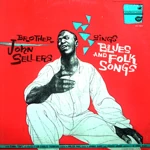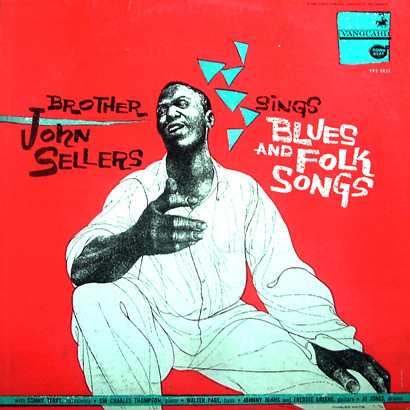
Brother John Sellers Sings Blues And Folk Songs is a landmark 1954 Vanguard Records release that captures the extraordinary voice of Brother John Sellers — a Mississippi-born singer who bridged gospel, blues, folk, and jazz with seamless grace. The album is actually a compilation of two separate 10" LPs recorded in early 1954, assembled into a 12" LP in 1958 and subsequently reissued on CD. It stands as one of the most significant documents of the early folk-blues revival, pairing a raw, powerful vocalist with some of the greatest jazz musicians of the era.
Recording Sessions & Production
The album comprises material from two separate recording sessions held in New York City in early 1954:
Session 1: January 22, 1954 — Vanguard VRS 8005 Session 2: March 10, 1954 — Vanguard VRS 7022 ("Jack Of Diamonds")
Label: Vanguard Records — released initially as two separate 10" LPs in 1954, then compiled as a 12" LP in 1958 (Vanguard VRS 9036, later VSD 79036 in stereo)
Production Supervisor: John Hammond — the legendary Columbia Records producer and talent scout who had discovered Billie Holiday, Count Basie, and Bob Dylan. Hammond's involvement guaranteed top-tier musicianship and production values. The original liner notes were also written by Hammond.
Cover Art: Charles White — the renowned African American painter and printmaker whose drawing graced both original 10" LP covers and the subsequent 12" compilation
Recording Context: The sessions were part of Vanguard's "Jazz Showcase" series, which documented both jazz and folk artists for the emerging postwar audience. The January session was particularly notable for its serendipitous origins — as documented by jazz writer Ray Horricks, it came about almost by accident.
The Serendipitous Session Story
According to Ray Horricks' account in his book on Count Basie and the rhythm section, the January 22, 1954 session was born from coincidence:
John Hammond had assembled three-quarters of Count Basie's legendary rhythm section — Freddie Green (guitar), Walter Page (bass), and Jo Jones (drums) — along with pianist Sir Charles Thompson and trumpeter Ruby Braff, to record a Sir Charles Thompson album at Vanguard Studios. As that session concluded, Brother John Sellers — newly arrived in New York from Chicago — wandered into the studio seeking an audition. When the musicians heard him sing a few bars of his own composition "Doretha Boogie," they unanimously voted to stay and record. Without contracts or prior arrangement, a new session was born, with Sellers drawing songs from his repertoire and the musicians fashioning accompaniments on the spot.
This impromptu approach — jazz masters responding in real-time to a folk-blues singer — gives the January session its unique, spontaneous energy.
The Musicians
January 22, 1954 Session (VRS 8005):
-
Brother John Sellers — vocals
-
Sir Charles Thompson — piano
-
Ruby Braff — trumpet (cornet)
-
Freddie Green — guitar
-
Walter Page — double bass
-
Jo Jones — drums
This was essentially the Count Basie rhythm section minus Basie himself, with Sir Charles Thompson substituting on piano. Freddie Green, Walter Page, and Jo Jones had been the backbone of Basie's orchestra since 1937, and their telepathic musical communication was legendary. As one reviewer noted, "it is nice to see Jo Jones hitting the right groove without using the common R&B cliches."
March 10, 1954 Session (VRS 7022):
-
Brother John Sellers — vocals
-
Sonny Terry — harmonica
-
Johnny Jones (or "Johnny Johns") — guitar
This session took a more traditional folk-blues approach, pairing Sellers with the blind harmonica master Sonny Terry (minus his usual partner Brownie McGhee) and guitarist Johnny Jones. The result was a grittier, more down-home sound compared to the jazz sophistication of the January session.
Brother John Sellers: A Brief Biography
Brother John Sellers (May 27, 1924 – March 27, 1999) was born in Clarksdale, Mississippi — the heart of the Delta blues. By age five, he was already singing, dancing, and playing tambourine in gospel tent shows put on by the Sanctified church (Holy Rollers). He watched bluesmen on the streets of Clarksdale, including Robert Johnson. By his mid-teens, he was living alone in a bordello when he was discovered by gospel legend Mahalia Jackson, who brought him to Chicago and became his mentor. He performed with Jackson throughout the 1940s, sometimes filling in for her at concerts.
In the 1950s, Sellers moved to New York City and became a central figure in the Greenwich Village folk revival scene, performing regularly at Folk City alongside Joan Baez, Bob Dylan, Paul Simon, and Art Garfunkel. He also formed a lifelong partnership with choreographer Alvin Ailey, contributing music to the landmark ballet Revelations (1960) and other Ailey works. He performed on Broadway in Langston Hughes' Tambourines to Glory and collaborated with Studs Terkel. Later recordings included albums for Monitor, Folkways, and Columbia.
Track-by-Track Breakdown
Tracks from January 22, 1954 Session (with Count Basie Rhythm Section)
1. "John Henry" (3:10)
-
Songwriter: Traditional (American folk ballad)
-
Recording: January 22, 1954, New York City
-
Musicians: Brother John Sellers (vocals), Sir Charles Thompson (piano), Freddie Green (guitar), Walter Page (bass), Jo Jones (drums)
-
Key: A♭ | Tempo: Quarter note = 216 | Form: 20 bars
-
Notes: The album opens with the classic African American folk ballad about the steel-driving man who died defeating the steam drill. Sellers' rendition is driving and intense, with the Basie rhythm section propelling the narrative at a brisk tempo. Freddie Green plays "Basie-style rhythm" — three-note chord voicings strummed four-to-the-bar. As the Freddie Green discography notes, this track features Green's "three note rhythm chords, four and five note sustained chords, and single note fills." The 20-bar form (rather than standard 12-bar blues) reflects the ballad structure.
2. "Farewell Work Life" (4:26)
-
Songwriter: Traditional / Brother John Sellers (arrangement)
-
Recording: January 22, 1954, New York City
-
Musicians: Brother John Sellers (vocals), Sir Charles Thompson (piano), Ruby Braff (cornet), Freddie Green (guitar), Walter Page (bass), Jo Jones (drums)
-
Key: B♭ | Tempo: Quarter note = 64 | Form: 12-bar blues
-
Notes: A slow blues lament about the end of working life — retirement, death, or simply the exhaustion of labor. At this slow tempo, every nuance of Sellers' voice is audible, and the band creates a spacious, mournful atmosphere. Ruby Braff's cornet adds a bluesy, vocal-like counterpoint. This is one of the tracks where Braff's "gorgeous tone" and blues-inflected phrasing are most evident.
3. "Doretha Boogie" (2:45)
-
Songwriter: Brother John Sellers (original composition)
-
Recording: January 22, 1954, New York City
-
Musicians: Brother John Sellers (vocals), Sir Charles Thompson (piano), Ruby Braff (cornet), Freddie Green (guitar), Walter Page (bass), Jo Jones (drums)
-
Key: B♭ | Tempo: Quarter note = 206 | Form: 12-bar blues
-
Notes: The song that launched the session — Sellers' original composition that so impressed the musicians they decided to record on the spot. A fast boogie-woogie with Sellers' vocals riding atop Sir Charles Thompson's rolling piano and the driving rhythm section. Freddie Green's guitar is in full boogie mode here, and Braff's cornet adds brassy excitement. This track demonstrates Sellers' ability to write and perform original material that stands alongside traditional folk songs.
4. "Boll Weevil" (3:40)
-
Songwriter: Traditional (folk ballad, associated with Huddie "Lead Belly" Ledbetter)
-
Recording: January 22, 1954, New York City
-
Musicians: Brother John Sellers (vocals), Freddie Green (guitar), Walter Page (bass), Jo Jones (drums) [no piano or trumpet on this track]
-
Key: D | Tempo: Quarter note = 82 | Form: 2/4 blues with irregular verse lengths (21, 22, 21, 21, 23, 21, 20 measures)
-
Notes: The most unusual track on the album — a folk ballad about the cotton-destroying pest, with irregular verse lengths that challenged the jazz musicians. According to the Freddie Green discography, "Jones and Page play a simple 2/4 feel closely following Sellers because of the irregular verse length; Freddie plays chord and single note fills." This is also one of the rare recordings where Freddie Green plays a notable single-string solo — "an inspired bluesy solo" that jazz scholars have cited as evidence that Green could do more than play rhythm chords. The track is a collector's item for this reason alone.
5. "Two Little Fishes, Five Loaves Of Bread" (2:58)
-
Songwriter: Traditional (gospel/spiritual)
-
Recording: January 22, 1954, New York City
-
Musicians: Brother John Sellers (vocals), Sir Charles Thompson (piano), Freddie Green (guitar), Walter Page (bass), Jo Jones (drums)
-
Key: E♭ | Tempo: Quarter note = 88 | Form: 12-bar blues
-
Notes: A gospel song referencing the biblical miracle of the loaves and fishes. Sellers' church background is evident in his fervent delivery. The tempo is moderate, allowing the Basie rhythm section to demonstrate their legendary swing feel. Freddie Green's "Basie-style rhythm" — three-note voicings on each beat — creates the propulsive groove that defines the Kansas City sound.
6. "Down By The Riverside" (3:12)
-
Songwriter: Traditional (African American spiritual)
-
Recording: January 22, 1954, New York City
-
Musicians: Brother John Sellers (vocals), Sir Charles Thompson (piano), Freddie Green (guitar), Walter Page (bass), Jo Jones (drums)
-
Key: G | Tempo: Quarter note = 210 | Form: 16 bars
-
Notes: The classic spiritual also known as "Ain't Gonna Study War No More" — an anti-war song that became an anthem of the civil rights movement. Sellers' version is uptempo and celebratory, with the rhythm section creating a joyful, marching groove. The 16-bar form gives the song a hymn-like structure distinct from standard blues. This track demonstrates Sellers' ability to move seamlessly between sacred and secular material — a quality that Studs Terkel noted: "the sinful and the secular could be heard in his singing."
Tracks from March 10, 1954 Session (with Sonny Terry)
7. "Jack Of Diamonds"
-
Songwriter: Traditional (folk song/gambling ballad)
-
Recording: March 10, 1954, New York City
-
Musicians: Brother John Sellers (vocals), Sonny Terry (harmonica), Johnny Jones (guitar)
-
Notes: The title track of the second 10" LP and one of Sellers' signature songs. "Jack of Diamonds" is a traditional gambling song about the card that brings ruin. Sonny Terry's harmonica provides a raw, country-blues counterpoint to Sellers' voice, while Johnny Jones' guitar keeps a steady folk rhythm. This is a grittier, more down-home sound than the jazz session — closer to the street-corner performances Sellers would have given in his youth.
8. "I Love You, Baby"
-
Songwriter: Brother John Sellers (original composition)
-
Recording: March 10, 1954, New York City
-
Musicians: Brother John Sellers (vocals), Sonny Terry (harmonica), Johnny Jones (guitar)
-
Notes: An original love song by Sellers, demonstrating his songwriting range beyond traditional material. Sonny Terry's harmonica weeps and moans behind Sellers' vocal, creating an intimate, after-hours atmosphere. The song shows Sellers' comfort with romantic material — the "secular" side of his repertoire that complemented his gospel roots.
9. "Sally Go Round The Sunshine"
-
Songwriter: Traditional (children's song/folk game)
-
Recording: March 10, 1954, New York City
-
Musicians: Brother John Sellers (vocals), Sonny Terry (harmonica), Johnny Jones (guitar)
-
Notes: A traditional children's play-party song that Sellers transforms into a folk-blues performance. The song's circular structure — "Sally go round the sunshine, Sally go round the moon" — is perfect for Terry's repetitive, hypnotic harmonica patterns. This track demonstrates Sellers' connection to the folk tradition beyond standard blues, encompassing the broader African American musical heritage.
10. "Every Day I Have The Blues"
-
Songwriter: Memphis Slim (Peter Chatman) / traditional blues
-
Recording: March 10, 1954, New York City
-
Musicians: Brother John Sellers (vocals), Sonny Terry (harmonica), Johnny Jones (guitar)
-
Notes: Sellers' version of the blues standard most associated with B.B. King (who recorded his definitive version in 1955). Sellers' interpretation predates King's famous recording and brings a more folk-oriented, less polished approach to the material. Sonny Terry's harmonica takes a more prominent role here, filling the space that a horn section would occupy in a jazz or R&B arrangement.
11. "Nobody Knows The Trouble I've Seen"
-
Songwriter: Traditional (African American spiritual)
-
Recording: March 10, 1954, New York City
-
Musicians: Brother John Sellers (vocals), Sonny Terry (harmonica), Johnny Jones (guitar)
-
Notes: One of the most famous African American spirituals — a song of suffering and endurance that dates back to slavery. Sellers' rendition is deeply felt, his voice conveying the weight of generations of struggle. Sonny Terry's harmonica is restrained and reverent, allowing the spiritual's message to take center stage. This track exemplifies the sacred roots of Sellers' art.
12. "Let Us Run"
-
Songwriter: Traditional (gospel/spiritual)
-
Recording: March 10, 1954, New York City
-
Musicians: Brother John Sellers (vocals), Sonny Terry (harmonica), Johnny Jones (guitar)
-
Notes: An uptempo gospel song with a driving rhythm. "Let us run, let us run, the race is not yet won" — the lyrics encourage perseverance in the Christian journey. Terry's harmonica provides a train-whistle effect that adds momentum to the track. This is Sellers as evangelist, using his voice to inspire and uplift.
13. "I've Been Lonesome, I've Been Worried"
-
Songwriter: Traditional / Brother John Sellers (arrangement)
-
Recording: March 10, 1954, New York City
-
Musicians: Brother John Sellers (vocals), Sonny Terry (harmonica), Johnny Jones (guitar)
-
Notes: A blues lament that combines the two great themes of the genre — loneliness and worry. Sellers' voice cracks with emotion as he sings of his troubles, while Terry's harmonica echoes his vocal phrases in classic call-and-response fashion. The track demonstrates the deep connection between blues and gospel in Sellers' repertoire — the same emotional vocabulary applied to different contexts.
14. "When I've Been Drinking"
-
Songwriter: Brother John Sellers (original composition)
-
Recording: March 10, 1954, New York City
-
Musicians: Brother John Sellers (vocals), Sonny Terry (harmonica), Johnny Jones (guitar)
-
Notes: An original blues about the consequences of alcohol — a theme that connects Sellers to the broader blues tradition. The song is candid and unapologetic: "When I've been drinking, I don't know what I'm doing." Terry's harmonica slurs and bends behind the vocal, mimicking the effects of intoxication. This track shows Sellers' willingness to address adult themes with honesty and humor.
15. "Lonesome Road"
-
Songwriter: Traditional (folk/blues)
-
Recording: March 10, 1954, New York City
-
Musicians: Brother John Sellers (vocals), Sonny Terry (harmonica), Johnny Jones (guitar)
-
Notes: A blues about the endless road — the traveling life of the itinerant musician. The "lonesome road" is both literal (the highways between gigs) and metaphorical (the solitary path of the artist). Sellers' voice conveys weariness and determination in equal measure. This track resonates with Sellers' own biography — the boy from Clarksdale who traveled to Chicago, then New York, then Europe, always on the move.
16. "Great Day"
-
Songwriter: Traditional (gospel/spiritual)
-
Recording: March 10, 1954, New York City
-
Musicians: Brother John Sellers (vocals), Sonny Terry (harmonica), Johnny Jones (guitar)
-
Notes: The album closer — an uplifting spiritual about the day of judgment and redemption. "Great day, great day, the righteous marching" — Sellers' voice soars with hope and conviction. Sonny Terry's harmonica provides a triumphant counterpoint. The track ends the album on a note of spiritual triumph, balancing the blues laments and folk narratives that precede it. This is Sellers as both bluesman and preacher — the dual identity that defined his career.
Critical Reception & Legacy
The album was praised by critics for Sellers' "broad expressional palette" and his ability to find "an individual approach for each song." The jazz backing on the January session was noted as particularly inspired — "the excellent backing seems to inspire him." Reviewers appreciated hearing Jo Jones in a non-jazz context, avoiding "common R&B cliches" while maintaining authentic blues feeling.
The 2006 Ace Records reissue (VMD 8005) added extensive liner notes by blues scholar Chris Smith, placing Sellers in the broader context of African American musical history. The original Charles White cover drawings have become collector's items in their own right.
The album's influence extends through multiple channels:
-
The folk revival — Sellers' performances at Folk City and on this album influenced Joan Baez, Bob Dylan, and the younger generation of folk singers
-
The civil rights movement — songs like "Down By The Riverside" became anthems of the movement, with Sellers' version being one of the most powerful
-
Jazz-folk fusion — the January session demonstrated that jazz musicians could accompany folk singers without condescension or compromise
-
The Alvin Ailey American Dance Theater — Sellers' music, including material from this album, became part of the soundtrack for Revelations, one of the most important works of American dance
-
Freddie Green scholarship — the "Boll Weevil" track remains a crucial document for understanding Green's rarely-heard solo capabilities
Studs Terkel's assessment of Sellers captures the essence of this album: "He had a light tenor voice that was very strong... the sinful and the secular could be heard in his singing." Brother John Sellers Sings Blues And Folk Songs is the definitive document of that unique voice — a bridge between the Delta and Greenwich Village, between the church and the concert hall, between tradition and innovation.