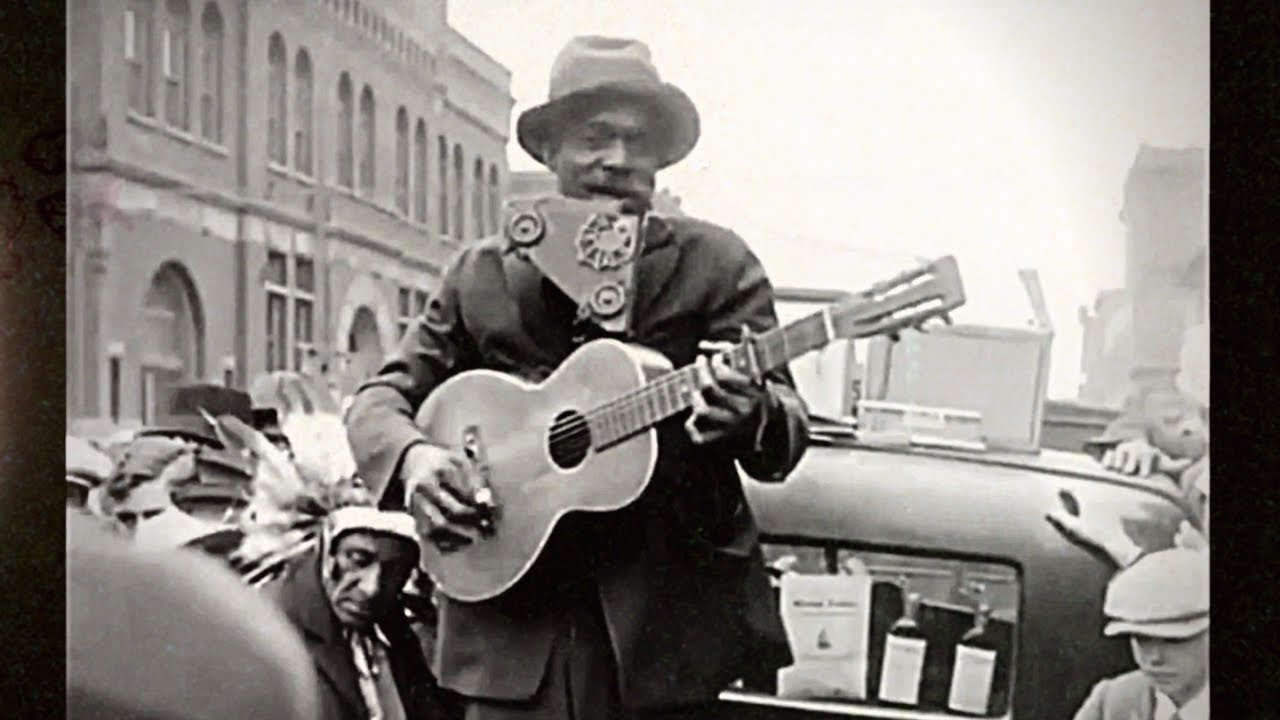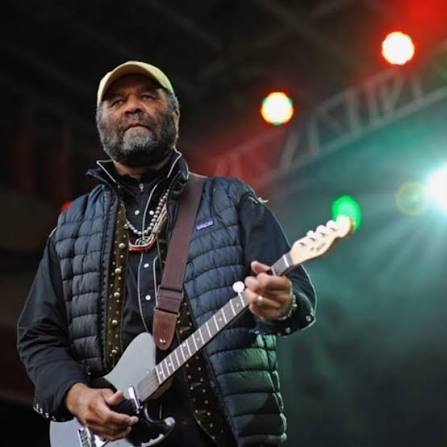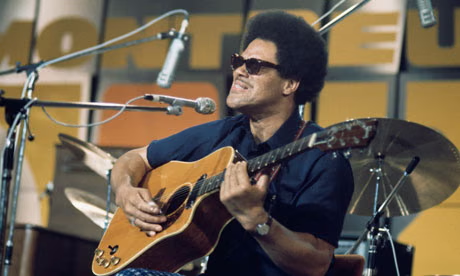
He lost his mother at birth, his father to a lynching, was raised in an orphanage, taught himself slide on Hastings Street and Maxwell Street, and left America to become the most uncompromising bluesman in Europe.
If you saw Louisiana Red live in the last twenty years of his life, in a small club in Hanover, Germany, or at a festival in Lucerne, or at a late-night jam in Chicago where he had come back to visit, you remembered how little he cared about being liked and how much he cared about being true.
He was small and wiry, with a face that had seen a lot and a voice that was high and keening, with a catch that could sound like a cry or a laugh in the same line. He played a battered acoustic or electric guitar with a slide — often a bottleneck, sometimes a pocketknife — tuned to open D or open E, with a ferocious attack, and he played harmonica at the same time on a rack around his neck. Not as a novelty act, but as a one-man band who had to make a lot of noise because he had a lot to say.
He sang about his mother dying in childbirth, his father being lynched by the Klan, being raised in an orphanage, being shot, being homeless, being Black in America and Black in Europe, and about sweet blood calling — his phrase for the pull of home and of blues. He sang without self-pity and without filter, in songs that were sometimes beautiful and sometimes brutal, often both in the same verse.
Iverson Minter, who became Louisiana Red, was born March 23, 1932, in Bessemer, Alabama, and died February 25, 2012, in Hanover, Germany. For more than fifty years he was one of the most uncompromising and most original blues musicians, with more than 50 albums, a W.C. Handy Award, work alongside Muddy Waters, John Lee Hooker, Carey Bell, and Eric Burdon, and no hit. He never wanted one.
Bessemer
Bessemer, just outside Birmingham in Jefferson County, was a steel town in the thirties, hard for Black families — mills, mines, Jim Crow, Klan. Iverson Minter was born there on March 23, 1932. His mother, Mary Minter, died at or shortly after his birth. His father was killed by Klansmen when Iverson was about five, lynched for an alleged offense that was never specified. He was orphaned.
He was raised briefly by relatives in Bessemer, then placed in an orphanage in Birmingham. The sequence blurs in his own telling, as it does for many children who lose parents early, but by the late thirties he was in Detroit, living with relatives and in institutional care, going to school irregularly and working odd jobs.
Detroit in the forties was a blues town. Hastings Street on the east side was Black Detroit's main street — clubs, barbershops, record stores, Lee's Sensation Club where John Lee Hooker played his one-chord boogie at house parties. Minter learned harmonica first, then guitar, by ear from records and from watching older players. He learned slide in open D, D-A-D-F#-A-D, or open E, with a bottleneck or a knife, with an attack influenced by Muddy Waters and Detroit slide players like Eddie Burns and Eddie Kirkland. He learned to wear a harp rack so he could play guitar and harmonica at once and be loud enough for the street. He learned to box, and picked up the nickname Red for his reddish complexion.
By his teens he was playing Hastings Street for tips, singing blues and R&B, learning how to make a crowd stop.
Chicago, Detroit, and the Road
In the early fifties he followed many Detroit players to Chicago, still Iverson Minter. Chicago was the capital of electric blues — Muddy Waters, Howlin' Wolf, Little Walter, Elmore James on the South and West Sides at the Zanzibar, the 708 Club, Silvio's. Minter played for tips on Maxwell Street, the open-air market on the Near West Side where Big Bill Broonzy and Tampa Red had played and where Magic Sam and Otis Rush were coming up. He played house parties and rent parties with Carey Bell, who became a lifelong friend, and with Bell's son Lurrie and with Eddie Taylor.
Muddy Waters let him sit in on second guitar or harp. So did Hooker when he came through. Minter absorbed Muddy's open-D slide and Hooker's hypnotic one-chord drone and half-spoken vocal.
He cut his first sides in the mid-fifties for tiny labels that barely released them, working as a sideman on harp and guitar behind others. His first sides as a leader came in the early sixties on small Detroit and Chicago imprints like Atlas. They did not sell. He worked day jobs — laborer, factory hand, dishwasher — and played at night. In Detroit in the early sixties he was shot in a dispute and spent a period homeless, in rooming houses and on the street.
He took the name Louisiana Red in the early sixties. He was from Alabama, not Louisiana, but audiences told him he sounded like Louisiana, like Lightnin' Hopkins, and Red was already his nickname. Louisiana Red sounded good. It stuck, in the same way Peetie Wheatstraw's Devil's Son-in-Law stuck — a piece of show business that told a truth about the sound.
As Louisiana Red he recorded more regularly in the late sixties and early seventies for small labels like Glover and Roulette, building a reputation among collectors and, crucially, in Europe, where white audiences were discovering blues.
The Orphanage
The orphanage is central to his songs and his worldview. Black orphanages in the South in the thirties were strict, underfed, and short on affection. Minter ran away several times, living on streets or with relatives before being returned. That early self-reliance became his ethic: make your own way, play for yourself, sing hard life without self-pity.
It also gave him his central metaphor, sweet blood call — the pull of home and of blues, blood calling you back to where you came from even when where you came from is painful. Songs like "Orphan Blues" and the title track "Sweet Blood Call" are direct and keening, not theatrical. The orphanage also gave him empathy for others on the street, which is why he often played for free at homeless shelters and sang about being shot, broke, and displaced.
Sweet Blood Call
In 1975 he recorded the album that defines him: "Sweet Blood Call" on Blue Labor Records, a small label run by Kent Cooper. It is solo — Red on guitar and harp rack, high keening voice, no band — with songs about his mother, father, orphanage, streets, and the title track about blood calling you home.
It sold little at first. Its reputation grew slowly, and by the early eighties it was considered a masterpiece of raw, unaccompanied blues. His next Blue Labor album, "Dead Stray Dog" in 1976, continued that stark approach, while "Blues for Ida B." on L+R in 1982 won the W.C. Handy Award for Best Traditional Blues Album in 1983, giving him his first real industry recognition.
He followed with a run of European recordings — "My Life" in 1984 with Carey Bell, "Midnight Rambler" in 1984, "New York Blues" and others — that mixed solo pieces with small band cuts, all with that ferocious slide and harp-rack attack.
Europe and Hanover
In 1981 he moved to Europe, like Memphis Slim and other Black bluesmen who found more work and less overt racism there. He settled in Hanover, Germany, with his wife Dora, a German photographer and manager who would remain with him until his death.
In Germany he found steady festival work — Lucerne Blues Festival where he became a regular, Montreux, North Sea, Pistoia — and German labels like L+R and Blue Labor that let him record what he wanted, with European bands or with visiting Americans like Carey Bell. He toured constantly, 200 nights a year even into his seventies, solo or with a small band, telling stories about Bessemer, Hastings Street, Maxwell Street, and Hanover between songs.
He collaborated widely: with Bell, with Eric Burdon on a late-nineties duo record, with younger European players who learned slide and rack harp from him. He became known as one of the most authentic and uncompromising bluesmen in Europe — a man who would not smooth his sound for radio, would not hide his life to be more marketable.
He died on February 25, 2012, in Hanover, at 79, of heart failure, with Dora at his side. Musicians from across Europe and America came to his funeral, including Lurrie Bell. He is buried in Hanover, far from Bessemer but close to where he lived for thirty years.
The Guitar and the Harp Rack
For players who want to understand his sound, start with open D, D-A-D-F#-A-D, or open E, E-B-E-G#-B-E, heavy strings .012 to .054, high action, slide on pinky — glass bottleneck or metal or a pocketknife — thumbpick and fingers, no flatpick, ferocious attack with a lot of palm muting and space. He snapped strings against the fretboard and let them ring with wide vibrato.
Harp rack: diatonic harp, often second position — A harp in E — strong vocal tone, lots of bending, playing call-and-response with the guitar so one man sounds almost orchestral.
Voice: high tenor, sometimes near falsetto, with a catch, slightly nasal, behind the beat, half-spoken, half-sung, building from whisper to shout the way he learned to do listening to preachers and to Hooker.
Repertoire: originals about his life — mother, father, orphanage, streets, jail, women, sweet blood call — plus Muddy, Hooker, and Lightnin' covers filtered through that high voice and slide and rack. Learn "Sweet Blood Call" for the I-IV-V with slide and rack answering, "Dead Stray Dog" for a more loping blues feel, and "Red's Dream" for slow blues with serious vocal.
Recordings - Where to Start
Start with Blue Labor: "Sweet Blood Call" (1975) and "Dead Stray Dog" (1976), solo, raw, essential. Then L+R: "Blues for Ida B." (1982) — Handy winner — and "My Life" (1984) with Carey Bell.
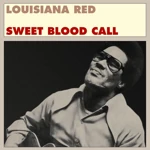 Buy from Amazon Sweet Blood Call
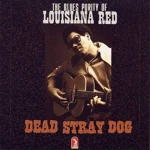 Buy from Amazon Dead Stray Dog
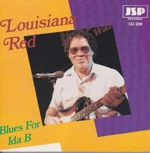 Buy from Amazon Blues for Ida B.
Then collaborations and live: festival recordings from Lucerne and Montreux in the eighties and nineties capture the long, story-filled versions with banter intact.
For deep digging, seek the early Atlas sides compiled on JSP's "The Early Recordings," rare but revealing — younger Red, still finding the voice.
Original Blue Labor vinyl BL 006 and BL 007 are collectible for their stark cover art. L+R CDs remain in print.
Influence
Red's influence is personal rather than commercial.
First, autobiographical songwriting. Singing plainly about mother dying, father lynched, orphanage, homelessness, and calling it sweet blood call gave permission to later writers like Eric Bibb and others to write blues that is personal without being confessional in a pop sense.
Second, the one-man slide-and-rack format influenced street musicians and one-man bands across Europe who saw that you could be loud and complete alone.
Third, the move to Europe as a viable life showed a generation that you could live outside America and still be blues, because blues is not about place but feeling. Memphis Slim had done it in Paris; Red did it in Hanover.
Fourth, uncompromising attitude. He never smoothed his sound for radio. That stance influenced Fat Possum artists like R. L. Burnside and Junior Kimbrough, who also refused to polish.
Finally, his high, keening slide — emotional, attacking, spacious — runs through modern slide players who value feeling over speed.
Play his "Sweet Blood Call" back-to-back with Eric Bibb's "Needed Time" or R. L. Burnside's "Goin' Down South." Same lonesome high voice, same insistence that truth matters more than polish.
Epilogue
Louisiana Red's career lasted more than fifty years, more than fifty albums, no hits, a lot of truth. He was not the most famous bluesman and not the most technically dazzling, but he was one of the most uncompromising and most personal.
He was Iverson Minter from Bessemer who became Louisiana Red because people heard Louisiana in his sound. He lost his mother at birth and his father to the Klan, was raised in an orphanage, taught himself slide on Hastings Street and Maxwell Street, moved to Hanover and lived there thirty years, and died there in 2012, far from Bessemer but close to where sweet blood called him — to the blues itself.
In Hanover today there is no street named for him, but at the local blues club there is a photo — small, wiry man, slide and harp rack, quick smile that could turn to a cry. At the National Blues Museum there is a small display on Detroit and Chicago blues that includes him.
Put on "Sweet Blood Call" late at night. That high voice, that ferocious slide, that harp answering the guitar. It sounds like a man alone who has a lot to say and says it without filter. Sweet blood still calls.
Essential Listening: Blue Labor 1975 Sweet Blood Call, Blue Labor 1976 Dead Stray Dog, L+R 1982 Blues for Ida B., L+R 1984 My Life with Carey Bell.