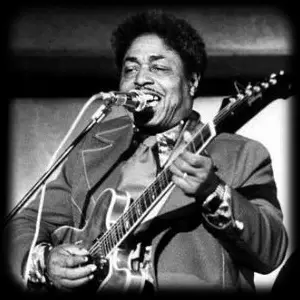
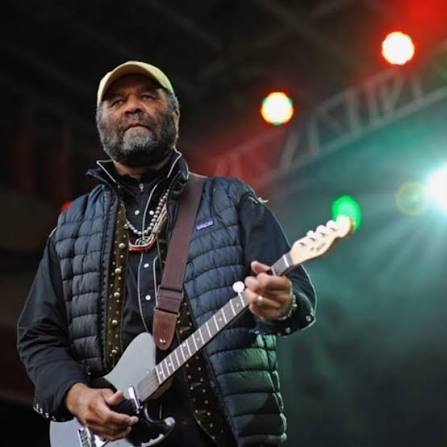
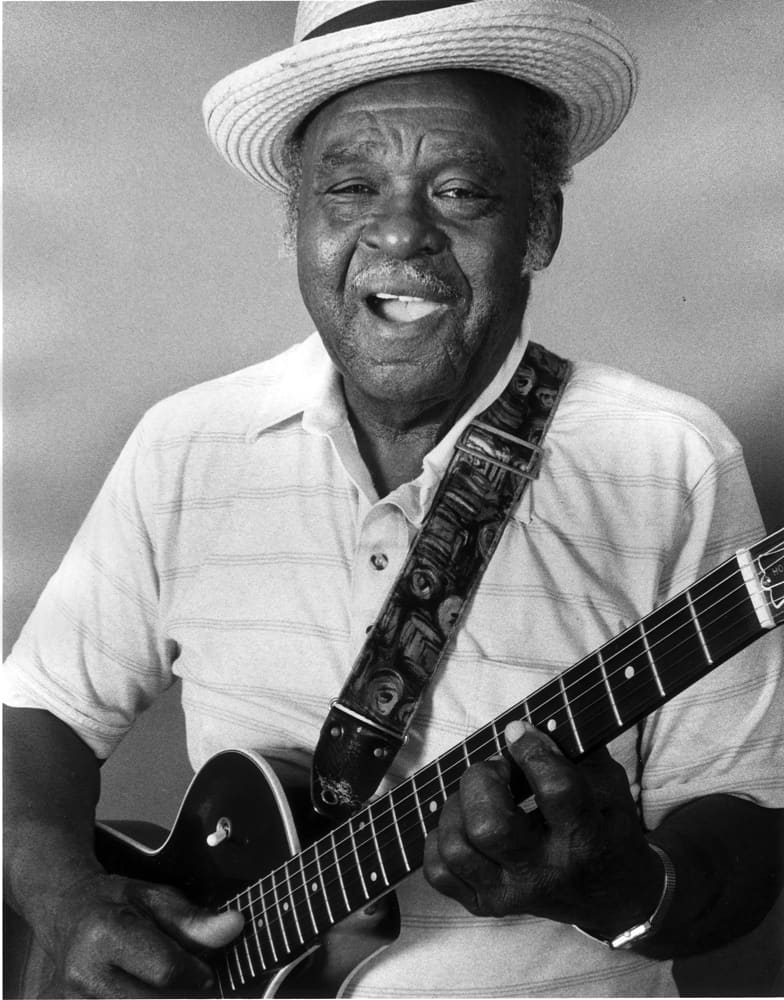
Earl Silas Johnson IV entered the world on February 7, 1934, in New Orleans, Louisiana, a city that does not merely host music but exhales it from every cracked sidewalk and rain-slicked street. He was the seventh son of a blues pianist, a lineage that sounds almost too perfectly symbolic to be true, as if the blues itself had ordained his arrival. His father, Earl Silas Johnson III, played with the legendary Tuts Washington, but he died when Earl was still an infant, leaving the boy to be raised by his mother, a woman of formidable character known affectionately as "Big Chief." The loss of his father meant that Earl never received formal musical training from the man whose name he carried; instead, he absorbed music the way New Orleans children absorb humidity, through the pores, through the air, through the very act of breathing in a city where brass bands march down funeral routes and pianos rattle in front parlors.
Big Chief made sure her son was steeped in the church from an early age. Earl sang in the choir of the Antioch Baptist Church, and with neighborhood friends he formed a gospel group that performed on street corners, harmonizing for spare change and the sheer joy of making sound. It was a common enough beginning for African American musicians of his generation, that passage from the sacred to the secular that has produced so much of American popular music. But Earl's transition from gospel to blues came not through spiritual crisis but through pragmatic advice. One day he was standing on a corner with his friend John Davis, who was playing guitar while Earl sang a few gospel songs, when a man named Victor Augustine approached them. Augustine ran a shop on Dryades Street, and he told the boys something that would alter the course of Earl's life: "You boys ought to be singing the blues because you could make a lot of money. Gospel music don't pay too much." He invited them to drop by his shop, where he knew some talent scouts, and within days the boys had worked up enough nerve to take him up on the offer. Augustine introduced them to Huey "Piano" Smith, the rollicking pianist who would become one of the defining figures of New Orleans R&B, and Smith gave Earl the words to a few boogies and set him on his path.
The Dew Drop Inn and the Education of a Showman
Huey Smith did more than give Earl songs; he gave him a job. Smith hired the teenager to sing with his group at the Algiers Club, a New Orleans nightspot where the young Earl made his first professional appearances. Since Smith could not afford to hire both a singer and a guitarist, Earl did what any ambitious young musician would do: he learned to play guitar. He was fifteen years old, and the instrument became both his voice and his vocation. Smith also entered Earl in the weekly talent contests at the Dew Drop Inn, the legendary nightclub on LaSalle Street that served as the unofficial headquarters of New Orleans black entertainment. The Dew Drop was more than a club; it was an institution, a place where musicians came to see and be seen, where careers were launched and reputations forged in the crucible of live performance. Earl began winning those contests, taking home first prize with a regularity that announced his arrival as a talent to watch.
The Dew Drop Inn opened Earl to what he would later call "a new circle of ideas and ambitions." In the early 1950s, the club was the center of a vibrant scene that included Ernie K-Doe, Billy Tate, Eddie Bo, Robert Parker, and Lloyd Price, all of them young men with dreams of recording stardom. Talent scouts and disc jockeys haunted the Dew Drop's tables, looking for the next act to sign, the next voice to put on wax. It was there that Earl met his idol and eventual mentor, Guitar Slim, the flamboyant guitarist and singer whose raw, emotional style and theatrical stage presence had made him one of the most exciting performers in the South. Slim was everything Earl aspired to be: a master of the guitar who played with his teeth, behind his back, and while strolling through the audience on a long cord, a showman who understood that music was only part of the equation and that spectacle could elevate a good performance into an unforgettable one.
The relationship between Earl and Guitar Slim was profound and formative. Slim taught Earl not just licks and chord progressions but a philosophy of performance, a way of thinking about the relationship between musician and audience. "He gave me the idea to write songs from a psychological approach—saying things that people want to hear," Earl later told Offbeat magazine. "He also taught me how to build a song. Make the second stanza stronger than the first and the third stronger than the second." It was a methodical, almost architectural approach to songwriting that would serve Earl throughout his career, distinguishing him from the more improvisational bluesmen who relied on inspiration rather than craft. Earl absorbed Slim's lessons so thoroughly that he became, for a time, virtually indistinguishable from his mentor. In 1954, when Slim was injured in an automobile accident around the time his record "The Things That I Used to Do" was climbing to number one on the R&B charts, Earl was deputized to continue a tour with Slim's band. The promoters did not announce the substitution; they simply sent Earl on stage, and the announcer introduced him as "the star of the show, Guitar Slim!" When Earl stepped up to the microphone and sang, as he told New Orleans Magazine years later, "the lid blew off the house, man. Money went flyin' everywhere. The band put all of their instruments down and helped me collect the money." It was a baptism by fire, a proof of concept that Earl King could hold a stage on his own.
The Name Game and the First Recordings
Earl made his recording debut in 1953, still billed under his birth name, Earl Johnson. The record, a 78-rpm single for Savoy Records featuring "Have You Gone Crazy" backed with "Beggin' at Your Mercy," was a modest affair that failed to attract much attention from the label's promotion department. But it put Earl on the radar of the talent scouts who were then circling New Orleans like hawks, looking for the next big thing in the wake of Fats Domino's breakthrough. The following year, Johnny Vincent, a sharp-eared producer and talent scout, introduced Earl to Specialty Records, the Los Angeles-based label run by Art Rupe that had already scored major hits with Lloyd Price and Guitar Slim himself.
It was at Specialty that Earl Johnson became Earl King, though the transformation was accidental. Rupe intended to bill him as "King Earl," a regal moniker that would have suited the young man's ambitions, but the pressing plant typesetter reversed the names, and Earl King it remained. The mistake was fortuitous; "Earl King" had a ring to it, a cadence that stuck in the memory, and Earl embraced it as his professional identity from that day forward. His first Specialty release, "A Mother's Love," was produced by Johnny Vincent and was, by Earl's own admission, an especially accurate Guitar Slim homage. The record was locally popular, but it also created problems: distributors confused Earl's sound with Slim's so completely that some jukeboxes listed "A Mother's Love" as a Guitar Slim record. Slim himself was reportedly "stark raving mad" that Earl had come so close to his sound, and the confusion made it difficult for Specialty to promote two artists who were so similar.
Despite the friction with his mentor, Earl recorded several more sides for Specialty, but none broke through nationally. The label's promotional machinery, which had worked so effectively for Lloyd Price, seemed unable to find a niche for Earl's particular blend of blues shouting and guitar pyrotechnics. By 1955, Earl had grown frustrated with Specialty's lack of commitment, and when Johnny Vincent left to launch his own label, Ace Records, Earl followed him. It was a decision that would change his life.
Ace Records and the Breakthrough
Ace Records was a small, independent operation based in Jackson, Mississippi, but its ambitions were large, and its connection to New Orleans was deep. Johnny Vincent understood the local scene in a way that the California-based Specialty never could, and he knew exactly how to position Earl King for success. The result was "Those Lonely, Lonely Nights," a two-chord south Louisiana blues that became Earl's first national hit, reaching number seven on the Billboard R&B chart in 1955. The record was a masterpiece of economy, built on a simple, repeating figure that allowed Earl's voice and guitar to dominate the arrangement. Huey Smith's rolling piano provided the propulsive undercurrent that drove the track, but it was Earl's vocal—by turns pleading and declarative, vulnerable and commanding—that made the record irresistible. The song was so distinctive that Johnny "Guitar" Watson recorded a soundalike cover in an attempt to cash in on its popularity, but Watson's version could not match the original's raw authenticity.
"Those Lonely, Lonely Nights" established Earl as a national figure, and he spent the next five years recording for Ace, turning out a string of singles that stands as one of the most consistent bodies of work in 1950s New Orleans R&B. "Well O Well O Well O Baby," "Weary Silent Nights," "Buddy, It's Time to Go," and a host of other tracks showcased Earl's developing songwriting, his increasingly confident guitar playing, and his ability to blend the raw intensity of blues with the danceable rhythms of R&B. The Ace sessions were recorded at Cosimo Matassa's studio on Rampart Street, the same room where Fats Domino, Little Richard, and countless other legends had cut their hits, and Earl benefited from the unparalleled house band that Cosimo had assembled. The musicians who backed him—drummers like Charles "Hungry" Williams, bassists like Frank Fields, and horn players from the cream of New Orleans jazz and R&B—gave his records the kind of tight, swinging precision that could only come from players who had spent years working together.
During his Ace years, Earl also began writing songs for other artists, establishing himself as a songwriter of uncommon versatility. He co-wrote "I Hear You Knocking" with Dave Bartholomew, a song that became a major hit for Smiley Lewis and that would later be revived by Dave Edmunds in the 1970s. He wrote for Roland Stone and Jimmy Clanton, tailoring his compositions to the strengths of each singer while maintaining a distinctive authorial voice. This behind-the-scenes work would become increasingly important to Earl as his own recording career waxed and waned; he understood early on that songwriting was the key to longevity in a business that chewed up performers and spit them out with ruthless efficiency.
Imperial and the Classic Period
By 1959, Earl's relationship with Ace had soured over a contract dispute, but he did not remain unsigned for long. Dave Bartholomew, the trumpeter, bandleader, and producer who had been the architect of Fats Domino's sound, invited Earl to join him at Imperial Records, the New Orleans-based label that had dominated the R&B charts since the late 1940s. Bartholomew was a demanding producer with exacting standards, but he recognized in Earl a kindred spirit, a musician who approached his craft with the same professionalism and attention to detail that Bartholomew demanded from his sessions. "Earl was a hard worker," Bartholomew later told Offbeat. "He had a lot of ideas and suggestions that were valuable. Earl could really write good, catchy songs. I have a lot of respect for Earl."
The Imperial period produced the two songs that would become Earl King's signature compositions and that would secure his place in the permanent repertoire of American popular music. "Come On," also known by its subtitle "Let the Good Times Roll," was recorded in 1960 and released as a two-part single. Musically, it was a showcase for guitar playing, performed in what music writer John Perry described as "the guitar-friendly key of E... specifically designed to cram as many hot licks as possible into a single number." Earl's guitar solos curled and sliced across the rolling New Orleans beat, balancing blues feeling with second-line rhythmic complexity. The song failed to chart at the time of its release, but its influence would prove far more enduring than any chart position. Jimi Hendrix, who had been playing "Come On" since his high school days at the Spanish Castle music club south of Seattle, recorded it with the Jimi Hendrix Experience for their 1968 album Electric Ladyland, following Earl's rhythm guitar parts but pushing the tempo into rock territory. The Hendrix version introduced the song to a massive new audience, and subsequent covers by Freddie King, Dr. John, Stevie Ray Vaughan, and the Steve Miller Band cemented its status as a standard.
The second Imperial classic was "Trick Bag," recorded in 1961. The song was inspired by a story Earl's grandmother had told him about his father, and it became one of his most beloved compositions, covered by the Meters, Robert Palmer, and countless others. Its humor, its sly narrative, and its unforgettable guitar riff made it a staple of Earl's live shows for the rest of his life. The Imperial sessions also produced "Always a First Time," which gave Earl his second chart hit in 1962, and a host of other tracks that demonstrated the breadth of his musical imagination. He was backed by an extraordinary cast of New Orleans musicians at Imperial, including drummer Bob French, bassist George French, the visionary pianist James Booker, and the brilliant arranger Wardell Quezergue. Together, they created a sound that was unmistakably of New Orleans—funky, sophisticated, and deeply rooted in the city's unique rhythmic traditions.
The Songwriter's Craft
What set Earl King apart from many of his contemporaries was his approach to songwriting, which was as methodical as it was inspired. Where many blues and R&B artists relied on improvisation and the fleeting visitations of the muse, Earl treated songwriting as a craft to be studied and mastered. Guitar Slim had given him the foundation—build the song stanza by stanza, each one stronger than the last—but Earl expanded this into a full-fledged philosophy. He wrote a book on songwriting, an almost unheard-of endeavor for a working blues musician, and he studied metaphysics in his spare time, seeking to understand the deeper patterns that governed human emotion and artistic expression.
Earl's songs were distinguished by their intelligence, their wit, and their psychological acuity. He understood that the best popular music spoke to people's desires and fears, their fantasies and their disappointments. "Time for the Sun to Rise," one of his most evocative compositions, describes a person fantasizing about how they would like life to be while knowing deep down that it cannot be. "It All Went Down the Drain" turns romantic failure into comic tragedy. "Love Rent" explores the economics of relationships with a sardonic eye. These were not simplistic blues laments; they were miniature dramas, populated by recognizable characters and driven by narratives that unfolded with the precision of a short story.
During the 1960s, Earl's songwriting became his primary source of income and his main contribution to the New Orleans music scene. He wrote "Big Chief," the Mardi Gras anthem that became Professor Longhair's signature song and that remains a staple of Carnival celebrations to this day. He wrote "Teasin' You" for Willie Tee and "Do-Re-Mi" for Lee Dorsey, both of them hits that demonstrated his ability to craft material for other voices. He co-wrote with Dave Bartholomew under his own name and under the pseudonym "E.C. King," a subtle nod to the reversed name that had launched his career. His songs were recorded by Fats Domino, Berna Dean, and a host of other artists who recognized in Earl's compositions the perfect blend of catchiness and substance.
The Wilderness Years and the Hot Line Label
In 1963, Imperial Records was sold to Liberty Records, a corporate acquisition that Earl correctly identified as "another nail in the coffin of the New Orleans music industry." The local labels that had nurtured the city's distinctive sound were being swallowed by national conglomerates, and the unique ecosystem that had produced so much great music was beginning to collapse. Determined to survive the transition, Earl and several other New Orleans musicians headed to Detroit, the home of Motown Records, where they hoped to find a new home for their talents. The trip ended in disappointment; Joe Jones, the New Orleans producer who had arranged the audition, tried to drive too hard a bargain with Berry Gordy, and the deal fell through at the last minute.
Undaunted, Earl returned to New Orleans and did what independent musicians have always done when the industry fails them: he created his own infrastructure. He established Hot Line Records, a small label that released several local and national hits, including his own recording of "Big Chief." The label was a bold experiment in self-determination, an attempt to control the means of production and distribution in an era when such control was increasingly concentrated in the hands of a few large corporations. For a time, it seemed to work; Hot Line generated genuine hits and gave Earl a platform for his own recordings. But in the mid-1960s, Dover Distributors attempted to pull Hot Line and several other small labels together into a cooperative distribution network, and when the venture collapsed, it took Hot Line and much of the remaining New Orleans independent scene down with it.
The failure of Hot Line marked the beginning of a difficult period in Earl's career. He went without a recording contract for the rest of the 1960s, a decade when the music business was changing in ways that were not favorable to artists of his generation. The British Invasion had redirected the attention of young white audiences toward rock and roll, while soul music was becoming increasingly polished and pop-oriented, leaving less room for the raw, guitar-driven R&B that Earl specialized in. Rather than chasing trends or relocating to a city with more opportunities, Earl stayed in New Orleans, doing what he had always done: writing songs, studying his craft, and finding ways to survive. He placed bets at the racetrack, ran a little record store, cut hair—whatever it took to keep body and soul together while he waited for the wheel to turn.
The Street Parade and the Seventies
The wheel began to turn in the 1970s, when Earl returned to performing with renewed energy. In 1972, he recorded an album with Allen Toussaint and the Meters, the legendary funk band that had emerged from the same New Orleans soil that had produced Earl. The album, titled Street Parade, was a concept piece built around the Mardi Gras tradition of the same name, and it represented some of Earl's most ambitious work. Atlantic Records initially expressed interest in releasing it but ultimately declined, a decision that must have been maddening for Earl after years of industry indifference. The title track was released as a single on the small Kansu label, and it became a popular Mardi Gras anthem, but the rest of the album languished in the vaults until 1981, when Charly Records in the UK finally issued it. The delay meant that one of Earl's finest artistic statements was heard by only a handful of dedicated collectors for nearly a decade.
In 1977, Earl recorded another album, That Good New New Orleans Rock 'n Roll, for the Swedish Sonet label. The record had its moments, but the production was uneven, and some of Earl's best songs received sloppy treatment that failed to capture the magic of his live performances. It was a frustrating experience for a perfectionist who took enormous pride in his work, but it kept his name in circulation and gave him material to perform on the local club circuit. Throughout the 1970s, Earl was a regular presence at uptown clubs and at the New Orleans Jazz & Heritage Festival, which was then in its infancy but would soon become one of the most important music events in the world. He also appeared on the album New Orleans Jazz & Heritage Festival 1976, a document of the festival's early years that captured Earl in his element, playing for an audience that knew his music and loved him for it.
The Black Top Revival
The true renaissance of Earl King's career began in the early 1980s, when he met Hammond Scott, a devoted record collector and Tulane Law School student who had recently moved to New Orleans. Scott knew exactly who Earl was—his hair and everything made it obvious—and when he spotted Earl at a bus stop at St. Charles and Louisiana, he pulled over and offered him a ride. What was supposed to be a short trip turned into a several-hours affair, and a friendship was born. Scott began seeking Earl out at his hangouts, and whenever Roomful of Blues, the renowned Rhode Island-based jump blues band, came to town, Earl would go see them and inevitably end up on stage.
One night, Scott watched Earl play with Roomful of Blues and had an epiphany. "Damn, this is as good as it gets," he thought. By that time, Scott was an assistant district attorney running a small record company on the side, and the idea snapped into focus: he could record Earl with Roomful of Blues, have Earl write some new tunes, and create something special. The logistics were daunting—Scott would take Earl home from sessions at five in the morning and have to be in front of a judge at eight-thirty—but the results were worth every lost hour of sleep.
Black Top Records, which Scott had co-founded with his brother Nauman in 1981, released Glazed in 1986, a collaboration between Earl King and Roomful of Blues that earned a Grammy nomination for Best Contemporary Blues Album. The album was a revelation, pairing Earl's songwriting and guitar with Roomful's tight, swinging arrangements and giving him a platform that his earlier recordings had never provided. The Black Top albums also gave Earl a chance to revisit some of his classic songs with the production values they deserved. He finally recorded "Those Lonely, Lonely Nights" with all the instruments in tune. He gave "Your Love Means More to Me Than Gold," the Imperial single, a fatter, fuller arrangement. And most importantly, he rescued "Time for the Sun to Rise" from its sloppy treatment on the Sonet album, giving the chiming guitar figure an incandescent clarity and his vocals a spellbinding intensity.
Glazed was followed by Sexual Telepathy in 1990, which featured Snooks Eaglin on two tracks and backing by Ronnie Earl & The Broadcasters on others, and Hard River to Cross in 1993, with George Porter Jr., David Torkanowsky, and Herman V. Ernest III providing the rhythmic foundation. These albums were not mere exercises in nostalgia; they were vital, contemporary statements by an artist who was still evolving, still writing, still finding new ways to express himself. "Earl has written a little differently in every decade," Hammond Scott observed. "He doesn't rest on his laurels. It's not like he has one sound and everything else is a derivation of that. Every 10 or 15 years, there's a complete washout of everything that was the old structure, and there's a totally new sound."
The Drone, the Sitar, and the Eastern Blues
One of the most fascinating aspects of Earl King's late-period creativity was his incorporation of drone elements into his guitar playing, an approach he attributed to his fascination with Ravi Shankar. "I was a Ravi Shankar fanatic," Earl explained. "I used to listen to him all night long. When Shankar plays the sitar, he lets the drone resonate off the other strings, but I don't let the drone do what it wants to do. I make the drone go rhythmically the way I want it to go." This insight—that the blues, for all its association with the American South, might have deeper connections to Eastern musical traditions—was typical of Earl's restless intelligence. "We always think of the blues as a Western culture," he said, "but from listening to the modes Shankar plays on, I think the blues are an Eastern culture."
The drone songs, of which "Time for the Sun to Rise" was the most celebrated, became staples of Earl's live performances in his later years. Audiences at clubs and festivals around the world would request them, and Earl would oblige, leading his band through the hypnotic, repetitive figures that built to ecstatic climaxes. It was a sound that no other blues guitarist was producing, a fusion of New Orleans second-line rhythms, blues tonality, and Indian classical influence that could only have come from a musician as open-eared and intellectually curious as Earl King.
The Flamboyant Showman
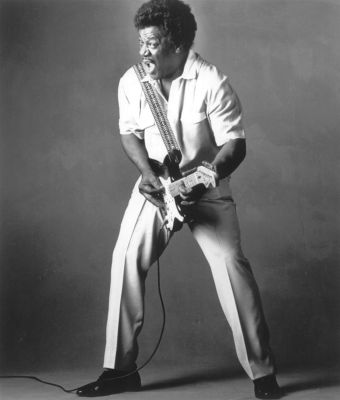
As a performer, Earl King was described by the New York Times as "flamboyant," a word that barely captures the electricity he generated on stage. He sang with what critics called "bluesy ease," but his guitar solos were anything but easy; they curled and sliced across the rolling New Orleans beat with a precision that bordered on the acrobatic. Earl understood, as Guitar Slim had taught him, that showmanship was part of the package. He did not merely play his guitar; he performed it, using his body, his facial expressions, and his stage movement to amplify the emotional content of the music. His live shows were spontaneous, unpredictable, and exhilarating, driven by a man who had spent his life on stage and who knew exactly how to work a crowd.
Cosimo Matassa, the legendary New Orleans recording engineer, testified to Earl's unpredictability in performance. Irma Thomas, the Soul Queen of New Orleans, spoke of his electric presence. Deacon John, the guitarist and bandleader, recalled how Earl could take a familiar song and transform it in the moment, stretching verses, adding guitar fills, and pushing the rhythm section into territory they had not anticipated. This was not the sloppiness of an undisciplined musician; it was the freedom of a master who had internalized the structure of his songs so thoroughly that he could deconstruct and reconstruct them at will.
The Near-Death Experience and the Final Years
In May of 1998, Earl's body finally rebelled against decades of hard living. A trip to the hospital revealed that he was on the verge of total collapse, his system ravaged by years of heavy drinking that had progressed to the point where he no longer felt drunk. "I wouldn't get drunk," he admitted. "That was what was so bad about it. If I had got plastered, that would have been cool; it might have slowed me down. But I wouldn't know I was drunk, so I would sit up there all day and put it away. I was drinking so much that I lost my appetite and I wasn't eating no food." Hammond Scott, ever the friend and advocate, suggested it might be pneumonia and urged Earl to seek help. The diagnosis was dire, but Earl was a die-hard. Once he realized he had to stop drinking, he simply stopped. "I'm a die-hard," he said, and the simplicity of the statement carried the weight of a man who had survived the music industry, the collapse of multiple record labels, and the indifference of the mainstream, and who was not about to be defeated by his own appetites.
The recovery was slow but complete. His appetite returned, his health stabilized, and he resumed performing and recording. He and Hammond Scott began planning a fourth Black Top album, but time was running out. In 2001, Earl was hospitalized during a tour of New Zealand, though the illness did not stop him from performing. In December of that same year, he toured Japan, bringing his music to audiences on the other side of the world who revered him as a master of the form. He continued to perform locally in New Orleans, appearing at clubs and festivals whenever his health permitted, a beloved elder statesman of the city's music community.
The Final Parade
Earl King died on April 17, 2003, from complications related to diabetes. He was sixty-nine years old, and his passing came just one week before the New Orleans Jazz & Heritage Festival, the annual celebration of the city's music that he had helped to build. The timing was almost unbearably poignant; Earl had been scheduled to perform, and instead his colleagues found themselves mourning his loss on the eve of the festival's opening. His funeral was held on April 30, during the festival itself, at Gallier Hall, and the building was packed with local music legends. Dr. John, Leo Nocentelli of the Meters, and Aaron Neville were among the mourners, along with Earl's four sons and a host of family, friends, and fellow musicians who had known and loved him. The service was followed by a traditional New Orleans jazz funeral procession, a second line through the streets that was the only appropriate farewell for a man who had given so much of his life to the city's music.
The June 2003 issue of OffBeat, New Orleans's premier music magazine, was devoted to tributes to Earl, with musicians and writers reflecting on his legacy. His Imperial recordings, long out of print, were reissued on CD soon after his death, giving a new generation of listeners access to the classic sides that had made his reputation. And the songs kept circulating, kept being covered, kept finding their way into the repertoire of blues and rock bands around the world.
Influence and Legacy
Earl King's influence on American music is both broad and deep, though it has often gone unrecognized by the broader public. As a songwriter, he created standards that have been recorded by some of the most important artists of the last half-century. "Come On (Let the Good Times Roll)" alone connects him to Jimi Hendrix, Stevie Ray Vaughan, Freddie King, Dr. John, the Steve Miller Band, and Flo Rida, whose 2013 hit "Let It Roll" sampled the chorus of King's composition. "Trick Bag" connects him to the Meters, Robert Palmer, and Johnny Winter. "Big Chief" is an essential text of Mardi Gras, recorded by Professor Longhair and performed by brass bands at every Carnival celebration. "Street Parade" is another Mardi Gras anthem, a song that defines the pre-Lenten revelry of New Orleans as surely as "When the Saints Go Marching In" defines its funerals.
As a guitarist, Earl influenced generations of players who heard in his playing the perfect synthesis of blues feeling and New Orleans rhythmic complexity. His solos were not merely displays of technical prowess; they were conversations with the rhythm section, dialogues with the piano and drums that pushed and pulled against the beat in ways that were uniquely Crescent City. The second-line rhythms that underpinned his best work—the syncopated parade beats that derive from New Orleans's African American brass band tradition—gave his blues a buoyancy and a swagger that distinguished it from the more straightforward Chicago or Delta styles.
As a performer, Earl set a standard for showmanship that influenced everyone who saw him. Guitar Slim may have been the originator of the theatrical blues guitar act, but Earl refined it, combining Slim's flamboyance with a songwriter's intelligence and a bandleader's authority. He was, as the Bitter Southerner described him, "the poet laureate of New Orleans R&B," a writer whose "discs were among the rare ones where the words were as important as the music, where blues guitar was balanced with second-line piano, and where the B-sides were as strong as the A-sides."
Perhaps most importantly, Earl King was an astute businessman who understood the value of his own work. Unlike so many of his contemporaries, he retained the publishing rights to his compositions, ensuring that he could live off his royalties even when the recording industry turned its back on him. It was a hard-won wisdom, born of decades of watching labels fold, contracts collapse, and opportunities evaporate. When he died, he left behind a catalog that continued to generate income for his estate, a final act of self-determination from a man who had spent his life fighting for control of his art.
The Poet Laureate's Voice
To listen to Earl King is to hear the sound of New Orleans at mid-century, a city of barrelhouses and brass bands, of Dew Drop Inns and second lines, of sacred churches and profane clubs. It is to hear a man who absorbed the lessons of Guitar Slim and T-Bone Walker, of Huey Smith and Dave Bartholomew, and who synthesized them into something unmistakably his own. It is to hear a songwriter who treated the blues not as a limitation but as a foundation upon which to build complex, witty, emotionally resonant narratives. It is to hear a guitarist who could make his instrument weep, shout, and dance, often within the same phrase.
Earl King was not the most famous musician to come out of New Orleans; Fats Domino and Louis Armstrong and the Neville Brothers loom larger in the popular imagination. He was not the most commercially successful; his chart hits were few and far between. He was not the most technically dazzling guitarist; there were faster fingers and cleaner tones in the blues world. But he was, in his quiet, determined, flamboyant way, one of the most complete musicians the city ever produced: a singer, a guitarist, a songwriter, a showman, a businessman, and a philosopher of the blues who understood that the music was as deep and as wide as the human experience itself.
His songs endure because they are true. "Come On" is still an invitation to joy. "Trick Bag" is still a warning about deception. "Those Lonely, Lonely Nights" is still the sound of a heart that cannot find rest. "Time for the Sun to Rise" is still a meditation on hope and resignation. These are not period pieces; they are living music, as relevant today as they were when Earl King first sang them into a microphone in Cosimo's studio on Rampart Street. And as long as musicians continue to play the blues, as long as audiences continue to seek the solace and the celebration that only this music can provide, Earl King will be there, his voice curling and slicing across the rolling New Orleans beat, his guitar telling stories that need no translation, his spirit marching in the second line that never ends.
For those seeking to explore Earl King's music in depth, the 2003 Okra-Tone release Come On: The Complete Imperial Recordings gathers every side he cut for Imperial between 1960 and 1963, including "Come On," "Trick Bag," and "Always a First Time." The 1997 Westside compilation Earl's Pearls: The Very Best of Earl King 1955–1960 presents the highlights of his Ace period, while the 2006 Classics release The Chronological Earl King 1953–1955 covers his Savoy and Specialty years. The Black Top albums— Glazed (1986), Sexual Telepathy (1990), and Hard River to Cross (1993)—document his magnificent late-career renaissance. For a taste of his classic New Orleans R&B at its finest, one could do worse than to start with "Those Lonely, Lonely Nights," "Come On (Let the Good Times Roll)," "Trick Bag," or "Time for the Sun to Rise"—songs that capture the essence of a musician who was, by any measure, the poet laureate of New Orleans R&B.

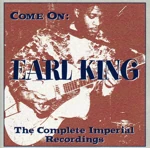 Buy from Amazon Come On: The Complete Imperial Recordings
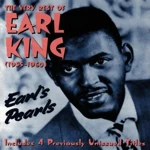 Buy from Amazon Earl's Pearls: The Very Best of Earl King 1955-1960
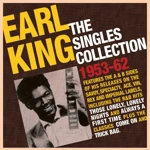 Buy from Amazon The Singles Collection 1953-62