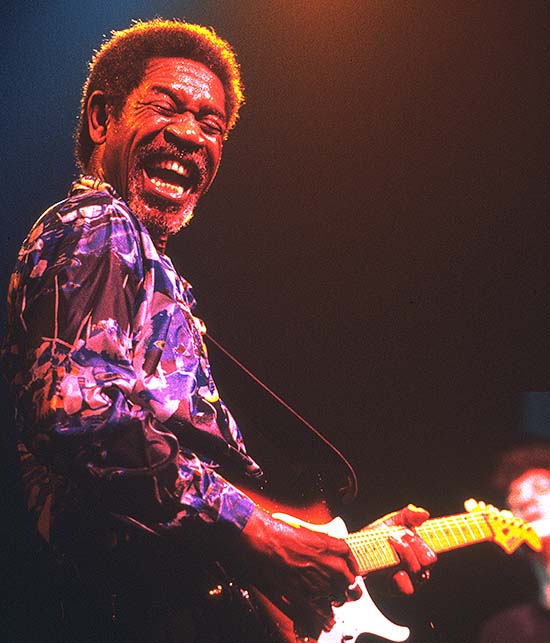
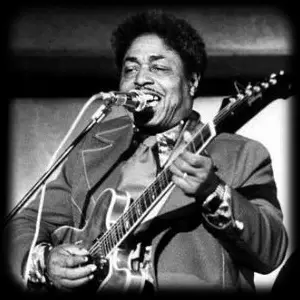
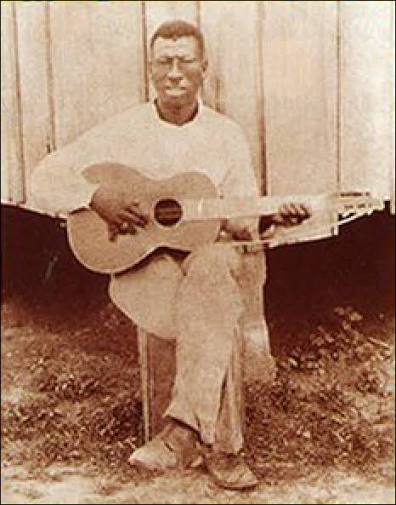
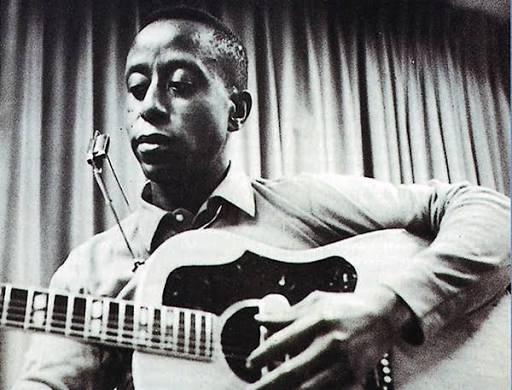
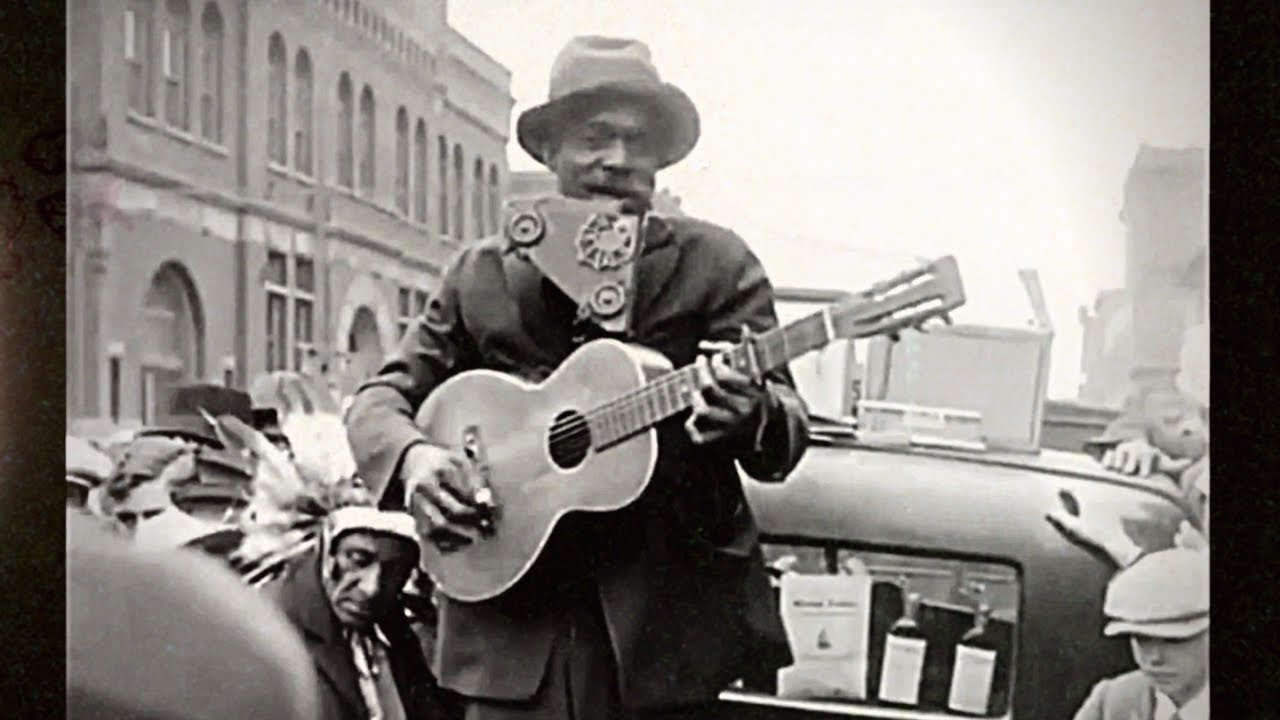
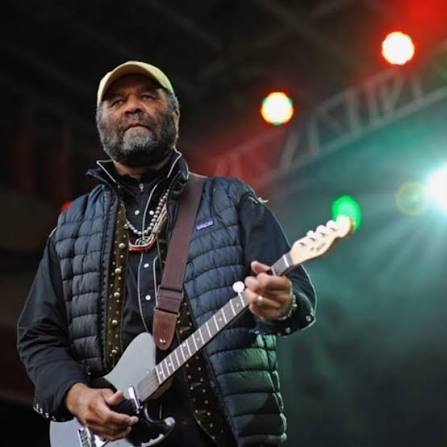
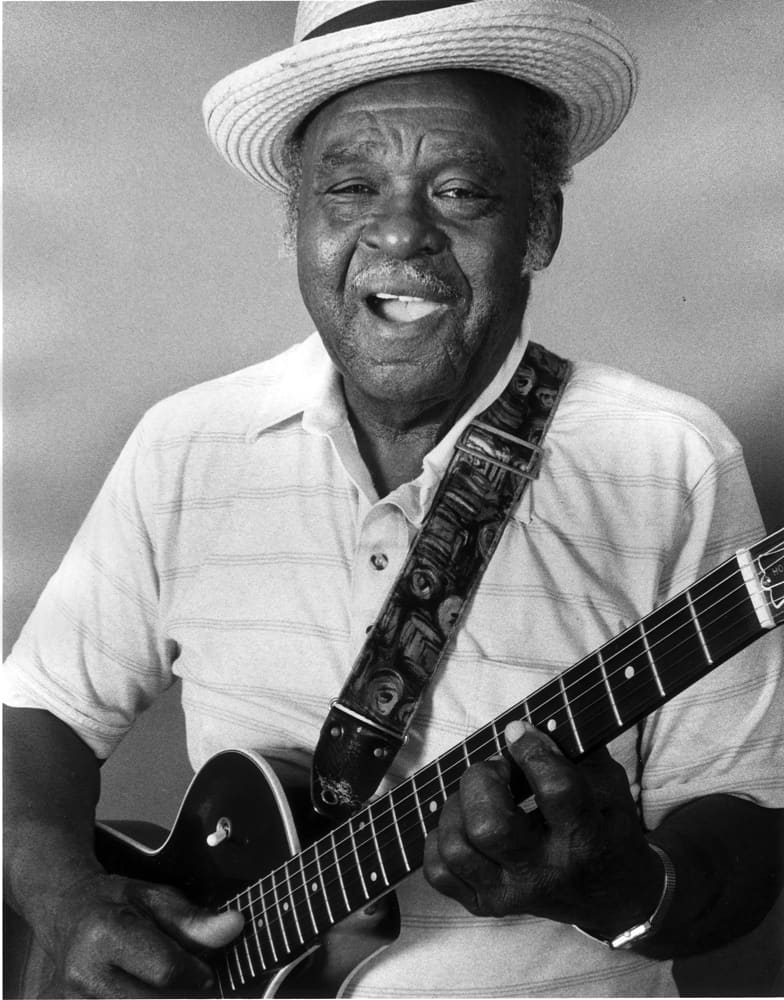
The story of Morris Holt, the man who would become Magic Slim, begins in the red clay and pine woods of Torrance, Mississippi, a former sawmill town in Yalobusha County where he was born on August 7, 1937. His parents were sharecroppers, working land that was not their own, and the young Morris grew up with the daily realities of agricultural labor, the kind of work that bends the back and hardens the hands before a boy has fully become a man. The Holt family would later move to Grenada, a slightly larger town where his mother ran a cafe on Union Street and where the family home at 818 Union became a gathering place for the local community. But in those early years in Torrance, music was already calling to the boy, though not in the form it would eventually take.
Morris's first instrument was the piano, and by all accounts he showed genuine promise. He sang in the choir of the local church, absorbing the harmonies and cadences of sacred music that would later inform the emotional authority of his vocals. He and his younger brother Nick also fashioned a homemade diddley bow, stretching a single piece of baling wire between two bottles nailed to the wall, creating a primitive one-string instrument that produced a droning, resonant tone when plucked. It was a common enough beginning for rural Southern musicians, this making of music from whatever materials were at hand, and it spoke to an innate musicality that would not be denied.
But fate intervened with the cruelty that seems to haunt the biographies of blues musicians. At the age of fourteen, Morris got his right hand caught in a cotton gin, and the machine took his little finger, his pinky, the digit that on a pianist's right hand provides the outer edge of chords and the reach for octaves. The accident ended his piano aspirations. A lesser spirit might have abandoned music altogether, but Morris Holt was not a lesser spirit. He switched to guitar, taking lessons from his uncle, Walter Miller, a bluesman who played "Roll and Tumble Blues" and who could show his nephew the rudiments of the instrument. It was a fortuitous turn. The guitar, with its six strings and portable frame, would prove to be the perfect vehicle for the sound that Morris was hearing in his head, a sound that drew from the country and western music that dominated the radio in 1940s Mississippi as much as from the blues that floated through the juke joints on Saturday nights.
The pivotal moment came when Morris heard John Lee Hooker's 1949 recording of "Boogie Chillen." The song's hypnotic, one-chord vamp and declamatory vocal style struck the teenager like a lightning bolt. "That was what turned me over to the blues," he would recall decades later, and from that moment, his course was set. He was also drawn to the performances of Rufus Thomas and Willie Mabon, and particularly to the guitarists who played in Slim Harpo's band, whose economical, piercing style left a deep impression on the young player. Under the trees in Grenada, he would sit and play alongside his childhood friend Sam Maghett, another young guitarist who shared his fascination with Hooker's boogie and who dreamed of bigger stages.
The First Trip North and the Name
In 1955, like so many young black Southerners of his generation, Morris Holt boarded a train for Chicago, following the well-worn path of the Great Migration. His friend Sam Maghett had already made the move, establishing himself on the city's West Side and adopting the stage name Magic Sam, a moniker that rhymed with his surname and that carried a touch of the mystical. Morris joined Sam's band as a bass player, but the Chicago blues scene of the mid-1950s was not kind to the unprepared. The city was teeming with talent, with established giants like Muddy Waters, Howlin' Wolf, and Little Walter dominating the clubs, and with a new generation of aggressive young players fighting for every gig. Morris's skills, honed in the relative isolation of Mississippi, were not yet up to the competitive standards of the Windy City. Discouraged, he returned to Grenada, where he would spend the next several years in what musicians call "woodshedding"—practicing, refining, and building the technique that would allow him to compete with the best.
It was during this period that Sam Maghett, now Magic Sam, bestowed upon his friend the name that would stick for the rest of his life. "Magic Slim," Sam called him, because he was slim and tall and, as Slim himself put it with characteristic humor, "I wasn't stickin' out nowhere." The name was a compliment and a prophecy. Sam told him, "Keep that name because it's gonna make you famous one day." Morris kept it, and he kept working.
Back in Mississippi, Slim did more than practice. He taught his younger brothers to play—Nick, who took up the bass, and Douglas, known as "Lee Baby," who sat behind the drums. Together they formed the nucleus of what would eventually become the Teardrops, though in those early years they were simply a family band, playing juke joints in Grenada, Charleston, Minter City, and other Delta towns where the admission was twenty-five cents and the crowd expected to dance. Slim also worked hauling and selling wood with his stepfather, and he bootlegged whiskey, doing whatever was necessary to survive while he built his musical foundation. These were not romantic years; they were years of grinding poverty and relentless work, but they forged the toughness that would characterize Slim's music for the rest of his life.
The Teardrops and the South Side
When Magic Slim returned to Chicago around 1965, he was a different musician. The uncertainty of his first trip had been replaced by confidence and control, and he quickly found work as lead guitarist for a South Side band called Robert "Mr. Pitiful" Perkins & The Teardrops. The band played at the Bo Weavil, a club at 29th and Wentworth, and Slim's slash-and-burn guitar style and booming vocals began to attract attention. When Perkins, the band's namesake and bass player, decided to quit, Slim took over as bandleader. Perkins told him, "Take the name of the Teardrop," and Slim kept it, eventually modifying it to Magic Slim & The Teardrops.
The early Teardrops lineup went through several changes before settling into the configuration that would define the band's sound. By 1970, Nick Holt had joined his brother on bass, and the two-guitar attack that would become the Teardrops' trademark was beginning to take shape. In 1973, Slim and the band took over the famed Sunday afternoon jams at Florence's Lounge on the South Side, a slot previously held by Hound Dog Taylor. It was at Florence's, in the dim, smoke-filled rooms where the bandstand was barely large enough to hold the musicians, that the Teardrops honed their sound into the tight, ferocious unit that would soon be recognized as one of the hottest blues bands in Chicago.
The Teardrops' music was raw, gut-bucket, back-alley blues, the kind of music that made no concessions to commercial trends or radio formats. Slim's guitar playing was aggressive and rhythm-driven, showing not a trace of the slickness that was creeping into blues and R&B in the 1970s. His solos were not displays of technical virtuosity in the jazz sense; they were piercing, stinging statements that cut through the ensemble like a blade. His rhythm work was equally distinctive, built on a heavy groove that owed as much to the juke joints of Mississippi as to the clubs of Chicago. And his voice—a roaring, gruff instrument that could sound like a cement mixer one moment and a wounded lion the next—provided the emotional center around which everything else revolved.
Recording Begins: From Ja-Wes to Ma Bea's
Magic Slim's recording career began in 1966, when he cut a handful of singles for the local Ja-Wes label, including "Scufflin'" and "Love My Baby." These early recordings were raw and promising, but they did not break through to a national audience. For the next decade, Slim concentrated on building his reputation through live performance, playing the ghetto clubs of Chicago's South and West Sides and establishing the Teardrops as the band to beat in the city's competitive blues scene.
His first full-length album came in 1977, when he recorded Born on a Bad Sign live at Ma Bea's, a Chicago club, on November 9, 1976. The album was released on the French label MCM Blues Records and later reissued by Storyville Records with additional tracks. It contained seven songs, five of which were Slim originals, alongside covers of St. Louis Jimmy Oden's "Goin' Down Slow" and B.B. King's "Rock Me Baby." The record captured the Teardrops in their natural habitat, the sound of a working band playing for a working audience, and it announced Slim as a recording artist of genuine power. A second MCM album, Let Me Love You (Magic Slim, Vol. 2), followed in 1978, and Slim also appeared on Alligator Records' Living Chicago Blues, Volume 2, a compilation that introduced him to a wider audience and led to further recording opportunities.
Throughout the 1980s, Slim released albums on a variety of labels, including Black & Blue, Isabel, Rooster Blues, and Wolf Records. In 1980, he recorded a cover of "Mustang Sally" and released Live 'n' Blue on the Candy Apple label. In 1982, Alligator released Raw Magic, a compilation of his Isabel material, and Rooster Blues issued Grand Slam (Essential Boogie), for which Slim won his first W.C. Handy Award, the precursor to the Blues Music Award. The 1980s also saw the arrival of John Primer, the veteran of the Chicago Blues All-Stars and the Muddy Waters Band, who joined the Teardrops as second guitarist in 1982 and would remain for thirteen years. Primer's smooth, authoritative rhythm and lead work provided the perfect foil for Slim's more aggressive approach, and the two guitarists developed an interplay that became one of the band's signature elements.
The Blind Pig Era and Gravel Road
The most significant recording relationship of Magic Slim's career began in 1990 with the release of Gravel Road on Blind Pig Records. The album featured what many consider to be Slim's finest aggregation of the Teardrops, with John Primer on guitar and Nick Holt on bass, and it opened a twenty-two-year association with the label that would produce ten albums and a live DVD. Blind Pig's owner, Jerry Del Giudice, later said that it was musicians like Magic Slim who had inspired him to start the label in the first place, and Slim became the embodiment of the label's aesthetic: raw, authentic, no-frills Chicago blues.
Gravel Road was well received by critics, landing on several year-end Top 10 lists. Billboard praised Slim as "near the top of his form," noting that the album came close to capturing the late-night ambiance of his live set. The title track was one of the first songs Slim had learned to play on his homemade baling-wire guitar in Mississippi, and its inclusion on the album served as a nod to his roots. The record also featured "Cold Women With Warm Hearts," "Hard To Handle," "Bad Luck Is Falling," and a churning version of "Further On Up The Road," all delivered with the Teardrops' trademark intensity.
The 1990s saw a steady stream of Blind Pig releases: Scufflin' in 1996, Black Tornado in 1998, Snakebite in 2000, and Blue Magic in 2002, the latter produced by Popa Chubby, who also played second guitar on several tracks. In 2005, the band released Anything Can Happen, a live album and DVD that captured the Teardrops in concert, demonstrating the power and precision that had made them festival favorites around the world. Throughout this period, Slim's sound remained remarkably consistent. He was not an artist who chased trends or experimented with fusion; he was a bluesman, and he played the blues with a conviction that brooked no compromise. "A lot of guys playin' the blues are putting too much funk in it," he once observed. "For me, I'm not gonna change and I'm not gonna put that funk in. I'm gonna stick with the blues."
The Finger and the Slide
One of the most distinctive elements of Magic Slim's guitar style was his approach to slide playing, or rather, his approach to producing slide-like effects without using a bottleneck. Slim did not use a glass or metal slide on his finger; instead, he achieved his vocalized, sliding tones by sliding with his bare finger along the strings. It was a technique that required enormous finger strength and control, and it produced a sound that was uniquely his own—less glassy than a conventional bottleneck, more organic and vocal in its phrasing. Combined with his aggressive attack and his refusal to use a pick, Slim's finger-slide method created a tone that was immediately identifiable, a piercing cry that could rise above the densest ensemble.
Slim's influences as a guitarist were wide-ranging, though he was always careful to maintain his own identity. He listened to Muddy Waters, Freddie King, and Otis Rush, absorbing the lessons of the Chicago masters without ever imitating them slavishly. "I listened to all of it but I didn't have no special reason because I didn't want to teach myself to play like nobody," he explained. "I had to get my own sound. But I would listen, to see which way I would go. But I wouldn't play like nobody but nobody was tryin' to play like me so that's how I came to it." This insistence on originality was not ego; it was the mark of a musician who understood that the blues was not a repertoire to be memorized but a language to be spoken in one's own voice.
Lincoln, Nebraska: An Unlikely Home
In 1994, Magic Slim made a move that surprised many of his Chicago admirers. He relocated his family to Lincoln, Nebraska, a college town in the Great Plains that had become one of his strongholds through years of regular performances at the Zoo Bar. The Zoo Bar, a legendary blues club, had been booking Slim for years, and the crowds there were fanatical in their devotion. Lincoln offered something that Chicago no longer could: a stable home environment away from the deteriorating conditions of the city's ghettos, a place where Slim's family could put down roots while he continued to tour the world.
The move to Lincoln did not diminish Slim's connection to Chicago or to the blues tradition he represented. He continued to tour internationally, playing Europe, Japan, and South America with a frequency that would have exhausted a much younger man. He also continued to record, and his association with Wolf Records yielded a series of live albums drawn from the Zoo Bar performances, including Don't Tell Me About Your Troubles, See What You're Doin' To Me, Teardrop, Spider In My Stew, and Highway Is My Home, all documenting different lineups and eras of the Teardrops. The Wolf releases, along with the Blind Pig albums, constitute a recorded legacy of remarkable depth and consistency.
The Encyclopedia of the Blues
One of the most astonishing aspects of Magic Slim's musicianship was his encyclopedic repertoire. He carried hundreds of songs in his head, and his live shows were renowned for their spontaneity and variety. Audience members could call out requests, and Slim would oblige, launching into everything from Delta blues standards to contemporary R&B hits, all transformed by the Teardrops' churning shuffle into unmistakably Magic Slim material. This vast knowledge was not merely a party trick; it was the product of decades spent listening, learning, and internalizing the full spectrum of African American popular music. Slim was a walking, guitar-playing library of the blues, and his ability to play nearly any song upon request made every Teardrops performance a unique event.
His live shows were rarely duplicated and never monotonous. The band's trademark sound was based on Slim's ability to take any song and transform it into a heaving blues shuffle, his penetrating guitar licks punctuating the music with the precision of a master craftsman. Whether he was playing a slow blues that hung in the air like smoke or an uptempo boogie that set the dance floor ablaze, Slim commanded the stage with a presence that was both authoritative and approachable. He was not a distant, untouchable star; he was a working musician who talked to his audience, joked with them, and made them feel like they were part of the family.
Awards, Recognition, and the National Treasure
Magic Slim & The Teardrops won their first W.C. Handy Award in 1981, and over the next three decades they would win Blues Band of the Year no fewer than six times, garnering over forty nominations in the first thirty years of the awards' existence. Living Blues magazine called them "a national treasure," a designation that reflected not only their musical quality but their role as standard-bearers for a tradition that was increasingly threatened by changing tastes and commercial pressures. In 2003, the band won the Blues Music Award as Blues Band of the Year for the sixth time, a record that may never be equaled.
Slim's influence extended beyond the blues world into the broader realm of popular music. Eddie Vedder, the frontman for Pearl Jam, was a devoted fan, and at the pinnacle of the band's career in 1994, Pearl Jam requested that Magic Slim open for them at a concert in Chicago. It was a remarkable moment of cross-generational recognition, with one of the biggest rock bands in the world acknowledging their debt to a bluesman who had spent his career playing juke joints and small clubs. Slim also recorded and performed with a wide array of artists, including James Cotton, Elvin Bishop, Lil' Ed Williams, Lonnie Brooks, Billy Branch, and Popa Chubby, always bringing the same level of commitment and intensity to collaborative projects that he brought to his own band.
The Final Years and the End of the Road
As the 2000s progressed, Magic Slim continued to record and tour with a vigor that belied his advancing age. He released Raising the Bar in 2010, an album that reached number one on the roots music charts, and Bad Boy in 2012, a covers album that proved he could still deliver the goods with the fire of a man half his age. But his health was failing. Years of life on the road, combined with the hard living that had always been part of the bluesman's lot, had taken their toll. He suffered from bleeding ulcers, heart problems, lung problems, and kidney problems, and in early 2013, while on tour, his condition worsened dramatically.
Magic Slim died on February 21, 2013, in a Philadelphia hospital, at the age of seventy-five. His manager confirmed that bleeding ulcers had sent him to the hospital, but the full picture was of a body that had simply worn out from decades of relentless use. The blues community mourned deeply. Blind Pig Records issued a statement saying that Slim "embodied the heart and soul of this label," and Blues Revue remarked that "whoever the house band in blues heaven may be, even money says they're wearing out Magic Slim albums trying to get that Teardrops sound down cold."
In May 2013, Slim was posthumously awarded a Blues Music Award for Traditional Blues Male Artist, a final recognition of his contributions to the music he had loved and served for nearly sixty years. In 2017, he was inducted into the Blues Hall of Fame, securing his place among the immortals of the genre. On July 25, 2011, the Mississippi Blues Trail had established a marker for Magic Slim on Union Street in downtown Grenada, near the site of his family home and his mother's cafe. The marker also honors his brothers Nick Holt, who died in 2009, and Douglas "Lee Baby" Holt, who died in 2006, recognizing the family band that had been the foundation of Slim's sound.
The Sound and the Legacy
To understand Magic Slim's contribution to the blues, one must understand what he represented: the continuation of the postwar Chicago blues tradition into the twenty-first century, unfiltered and uncompromised. While many of his contemporaries softened their sound, incorporated rock or funk elements, or drifted into nostalgia, Slim remained true to the raw, electric, ensemble-based blues that had defined the city's South Side in the 1950s and 1960s. His music carried on in the unvarnished style of Muddy Waters and Howlin' Wolf, of Hound Dog Taylor and Magic Sam, and he helped keep that tradition alive for new generations of listeners who discovered the blues through his records and his electrifying live performances.
The Teardrops were, in the estimation of many critics and fans, the last real Chicago blues band, a unit that played with the kind of tight, telepathic interplay that can only be forged through years of shared gigs and shared hardships. The intertwining of Slim's lead guitar with the insistent rhythm guitar grooves—whether provided by John Primer, Alabama Jr. Pettis, or later Jon McDonald—became the band's signature sound, a template for what Chicago blues should be. Nick Holt's bass lines, rock-solid and propulsive, anchored the groove with a determination that matched his brother's guitar attack. And the drummers, from Jerry Porter to Brian "BJ" Jones, provided the heavy, four-on-the-floor pulse that made the Teardrops' shuffles irresistible.
Slim's influence on modern blues and rock guitar is diffuse but significant. His slash-and-burn technique and his refusal to compromise the blues formula inspired countless younger players who encountered his music at festivals, in clubs, or on record. His son, Shawn Holt, is an accomplished guitarist and singer who took over as bandleader of the Teardrops after his father's death, releasing Daddy Told Me in 2013 with special guest John Primer, ensuring that the family tradition continues. The Kris Lager Band, a Nebraska group that had often performed with Slim, paid tribute to him on their 2012 album Swagadocious with the song "Kris Done Took My Woman," featuring Slim's unmistakable presence.
Reassessing Magic Slim in the Twenty-First Century
As the years pass and the original architects of Chicago blues recede into history, the work of reassessing and preserving Magic Slim's legacy continues. The Wolf Records archival releases, including the Zoo Bar Collection volumes and the 2019 live album I'm Gonna Play the Blues, recorded in Vienna in 2010, provide new opportunities to hear Slim in his element, leading his band through sets that mixed originals with classics from the blues canon. These recordings capture a man who, even in his seventies, was playing and singing with the passion and strength of a young lion, his growling vocals full of fire and brimstone, his guitar playing still razor-sharp.
To listen to Magic Slim is to hear the sound of Chicago blues at its most raw and essential. It is to hear a man who took the lessons of the Mississippi Delta and the South Side of Chicago and forged them into something powerful, immediate, and timeless. It is to hear a band that understood the blues not as a museum piece but as a living, breathing music, a music of shuffles and boogies, of slow blues and barn-burners, of laughter and lamentation. Magic Slim was not the most famous bluesman of his generation, nor the most commercially successful, nor the most technically refined. But he was, by any honest accounting, one of the most authentic, one of the most dedicated, and one of the most thrilling. And his music, thank God, is still here for us to hear.
For those seeking to explore Magic Slim's music in depth, the 1990 Blind Pig album Gravel Road remains the ideal entry point, featuring John Primer and Nick Holt in what many consider the classic Teardrops lineup. The Blind Pig releases Scufflin' (1996), Black Tornado (1998), Snakebite (2000), and Raising the Bar (2010) document the band's evolution over two decades, while the Wolf Records Zoo Bar Collection volumes capture the live energy of Slim's Nebraska years. The 2005 live album and DVD Anything Can Happen offers a visual and aural document of the Teardrops at full throttle. For a taste of his classic Chicago blues at its most ferocious, one could do worse than to start with "Scufflin'," "Gravel Road," "Bad Boy," or the churning shuffle of "I'm Gonna Play the Blues"—songs that capture the essence of a musician who body-slammed his audiences with a vicious guitar attack and pinned them to the floor, and who did so with a grin, a growl, and a groove that will never die.
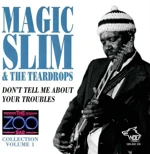 Buy from Amazon Wolf Records Zoo Bar Collection, Vol. 1 (Part of 4 volumes)

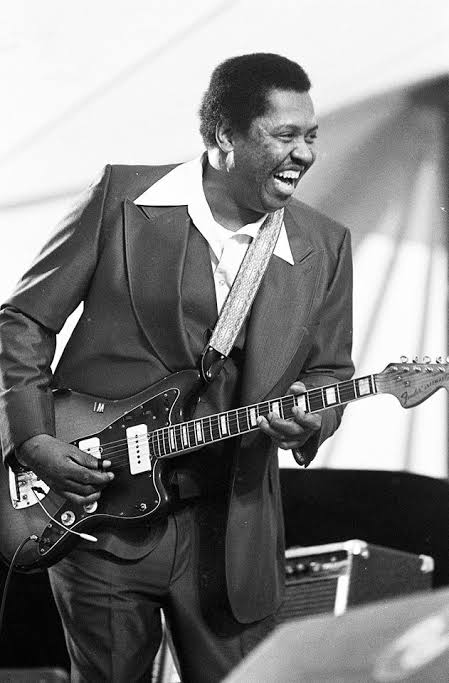
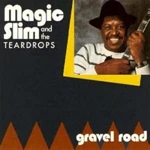 Buy from Amazon Gravel Road
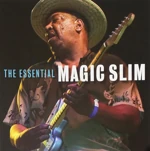 Buy from Amazon The Essential Magic Slim