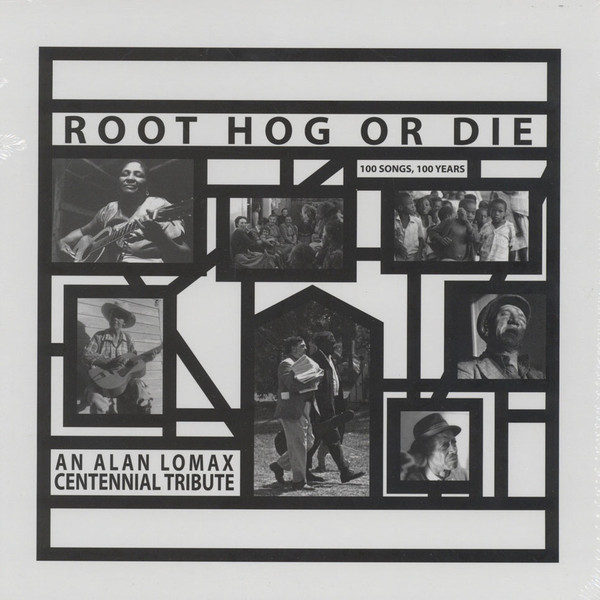
Released on March 1, 2016 by Mississippi Records (catalog no. MRP-060) in collaboration with the Alan Lomax Archive, Root Hog Or Die: 100 Songs, 100 Years is a limited-edition 6-LP box set comprising 100 tracks drawn from fifty years of Alan Lomax's field recordings, spanning 1933 to 1983. It is the most geographically and stylistically diverse compilation of Lomax's work ever assembled, pairing legendary figures with anonymous voices from across the globe. More than half of the tracks are previously unreleased.
Recording Sessions & Production
Root Hog Or Die is not a studio album but a curatorial compilation assembled from Lomax's vast archive of field recordings, made across six continents and five decades. The recordings were captured in locations as varied as Mississippi Delta plantations, Harlem apartments, London flats, Edinburgh streets, Italian beaches, Moroccan weddings, Romanian villages, and Anguillan churches.
The set was compiled by Nathan Salsburg, curator of the Alan Lomax Archive, who approached the project with a deliberate aesthetic vision. Rather than organizing chronologically or thematically—the method used for Rounder Records' earlier 13-volume CD series—Salsburg sequenced the tracks for listening flow, modeled on Harry Smith's Anthology of American Folk Music and Dust-to-Digital's Goodbye, Babylon.
As Salsburg explained, he found it "more fun to listen to these songs without the limiting academic themes or genres."
The box set includes a 22-page booklet with previously unpublished photographs, an introduction and recording chronology by Salsburg, and Alan Lomax's landmark 1976 essay "An Appeal for Cultural Equity."
The title derives from a saying Lomax recorded from Neal Morris in 1959: "Big pig, little pig, root hog or die. That's been a saying among the mountain people—that means if you don't work you don't get anything to eat. The pig's got to root if he gets anything to eat."
The Artists
The compilation features over 100 distinct artists and ensembles from more than a dozen countries. The famous appear alongside the unknown:
Legendary figures: Jelly Roll Morton, Big Bill Broonzy, Sonny Boy Williamson, Memphis Slim, Bob Dylan, Skip James, Son House, Fred McDowell, Bessie Jones, Vera Ward Hall, the Georgia Sea Island Singers, Jean Ritchie, Shirley Collins, Margaret Barry, Jimmy MacBeath, Bascom Lamar Lunsford, Clark Kessinger, Dennis McGee, Almeda Riddle, Texas Gladden, Jeannie Robertson, Duke of Iron, and Lomax himself.
Anonymous or rarely heard voices: Brother Alec Stamps and the congregation of Rose Hill Missionary Baptist Church (Greenville, Mississippi); the women's league of the South Hill Methodist Church (South Hill Village, Anguilla); Steven Wright, an adolescent hambone performer from Harlem; Abraham "Aapo" Juhan (Calumet, Michigan); fishermen on an Italian beach; wedding singers in Morocco; and voices from Romania, Spain, Bangladesh, Ireland, Scotland, Wales, and the Caribbean.
Track-by-Track Breakdown
Given the set's 100 tracks, the following highlights representative selections from each LP while conveying the scope and sequencing.
LP One
1. Alan Lomax – "I'm A Rambler, I'm A Gambler"
The set opens with Lomax himself, an unexpected but fitting gesture from a man who often sang in the field. It establishes the personal, first-person intimacy that pervades the collection.
The set opens with Lomax himself, an unexpected but fitting gesture from a man who often sang in the field. It establishes the personal, first-person intimacy that pervades the collection.
2. Sonny Boy Williamson, Memphis Slim & Big Bill Broonzy – "I Could Hear My Name A Ringin'"
A summit meeting of Chicago blues royalty, recorded by Lomax. The interplay between Williamson's harp, Slim's piano, and Broonzy's guitar represents the urbane, ensemble-driven blues Lomax documented alongside rural forms.
A summit meeting of Chicago blues royalty, recorded by Lomax. The interplay between Williamson's harp, Slim's piano, and Broonzy's guitar represents the urbane, ensemble-driven blues Lomax documented alongside rural forms.
3. Anita Wilkins and Group – "One, Two, Three"
A children's game song that exemplifies Lomax's belief that folk music permeated every aspect of life, not just professional performance.
A children's game song that exemplifies Lomax's belief that folk music permeated every aspect of life, not just professional performance.
6. Steven Wright – "Hambone"
A young boy from Harlem performs body percussion—hambone—demonstrating Lomax's interest in rhythmic traditions beyond conventional instrumentation.
A young boy from Harlem performs body percussion—hambone—demonstrating Lomax's interest in rhythmic traditions beyond conventional instrumentation.
7. Sheila Kay Adams – "Dinah"
The North Carolina ballad singer and banjo player delivers a glorious, mountain-twang rendition.
The North Carolina ballad singer and banjo player delivers a glorious, mountain-twang rendition.
9. Jelly Roll Morton – "Alabama Bound"
The New Orleans piano legend recorded by Lomax in 1938, performing the vaudeville standard with his characteristic swagger and rhythmic precision.
The New Orleans piano legend recorded by Lomax in 1938, performing the vaudeville standard with his characteristic swagger and rhythmic precision.
11. "Go Down Old Hannah"
A prison holler addressed to the sun, begging it to set and end the day's labor—a staple of Lomax's Southern prison recordings.
A prison holler addressed to the sun, begging it to set and end the day's labor—a staple of Lomax's Southern prison recordings.
13. Abraham "Aapo" Juhan – "Finnish Waltz"
From Calumet, Michigan, this track spotlights the role of ethnic Scandinavian music in the Upper Peninsula's musical heritage.
From Calumet, Michigan, this track spotlights the role of ethnic Scandinavian music in the Upper Peninsula's musical heritage.
21. Margaret Barry – "Her Mantle So Green"
The Irish street singer and banjo player, recorded at a song swap in Lomax's London flat in 1953, delivers an unforgettable vocal performance.
The Irish street singer and banjo player, recorded at a song swap in Lomax's London flat in 1953, delivers an unforgettable vocal performance.
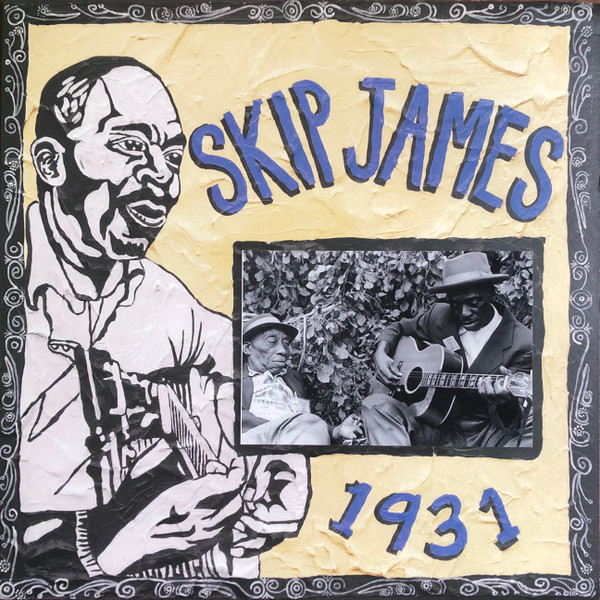
26. Skip James – "Cherry Ball Blues"
Recorded at the 1964 Newport Folk Festival, this captures the Bentonia blues master in his rediscovery prime, his falsetto and open D-minor guitar creating an atmosphere of nocturnal intimacy.
Recorded at the 1964 Newport Folk Festival, this captures the Bentonia blues master in his rediscovery prime, his falsetto and open D-minor guitar creating an atmosphere of nocturnal intimacy.
39. Big Bill Broonzy – "In A Shanty In Old Shanty Town"
Broonzy's Paris recording for Lomax, a sophisticated reading that bridges blues and popular song.
Broonzy's Paris recording for Lomax, a sophisticated reading that bridges blues and popular song.
40. Jimmy MacBeath – "Tramps and Hawkers"
The Scottish traveler singer, recorded in Edinburgh in 1951, represents Lomax's British Isles collecting.
The Scottish traveler singer, recorded in Edinburgh in 1951, represents Lomax's British Isles collecting.
LP Two
43. The Georgia Sea Island Singers – "Read 'Em John"
A ring shout and spiritual from the Gullah community, demonstrating Lomax's documentation of African American sacred traditions.
A ring shout and spiritual from the Gullah community, demonstrating Lomax's documentation of African American sacred traditions.
52. Fred McDowell – "Lord Have Mercy"
The North Mississippi hill country bluesman delivers a raw, droning spiritual that blurs the line between sacred and secular.
The North Mississippi hill country bluesman delivers a raw, droning spiritual that blurs the line between sacred and secular.
57. Dawson Henson – "Fare You Well My Little Annie Darling"
A traditional ballad from the Appalachian repertoire.
A traditional ballad from the Appalachian repertoire.
64. Rosa Lee Hill – "This Old World's In A Tangle"
The Mississippi hill country singer and associate of McDowell represents the female voice of the tradition.
The Mississippi hill country singer and associate of McDowell represents the female voice of the tradition.
67. Bob Dylan – "Masters of War"
A young Bob Dylan, recorded live in Alan Lomax's own kitchen, performing his anti-war anthem. This track alone justifies the set's archival importance.
A young Bob Dylan, recorded live in Alan Lomax's own kitchen, performing his anti-war anthem. This track alone justifies the set's archival importance.
76. "The Day Is Past and Gone"
A sacred harp or shape-note selection, representing Lomax's documentation of white Southern church singing.
A sacred harp or shape-note selection, representing Lomax's documentation of white Southern church singing.
83. Son House – "Early In The Morning"
The Delta blues patriarch, recorded by Lomax in 1941 or 1964, delivering the kind of raw, declamatory blues that influenced Muddy Waters and Robert Johnson.
The Delta blues patriarch, recorded by Lomax in 1941 or 1964, delivering the kind of raw, declamatory blues that influenced Muddy Waters and Robert Johnson.
88. Skip James – "Blues #2"
Another Newport Folk Festival recording, demonstrating the breadth of James's repertoire beyond his signature falsetto pieces.
Another Newport Folk Festival recording, demonstrating the breadth of James's repertoire beyond his signature falsetto pieces.
94. "Jesus Gonna Make Up My Dying Bed"
A spiritual that connects to the same tradition as "In My Time of Dying," recorded by Lomax in the South.
A spiritual that connects to the same tradition as "In My Time of Dying," recorded by Lomax in the South.
LPs Three Through Six
The remaining discs continue the global journey:
-
Romanian fiddle music and village dances (Strigaturi)
-
Moroccan wedding songs and devotional music (Ya Malikna)
-
Italian tammuriata drum rhythms and lullabies (Ninna Nanna)
-
Spanish fandangos and carnival songs (Ol Carneàl El Va El Vé, Fandango de Comares)
-
Scottish Gaelic waulking songs and ballads (Pu'in Bracken, Mo nighean donn á Còrnaig)
-
Haitian/Caribbean work songs and vodou rhythms (Chèz-O, Prete M Yon Chèz-O, Mèt Kafou Men Djab-la)
-
Cajun two-steps and French Canadian reels (Two Step de Eunice, Bonsoir Moreau)
-
English agricultural songs and hunting calls (High Force Agricultural Show)
-
Welsh engine songs (Cosher Bailey Had An Engine)
-
Mardi Gras Indian chants (Indian Red)
-
Sacred Harp conventions (New Prospect)
-
Anguillan Methodist hymns (Prayer / Doption)
The set closes with:
99. "Duérmete, niño angelito (Sleep, angel baby)"
A Spanish lullaby, demonstrating Lomax's belief that folk music begins and ends with the most intimate domestic moments.
A Spanish lullaby, demonstrating Lomax's belief that folk music begins and ends with the most intimate domestic moments.
100. "I Bid You Goodnight"
The Bahamas/Georgia Sea Island spiritual, a communal farewell that serves as the perfect closing benediction to a century of song.
The Bahamas/Georgia Sea Island spiritual, a communal farewell that serves as the perfect closing benediction to a century of song.
Buy This Album
Critical Assessment & Legacy
Root Hog Or Die was immediately recognized as a landmark in archival music. PopMatters called it "a vast and impressive collection of folk music, lovingly assembled" and noted that "the sheer scope of these recordings alone establishes Lomax's importance to music history."
Paste Magazine observed that the set captures "the energy Lomax applied to his mission, essentially spinning the dial through a mere fraction of the things he captured" and praised its refusal to privilege the famous over the anonymous.
The Big Takeover emphasized that "the majority of these tracks have never been previously released, making this much more than a mere compilation" and highlighted the democratic impulse behind Lomax's work: "bluegrass fits perfectly between gospel choirs and island street music."
Nathan Salsburg's curation was universally praised. His decision to sequence for artistic flow rather than academic categorization—moving from 1947 to 1954 to 1962 to 1938 within the first half of Side One alone—creates a listening experience that mirrors the chaotic, beautiful reality of human musical expression.
Today, Root Hog Or Die stands as the definitive one-volume testament to Alan Lomax's life's work—a century of song gathered by a man who believed that every voice mattered, that every tradition was worth preserving, and that the true music of the world was not found in concert halls but in kitchens, prisons, churches, fields, and streets. As Lomax himself wrote in "An Appeal for Cultural Equity," included in the box set: the future of humanity depends upon our ability to listen to one another. This box set is that listening, made tangible.