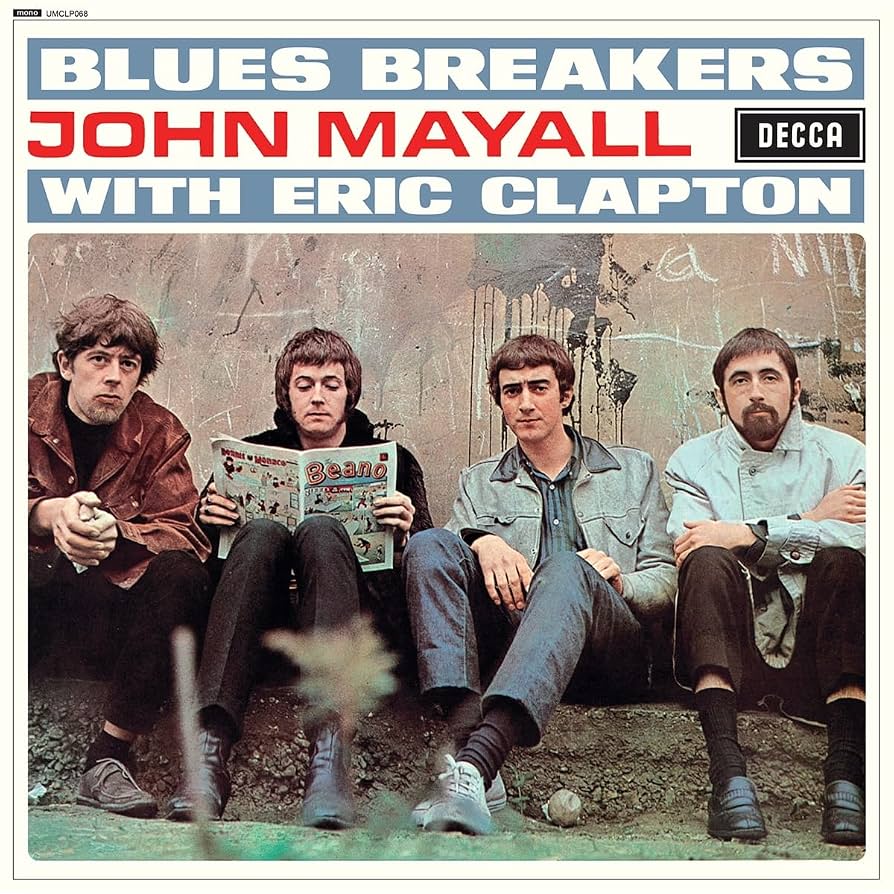
Released in July 1966 on Decca Records in the UK and London Records in the US, Blues Breakers with Eric Clapton—universally known as "The Beano Album" after its iconic cover photograph—stands as the single most influential record of the British blues boom and a foundational document of blues-rock guitar. It peaked at #6 on the UK Album Chart, remained there for 17 weeks, and was later ranked #195 on Rolling Stone's list of the 500 Greatest Albums of All Time.
Recording Sessions & Production
The album's genesis was unconventional. John Mayall originally intended his second album to be a live recording in order to capture Eric Clapton's guitar solos in their natural habitat. A set was recorded at the Flamingo Club in London with Jack Bruce on bass (with whom Clapton would subsequently form Cream), but the recordings were of poor quality and scrapped. One song, "Stormy Monday," was salvaged and later included on Mayall's retrospective Looking Back (1969).
With the live album abandoned, Mayall & the Bluesbreakers entered Decca Studios in West Hampstead, London in May 1966 to cut what would become their studio debut.
Mike Vernon produced the sessions. A champion of British blues who had already worked with the band on singles, Vernon was instrumental in getting Decca to re-sign the group after they had been dropped in 1965.
Gus Dudgeon engineered. Dudgeon would later become famous for his work with Elton John, but here he was breaking new ground in electric guitar recording. As was customary, he positioned a microphone near Clapton's Marshall speaker cabinet and was taken aback when the guitarist turned up to gig levels without headphones, working the amp to exploit nuances and controlled feedback. The unorthodox setup necessitated baffles and angling of the cabinet, and the guitar bled into room microphones, lending an ambient depth to every track.
Mayall strove for what he called a "jazz perspective where there is improvisation, a long-running jam session and exploration of the music." The band was recorded largely live as a quartet, with Mayall on Hammond organ and acoustic piano, Clapton on guitar, John McVie on bass, and Hughie Flint on drums. A horn section was added during post-production.
The famous cover photograph was taken by David Wedgbury near the Old Kent Road, showing the band seated on a curb with Clapton reading The Beano comic #1242 (dated 7 May 1966). Clapton later explained he was being deliberately uncooperative during the shoot.
The Musicians
-
John Mayall — Lead vocals, piano, Hammond B3 organ, harmonica. The 32-year-old bandleader and "Father of British Blues" provided the organizational framework and harmonic foundation, alternating between blues piano, jazz-influenced organ, and raw Delta-style harmonica.
-
Eric Clapton — Lead guitar, lead vocals on "Ramblin' on My Mind." Then 21 years old and recently departed from the Yardbirds, Clapton recorded these sessions with a sunburst 1960 Gibson Les Paul Standard (the legendary "Beano Burst") through an overdriven Marshall 1962 2×12 combo—a pairing that established the template for British blues-rock guitar tone.The guitar was stolen later in 1966 and its whereabouts remain unknown.
-
John McVie — Bass guitar. McVie's walking bass lines and sympathetic interplay with Clapton—particularly on "Little Girl," where he shadows Clapton's pizzicato attack—demonstrated the musical chemistry that would later define Fleetwood Mac.
-
Hughie Flint — Drums. Flint's drumming was pushed low in the mix on some tracks, though he managed to slip in shimmering cymbal work when producer Vernon wasn't looking.
Horn section (added in post-production):
-
Alan Skidmore — Tenor saxophone
-
Johnny Almond — Baritone saxophone (also appears on track 5)
-
Derek Healey — Trumpet (erroneously credited as "Dennis Healey" on the original sleeve)
Track-by-Track Breakdown
Side One
1. "All Your Love" (3:33)
Songwriter: Otis Rush
Musicians: John Mayall (vocals, organ), Eric Clapton (guitar), John McVie (bass), Hughie Flint (drums)
The album opens with a cover of Otis Rush's 1958 Cobra classic, delivered at a slower tempo than the original and without the horn support that makes Rush's version so seductive.
Clapton begins with supporting fills in response to Mayall's vocal before launching into a solo of slow, lingering arpeggios in the thick, overdriven Les Paul-Marshall tone. He falls behind the beat, savoring each sustain before a full-chord slide heralds a shift to double-time, where he snaps out of his reverie and lets loose.
Songwriter: Otis Rush
Musicians: John Mayall (vocals, organ), Eric Clapton (guitar), John McVie (bass), Hughie Flint (drums)
The album opens with a cover of Otis Rush's 1958 Cobra classic, delivered at a slower tempo than the original and without the horn support that makes Rush's version so seductive.
2. "Hide Away" (3:15)
Songwriters: Freddie King, Sonny Thompson
Musicians: John Mayall (organ), Eric Clapton (guitar), John McVie (bass), Hughie Flint (drums)
The Freddie King instrumental that inspired Clapton to take up guitar receives its definitive British interpretation. The band executes a standard 12-bar blues progression with walking bass, organ chord stabs, and Clapton's guitar front and center.
Clapton integrates King's signature E9 chord figures and parallel-sixth double stops, but with greater dexterity and attack. The solo builds through clipped notes, boogie-woogie variants, and high-note bends, culminating in an all-out assault on the upper fretboard. For a brief moment, the band even quotes Henry Mancini's "Baby Elephant Walk."
Songwriters: Freddie King, Sonny Thompson
Musicians: John Mayall (organ), Eric Clapton (guitar), John McVie (bass), Hughie Flint (drums)
The Freddie King instrumental that inspired Clapton to take up guitar receives its definitive British interpretation. The band executes a standard 12-bar blues progression with walking bass, organ chord stabs, and Clapton's guitar front and center.
3. "Little Girl" (2:35)
Songwriter: John Mayall
Musicians: John Mayall (vocals, organ), Eric Clapton (guitar), John McVie (bass), Hughie Flint (drums)
A Mayall original that showcases the best ensemble work on the album. The track opens with a duet between Mayall's organ and Clapton's lead guitar, matching each other note-for-note before diverging into separate supporting roles.
When Clapton's solo begins, McVie emerges from the shadows to shadow Clapton's attack with his own bass runs before both musicians take flight. The song is a mid-tempo blues shuffle with a slightly unsettling lyrical premise.
Songwriter: John Mayall
Musicians: John Mayall (vocals, organ), Eric Clapton (guitar), John McVie (bass), Hughie Flint (drums)
A Mayall original that showcases the best ensemble work on the album. The track opens with a duet between Mayall's organ and Clapton's lead guitar, matching each other note-for-note before diverging into separate supporting roles.
4. "Another Man" (1:45)
Songwriter: John Mayall
Musicians: John Mayall (vocals, harmonica, hand clapping)
Stripped down to just Mayall's voice, harmonica, and hand clapping—no guitar, no bass, no drums. This is extreme Delta-style blues, a stark tale of intimidation and oppression: "Another man done gone / He's on the county farm / I didn't know his name."
The sparse arrangement conjures the image of a man crouching in cotton fields, sharing news once the overseer is out of sight. It provides essential contrast to the electric bombast surrounding it.
Songwriter: John Mayall
Musicians: John Mayall (vocals, harmonica, hand clapping)
Stripped down to just Mayall's voice, harmonica, and hand clapping—no guitar, no bass, no drums. This is extreme Delta-style blues, a stark tale of intimidation and oppression: "Another man done gone / He's on the county farm / I didn't know his name."
5. "Double Crossing Time" (3:02)
Songwriters: Eric Clapton & John Mayall
Musicians: John Mayall (vocals, piano), Eric Clapton (guitar), John McVie (bass), Hughie Flint (drums), Johnny Almond (baritone saxophone)
A slow blues allegedly written in response to Jack Bruce's sudden departure from the Bluesbreakers to join Manfred Mann.
Mayall opens with honky-tonk piano trills before Clapton bursts from the background with a screaming solo featuring exceptionally long sustains and "woman-tone" counterpoint riffs.
Mayall's vocal mirrors Clapton's anger, resulting in one of the album's most intense performances.
Songwriters: Eric Clapton & John Mayall
Musicians: John Mayall (vocals, piano), Eric Clapton (guitar), John McVie (bass), Hughie Flint (drums), Johnny Almond (baritone saxophone)
A slow blues allegedly written in response to Jack Bruce's sudden departure from the Bluesbreakers to join Manfred Mann.
6. "What'd I Say" (4:25)
Songwriter: Ray Charles
Musicians: John Mayall (vocals, organ), Eric Clapton (guitar), John McVie (bass), Hughie Flint (drums)
Mayall insisted on covering Ray Charles's epic despite producer Mike Vernon's reservations—Vernon felt going up against Charles was a losing proposition and resisted the idea of a drum solo for Flint.
The studio version lacks the live spontaneity of the original, but Clapton compensates with overdubbed E7#9 guitar arpeggiations, a double-lead solo, and a cheeky quote of the Beatles' "Day Tripper" riff at 3:32.
Songwriter: Ray Charles
Musicians: John Mayall (vocals, organ), Eric Clapton (guitar), John McVie (bass), Hughie Flint (drums)
Mayall insisted on covering Ray Charles's epic despite producer Mike Vernon's reservations—Vernon felt going up against Charles was a losing proposition and resisted the idea of a drum solo for Flint.
Side Two
7. "Key to Love" (2:06)
Songwriter: John Mayall
Musicians: John Mayall (vocals), Eric Clapton (guitar), John McVie (bass), Hughie Flint (drums), Alan Skidmore (tenor saxophone), Johnny Almond (baritone saxophone), Derek Healey (trumpet)
The album's first horn-augmented track opens with a bright brass fanfare. The Motown/Stax-inspired horn riffs, shout choruses, and chord punctuations add commercial sheen, though critics have noted they occasionally bury Clapton's brief solo.
8. "Parchman Farm" (2:20)
Songwriter: Mose Allison (adaptation of Bukka White)
Musicians: John Mayall (vocals, harmonica), Eric Clapton (guitar), John McVie (bass), Hughie Flint (drums)
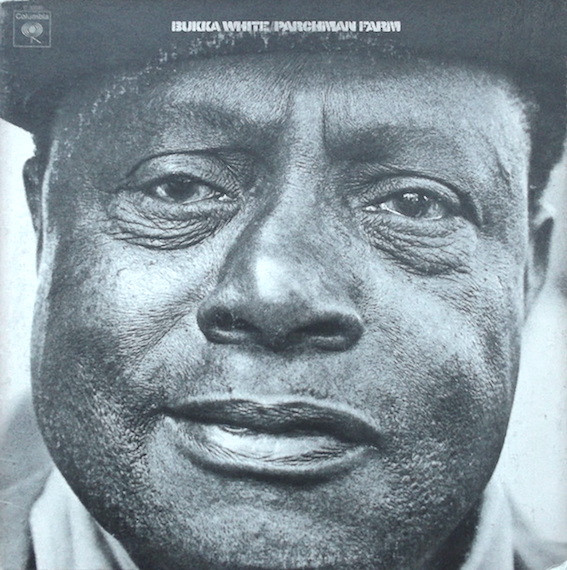
Mayall's adaptation of Mose Allison's adaptation of Bukka White's Delta classic about the Mississippi State Penitentiary. Mayall drops Allison's closing line where the convict admits to killing his wife, replacing it with a repetition of "ain't other done no man no harm"—a choice that shifts the focus to the injustice of the innocent black man imprisoned by a racist system.
The musical interpretation is light-hearted and speedy, featuring Mayall's high-speed harmonica work.
Songwriter: Mose Allison (adaptation of Bukka White)
Musicians: John Mayall (vocals, harmonica), Eric Clapton (guitar), John McVie (bass), Hughie Flint (drums)
Mayall's adaptation of Mose Allison's adaptation of Bukka White's Delta classic about the Mississippi State Penitentiary. Mayall drops Allison's closing line where the convict admits to killing his wife, replacing it with a repetition of "ain't other done no man no harm"—a choice that shifts the focus to the injustice of the innocent black man imprisoned by a racist system.
9. "Have You Heard" (5:55)
Songwriter: John Mayall
Musicians: John Mayall (vocals, piano), Eric Clapton (guitar), John McVie (bass), Hughie Flint (drums), Alan Skidmore (tenor saxophone), Johnny Almond (baritone saxophone), Derek Healey (trumpet)
The longest track on the album and the one Mayall himself cited as his personal favorite.
A slow-burning blues epic that allows Clapton to stretch out with one of his most celebrated solos—soulful, melodic, and structurally sophisticated, employing motivic development, dramatic phrasing, and vocalesque speech rhythms.
Alan Skidmore's tenor sax adds jazzy solo flourishes alongside Clapton's guitar.
Songwriter: John Mayall
Musicians: John Mayall (vocals, piano), Eric Clapton (guitar), John McVie (bass), Hughie Flint (drums), Alan Skidmore (tenor saxophone), Johnny Almond (baritone saxophone), Derek Healey (trumpet)
The longest track on the album and the one Mayall himself cited as his personal favorite.
10. "Ramblin' on My Mind" (3:07)
Songwriter: Robert Johnson
Musicians: Eric Clapton (lead vocals, guitar), John Mayall (piano)
Clapton's recorded debut as a lead vocalist. Shy about his singing, he recorded it as an intimate duet with Mayall in a separate session, with just piano and guitar.
The stripped-down arrangement places Clapton's voice in unforgiving proximity to the microphone, revealing his limitations as a singer but also the depth of his feeling for the Delta blues. His guitar work is restrained and empathetic, supporting the vocal rather than overwhelming it.
Songwriter: Robert Johnson
Musicians: Eric Clapton (lead vocals, guitar), John Mayall (piano)
Clapton's recorded debut as a lead vocalist. Shy about his singing, he recorded it as an intimate duet with Mayall in a separate session, with just piano and guitar.
11. "Steppin' Out" (2:30)
Songwriter: L.C. Frazier (Memphis Slim)
Musicians: John Mayall (organ), Eric Clapton (guitar), John McVie (bass), Hughie Flint (drums), Alan Skidmore (tenor saxophone), Johnny Almond (baritone saxophone), Derek Healey (trumpet)
The second instrumental and one of the most useful guitar lessons ever recorded. Since Memphis Slim was a piano player, Clapton had only the musical structure to guide him, taking a spirited approach with dazzling variety of bends, off-rhythm phrasing, and complete command of the blues scale.
The horn section adds sustained pads and punctuations beneath Clapton's lead.
Songwriter: L.C. Frazier (Memphis Slim)
Musicians: John Mayall (organ), Eric Clapton (guitar), John McVie (bass), Hughie Flint (drums), Alan Skidmore (tenor saxophone), Johnny Almond (baritone saxophone), Derek Healey (trumpet)
The second instrumental and one of the most useful guitar lessons ever recorded. Since Memphis Slim was a piano player, Clapton had only the musical structure to guide him, taking a spirited approach with dazzling variety of bends, off-rhythm phrasing, and complete command of the blues scale.
12. "It Ain't Right" (2:40)
Songwriter: Marion Walter Jacobs (Little Walter)
Musicians: John Mayall (vocals, harmonica), Eric Clapton (guitar), John McVie (bass), Hughie Flint (drums)
The album closes with a Little Walter classic, showcasing Mayall's harmonica skills in a more traditional Chicago blues setting. Clapton's guitar provides stinging fills around Mayall's vocal and harp, ending the record on a note of raw, unadorned blues authenticity.
Buy This Album
Critical Assessment & Legacy
Blues Breakers with Eric Clapton was immediately recognized as a watershed. The album pioneered the now-iconic combination of a Gibson Les Paul through an overdriven Marshall amplifier—a pairing that would define hard rock and heavy metal guitar tone for generations.
Critics and musicians alike acknowledged its revolutionary impact. The record elevated standards overnight, establishing Clapton as the preeminent British blues guitarist and setting in motion the rise of the guitar hero. By the time the album fell off the charts, Clapton had already departed to form Cream with Jack Bruce and Ginger Baker—making Blues Breakers a one-off document of a fleeting but transformative musical partnership.
Today it remains revelatory essential listening for anyone interested in how blues informed hard rock—the bridge between the Chicago blues tradition and the British Invasion, captured at the precise moment when a 21-year-old guitarist changed the sound of popular music forever.