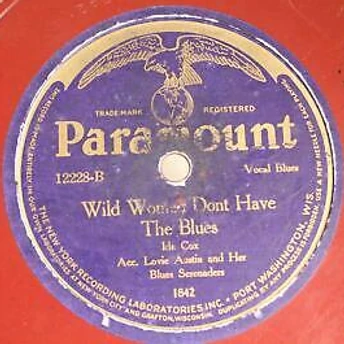
“Wild Women Don’t Have the Blues” (also known as “Wild Women Don’t Get the Blues” or simply “Wild Women”) is a classic 1924 vaudeville-style blues recorded by Ida Cox with Lovie Austin and Her Blues Serenaders. It stands as one of the most assertive and enduring statements of female independence in early blues, celebrated for its unapologetic feminist message and Cox’s commanding delivery.
Recording Sessions and Producer
The original version was recorded in Chicago, Illinois, circa August 16 to late August 1924 for Paramount Records (catalog 12228). It was issued as the B-side of “Cherry Picking Blues,” with matrix number 1842-4. The record was first advertised in the Chicago Defender on October 18, 1924.
Paramount sessions of this era rarely list a formal “producer” in the modern sense. The label’s race-record operations were overseen in part by figures such as J. Mayo Williams, who played a key role in scouting and guiding Paramount’s Chicago blues output. The session featured the house-style accompaniment of Lovie Austin’s Blues Serenaders, a tight, professional unit that regularly backed Paramount’s leading female blues singers.
Ida Cox returned to the song nearly four decades later. On April 12–13, 1961, in New York, she re-recorded it for Riverside Records as part of the album Blues for Rampart Street (later reissued under titles including Wild Women Don’t Have the Blues). This session, produced in the modern sense by figures associated with Riverside (including involvement from Chris Albertson and Orrin Keepnews in related contexts), paired the 65-year-old Cox with an all-star swing-era group.
Songwriters
The song is solely credited to Ida Cox (born Ida Prather, February 25, 1888 or 1896 – November 10, 1967). Unlike many classic blues artists who relied heavily on outside writers, Cox composed a significant portion of her own material, including several of her strongest and most distinctive sides.
Detail on the songwriter: Ida Cox was a savvy, self-directed artist who managed her own career and touring companies (such as Raisin’ Cain and Darktown Scandals). She wrote songs that reflected a tough, independent persona—sassy, worldly, and unwilling to tolerate mistreatment. “Wild Women Don’t Have the Blues” is her most celebrated composition and a clear expression of that outlook.
The lyrics reject the traditional blues narrative of the suffering, abandoned woman. Instead, Cox contrasts “poor women” who sit around moaning about trifling husbands and “monkey men” with the “wild women” who refuse to worry or suffer:
I’ve got a disposition and a way of my own, When my man starts to kicking I let him find a new home, I get full of good liquor, walk the street all night, Go home and put my man out if he don’t act right. Wild women don’t worry, wild women don’t have the blues.
This stance was radical for 1924. While classic blues frequently addressed male mistreatment, few songs so explicitly celebrated female autonomy, sexual freedom, and the refusal to play the victim. Cox’s writing draws on vaudeville traditions of strong female characters while grounding the message in blues form and vernacular. The song’s structure is straightforward and memorable, with a clear verse-refrain pattern that makes the central slogan land with force. Its enduring appeal lies in this combination of personal declaration, humor, and defiance—qualities that have made it an early feminist anthem and a favorite of later generations of singers.
Cox collaborated with pianist Jesse Crump (her husband for a period) on other material, but “Wild Women Don’t Have the Blues” stands as her own work and one of the clearest examples of her songwriting voice.
Musicians (1924 Paramount Version)
The original recording features:
- Ida Cox – vocals
- Lovie Austin – piano (leader of the Blues Serenaders)
- Tommy Ladnier – cornet
- Johnny Dodds – clarinet
This was a high-caliber Chicago ensemble. Lovie Austin was one of the premier blues pianists and bandleaders of the era, known for her crisp, supportive playing and arranging skills. Tommy Ladnier contributed bright, swinging cornet lines, while Johnny Dodds (already a major figure from his work with King Oliver and Louis Armstrong) provided distinctive clarinet fills and obbligatos. The small-group texture is typical of Paramount’s classic blues sides: piano-driven rhythm with front-line horns providing color and response rather than dense arrangement.
The 1961 Riverside version featured a star-studded swing group: Roy Eldridge (trumpet), Coleman Hawkins (tenor saxophone), Sammy Price (piano), Milt Hinton (bass), and Jo Jones (drums).
Other Versions
The song has been widely covered. Notable versions include:
- Nancy Harrow (1960, title track of her album with Buck Clayton arrangements)
- Barbara Dane
- Francine Reed (a signature song for the singer, who also worked with Lyle Lovett)
- Cass Elliot with The Big 3
- Lyle Lovett
- Cyndi Lauper (bonus track on her 2010 album Memphis Blues)
- Sue Keller, Saffire – The Uppity Blues Women, and various jazz and blues revivalists
It has also been performed by male artists and ensembles, including the San Francisco Gay Men’s Chorus, demonstrating its broad cultural reach.
Musical Style and Analysis
The song is a classic example of 1920s classic (or “vaudeville”) blues: structured, urban, and performed by a professional female singer with a polished small jazz-band accompaniment. It is not a pure rural 12-bar country blues but a verse-refrain form that incorporates blues feeling, blue notes, and call-and-response elements between voice and instruments.
Ida Cox’s vocal style is distinctive. She was neither a pure shouter like Bessie Smith nor a moaner; her delivery is heavy-voiced, laid-back, sure, warm, and slightly nasal, with excellent control and subtlety of timbre. She uses volume and emphasis strategically rather than constant intensity, allowing the lyrics’ attitude to shine through. The refrain—“Wild women don’t worry, wild women don’t have the blues”—is delivered with knowing confidence.
Lovie Austin’s piano provides a solid, swinging foundation with characteristic blues left-hand patterns and right-hand fills. Tommy Ladnier’s cornet and Johnny Dodds’s clarinet supply melodic commentary, punctuating the vocal lines with short, expressive phrases typical of the Chicago style of the mid-1920s. The overall feel is lively and assertive rather than mournful, matching the lyrical content.
In the 1961 remake, the swing-era all-stars bring a more expansive, jazz-oriented sound while Cox’s older voice retains the same authoritative personality. The song’s musical simplicity and strong melodic hook have made it adaptable across styles—from classic blues to swing, folk-blues revival, and contemporary interpretations—while its message has ensured its lasting cultural resonance.
“Wild Women Don’t Have the Blues” endures as both a fine example of 1920s classic blues craftsmanship and a bold declaration of female agency that still resonates a century later.
Suggested Listening
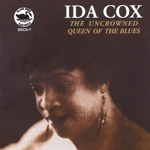 Buy from Amazon The Uncrowned Queen Of The Blues
Legacy
“Wild Women Don’t Have the Blues” is widely regarded as an early feminist anthem within the blues tradition. Long before later songs of female empowerment, Cox articulated a vision of women who refuse to suffer in silence or accept mistreatment. The song helped define Cox’s tough, independent public image and remains her best-known composition.
Its revival in the 1960s folk and blues revival, particularly through the 1961 Riverside recording and subsequent covers, introduced it to new audiences. It has been cited in discussions of women’s history, blues scholarship, and popular culture as evidence of progressive attitudes within classic blues. Cox herself is remembered as one of the major figures of the classic blues era—alongside Ma Rainey and Bessie Smith—and this song is central to that legacy. Paramount promoted her as the “Uncrowned Queen of the Blues,” and the track exemplifies why.