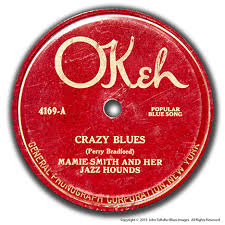
“Crazy Blues” is the landmark 1920 recording by Mamie Smith and Her Jazz Hounds that is widely regarded as the first commercially successful blues record by a Black artist and the spark that ignited the “race records” boom. Written by Perry Bradford (originally as “Harlem Blues”), it was recorded on August 10, 1920, for Okeh Records (catalog 4169) and released later that year, with “It’s Right Here for You (If You Don’t Get It—’Taint No Fault o’ Mine)” as the B-side. Its massive sales—estimates range from 75,000 copies in the first month or two to over a million overall—proved there was a large, previously ignored market of Black record buyers and opened the doors of the recording industry to African American performers.
Recording Sessions and Producer
Mamie Smith’s path to the session began earlier in 1920. Songwriter and hustler Perry Bradford had been persistently pitching his songs and Smith (whom he had featured in his stage show Made in Harlem / Maid of Harlem) to record companies. After a trial for Victor went nowhere, Bradford convinced Okeh recording director Fred Hager to give Smith a chance. On or about February 14, 1920, she recorded two Bradford songs—“That Thing Called Love” and “You Can’t Keep a Good Man Down”—backed by Okeh’s white house orchestra (the Rega Orchestra). Those sides sold well enough to earn a return date.
For the historic August 10, 1920, session at Okeh’s New York studio (near Times Square), Bradford insisted on an all-Black band, which he hastily assembled and named the Jazz Hounds. Hager supervised the session (with assistance from the young Ralph Peer in some accounts); recording engineer Charles Hibbard was present and reportedly frustrated by the band’s loud, uninhibited approach, which clashed with the limitations of acoustic recording technology. The musicians ignored instructions to play softer, leading to multiple discarded takes before a usable balance was achieved. Bradford later claimed “mental telepathy” guided the head arrangements. The session also produced the B-side. Okeh’s Otto Heineman is sometimes credited with suggesting the title change from “Harlem Blues” to “Crazy Blues.”
Songwriters
The sole credited songwriter is Perry Bradford (February 14, 1893 – April 20, 1970), an Alabama-born pianist, singer, dancer, songwriter, and vaudeville performer nicknamed “Mule” for his stubborn determination. Bradford grew up in Atlanta, worked Southern theater circuits, and arrived in New York around 1910. He specialized in blues-inflected popular songs tailored for stage shows and was relentless in promoting both his material and Black performers to the white-controlled recording industry.
Detail on the songwriter and composition history: Bradford originally wrote the piece around 1918 as “Harlem Blues” for his theatrical production Made in Harlem, in which Mamie Smith performed it. The melody and structure drew from earlier floating blues themes that had circulated in sporting houses and vaudeville under various titles. Sources link it to older material such as “Baby, Get That Towel Wet,” James P. Johnson’s “Mama and Papa’s Blues,” and Bradford’s own prior songs including “The Broken-Hearted Blues” and “The Wicked Blues” (also known as “The Nervous Blues”). Bradford had sold rights to some of these earlier versions, leading to later legal disputes (including a 1921 lawsuit by Max Kortlander alleging that “Crazy Blues” was essentially a retitled “Wicked Blues”). The title was changed to “Crazy Blues” for the Okeh release, partly at the suggestion of Okeh management.
Bradford’s lyrics follow a classic blues narrative of romantic abandonment and emotional turmoil, but they are framed for theatrical performance rather than pure folk expression. The singer cannot sleep or eat, feels mistreated, and expresses escalating desperation that includes a startling, coded line about getting a gun and shooting a cop—interpreted by some modern scholars as a veiled response to the racial violence of the 1919 “Red Summer.” The structure mixes non-blues verses with embedded 12-bar blues choruses rather than a continuous string of 12-bar choruses, reflecting its stage origins. Bradford’s genius lay less in pure originality of melody than in packaging existing blues feelings into a commercially viable, singable form that a polished vaudeville vocalist could deliver with impact, and in stubbornly forcing the industry to record it with Black musicians.
Musicians
Personnel for the August 10 session is not documented in surviving Okeh files and remains partly disputed between accounts by Bradford and pianist Willie “The Lion” Smith (both of whom claimed key roles). The most commonly accepted lineup for Mamie Smith and Her Jazz Hounds includes:
- Mamie Smith – vocals
- Johnny Dunn (or possibly Addington Major) – cornet/trumpet
- Dope (Ward) Andrews – trombone
- Ernest Elliott (or possibly Bob Fuller) – clarinet
- Leroy Parker – violin
- Piano: claimed by both Perry Bradford and Willie “The Lion” Smith (Smith appears in related publicity photos; the piano is relatively buried in the mix)
The band played with high energy and improvisational freedom, producing a hot, raucous sound that contrasted sharply with the more sedate white studio orchestras of the era. This “hot” approach—trombone smears, energetic cornet, clarinet fills, and violin—helped make the record exciting and danceable.
Musical Style and Analysis
“Crazy Blues” is best described as a blues-inflected popular song or theatrical blues rather than a pure 12-bar country blues. It alternates structured verses with blues choruses, reflecting its origins as stage material. The tempo is moderate to upbeat, supporting both emotional expression and the energetic interplay of the Jazz Hounds.
Mamie Smith’s vocal style is central: she was a trained vaudeville performer with a strong, clear contralto, precise diction, and dramatic flair rather than the raw, growling intensity later associated with classic blues shouters like Bessie Smith. She belts with authority and swagger, bending notes and interacting dynamically with the band—riding trombone smears and responding to instrumental “bombs.” The accompaniment is hot and collective: the cornet leads with punchy phrases, the trombone provides smears and rhythmic drive, the clarinet weaves fills, and the violin adds melodic color, all over a propulsive rhythm. The overall effect is lively, urban, and theatrical—more “Jazz Hounds” than rural juke-joint blues—yet unmistakably blues in feeling and subject matter.
The combination of Smith’s polished yet passionate delivery, Bradford’s accessible yet emotionally charged songwriting, and the uninhibited Black band created a record that felt both novel and authentic to contemporary Black audiences. It captured the energy of Harlem nightlife and the emotional realities of urban migration and romantic struggle, packaged in a form that could sell widely. In doing so, “Crazy Blues” not only became a hit but redefined what popular music could sound like and who it could be for.
Other Versions
Contemporaneous and later covers include versions by Noble Sissle (1921), the Original Dixieland Jazz Band (1921), Georgia White (1940), Barbara Dane (1962), Leon Redbone (1977), and others. The song has been widely reissued on historical compilations of early blues, race records, and women’s blues. Its status as a foundational recording ensures continual presence in archival projects and scholarly collections.
Legacy
“Crazy Blues” transformed the American recording industry. Its unexpected commercial success demonstrated that Black consumers would buy records by Black artists performing in vernacular styles, leading major labels to create “race records” series and aggressively seek out other Black female blues singers (Bessie Smith, Ma Rainey, Ethel Waters, Clara Smith, and many more). It launched Mamie Smith as a national star billed as the “Queen of the Blues” and made Perry Bradford a wealthy (if litigious) figure for a time. The record was inducted into the Grammy Hall of Fame in 1994 and selected for the National Recording Registry of the Library of Congress in 2005. Its cultural impact extended beyond music sales: it validated Black artistic expression in the commercial marketplace and helped pave the way for the broader flowering of blues, jazz, and later popular music by African American artists.
Suggested Listening
 Buy from Amazon Crazy Blues: Best of Mamie Smith
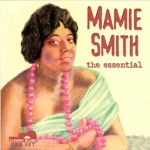 Buy from Amazon The Essential Mamie Smith