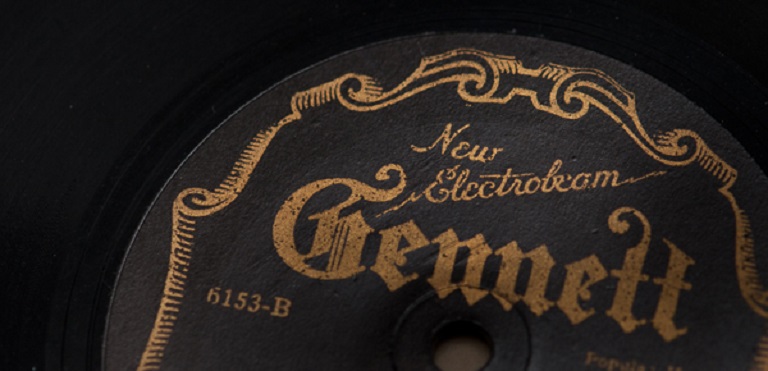
Gennett Records was a pioneering American independent record label based in Richmond, Indiana, that operated primarily from 1917 to 1934 as a division of the Starr Piano Company. Though it never rivaled the major labels in sales or distribution, Gennett holds an outsized place in music history for capturing some of the earliest and most important recordings of jazz, blues, and country music. Its modest studio beside the railroad tracks in rural Indiana became known as the “cradle of recorded jazz,” preserving foundational performances by artists who would shape 20th-century American music.
Founding and Ownership
The Starr Piano Company was founded in Richmond in 1872 (originally as the Trayser Piano Company) by James and Benjamin Starr. In 1893, Henry Gennett and John Lumsden acquired a major stake; after Benjamin Starr’s death, the Gennett family assumed control. By the early 20th century Henry Gennett served as president, with his sons Harry, Fred, and Clarence in key management roles.
Starr entered the phonograph and record business around 1915–1916 to capitalize on the booming home-entertainment market. The recording division was formalized in 1917, initially issuing discs under the Starr name. In 1918 the label was renamed Gennett (after the family) to make the records more attractive to non-Starr dealers. Fred Gennett played a particularly active role in guiding the recording operation. The company built its own pressing plant and, in 1921, a recording studio on the factory grounds in Richmond (a New York studio also operated earlier). Gennett won a landmark legal victory over Victor Talking Machine Company in 1921–1922 regarding lateral-cut recording patents, helping open the field for independent labels.
At its peak Gennett pressed millions of records annually and supplied budget discs for Sears (Silvertone) and other client labels. Subsidiary imprints included Champion. The Great Depression devastated the business; commercial recording largely ceased by 1934. Some masters and the Gennett/Champion trademarks were sold to Decca in 1935. The Richmond plant later served Decca and Mercury before the Starr Piano Company itself closed in the early 1950s.
Notable Artists and Recordings
Gennett’s willingness to record vernacular and regional music—especially early jazz and “race” records—produced a catalog of extraordinary historical value despite primitive recording conditions (a small, hot room near train tracks that often interrupted takes).
King Oliver’s Creole Jazz Band with Louis Armstrong On April 5–6, 1923, the band traveled from Chicago to Richmond for what became one of the most important sessions in jazz history. These were Louis Armstrong’s first commercial recordings. Key sides include “Dippermouth Blues” (also known as “Dipper Mouth Blues”), “Chimes Blues,” “Just Gone,” “Froggie Moore,” and “Canal Street Blues.” The polyphonic New Orleans style and Armstrong’s emerging solo voice were captured for the first time.
New Orleans Rhythm Kings (and interracial sessions) The white New Orleans Rhythm Kings made their first Gennett recordings on August 29, 1922—among the earliest significant jazz sessions for the label. On March 12, 1923, they recorded with Black pianist Jelly Roll Morton, producing one of the first documented interracial jazz sessions. Titles from these dates helped establish the band’s reputation.
Jelly Roll Morton In addition to the NORK collaboration, Morton recorded solo piano sides at Gennett in 1923–1924, including early versions of his compositions that showcased his pioneering jazz piano style and compositional genius.
Bix Beiderbecke and the Wolverines Cornetist Bix Beiderbecke recorded extensively for Gennett from 1924 to 1927, both with the Wolverines and under his own name. These sides, including early showcases of his lyrical, innovative improvisations, are among the most celebrated white jazz recordings of the 1920s and helped define the “Chicago style.”
Hoagy Carmichael Indiana native Hoagy Carmichael recorded foundational compositions at Gennett, including “Riverboat Shuffle” (1924), “Washboard Blues” and “Boneyard Shuffle” (1925), and the first version of “Stardust” (1927). These sessions launched one of America’s greatest songwriters.
Other major jazz figures Duke Ellington (early Washingtonians sides), Fletcher Henderson, Fats Waller, Earl Hines (with Lois Deppe’s Serenaders), and various territory bands also recorded for the label, documenting the transition from New Orleans polyphony toward swing-era precursors.
Blues and gospel artists Gennett was an important early outlet for blues. Notable recordings include work by Charley Patton (his first sessions), Blind Lemon Jefferson, Big Bill Broonzy, Sam Collins, Jaybird Coleman, Scrapper Blackwell, Roosevelt Sykes, and Thomas A. Dorsey (Georgia Tom). These sides helped establish the commercial blues market.
Country and old-time music The label recorded pioneering country and hillbilly artists such as Vernon Dalhart (major sellers including folk-song covers), Gene Autry (early yodeling and cowboy sides), Ernest Stoneman, Bradley Kincaid, and Fiddlin’ Doc Roberts, contributing to the foundations of commercial country music.
Legacy
Gennett Records’ impact far exceeds its commercial success. By recording Black and white artists with relative openness (for the era) and focusing on emerging vernacular styles that major labels often ignored, it preserved essential documents of early jazz, blues, and country. The 1923 King Oliver/Armstrong sessions alone would secure its place in history; the addition of Beiderbecke, Morton, Carmichael, and numerous blues and country pioneers makes the catalog indispensable. Today the Starr-Gennett Foundation and various reissue programs continue to celebrate this rural Indiana studio as a birthplace of recorded American popular music.
Suggested Reading
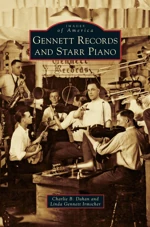 Buy from Amazon Gennett Records and Starr Piano
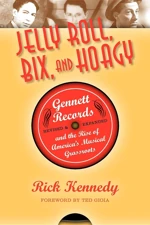 Buy from Amazon Jelly Roll, Bix, and Hoagy: Gennett Records and the Rise of America's Musical Grassroots
Suggested Listening
 Buy from Amazon Gennett Records Greatest Hits Collection
 Buy from Amazon Gennett Records Greatest Hits, Vol. 2