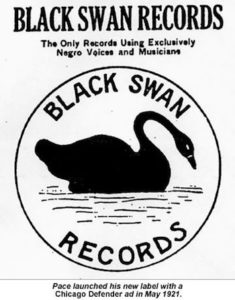
Black Swan Records was the first widely distributed, Black-owned and operated record label in the United States. Founded in Harlem, New York, in 1921 by entrepreneur Harry H. Pace, it aimed to record and market music by African American artists for African American audiences while promoting racial uplift through a mix of classical, spiritual, blues, and popular music. Though short-lived (active primarily 1921–1923), Black Swan played a pivotal role in the early commercial recording of Black music and helped open doors for African American performers in the industry.
Founding and Ownership
Harry Herbert Pace (1884–1943), born in Covington, Georgia, was a graduate of Atlanta University (where he studied under W.E.B. Du Bois) and a successful businessman with experience in insurance, publishing, and music. In 1912 he partnered with composer W.C. Handy to form the Pace & Handy Music Company in Memphis; the firm later moved to New York and published major hits including “St. Louis Blues.” Pace left the partnership in late 1920 to launch his own recording venture.
In early 1921 he established the Pace Phonograph Corporation (later associated with the Black Swan label). The label was named at Du Bois’s suggestion after Elizabeth Taylor Greenfield, the celebrated 19th-century Black concert singer known as “the Black Swan.” Du Bois served on the board, and the company attracted other prominent Black investors and advisors. Fletcher Henderson served as recording manager/musical director in the early period, while composer William Grant Still worked as arranger and music director. Operations began modestly (initially from Pace’s Harlem basement) but expanded rapidly: by 1922 the company employed dozens of staff, maintained district managers, and claimed over a thousand dealers and agents. Pace later partnered with white businessman John Fletcher to acquire a pressing plant, giving the label greater control over manufacturing.
Despite early commercial success (reported first-year revenues around $100,000), Black Swan faced intense competition from larger white-owned labels that began aggressively recording Black artists, rising costs from expansion, and the disruptive impact of radio. Pace declared bankruptcy in December 1923; the catalog was sold to Paramount Records in 1924. Pace later built a successful career in insurance and civil rights work.
Notable Artists and Recordings
Black Swan released more than 180 sides across classical, spiritual, blues, jazz, and popular styles. Pace initially emphasized “higher standard” concert and uplift-oriented material, but commercial success came largely from blues and vaudeville-influenced records.
Ethel Waters The label’s biggest star and best-selling artist. Her first Black Swan release, “Down Home Blues” / “Oh, Daddy” (Black Swan 2010, 1921), became a major hit (reportedly selling over 100,000 copies) and stabilized the young company. Other important sides include “Dying with the Blues” and further blues and popular numbers. Waters’s elegant phrasing and commercial breakthrough helped establish her as a major recording artist and demonstrated the market for sophisticated Black blues singing.
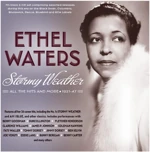 Buy from Amazon Stormy Weather: All The Hits And More 1921-47 - includes 8 of her Black Swan releases
Alberta Hunter Already a Chicago star, Hunter recorded for Black Swan early in the label’s life. Notable sides include “Bring Back the Joys” and “He’s a Darn Good Man” (around 1921–1922). Her powerful, expressive blues style contributed to the label’s popular appeal before she moved on to other companies.
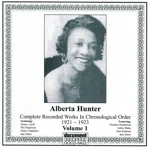 Buy from Amazon Alberta Hunter Vol 1 1921-1923
Trixie Smith Winner of a high-profile 1921 Harlem blues contest, Smith became one of Black Swan’s top sellers after Ethel Waters. Key recordings include “My Man Rocks Me (With One Steady Roll)” (1922), an early use of the phrase “rock and roll,” and other blues and vaudeville-oriented sides.
Classical and Concert Artists Reflecting Pace’s uplift ideals, the label recorded classically trained Black singers:
- Revella Hughes — featured on the very first Black Swan release: “At Dawning” / “Thank God for a Garden” (Black Swan 2001, May 1921).
- C. Carroll Clark (baritone) — early sides including “For All Eternity” and “Dear Little Boy of Mine.”
- Florence Cole Talbert — operatic selections, including material from Lakmé.
- Antoinette Garnes — operatic arias such as “Caro Nome” from Rigoletto.
These recordings documented important Black classical voices of the era.
Other notable performers
- Lucille Hegamin — blues and jazz-tinged sides such as “Arkansas Blues.”
- Katie Crippen — early vaudeville/jazz sides with Fletcher Henderson’s band.
- James P. Johnson — stride piano contributions.
- Vocal groups including the Four Harmony Kings.
- The label also issued the first commercial recording of “Lift Every Voice and Sing” (the “Negro National Anthem”), performed by the Manhattan Harmony Four (Black Swan 2120, 1923).
Fletcher Henderson’s early work as bandleader and musical director on many Black Swan sessions provided crucial experience before he became a major figure in the swing era.
Legacy
Black Swan Records proved that a Black-owned company could successfully produce, manufacture, and distribute records on a national scale. It launched or advanced the careers of Ethel Waters, Trixie Smith, Alberta Hunter, and others, while documenting classical and spiritual repertoire often overlooked by mainstream labels. Although competition and economic pressures ended the venture after roughly two years, its existence helped force white-owned companies to take Black artists and audiences more seriously. The catalog was later reissued in part by Paramount and has been preserved and studied by historians as a landmark of early African American entrepreneurship and the Harlem Renaissance-era recording industry.
Suggested Reading
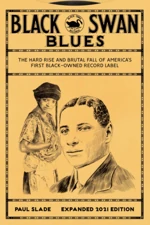 Buy from Amazon Black Swan Blues: The Hard Rise & Brutal Fall of America's First Black-owned Record Label