Okeh Records is one of the most historically significant labels in American music history. Founded in 1918 by a German immigrant who named the company after his own initials, Okeh pioneered the recording of blues, jazz, and country music, introduced the concept of "race records" and "hillbilly" series, and launched the careers of Mamie Smith, Louis Armstrong, and countless others. Over more than a century, the label has been sold, shuttered, revived, and reimagined multiple times, yet its name remains synonymous with the foundational recordings of American popular music.
Founding and Early Years (1918–1926)
Otto K.E. Heinemann
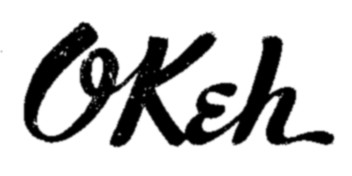
Otto K.E. Heinemann (1877–1965), a German-American manager for the U.S. branch of German-owned Odeon Records, founded Okeh Records in September 1918 in New York City. Stranded in America by World War I and sensing opportunity in the postwar American market, Heinemann incorporated the Otto Heinemann Phonograph Corporation in 1916, established a recording studio and pressing plant in New York, and launched the Okeh label — the name derived from his initials ("O.K.E.H."). Early labels rendered the name as "OkeH" before standardizing to "OKeh."
The company's first discs were vertical-cut (hill-and-dale) records, a format intended to distinguish Okeh from competitors Victor and Columbia, which used lateral-cut. In 1919, Okeh switched to the lateral-cut method, and the company name was changed to the General Phonograph Corporation. The label's musical director was Fred Hager, who also recorded under the pseudonym "Milo Rega" (his middle name plus his surname reversed).
The "Crazy Blues" Breakthrough and Race Records
Okeh initially issued popular songs, dance numbers, and vaudeville skits, but Heinemann also wanted to serve audiences neglected by larger labels. The company produced recordings in German, Czech, Polish, Swedish, and Yiddish for America's immigrant communities. The label's breakthrough came in 1920 when Ralph Peer, Okeh's recording director, recorded Mamie Smith singing "Crazy Blues" (Okeh 4169). The record was a surprise smash, selling over a million copies and demonstrating the existence of a substantial market for blues and jazz by African American artists.
This success led Okeh to establish a dedicated 8000 "Race" series in 1921, beginning with Daisy Martin's "Play 'Em for Mama, Sing 'Em for Me" (Okeh 8001). The series featured Sara Martin, Eva Taylor, Shelton Brooks, Esther Bigeou, Handy's Orchestra, and eventually Lonnie Johnson, King Oliver, and Louis Armstrong. Okeh hired Clarence Williams as director of "Race" recordings for New York and Richard M. Jones for the Chicago studio, which opened in 1922.
Location Recording and the Hillbilly Series
Okeh pioneered "location recording" in 1922, sending mobile recording trucks to capture regional music across the American South. Starting in 1924, regular trips were made to New Orleans, Atlanta, San Antonio, St. Louis, Kansas City, and Detroit. These expeditions documented jazz, blues, early country music, and ethnic folk traditions that would otherwise have been lost.
On June 14, 1923, Okeh made the first "hillbilly" recording in Atlanta: Fiddlin' John Carson's "Little Old Log Cabin in the Lane" / "Old Hen Cackled and the Rooster's Going to Crow" (Okeh 4890). The success of this session led to the creation of the 45000 "Hillbilly" (Old Time) series in October 1925, beginning with Carson's "Run Along Home with Lindy" / "To Welcome the Travellers Home" (Okeh 45001).
The 1925 Asheville, North Carolina sessions were particularly notable. At the Vanderbilt Hotel, Okeh recorded Henry Whitter, Ernest "Pop" Stoneman, Bascom Lamar Lunsford, and Emmett Miller, whose "Lovesick Blues" would later become a hit for Jimmie Rodgers. These were the first phonograph records made in the Carolinas.
The Louis Armstrong Era
From 1925 to 1928, Okeh recorded Louis Armstrong's Hot Five and Hot Seven in Chicago, producing approximately 70 sides that remain among the most important recordings in jazz history. The sessions featured Lil Hardin on piano, Kid Ory on trombone, Johnny Dodds on clarinet, and Baby Dodds on drums. Tracks like "Heebie Jeebies," "Cornet Chop Suey," "West End Blues," and "Gut Bucket Blues" established Armstrong as the dominant figure in jazz. The recordings were made at Okeh's Chicago studio on the fourth floor of the Consolidated Talking Machine Company building, run by E.A. Fearn.
The Columbia Era and Decline (1926–1934)
Acquisition by Columbia
On November 11, 1926, controlling interest in Okeh was purchased by the Columbia Phonograph Company for an undisclosed sum. The Okeh Phonograph Corporation was formed as a subsidiary, with Heinemann retained as president. Okeh adopted Columbia's electrical recording processes, and on November 16, 1926, the label switched from acoustical to electrical recording. The first electrical race item was Eva Taylor with Clarence Williams' "Candy Lips" / "Scatter Your Smiles" (Okeh 8414).
The Great Depression and ARC
The Depression devastated the record industry. In December 1931, Columbia was purchased by the Grigsby-Grunow Company (Majestic radios and refrigerators). When Grigsby-Grunow went bankrupt in November 1933, Columbia was placed in receivership. In early 1934, the American Record Corporation (ARC) acquired Columbia's assets for $70,000, and the Okeh label was discontinued shortly thereafter. The 8000 race series ended with the Memphis Jug Band's "Little Green Slippers" / "Jug Band Quartette" (Okeh 8966), recorded in November 1934. The 45000 hillbilly series ended with the Crazy Hillbilly Band's "Going Down the Road Feeling Bad" / "Leaving on the New River Train" (Okeh 45579).
The CBS Era and Postwar Revivals (1938–1970)
CBS Acquisition and 1940 Revival
In December 1938, the Columbia Broadcasting System (CBS) purchased ARC for $700,000. In 1940, CBS revived the Okeh name by rebranding the Vocalion label as Okeh, introducing the script logo design still in use today. This revival was necessitated by CBS losing the rights to the Vocalion name after dropping the Brunswick label. The revived Okeh operated until 1946, then was dormant until 1951.
The 1950s: R&B, Rock and Roll, and Johnnie Ray
In the early 1950s, Okeh was revived as an R&B and country label, independently distributed from Columbia's mainstream network. The label's biggest hit of this era was Johnnie Ray's "Cry" (Okeh 6840), which reached No. 1 on the pop charts in 1951 — an anomaly for a label otherwise focused on R&B. Ray soon moved to Columbia's pop division.
Okeh continued to release R&B material by Chuck Willis, Joe Williams, Red Sanders, and The Ravens, alongside country tunes. In 1956, the label released Screamin' Jay Hawkins' "I Put a Spell on You" (Okeh 7072) — a record that failed to chart but became a classic of 1950s American music. Minor hits in 1957 included "Peanuts" by Little Joe & the Thrillers and "Shirley" by the Schoolboys.
The 1960s: Chicago Soul and the Major Lance Era
In 1961, Atlanta blues pianist Willie "Piano Red" Perryman joined Okeh. On May 31, 1961, he and his group (later named Dr. Feelgood & the Interns) recorded eight songs in Columbia's Nashville studio, including "Mister Moonlight" (later made famous by the Beatles) and "Doctor Feel-Good." The latter became a chart hit when released in January 1962.
The label's most significant era began in 1962 when Dave Kapralik, head of A&R at Columbia, hired veteran Chicago producer Carl Davis as A&R producer for Columbia and, in April 1963, as A&R director for Okeh. Davis immediately hired Curtis Mayfield as Associate Producer. Together, they created what became known as "Chicago Soul" — a sound featuring brass instruments, highly melodic vocals, and a relaxed, sophisticated groove that contrasted with the harder beats of Motown and Stax.
Major Lance, signed on Mayfield's recommendation, became Okeh's top-selling artist. His hits included:
-
"The Monkey Time" (1963, Okeh 7094) — No. 2 R&B, No. 8 pop; Okeh's first hit in 10 years
-
"Hey Little Girl" (1963)
-
"Um, Um, Um, Um, Um, Um" (1964, Okeh 7187) — No. 5 pop, No. 40 UK
-
"The Matador" (1964)
-
"Rhythm" (1964)
-
"Sometimes I Wonder" (1964)
-
"Come See" (1964)
-
"Ain't It A Shame" (1964)
Other Chicago Soul artists included Ted Taylor, Walter Jackson, Billy Butler and the Enchanters, and The Artistics. The sound was characterized by Mayfield's songwriting, Johnny Pate's arrangements, and the relaxed but swinging groove that would influence later Chicago rock groups like the Buckinghams and Chicago Transit Authority.
The Decline and Closure
The downfall came in 1965 when CBS reorganized, placing Okeh under the Epic organization headed by Len Levy. Levy clashed with Davis over Davis's moonlighting (producing Mary Wells' "Dear Lover" for Atco). Davis quit and moved to Brunswick Records. Arranger Johnny Pate and songwriter Curtis Mayfield also lost interest in Okeh.
Okeh had a decent year in 1966 on the strength of Davis's vault productions, but then declined. Larry Williams attempted to create an "Angel Town Sound" from Los Angeles, bringing Johnny "Guitar" Watson and Little Richard to the label. Ted Cooper produced Walter Jackson from the East Coast. But hits were increasingly scarce, and by 1969, Richard Parker was hired to resuscitate the dying label without success. CBS quietly shut down Okeh at the end of 1970. During the 1960s, Okeh released only 30 albums, none reflecting the rich pre-1960 legacy.
The Sony Era: Revivals and Reimaginings (1988–Present)
Sony Acquisition
In 1988, Sony Corporation acquired CBS Records for $2 billion, integrating Okeh into Sony Music Entertainment. The label has remained under Sony ownership ever since.
1993 Blues Revival
In 1993, Sony reactivated Okeh as a new-age blues label distributed by Epic Records. The initial signings included G. Love & Special Sauce, Keb' Mo', Popa Chubby, and Little Axe. In celebration of the relaunch, singles were released on 10-inch vinyl. By 2000, the label was again retired, and G. Love moved to Epic.
2013 Jazz Relaunch
In January 2013, Sony Classical relaunched Okeh as a jazz imprint under Sony Masterworks, with the slogan "Global Expressions in Jazz." Overseeing the relaunch were Chuck Mitchell (Senior VP at Sony Masterworks) and Wulf Müller (jazz A&R and marketing consultant). Initial releases included John Medeski (A Different Time), David Sanborn & Bob James, Bill Frisell, and Dhafer Youssef.
The relaunch faced criticism from The Atlantic for its initial lack of African-American artists, though Mitchell and Müller defended the lineup, noting that Craig Handy's album was delayed and that future releases would feature more Black American artists. The label subsequently released albums by Regina Carter, Somi, Sachal Vasandani, and others.
As of 2025, Okeh remains an active sub-imprint of Sony Masterworks, focusing on contemporary jazz projects.
Key Artists and Recordings
Blues and Jazz Pioneers (1920s–1930s)
-
Mamie Smith — "Crazy Blues" (1920), the first blues record by an African American artist to sell over a million copies
-
Louis Armstrong — Hot Five and Hot Seven recordings (1925–1928), approximately 70 sides including "Heebie Jeebies," "West End Blues," "Cornet Chop Suey"
-
King Oliver's Creole Jazz Band — Classic Chicago jazz recordings
-
Lonnie Johnson — Early blues guitar masterpieces
-
Duke Ellington — Early orchestral jazz
-
Bix Beiderbecke — Cornet jazz innovations
-
Lucille Bogan — Raw blues vocals
-
Hattie McDaniel — Early recordings before her film career
-
Sidney Bechet — Clarinet and soprano saxophone jazz
-
Bessie Smith — Some early recordings (though primarily associated with Columbia)
-
Mississippi John Hurt — Rediscovered through Okeh field recordings
-
Big Bill Broonzy — Chicago blues foundation
-
Memphis Minnie — Guitar blues and vocals
Hillbilly and Country (1920s–1930s)
-
Fiddlin' John Carson — "Little Old Log Cabin in the Lane" (1923), the first hillbilly recording
-
Ernest "Pop" Stoneman — Appalachian ballads and instrumentals
-
Henry Whitter — Old-time guitar and harmonica
-
Emmett Miller — "Lovesick Blues" (1925), later covered by Jimmie Rodgers
-
Bascom Lamar Lunsford — North Carolina folk songs
-
Frank Hutchinson — "West Virginia Rag" (1927), earliest electrical hillbilly recording
R&B and Soul (1950s–1960s)
-
Johnnie Ray — "Cry" (1951), No. 1 pop hit
-
Screamin' Jay Hawkins — "I Put a Spell on You" (1956)
-
Willie "Piano Red" Perryman / Dr. Feelgood & the Interns — "Doctor Feel-Good" (1962), "Mister Moonlight"
-
Major Lance — "The Monkey Time," "Um, Um, Um, Um, Um, Um" (1963–1964)
-
Ted Taylor — Chicago soul vocalist
-
Walter Jackson — "It's an Uphill Climb to the Bottom"
-
Billy Butler and the Enchanters — "Found Myself a Brand New Baby"
-
The Artistics — "Get My Hands on Some Lovin'"
-
Johnny "Guitar" Watson — "Angel Town Sound" period
-
Little Richard — Greatest Hits re-recordings
Contemporary Jazz (2013–Present)
-
Bill Frisell — When You Wish Upon a Star (2016), Music IS (2018)
-
John Medeski — A Different Time (2013)
-
David Sanborn & Bob James — Collaborations
-
Dhafer Youssef — Tunisian jazz oud player
-
Regina Carter — Jazz violin
-
Somi — Vocal jazz
-
Sachal Vasandani — Slow Motion Miracles (2015)
-
RGG — Polish jazz trio, Aura (2014)
-
Michel Camilo — Dominican jazz pianist
The Catalog and Reissues
Sony Music Entertainment owns the global rights to the Okeh Records catalog through Epic Records and Sony's Legacy Recordings reissue subsidiary. EMI's rights to the Okeh catalog in the UK expired in 1968, and CBS took over distribution.
In 1993, the 3-CD box set The OKeh Rhythm and Blues Story 1949–1957 (Epic/OKeh/Legacy E3K 48912), compiled by Bob Irwin and Vic Anesini, helped rectify the neglect of Okeh's pre-1960 legacy. The set gathered the label's R&B recordings from the 1950s, including material by Chuck Willis, the Ravens, and others.
Legacy and Significance
Okeh Records' legacy is multifaceted and profound:
-
Pioneer of Race Records: Okeh's 8000 series, launched in 1921, was one of the first dedicated lines for African American music, establishing the commercial viability of blues and jazz and creating a template that Paramount, Columbia, Victor, and others would follow.
-
Pioneer of Hillbilly/Country Recording: The 45000 series and the 1923–1925 field recordings documented American folk music in its native environment, preserving traditions that might otherwise have been lost to modernization.
-
Pioneer of Location Recording: Okeh's mobile recording trucks, sent throughout the South from 1924 onward, established the practice of field recording that would become standard for folklorists and record companies alike.
-
Home of Jazz Foundations: The Louis Armstrong Hot Five and Hot Seven recordings remain among the most important documents in jazz history, establishing the soloist as the central figure in jazz performance.
-
Home of Chicago Soul: The 1960s Okeh, under Carl Davis and Curtis Mayfield, created a distinctive soul sound that influenced generations of Chicago musicians and established Major Lance as an icon of the genre.
-
Cultural Bridge: Okeh's recordings of immigrant music (German, Czech, Polish, Swedish, Yiddish) in the 1910s and 1920s documented the musical traditions of America's ethnic communities, creating a multicultural archive that complements its better-known blues and jazz recordings.
From its founding by a German immigrant in 1918 to its current status as a Sony jazz imprint in 2025, Okeh Records has demonstrated remarkable resilience and adaptability. Its name — derived from the initials of its founder — has become a byword for quality and historical significance in American music. The label's century-long journey, with its multiple deaths and rebirths, mirrors the larger story of American popular music itself: constantly evolving, forever rooted in the past, and always finding new ways to speak to the present.
Selected Discography
 The Okeh Rhythm & Blues Story 1949-1957 Buy from Amazon
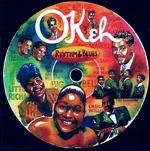 Okeh Rhythm & Blues Buy from Amazon