Barrelhouse Records was a small but highly regarded American independent record label specializing in traditional blues and rockabilly. Founded in Chicago by collector and producer George Paulus, it focused on documenting overlooked postwar blues artists, particularly those associated with the city’s Maxwell Street scene, as well as select rockabilly and older country-blues performers. Active primarily from the late 1960s through the late 1970s (with some sources dating the formal launch to 1974), the label released a modest but carefully curated catalog of LPs that remain prized by blues enthusiasts for their authenticity and historical value.
Founding and Ownership
George Paulus (1948–2014), a passionate Chicago blues collector with one of the world’s most extensive holdings of rare 78s, established Barrelhouse Records to preserve and issue music by under-recorded traditional artists. Paulus handled production, artwork, and distribution himself, maintaining complete creative control. The label operated as a pure labor of love rather than a commercial enterprise, prioritizing artistic integrity and historical documentation over mass-market sales. Paulus also released material on related imprints such as St. George later in his career. The company became inactive after his death in 2014.
Barrelhouse is distinct from other entities sharing the name (including a Dutch blues band and various modern imprints). Its significance lies in its role during the 1970s blues revival, when major labels had largely abandoned traditional Chicago blues in favor of more commercial styles.
Notable Artists and Recordings
The catalog emphasized raw, unpolished performances by veteran blues musicians, often recorded in informal or live-inspired settings. Key releases include:
Washboard Willie The label’s inaugural release: Whippin’ That Board (BH-01, 1969). Featuring the veteran Detroit washboard player backed by guitarist Calvin Frazier, this album captured the rhythmic drive and street-level energy of traditional blues percussion styles.
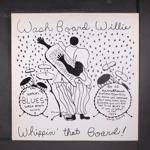 Whippin’ That Board
Big John Wrencher Maxwell Street Alley Blues (BH-02, 1969/1974) by Big John Wrencher and His Maxwell Street Blues Boys. This set documented the vibrant, open-air blues culture of Chicago’s Maxwell Street market, with Wrencher’s powerful harmonica and vocals at the center. It stands as one of the label’s most evocative portraits of the city’s street-blues tradition.
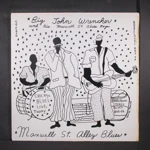 Maxwell Street Alley Blues
Charlie Feathers Good Rockin’ Tonight (BH-03, 1974). A strong rockabilly entry featuring the legendary Memphis-associated performer, bridging Barrelhouse’s blues focus with early rock and roll roots.
Harmonica Frank (Floyd) Blues That Made the Roosters Dance (BH-05, 1975). Showcasing the eccentric, one-man-band style of this early rockabilly and blues figure, whose music mixed country, blues, and novelty elements.
Blind Joe Hill Boogie in the Dark (BH-08, 1976). A compelling one-man-band performance in which Hill played guitar, harmonica, drums, and sang, delivering honest, self-contained traditional blues.
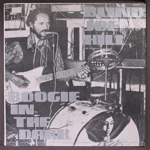 Boogie in the Dark
Various Artists – Chicago Boogie! (BH-004, 1974) An important compilation of previously unissued or rare Chicago material, including sides involving Jimmy Rogers, Little Walter, Johnny Young, Sleepy John Estes, and others. It highlighted the deep connections between Maxwell Street musicians and the broader Chicago blues scene. Paulus had acquired original Ora Nelle lacquers from the Maxwell Street Record and Radio store, some of which informed related reissue projects.
Other notable releases
- Bring Me Another Half-A-Pint (BH-09, 1976) — A harmonica-focused compilation featuring Billy Branch and other Chicago players.
- Banty Rooster Blues (BH-010, 1977) by Robert Richard.
- Drinkin’ Wine Spo-Dee-O-Dee! (BH-011, 1977) by Marcus Van Story.
- Mean & Evil Blues (BH-013, 1977) by Joe Carter.
- Sweet Home Chicago (BH-014, 1979) by Easy Baby.
- Love Me Or I’ll Kill Ya (BH-015, 1979) by the Chicago Slim Blues Band.
- Additional titles involving Johnny “Man” Young, Sleepy John Estes, Earl Hooker, Calvin Frazier, and others.
Legacy
Barrelhouse Records occupies a special place in the 1970s blues revival. At a time when many traditional artists were being overlooked by larger companies, George Paulus provided a platform for Maxwell Street veterans, one-man bands, and regional stylists. The label’s modest output is valued for its authenticity, strong annotation, and role in preserving a disappearing street-blues culture. Original LPs are scarce and sought after by collectors; the music continues to be appreciated through reissues and the ongoing work of blues historians who regard Paulus’s efforts as an important act of cultural documentation.