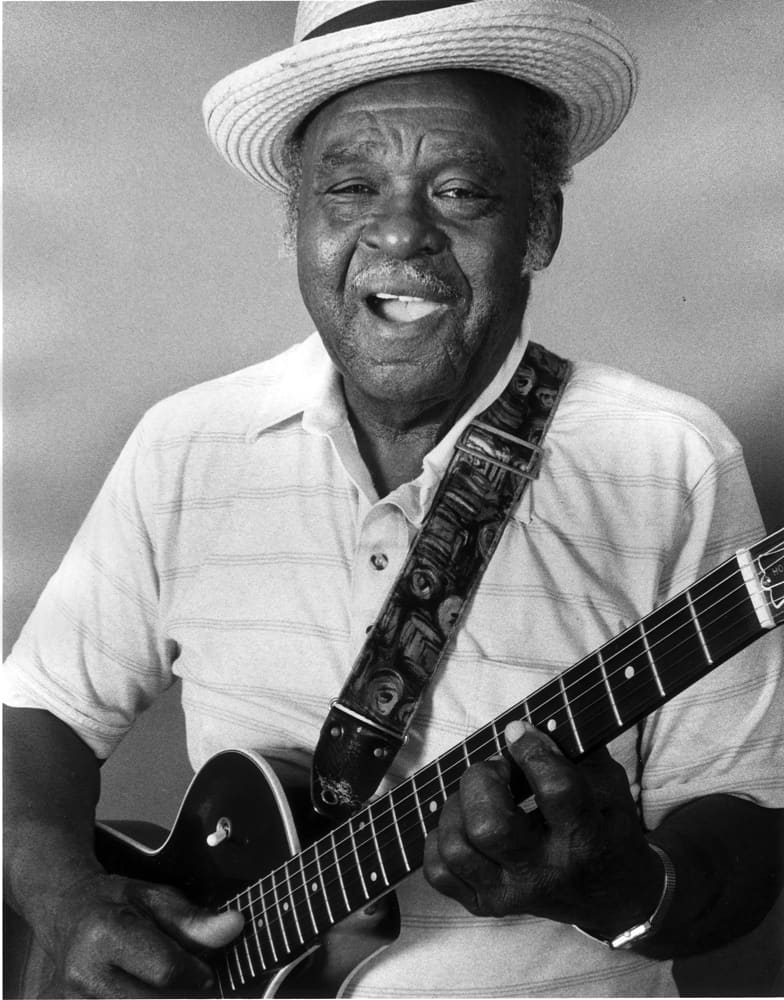
William James “Willie” Dixon (July 1, 1915 – January 29, 1992) was a towering figure in American music—as a bassist, vocalist, songwriter, arranger, producer, and talent scout. Often called the “poet laureate of the blues” and the “father of modern Chicago blues,” Dixon wrote or co-wrote over 500 songs, many of which became enduring standards. His work with Chess Records in the 1950s and 1960s shaped the electric Chicago blues sound that influenced rock ’n’ roll worldwide.
Early Life
Born in Vicksburg, Mississippi, Dixon was one of 14 children. His mother wrote religious poetry, and he grew up singing gospel in church quartets, absorbing Delta blues, spirituals, and country music. As a teenager, he spent time on a chain gang after a fight with a white man. In 1936, he moved to Chicago, pursued boxing (winning the Illinois Golden Gloves amateur heavyweight championship in 1937), and taught himself bass. Post-WWII, he formed vocal harmony groups, including the Five Breezes and the Big Three Trio (with Leonard “Baby Doo” Caston and Ollie Crawford), which recorded successful jump-blues and harmony numbers for labels like Columbia and Bullet in the late 1940s.
Chess Records Era and Songwriting Breakthrough
In the early 1950s, Willie Dixon transitioned from the Big Three Trio to Chess Records (originally Aristocrat Records), initially as a session bassist. By 1951–1952, he had become a central figure at the label—serving as house bassist, arranger, producer, and eventually A&R man. His deep, authoritative voice and commanding upright bass provided the perfect rhythmic and harmonic foundation for Chess’s emerging electric blues sound.
Dixon’s true genius emerged as a songwriter. He had an uncanny ability to craft songs that combined strong, memorable riffs with vivid, streetwise lyrics full of swagger, humor, sexuality, and everyday wisdom. Many of his compositions were tailored specifically for the artists he worked with, often written in the studio or during rehearsals.
Major Songwriting Highlights at Chess:
- For Muddy Waters (his most frequent collaborator): “Hoochie Coochie Man” (1954, Chess 1560 — reached No. 3 on the R&B chart and became a blues standard), “I Just Want to Make Love to You,” “I’m Ready,” “You Need Love” (1962, later adapted by Led Zeppelin as “Whole Lotta Love”), “I Can’t Be Satisfied,” “Same Thing,” “You Shook Me,” and “I’m Your Hoochie Coochie Man.”
- For Howlin’ Wolf: “Little Red Rooster” (1961, Chess 1793 — a major hit that crossed over to pop), “Back Door Man,” “Spoonful,” “Evil,” “I Ain’t Superstitious,” “Shake for Me,” and “The Red Rooster.”
- For Little Walter: “My Babe” (1955, Checker 450 — Walter’s biggest hit), “Key to the Highway.”
- For Bo Diddley: “You Can’t Judge a Book by the Cover,” “Pretty Thing,” “Diddley Daddy.”
- For Koko Taylor: “Wang Dang Doodle” (1966, Checker 1135 — her breakthrough hit).
- For Sonny Boy Williamson II: “Bring It On Home,” “Help Me.”
- Additional classics: “The Seventh Son,” “Wang Dang Doodle,” “Built for Comfort,” and “I Ain’t Superstitious.”
Dixon not only wrote the material but frequently played bass on the sessions, arranged the horns and rhythm sections, coached vocalists on phrasing and delivery, and supervised the overall production. His work helped transform raw Delta blues into a polished, powerful, danceable urban sound that appealed to both Black record buyers in the 1950s and the emerging white rock audience in the 1960s. He was instrumental in developing the “Chess sound”—tight grooves, prominent bass lines, and call-and-response structures.
He also worked with the short-lived Cobra Records (1956–1959), producing and writing for Otis Rush (“I Can’t Quit You Baby”), Magic Sam, and Buddy Guy, further spreading his influence across the Chicago scene.
Solo Recordings and Discography Highlights
Although Willie Dixon was primarily known as a behind-the-scenes architect at Chess Records, he maintained a notable recording career as a featured artist and leader throughout his life. His solo and collaborative albums often revisited his classic compositions while showcasing his deep, resonant vocals and commanding bass playing. These recordings gained particular prominence during the blues revival of the 1960s and beyond.
Early Solo and Collaborative Work
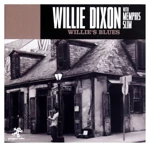 Willie’s BluesBuy from Amazon (1959, Prestige/Bluesville BVLP-1003) — A strong debut collaboration with pianist Memphis Slim. This album highlighted Dixon’s originals and vocal style in a relaxed small-group setting and is considered one of his finest early efforts.
-
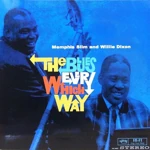 Blues Every Which WayBuy from Amazon (1960, Verve) and Songs of Memphis Slim and “Wee Willie” Dixon (1960, Folkways) — Further collaborations with Memphis Slim that captured their live chemistry and repertoire.
-
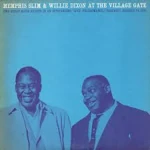 Memphis Slim and Willie Dixon at the Village GateBuy from Amazon (1962, Folkways, live) — Recorded with Pete Seeger, this live set documented their performances in the Greenwich Village folk scene.
Dixon also had a modest chart success with the solo single “Walking the Blues” (Checker, 1955), which reached No. 6 on the R&B chart.
Peak Solo Albums
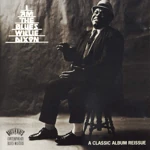 Buy from Amazon I Am the Blues (1970, Columbia) — Widely regarded as his signature solo statement. Featuring many of his best-known songs (“Spoonful,” “I Ain’t Superstitious,” “Back Door Man,” “Little Red Rooster,” “The Same Thing”), it was backed by a top Chicago band and introduced his catalog to a new generation. The album shares its title with his later autobiography.
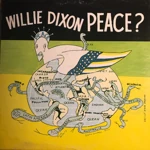 Peace? (1971, Yambo) — Released on his own label, reflecting his growing independence and social commentary.
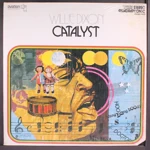 CatalystBuy from Amazon (1973, Ovation) — Another strong 1970s effort showcasing his continued creativity.
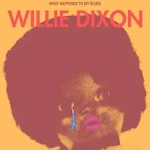 What Happened to My BluesBuy from Amazon (1976, Ovation) — A reflective album with solid performances.
Later Career Highlights
- Hidden Charms (1988, Bug/Capitol) — A critically acclaimed late-career album that earned Dixon a Grammy Award for Best Traditional Blues Recording in 1989. It featured fresh interpretations of his classics with modern yet respectful production.
Dixon also released live albums and projects with the Chicago Blues All-Stars, including various European tour recordings from the 1960s–1970s. He appeared on numerous compilation and tribute albums and contributed bass and vocals to sessions across decades.
Compilations and Box Sets
- The Willie Dixon Chess Box (1992, Chess/MCA) — A comprehensive three-CD set mixing Dixon’s own recordings with landmark Chess tracks he wrote and produced.
- Poet of the Blues and other anthologies on labels like Chess, MCA, and Legacy.
- Posthumous releases such as Willie Dixon’s Blues Dixonary (1993) and various live and archival collections.
Dixon’s discography as a leader is relatively compact compared to his vast sessionography (hundreds of sides for Chess and other labels), but his solo albums effectively preserved his personal interpretations of the songs that made him famous. Many of these recordings have been reissued on CD and digital platforms, often with bonus tracks from his extensive catalog. They remain essential listening for understanding the full scope of his artistry beyond his famous compositions for Muddy Waters, Howlin’ Wolf, and others.
Later Career
After his peak years at Chess (which loosened in the mid-to-late 1960s as the label’s direction shifted), Dixon remained highly active. In the 1960s, he toured extensively in Europe with the American Folk Blues Festival alongside artists like Muddy Waters, Howlin’ Wolf, and Sonny Boy Williamson II, helping introduce authentic Chicago blues to international audiences.
He formed the Chicago Blues All-Stars in the late 1960s, a rotating ensemble featuring top sidemen such as Buddy Guy, Junior Wells, Sunnyland Slim, and Clifton Chenier. The group toured the U.S., Europe, and beyond, keeping classic Chicago blues alive during a time when younger audiences were turning to rock and soul.
Dixon recorded several solo albums, ran his own labels (Yambo, Supreme, and Spoonful Records), and continued producing and publishing. He became a passionate advocate for blues musicians’ rights, fighting for proper royalties and credits. In the 1970s and 1980s, he successfully sued Led Zeppelin over the uncredited use of “You Need Love” in “Whole Lotta Love.” He also worked on film soundtracks and appeared in documentaries.
In 1980, he founded the Blues Heaven Foundation in Chicago to preserve blues history, support aging musicians, and educate young people. The foundation eventually acquired the historic Chess Records building at 2120 S. Michigan Avenue. His 1989 autobiography, I Am the Blues, co-written with Don Snowden, remains an essential firsthand account of the Chicago blues scene.
Even in his final years, despite health challenges, Dixon continued performing, recording (Hidden Charms won a Grammy in 1989), and mentoring. He died on January 29, 1992, in Burbank, California, from complications of diabetes.
These expanded sections provide deeper insight into Dixon’s pivotal creative and business contributions at Chess and his enduring legacy as a performer, advocate, and guardian of the blues in his later decades.
Musical Style and Influence
Dixon’s bass playing was solid, propulsive, and foundational. As a songwriter, he mastered concise, vivid storytelling with powerful hooks, rhythmic vitality, and streetwise wisdom. His productions emphasized tight grooves, strong riffs, and dynamic interplay — defining the Chess Records sound.
His songs became rock standards: The Rolling Stones (“Little Red Rooster,” “I Just Want to Make Love to You”), Led Zeppelin, Cream (“Spoonful”), The Doors (“Back Door Man”), Jimi Hendrix, Aerosmith, and many others. Artists from Adele to modern blues acts continue to draw from his catalog.
Legacy
Willie Dixon died of complications from diabetes in Burbank, California, in 1992. He was inducted into the Blues Hall of Fame (1980), Rock & Roll Hall of Fame (1994, Early Influence), and Songwriters Hall of Fame. The Chess Records building now houses the Blues Heaven Foundation, preserving his vision.
Dixon didn’t just play or write the blues—he codified its modern form, provided its most memorable anthems, and fought to protect its creators. His songs, bass lines, and influence remain foundational to blues, rock, and American music.
Suggested Reading
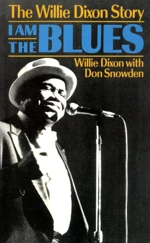 I Am The Blues: The Willie Dixon Story Buy from Amazon