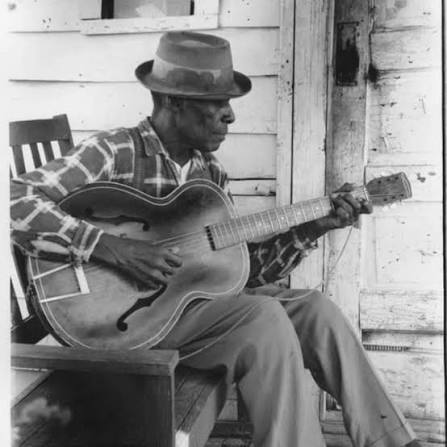
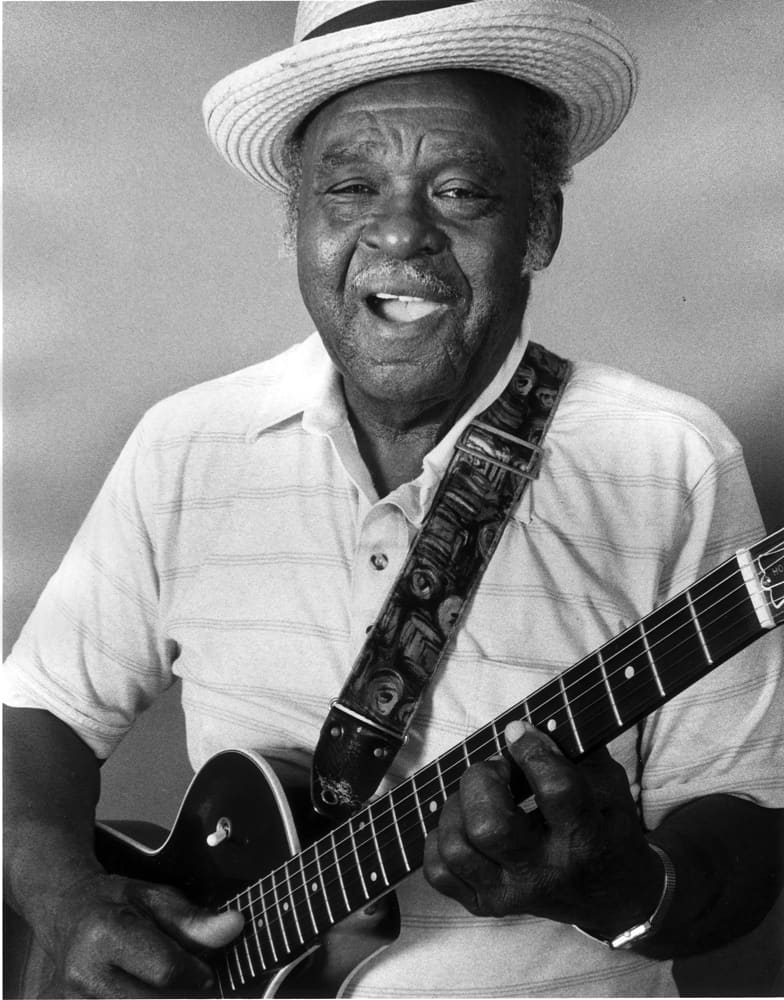
John Smith Hurt—known to the world as Mississippi John Hurt—was one of the most beloved and influential figures in American roots music. A self-taught guitarist with a syncopated fingerpicking style that sounded like an entire orchestra emerging from a single instrument, Hurt combined blues, ballads, gospel, ragtime, and old-time country music into a gentle, melodic sound that was utterly unique in the blues tradition. His story is one of the most remarkable in American music: a brief recording career in 1928, thirty-five years of obscurity as a sharecropper, a dramatic rediscovery in 1963, and three years of international fame before his death—years in which he became the "sweet soul" of the 1960s folk-blues revival and influenced generations of guitarists from Bob Dylan to Doc Watson, from John Sebastian to Gillian Welch.
Early Life: Teoc, Avalon, and the Mississippi Hills
John Smith Hurt was born on March 8, 1892 (or possibly July 3, 1893, according to a family Bible), in Teoc, Carroll County, Mississippi—a small farming community in the Mississippi hill country, geographically and culturally removed from the Delta blues heartland. While still a baby, his family moved to nearby Avalon, a town even smaller than Teoc, where he would spend most of his life. The hill country was an area where white and Black string band musicians interacted fairly freely, and where the harder edges of Delta blues were softened by old-time music, ragtime, and country ballads. This environment would prove crucial to Hurt's musical development.
Hurt's first exposure to music came from a guitar-playing schoolteacher named William H. Carson, who inspired the young boy to take up the instrument. At age nine, Hurt began teaching himself to play on a guitar he called "Black Annie"—a friend's mother's guitar that he would secretly pick up when she visited. He claimed to be entirely self-taught, developing an unorthodox three-finger picking style that would become his trademark. "I grab it and go my way with it. Use my melody with it. I always tried to make my strings say just what I say," was Hurt's own explanation of his technique.
As a teenager, Hurt played old-time music for friends and at local dances, sometimes as a solo performer and sometimes in string bands, some of which were likely racially mixed. He worked as a farmhand and sharecropper, never considering music as anything more than an enjoyable way to relax from the arduous work of the cotton fields. He also worked briefly as a section hand on the Illinois Central Railroad, for the Works Progress Administration during the Depression building roads and cutting timber, in a factory in Jackson, Mississippi, and at a local gravel pit. Music was a sideline, not a livelihood.
In 1923, Hurt began playing with Willie T. Narmour, a white fiddler from Avalon who had a contract with OKeh Records. Hurt served as a substitute for Narmour's regular partner, Shell Smith, and the musical friendship would prove fateful. When Narmour won first place in a 1928 fiddle contest, his prize was a chance to record for OKeh. He recommended Hurt to the label's producer, Tommy Rockwell.
The 1928 Recordings: A False Start
Hurt's first recording session took place on February 14, 1928, in Memphis, Tennessee, at the OKeh mobile recording unit. Rockwell had auditioned Hurt at his home, where Hurt performed "Monday Morning Blues," and was sufficiently impressed to bring him to Memphis. Hurt described the experience: "A great big hall with only the three of us in it: me, the man [Rockwell], and the engineer. It was really something. I sat on a chair, and they pushed the microphone right up to my mouth and told me that I couldn't move after they had found the right position. I had to keep my head absolutely still. Oh, I was nervous, and my neck was sore for days after."
The Memphis session produced two released sides: "Nobody's Dirty Business" and "Frankie," issued on OKeh 8560. The records sold modestly, but OKeh was sufficiently encouraged to summon Hurt to New York City in December 1928 for two additional sessions. There, in the more sophisticated studio environment, Hurt recorded a dozen more songs, including what would become his signature composition, "Avalon Blues":
"Avalon, my home town, always on my mind. Avalon, my hometown, always on my mind. Pretty mama's in Avalon, want me there all the time."
The song was a love letter to his tiny hometown, and it would prove to be the key to his rediscovery thirty-five years later. As a marketing gimmick, OKeh prefixed "Mississippi" to his name, creating the moniker by which he would be known for the rest of his life. He was paid twenty dollars for each song and sent back to Avalon to resume his life as a sharecropper.
The complete 1928 OKeh recordings included:
-
"Frankie" / "Nobody's Dirty Business" (OKeh 8560)
-
"Ain't No Tellin'" / "Louis Collins" (OKeh 8724)
-
"Avalon Blues" / "Big Leg Blues" (OKeh 8759—"Big Leg Blues" was unissued)
-
"Stack O'Lee Blues" / "Candy Man Blues" (OKeh 8654)
-
"Got the Blues Can't Be Satisfied" / "Blessed Be the Name" (OKeh 8666)
-
"Praying on the Old Camp Ground" / "Blue Harvest Blues" (OKeh 8692)
-
"Spike Driver Blues" (OKeh 8692)
The recordings were a remarkable mix of murder ballads ("Frankie," "Stack O'Lee," "Louis Collins"), blues ("Candy Man Blues," "Got the Blues Can't Be Satisfied"), gospel ("Blessed Be the Name," "Praying on the Old Camp Ground"), work songs ("Spike Driver Blues," a variant of the John Henry legend), and minstrel tunes ("Nobody's Dirty Business," with roots in 19th-century minstrelsy). Hurt's gentle, syncopated fingerpicking and warm, conversational voice created a sound that was utterly unlike the harsh, aggressive Delta blues of Charley Patton or Son House.
But the records did not sell. The Great Depression was imminent, and OKeh went out of business shortly after Hurt's sessions. He attempted to negotiate further recordings but was unsuccessful. He returned to Avalon and obscurity, working as a sharecropper and playing at local parties, picnics, night spots, work sheds, hunting lodges, and at the Valley Store—the general store and gathering place that constituted downtown Avalon. His older brother Junious sometimes played harmonica with him. For the next thirty-five years, John Hurt lived the quiet life of a rural farmer, his music heard only by neighbors and friends.
The Wilderness Years: 1928–1963
Hurt's life during the long silence between his recording career and his rediscovery was one of steady, unremarkable labor. He married Gertrude Hoskins in 1916, a marriage that produced a son, T.C., but ended in divorce. He then took a common-law wife, Jessie Wade, with whom he had another son, John William. John and Jessie's relationship was marked by playful bickering that belied a deep commitment; Jessie would goad him into playing, shouting "You play that thing, John Hurt!" and he would respond with some of his finest performances.
Hurt continued to play music throughout these years, though he sometimes did not even own a guitar and played only infrequently on borrowed instruments. He refused an invitation to join a traveling medicine show because, as he later explained, "I just never wanted to get away from home." Avalon was his world, and he was content to remain in it.
The only ripple in this long calm came in 1952, when two of Hurt's 1928 recordings—"Frankie" and "Spike Driver Blues"—appeared on Harry Smith's influential
Anthology of American Folk Music, a six-LP collection released by Folkways Records that became the bible of the American folk music revival. The anthology introduced Hurt's music to a small but dedicated coterie of record collectors and aspiring folk guitarists who hunted for his rare 78s and traded tapes of his recorded repertoire. But Hurt himself knew nothing of this growing interest. He was, as far as the wider world knew, dead and forgotten.
The Rediscovery: "Avalon, My Hometown" (1963)
The rediscovery of Mississippi John Hurt is one of the great stories of the folk-blues revival. In 1963, Dick Spottswood, a blues enthusiast and record collector, came across a copy of Hurt's "Avalon Blues" and was intrigued by the line "Avalon, my hometown, always on my mind." He consulted a vintage map of Mississippi and found a speck of a town called Avalon. He encouraged his friend Tom Hoskins, who was traveling in the South, to check it out.
Hoskins arrived in Avalon and stopped at Stinsons, the combination general store, gas station, and post office that constituted downtown. Inquiring if John Hurt was still alive, he was told, "If he ain't died since he went that way with two sacks of groceries at eleven o'clock this morning." Hoskins followed the directions—"about a mile down that road, third mailbox up the hill. Can't miss it"—and found Hurt, now approximately seventy-one years old, still living in the same area, herding cattle and working as a sharecropper.
Hurt was completely baffled by Hoskins's interest. He was unaware of the Folkways reissues and thought Hoskins might be from the FBI. "You've got the wrong man! I ain't done nothing mean," he told the young researcher. Still fearing that Hoskins was somehow connected with the law, Hurt agreed to go north with him because he thought that if he refused, Hoskins would arrest him anyway. Hoskins recorded Hurt performing several songs to verify his authenticity and was convinced: the gentle, melodic style was unmistakable, and Hurt's guitar skills were still intact after thirty-five years of rural isolation.
Music historian and critic Nat Hentoff called the finding of Hurt the "most singular rediscovery" of the 1960s blues renaissance. The discovery of John Hurt encouraged other enthusiasts to search for old bluesmen, and soon Hurt was joined on the contemporary stage by two other Delta legends, Son House and Skip James. But Hurt was hardly a typical blues musician. "When you think of Mississippi Delta blues," said Stefan Grossman, "you think of a type of music that has nothing to do with John Hurt. He's playing as if the guitar is a piano with a boom-chick in the bass imitating the left hand of the piano player and melody on the treble strings like that played by the right hand. There are no extra notes in his music, there is just the sound, and the sound is rooted in his thumb."
The Folk-Blues Revival Years: 1963–1966
Hurt's second act was as remarkable as his first had been obscure. In July 1963, he recorded 39 songs for the Library of Congress in Washington, D.C. Shortly afterward, he appeared before thousands at the Newport Folk Festival, causing his star to rise in the folk revival. He returned to Avalon to finish his cotton crop, and then he and Jessie moved to an apartment in Washington, D.C., where he became the resident artist at the Ontario Place Coffeehouse.
The demand for Hurt's appearances was extraordinary. He performed at major folk festivals including Newport (1963, 1964, and 1965), Philadelphia, Mariposa, and New York. He kept a busy club schedule, appearing at the Showboat and the Brickseller in D.C., the Gaslight and Café A Go-Go in New York, the Second Fret in Philadelphia, and the Ash Grove in Los Angeles. He gave concerts at numerous colleges and universities and appeared on television's
The Tonight Show Starring Johnny Carson. He also appeared in the pages of
Time magazine. His income went from sharecropper's wages of a few hundred dollars a year to thousands as an entertainer.
Such a whirl of activity was overwhelming to this unassuming and gentle man. He never quite grasped what was happening. "He made it seem so simple and accessible," recalled Happy Traum, who studied with Hurt at the Gaslight. "All these years later and I'm still hearing new things in his playing." Hurt was generous with his time and knowledge, showing young guitarists his technique and patiently repeating lessons until they understood. "He'd show you stuff! And if you didn't get it, he'd show you again," remembered John Sebastian. "Some of these guys were kind of scary, but John Hurt had this sort of Meher Baba quality."
Hurt recorded three albums for Vanguard Records during this period:
-
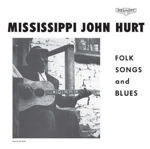 Buy from Amazon Folk Songs and Blues
(1963) — His rediscovery album, featuring "Avalon Blues," "Candy Man," "Coffee Blues," and other classics.
-
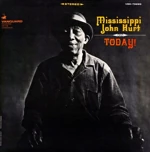 Buy from Amazon Today!
(1966) — A mix of blues, ballads, and gospel, showcasing his continued vitality.
-
 Buy from Amazon The Immortal Mississippi John Hurt
(1967, recorded 1965) — Released posthumously, featuring some of his finest late-period performances.
He also recorded extensively for the Library of Congress and made his final recordings at a hotel in New York City in February and July 1966, which were released in 1972 as Last Sessions.
The Musical Style: A Guitar That Talks
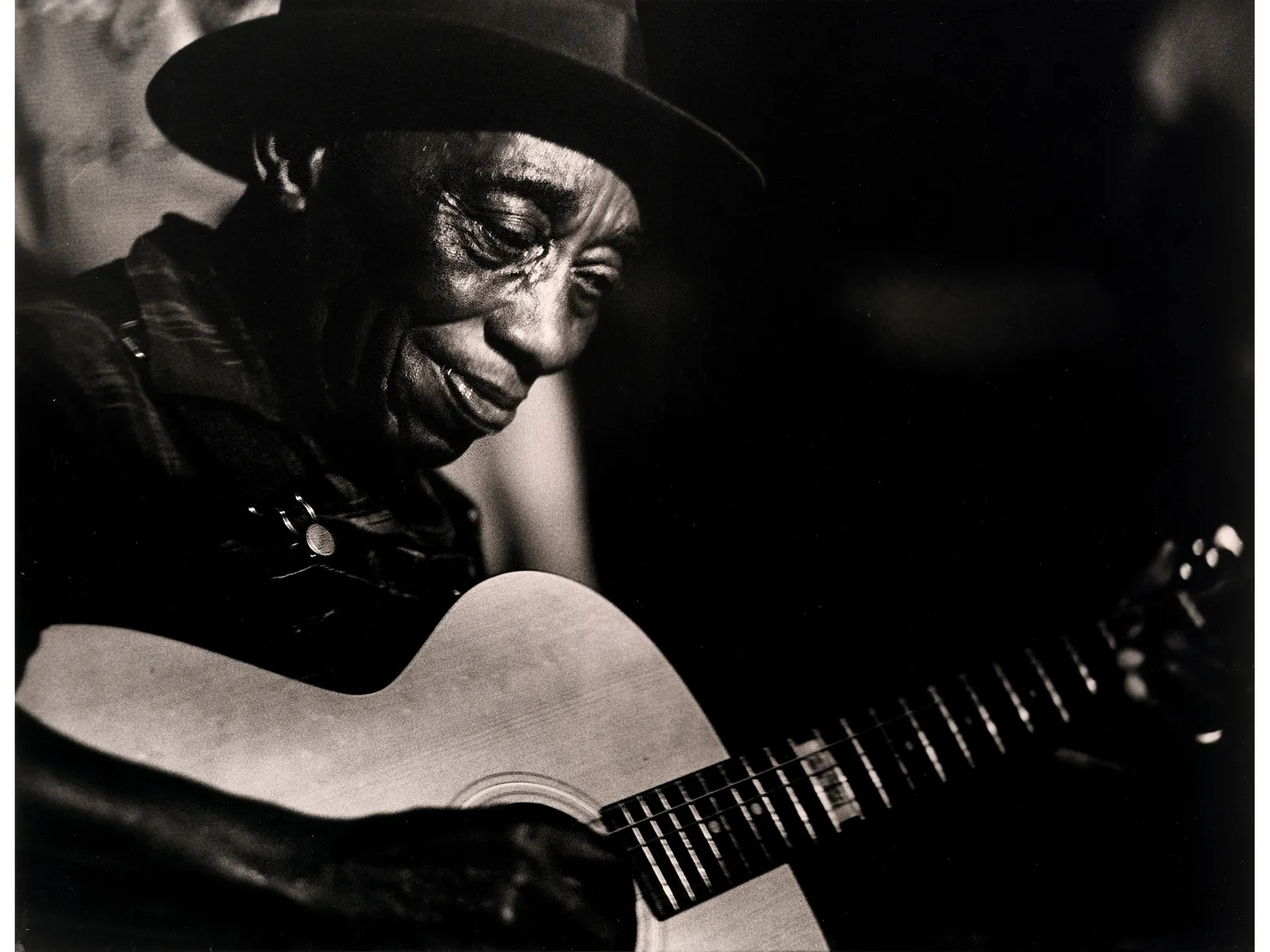
Mississippi John Hurt's guitar style was, and remains, one of the most influential in American music. His fast, highly syncopated fingerpicking was entirely self-taught and utterly unique. As Stefan Grossman described it, Hurt played "as if the guitar is a piano with a boom-chick in the bass imitating the left hand of the piano player and melody on the treble strings like that played by the right hand." His thumb provided a steady, rolling bass pattern while his fingers—usually index and middle—picked out intricate melodies and counter-melodies on the treble strings. The result was a sound of remarkable complexity and rhythmic drive, yet it appeared effortless.
"What I heard in the music of John Hurt," said John Sebastian, "was that it was more swinging than a lot of the finger picking that I had heard up to that time. His groove was just deeper, and yet when he'd talk about his playing, he'd made it sound so simple. 'Well, you get your thumb doing this,' he'd tell me, 'and then you got these fingers left over so you can kinda get a little melody going on that.'" This accessibility—making complex music sound simple—was Hurt's gift and his legacy.
Hurt's repertoire was encyclopedic, spanning blues, ballads, gospel, ragtime, old-time country, and minstrel songs. His gentle, warm voice was perfectly suited to this diverse material, and his performances were marked by a conversational intimacy that made listeners feel they were sitting on a porch with a beloved grandfather. As his granddaughter Mary Frances Hurt and Ed Levine noted, "hearing the music of Mississippi John Hurt feels like sitting on a porch in the old south listening to a warm, caring grandfather tell stories."
The Guitars of Mississippi John Hurt
When Hurt resumed performing in 1963, he did not own a guitar. Tom Hoskins loaned him a refinished Gibson J-45 with a crescent moon inlay on the fingerboard. The blonde, slotted-headstock guitar Hurt used for his groundbreaking set at the 1963 Newport Folk Festival was an Emory instrument, also belonging to Hoskins. Additional footage from the festival shows Hurt playing "Casey Jones" on a Harmony Sovereign 12-string. The instrument he played on Pete Seeger's
Rainbow Quest television show was made for him as a gift by Pennsylvania luthier John Alderson.
In 1964, the Newport Foundation gave Hurt carte blanche to obtain an instrument of his own, and he purchased a sunburst Guild F-30 at Marc Silber's Fretted Instruments in New York. Silber had encouraged him to buy a Martin, but Hurt selected the less expensive Guild, saying that he always wanted a guitar that was "two colors at the same time." This Guild F-30 became one of his primary instruments. After his death, the guitar passed through several hands, including guitarist Jerry Ricks and Denver Folklore Center proprietor Harry Tuft, before being acquired by John Oates of Hall & Oates, who had taken lessons from Ricks. Oates confirmed that if he is playing acoustic guitar on Hall & Oates' early albums
Abandoned Luncheonette or
Whole Oats, it is Mississippi John Hurt's guitar.
For his 1965 Vanguard recording sessions, Hurt played a 1930 Martin OM-45 loaned by Stefan Grossman. The strings on his Guild F-30, unchanged since Hurt's passing, were a light-gauge bronze wound set.
Influence and Legacy
Mississippi John Hurt's influence on subsequent generations of musicians is vast and continues to expand. His syncopated fingerpicking style inspired thousands of guitar players and became a foundational element of the folk, blues, and roots music revival.
Bob Dylan covered "Baby, Let Me Follow You Down" on his 1962 debut album, introducing Hurt's music to a new generation. Dylan's fingerpicking style on his early acoustic albums drew directly from Hurt's example. "Buckets of Rain," from Dylan's 1975 masterpiece
Blood on the Tracks, is explicitly played in the style of Mississippi John Hurt.
John Sebastian, founder of The Lovin' Spoonful, described his band's sound as "a combination of Chuck Berry and Mississippi John Hurt" and named the group after a line from Hurt's "Coffee Blues." Sebastian's signature model Martin guitar features crescent moon-and-stars fingerboard inlays as a tribute to Hurt.
Doc Watson and Merle Watson almost always included a Mississippi John Hurt song in their concerts and never failed to express their gratitude for his gifts. Watson's flatpicking style, while different from Hurt's fingerstyle, was deeply influenced by Hurt's melodic approach to the guitar.
The Grateful Dead's Jerry Garcia,
Beck,
Taj Mahal,
Bruce Cockburn,
Gillian Welch,
Josh Ritter,
Chris Smither,
Rory Block,
Parsonsfield, and
Guthrie Thomas are among the many artists who have recorded Hurt's songs or incorporated his style into their own work.
Happy Traum, who studied with Hurt at the Gaslight, founded the Homespun music teaching series with a book of transcriptions of Hurt's fingerstyle arrangements. The series now contains hundreds of video titles, including Traum and Sebastian's
The Fingerpicking Blues of Mississippi John Hurt, and remains a leading multimedia resource for folk and roots music players worldwide.
John Fahey, the pioneering American primitive guitarist, dedicated the first track of his 1968 album
Requia to "Requiem for John Hurt." Fahey's posthumous live album,
The Great Santa Barbara Oil Slick, also features a version entitled "Requiem for Mississippi John Hurt."
Tom Paxton, who met Hurt and played on the same bill with him at the Gaslight, wrote and recorded "Did You Hear John Hurt?" in 1977, a song he still frequently performs.
Bill Morrissey released the Grammy-nominated album
Songs of Mississippi John Hurt in 1999.
Rory Block recorded
Avalon: A Tribute to Mississippi John Hurt in 2013 as part of her "Mentor Series."
The folk-rock band
The Lovin' Spoonful took their name from a recurring phrase in Hurt's "Coffee Blues."
In 2017, Hurt's life story was told in the award-winning documentary series
American Epic. Director Bernard MacMahon stated that Hurt "was the inspiration for
American Epic." Hurt's life was profiled in the accompanying book,
American Epic: The First Time America Heard Itself. The film featured previously unseen footage of Hurt performing and being interviewed, and radically improved restorations of his 1920s recordings.
In 2023,
Rolling Stone ranked Hurt at number 159 on its list of the 200 Greatest Singers of All Time.
Death and Posthumous Recognition
In 1965, Hurt moved to Grenada, Mississippi, a few miles from Avalon, having saved enough money from his performing career to buy a house. But he did not have long to enjoy his new home. On November 2, 1966, he died of a heart attack in a hospital in Grenada, at the age of 73 (or 74, depending on his actual birth year). The
New York Times eulogized him as "a singer of wry country blues" and noted: "Of all the fine old singers uncovered in the folk-music revival of the nineteen-sixties, few had as much influence on young audiences as Mississippi John Hurt."
Hurt was buried at the St. James Cemetery in Avalon. In 2019, the Killer Blues Headstone Project placed a stone for Hurt at the family plot, ensuring that his final resting place would be properly marked.
The Mississippi John Hurt Museum was established in Avalon, Mississippi, in a three-room shack that had been one of Hurt's homes. It stood parallel to Rural Route 2, the rural road on which he grew up. Tragically, on February 20, 2024—just hours after being listed in the National Historic Register—the museum burned to the ground, the 200-year-old building and everything inside completely reduced to ashes. Arson was not suspected. The Mississippi John Hurt Foundation announced it "will work to create a new physical symbol of his legacy."
Hurt has been honored with markers on the Mississippi Blues Trail in both Avalon and at the Valley Store, the gathering place where he played for locals during his long years of obscurity. The markers note his status as "a world-renowned master of the acoustic guitar" and "an important figure in the 1960s folk blues revival."
Conclusion: The Sweet Soul of the Blues
Mississippi John Hurt's career was brief in terms of public recognition—thirteen songs in 1928, three years of fame from 1963 to 1966—but his influence has proven enduring beyond measure. He was, as Geoff Muldaur observed, "the quintessential wonderful guy" of the blues revival: "They rediscovered him, he smiled, and started to play until he died. A lot of those guys were bitter and sad and a lot of them were drunks. But John Hurt was really the quintessential wonderful guy."
His music—a mellow mix of country, blues, and old-time music, delivered with a gentle voice and a guitar that seemed to speak—provided a stark contrast to the harsh, aggressive blues of his Delta contemporaries. His fingerpicking style, rooted in his thumb and elevated by his melodic imagination, became the template for generations of folk, blues, and roots guitarists. His songs—"Avalon Blues," "Candy Man," "Frankie," "Spike Driver Blues," "Coffee Blues," "Stack O'Lee"—are part of the permanent repertoire of American music.
From the cotton fields of Carroll County to the stage of the Newport Folk Festival, from the Valley Store in Avalon to the Gaslight Cafe in Greenwich Village, Mississippi John Hurt carried his music with humility, grace, and an unassuming genius that touched everyone who heard him. He was, in the end, a man who simply wanted to make his strings say what he said—and in doing so, he said something that continues to resonate through the ages.
Suggested Reading
 Buy from Amazon Mississippi John Hurt: His Life, His Times, His Blues

 19Buy from Amazon 28 Sessions
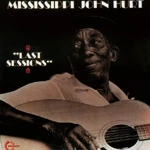 Buy from Amazon Last Sessions