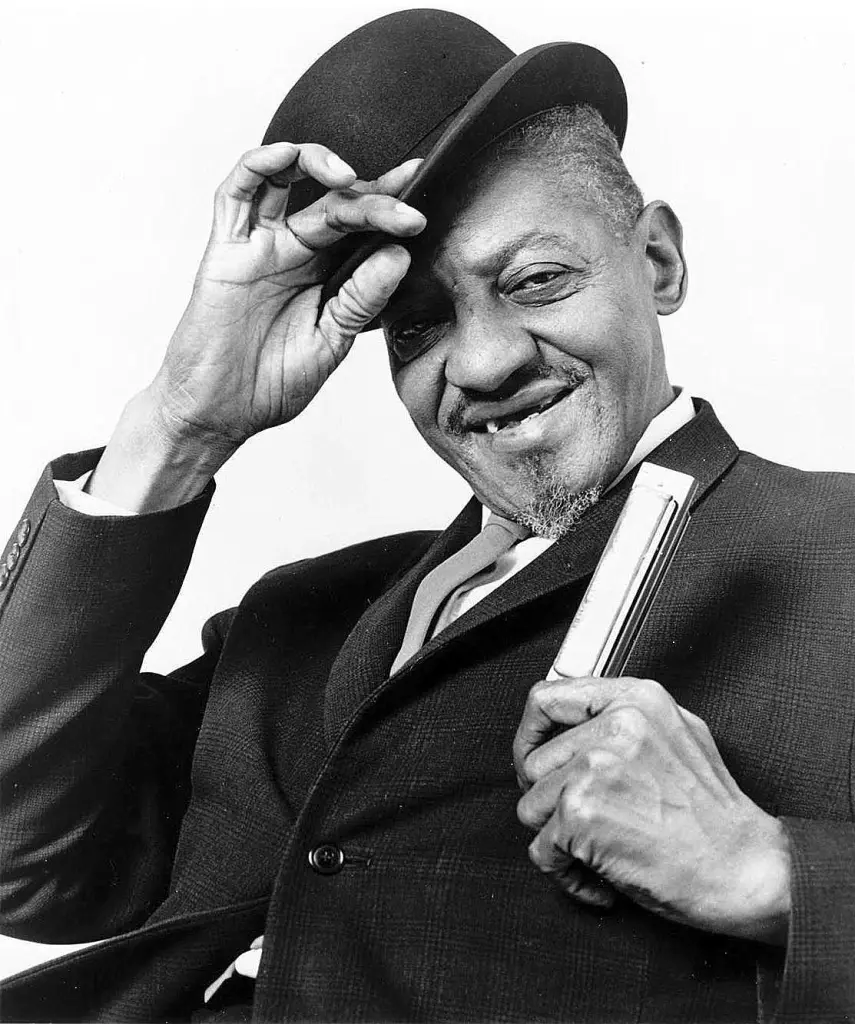
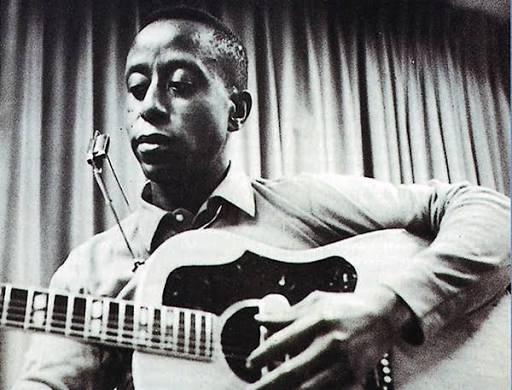
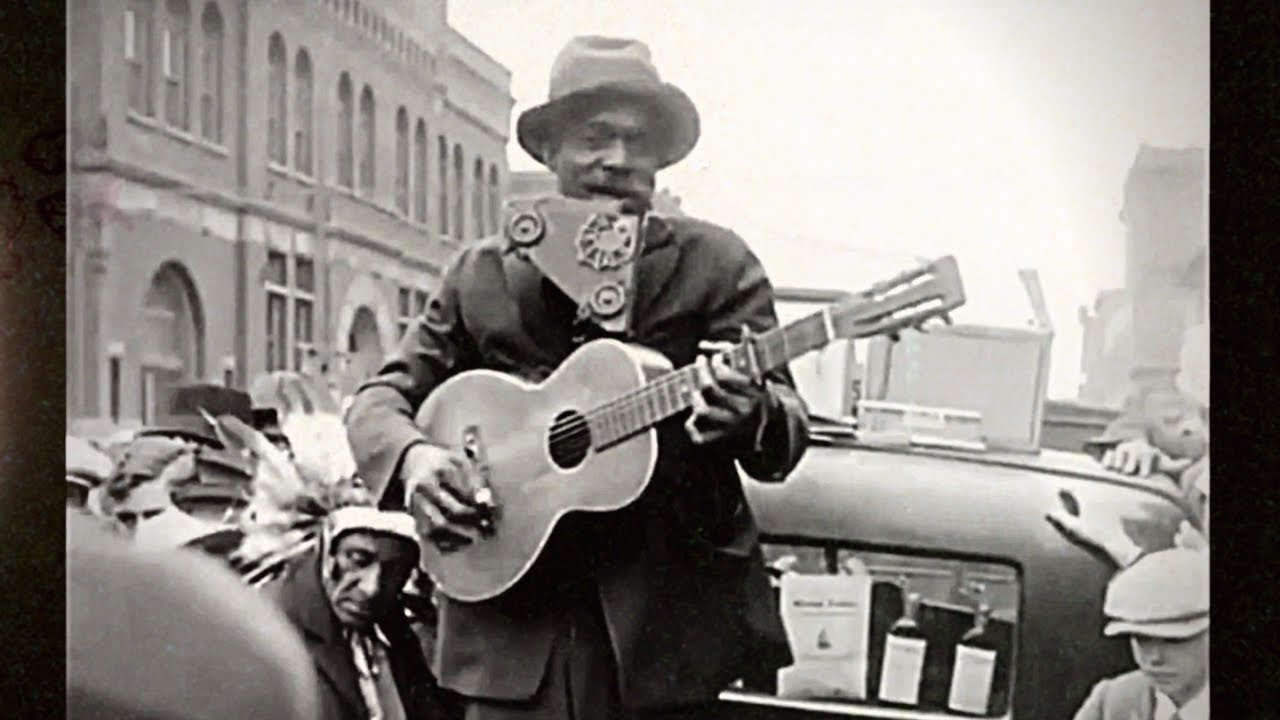
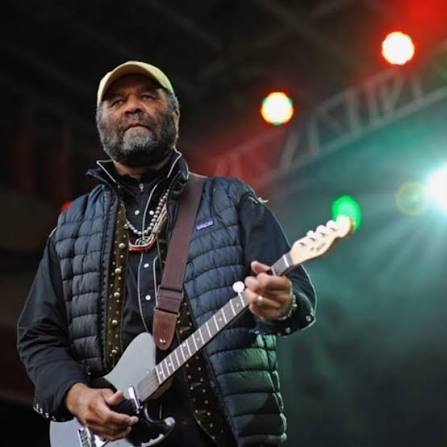
Sonny Boy Williamson II—born Aleck or Alex Miller, also known as Rice Miller, Little Boy Blue, and a dozen other aliases—was one of the most charismatic, influential, and enigmatic figures in the history of the blues. A master harmonica player, a songwriter of rare wit and poetic imagination, and a showman of legendary proportions, he dominated the Delta blues scene for decades before becoming an international star during the 1960s British blues explosion. His story is shrouded in mystery, his name was borrowed (or stolen, depending on whom you believe), and his life was filled with tall tales, violent encounters, and musical brilliance that transcended the chaos of his personal existence.
The Mystery of Birth and Identity
The facts of Sonny Boy Williamson II's life are mired in mystery, much of it of his own making. His birthdate has been claimed as anywhere from 1894 to December 5, 1912, and scholars continue to debate the truth. Researcher William E. Donoghue, who conducted extensive interviews with Williamson's surviving sisters in 1995, concluded that census records indicate he was born around 1912—making him only two years older than John Lee "Sonny Boy" Williamson I and one year older than Robert Johnson. This would mean that his claims to be the "original" Sonny Boy were fabrications, and that he was, in fact, a younger contemporary of the man whose name he appropriated.
What is known is that he was born to Millie Ford on the Sara Jones Plantation near Glendora, Mississippi, in Tallahatchie County. His father is believed to have been Jim Miller, though some sources suggest his original surname was Ford. He was Millie's 21st child, and he was given the nickname "Rice" as a boy, supposedly due to his love for milk and rice. He was known to his Black contemporaries as "Rice" Miller, and he grew up working as a sharecropper alongside his stepfather.
His childhood was marked by hardship and violence. As a teenager, he was often in trouble with the law, and a reported fight with his stepfather prompted him to leave home and begin the itinerant life of a bluesman. He wandered throughout Mississippi, Arkansas, Tennessee, and Missouri, developing his harmonica skills and a raffish stage persona that would serve him throughout his career. He performed under various names, including Little Boy Blue, Willie Miller, Willie Williamson, Harmonica Blowin' Slim, and Sonny Boy Miller, before finally settling on the name that would make him famous—and infamous.
The Name Game: Stealing Sonny Boy
The central controversy of Sonny Boy Williamson II's career is his name. John Lee Williamson—Sonny Boy Williamson I—was a major blues star in Chicago from 1937 until his murder in 1948. He recorded "Good Morning, School Girl" and dozens of other influential sides for Bluebird and RCA Victor, establishing the harmonica as a lead instrument in blues music. When John Lee Williamson was killed, Rice Miller saw an opportunity. He began calling himself "Sonny Boy Williamson," claiming to be the original bearer of the name and insisting that John Lee had stolen it from him.
"I'm the original Sonny Boy, the only Sonny Boy. There ain't no other," he told British interviewers during his 1963 European tour. He claimed to have been born in 1897 or 1899, making him old enough to have used the name before John Lee Williamson, who was born in 1914. But census research suggests this was a lie—a carefully constructed fiction designed to lend legitimacy to his appropriation of another man's identity. As Randy Newman later wrote in his song "Sonny Boy": "This man stole my name / He stole my soul."
Yet there is another perspective. Some blues scholars believe that Miller may have been using the name "Sonny Boy" informally in the Delta as early as the 1930s, and that the name was common enough among harmonica players that multiple musicians claimed it. Whatever the truth, the name stuck, and Miller—now Sonny Boy Williamson II—built a career that, in many ways, eclipsed that of his namesake.
The King Biscuit Years: Radio Stardom (1941–1951)
In 1941, Williamson made the move that would define his early career. He approached KFFA radio station in Helena, Arkansas, with a proposal: a daily blues radio show sponsored by a local business. Station manager Sam Anderson liked the idea but insisted on a sponsor. Williamson and his guitar partner, Robert Lockwood Jr., approached Max Moore, owner of the Interstate Grocery Company and distributor of King Biscuit Flour. Moore, who recognized the marketing potential of reaching Black audiences, agreed to sponsor the show in exchange for the musicians promoting his products.
King Biscuit Time debuted on November 21, 1941, at 12:15 p.m., featuring Williamson on harmonica and vocals and Lockwood on guitar. The show was an immediate success. Sales of King Biscuit flour soared, and Moore expanded the marketing to include "Sonny Boy" cornmeal, with bags featuring a drawing of Williamson sitting barefoot on an ear of corn, holding a piece of cornbread. The show became an institution in the Mississippi Delta, heard within a fifty- to eighty-mile radius of Helena, including much of the Delta and the outskirts of Memphis. It was the first regular radio show to feature live blues performances and one of the earliest examples of integrated radio in the South.
The King Biscuit Entertainers expanded over the years to include some of the finest musicians in the Delta: guitarists Joe "Willie" Wilkins, Earl Hooker, and Houston Stackhouse; pianists Robert "Dudlow" Taylor, Willie Love, and Pinetop Perkins; and drummer James "Peck" Curtis. The band's makeup—harmonica, guitar, piano, bass, and drums—is often cited as the prototype for the modern blues band. Guest artists who appeared on the show included Muddy Waters, Jimmy Rogers, Little Walter, James Cotton, and Levon Helm. Williamson's daily broadcasts made him a star in the Delta long before he ever made a commercial recording.
Williamson's radio success was not without its complications. He was known for his drinking, his temper, and his tendency to disappear for days at a time. He allegedly once did his radio show in prison shackles after a drunken spree caused him to miss a broadcast. But his musical brilliance was undeniable, and his influence on younger harmonica players—many of whom listened to King Biscuit Time daily—was profound.
The Trumpet Years: First Recordings (1951–1955)
Despite his fame in the Delta, Sonny Boy Williamson II did not enter a recording studio until 1951, when Lillian McMurry of Jackson, Mississippi's newly established Trumpet Records invited him to record. The timing was fortuitous: John Lee Williamson had been dead for three years, which lent some legitimacy to Miller's claim to the name. The first session produced classics that remain among the finest blues recordings ever made: "Eyesight to the Blind," "Mighty Long Time," "Nine Below Zero," "Mr. Downchild," "Cross My Heart," "Pontiac Blues," and "Sonny Boy's Christmas Blues."
These recordings revealed a fully formed artist. Williamson's harmonica style was distinctive: he was a master of economy, using space and silence as effectively as notes. His vocal delivery was laconic, often mordant and sarcastic, with a slightly bent worldview that gave his songs a unique flavor. His lyrics were marked by wit, imagination, and a sly humor that set him apart from his contemporaries. As one commentator noted, "his sound was entirely his own. He was a tremendous influence on other players; every blues harmonica player since Sonny Boy has struggled to master his style."
Trumpet Records released a string of singles that established Williamson as a recording artist of major importance. But in 1955, the label went bankrupt, and Williamson's contract was sold to its creditors, who in turn sold it to Chess Records in Chicago.
The Chess/Checker Years: Chicago Stardom (1955–1964)
Williamson's move to Chicago marked the most successful period of his recording career. He had already begun developing a following in the city, having appeared there as a member of Elmore James's band in 1953. At Chess subsidiary Checker Records, he recorded approximately 70 songs between 1955 and 1964, creating a body of work that ranks with the finest Chicago blues of the era.
His first major hit came in 1955 with "Don't Start Me to Talkin'," which reached No. 3 on the Billboard R&B chart—his only significant chart success, but enough to establish him as a star. The song's driving rhythm and Williamson's urgent vocal and harmonica work made it an instant classic. He followed it with a remarkable string of singles that have become blues standards:
-
"Keep It to Yourself" (1956) — A sly, cautionary tale about gossip and secrets.
-
"Fattening Frogs for Snakes" (1957) — A Williamson original with one of his most memorable titles and a typically cryptic lyric.
-
"Cross My Heart" (1958) — A declaration of romantic intent delivered with Williamson's characteristic wit.
-
"Your Funeral and My Trial" (1958) — A dark, dramatic blues that became one of his signature songs.
-
"Born Blind" (1958) — A powerful spiritual-tinged blues.
-
"The Goat" (1960) — A comic novelty that showcased Williamson's playful side.
-
"One Way Out" (1962) — A reworking of an Elmore James song that The Allman Brothers Band would later make famous.
-
"Help Me" (1963) — A haunting, pleading blues that became one of his most covered songs.
-
"Bye Bye Bird" (1963) — His European theme song, a farewell anthem that took on added poignancy after his death.
-
"Bring It On Home" (1963) — Written by Willie Dixon, this train-blues became a staple of his repertoire and later a Led Zeppelin classic.
Unlike many of his Chess contemporaries, Williamson rarely utilized the label's house songwriter, Willie Dixon. Most of his songs were originals, reflecting a highly personal vision that set him apart from the blues mainstream. His first LP,
Down and Out Blues (1959), was a compilation of previously released singles that introduced his work to the album market.
The European Tours: Conquering Britain (1963–1965)
The final chapter of Sonny Boy Williamson II's career was also his most spectacular. In the early 1960s, he toured Europe several times as part of the American Folk Blues Festival, organized by German impresarios Horst Lippmann and Fritz Rau. These tours introduced him to the young British musicians who were then in the process of creating the British blues boom, and the impact was mutual and profound.
Williamson's 1963 and 1964 European tours were legendary. He performed with Muddy Waters, Howlin' Wolf, Lightnin' Hopkins, Lonnie Johnson, Sleepy John Estes, Big Joe Williams, Otis Spann, and other blues giants. But Williamson was the acknowledged star of the tour, revered by audiences and fellow musicians alike. His performances were captured on numerous television broadcasts, and his on-stage antics—lying down while playing harmonica, inserting the harp into his mouth and playing with no hands, his impeccable dress and commanding presence—made him an unforgettable figure.
His relationship with British rock bands was particularly significant. The Yardbirds, featuring a young Eric Clapton on lead guitar, backed Williamson for several English dates between December 1963 and February 1964. The resulting album,
Sonny Boy Williamson and the Yardbirds, captured their chaotic but thrilling collaborations. At their first meeting, Clapton attempted to impress Williamson by asking, "Isn't your real name Rice Miller?" Williamson slowly pulled out a small penknife and glared at him. "It went downhill from there," Clapton later recalled. The album, recorded live with Williamson growing increasingly drunk on Scotch whiskey, is a raw document of two musical worlds colliding.
The Animals also backed Williamson during this period, recording a live album on December 30, 1963. Williamson's influence on these young British musicians was immense. He recorded with Jimmy Page, Brian Auger & The Trinity, and two jazz saxophonists on his final day in England. He was quoted as saying of his British accompanists, "Those British boys want to play the blues real bad, and they do"—a statement that has been interpreted as both compliment and critique.
While in England, Williamson indulged in the flamboyant lifestyle that matched his stage persona. He had a custom-made, two-tone suit tailored for him, along with a bowler hat, matching umbrella, and an attaché case for his harmonicas. According to Led Zeppelin biographer Stephen Davis, he once set his hotel room on fire while trying to cook a rabbit in a coffee percolator. Robert Palmer's
Deep Blues mentions that he allegedly stabbed a man during a street fight and left the country abruptly. Future Led Zeppelin vocalist Robert Plant reportedly stole one of Williamson's harmonicas at a show—a story Plant himself has confirmed in various forms.
Personal Life and Character
Williamson married Mattie Gordon, who remained his wife until his death. He also married Howlin' Wolf's half-sister Maggy at one point, and he showed Wolf how to play harmonica—one of the many ways in which his influence spread through the blues world. In 1949, he relocated to West Memphis, Arkansas, and lived with his sister and her husband, Howlin' Wolf. He started his own KWEM radio show from 1948 to 1950, selling the elixir Hadacol, and brought his King Biscuit musician friends—including Elmore James, Houston Stackhouse, Arthur "Big Boy" Crudup, and Robert Nighthawk—to perform on the station.
Williamson's personality was as complex as his music. He was guarded, suspicious, and prone to telling tall tales—including the claim that Robert Johnson had died in his arms. He was a heavy drinker, known for his irascible nature and his tendency to violence. When a fourteen-year-old Robert Plant introduced himself to Williamson at a urinal during a blues festival, Williamson responded with a curt "fuck off." Plant then snuck backstage and helped himself to Williamson's harmonica. Yet for all his character flaws, Williamson impressed his fellow musicians with his brilliance. B.B. King called him "the king of the harmonica."
Death and Legacy
In early 1965, sensing that his health was failing, Williamson returned to Helena, Arkansas, and resumed his beloved
King Biscuit Time broadcasts. On May 25, 1965, he failed to arrive at the KFFA studios for his scheduled performance. Drummer James "Peck" Curtis went to the rooming house where Williamson was staying and discovered his body in bed. He had died of an apparent heart attack in his sleep the night before. He was approximately 52 to 53 years old, though his claims to be much older had convinced many that he was in his sixties or seventies.
He was buried in the Whitfield Chapel Cemetery near Tutwiler, Mississippi. His grave remained unmarked for over a decade until Lillian McMurry, the owner of Trumpet Records who had given him his first recording opportunity, commissioned a headstone in 1977. The stone reads: "Aleck Miller, Better Known As 'Willie' Sonny Boy Williamson, Born Mar. 12, 1905, Died June 23, 1965"—but the dates are almost certainly incorrect, a final testament to the mysteries that surrounded his life.
In 2008, he was inducted into the Arkansas Entertainers Hall of Fame. In October 2014, he was honored with a marker on the Mississippi Blues Trail in Helena, Arkansas. In 2017, the Library of Congress added
King Biscuit Time to the National Recording Registry, recognizing its significance as the longest-running daily radio program in American history and its role in preserving and promoting blues music.
Musical Style and Influence
Sonny Boy Williamson II's influence on modern music is incalculable. He left three distinct legacies:
The Harmonica Legacy: Williamson was the first blues harmonica player known to use amplification, and he was among the first Delta blues artists to perform live on radio. His influence on subsequent harmonica players includes Howlin' Wolf, Junior Wells, James Cotton, and Little Walter Jacobs. Stylistically, he was a master of economy, using space and silence as effectively as notes, and his ability to make the harmonica mimic the human voice—crying, moaning, shouting—set a standard that every blues harp player since has struggled to match.
The Songwriting Legacy: Williamson's songs are marked by wit, imagination, sly humor, and a slightly bent worldview. Unlike many of his Chess contemporaries who relied on Willie Dixon's songwriting, Williamson wrote most of his own material, creating a catalog of originals that stand out for their originality and poetic quality. Songs like "Eyesight to the Blind," "Don't Start Me to Talkin'," "Help Me," "Your Funeral and My Trial," and "Bye Bye Bird" have become blues standards, covered by artists across generations and genres.
The Rock Legacy: Williamson's European tours and recordings with British rock bands forged a direct link between Delta blues and rock music. The list of artists who have covered his songs is staggering:
-
The Who performed "Eyesight to the Blind" as a key song in their rock opera Tommy—the only song in that opus not written by a band member.
-
Aerosmith covered "Eyesight to the Blind" on their album Honkin' on Bobo.
-
Led Zeppelin adapted "Bring It On Home" on Led Zeppelin II (1969), initially as a homage to Williamson, though the song later became embroiled in a copyright dispute.
-
The Allman Brothers Band popularized "One Way Out" in the early 1970s, making it a staple of their live repertoire.
-
Van Morrison covered "Take Your Hands Out of My Pocket" and "Help Me" on his 1974 live album It's Too Late to Stop Now, and has often sung "Help Me" in live performances throughout his career.
-
The New York Dolls covered "Don't Start Me Talkin'."
-
The Doobie Brothers covered "Don't Start Me to Talkin'" on their album Toulouse Street.
-
Joe Bonamassa covered "Your Funeral and My Trial."
-
Nine Below Zero took their band name from his song.
-
The Downchild Blues Band took their name from his song "Mister Downchild."
-
John Popper of Blues Traveler has cited Sonny Boy Williamson as a strong influence on his harmonica playing.
-
Muddy Waters, Canned Heat, Junior Wells, B.B. King, Mose Allison, John Mayall's Bluesbreakers, Ten Years After, Gary Moore, The Blues Brothers, Lester Butler, Rory Gallagher, and Dr. Feelgood have all recorded his songs.
In interviews in
The Last Waltz, roots-rockers The Band recounted jamming with Williamson prior to their initial fame as Bob Dylan's electric backing band, and making never-realized plans to become his backing band. The rumor persists that, had Williamson lived but four months longer, he would have been a member of The Band when they joined Bob Dylan on his controversial 1966 electric tour—a tantalizing "what if" of music history.
Suggested Listening
 Buy from Amazon Sonny Boy Williamson II His Best
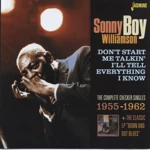 Buy from Amazon Don't Start Me Talkin' I'll Tell Everything I Know - The Complete Checker Singles 1955-1962
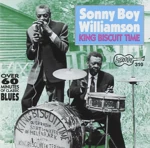 Buy from Amazon King Biscuit Time
Conclusion: The One and Only
Sonny Boy Williamson II was, by any measure, one of the greatest blues musicians who ever lived. His harmonica playing was innovative and influential, his songwriting was original and enduring, and his stage presence was unforgettable. He was also a rogue—a name-stealer, a teller of tall tales, a heavy drinker, and a man of violent temperament. But as Randy Newman acknowledged in his song "Sonny Boy," the second Sonny Boy was "just as good, or better" than the first. His music transcended the moral ambiguities of his life, and his influence continues to resonate through every blues harmonica player who picks up the instrument, every rock band that covers his songs, and every listener who discovers the depth and beauty of his recordings.
From the cotton fields of Tallahatchie County to the radio studios of Helena, from the clubs of Chicago to the concert halls of Europe, Sonny Boy Williamson II carried the blues with him, transforming every stage into a kingdom and every audience into his subjects. He may not have been the original Sonny Boy, but he made the name his own, and in doing so, he ensured that the legacy of the blues would survive and thrive for generations to come.