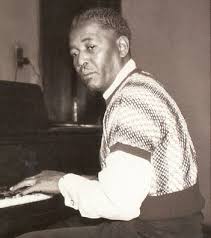
Curtis Jones was one of the most distinctive and underappreciated voices in the history of blues piano. A Texas-born musician who brought a light, melodic touch to the barrelhouse and boogie-woogie traditions, Jones recorded prolifically during the golden age of Chicago blues, created songs that became standards of the genre, and enjoyed a remarkable second act during the 1960s folk-blues revival before settling in Europe as an expatriate bluesman. Though he never achieved the fame of contemporaries like Memphis Slim or Otis Spann, his influence on blues piano—and on a young Bob Dylan—ensures his place in the pantheon of American roots music.
Early Life: From the Cotton Fields to Dallas
Curtis Jones was born on August 18, 1906, in Naples, Texas, to sharecropping parents, Willie Jones and Agnes Logan. He was one of seven children in a family that toiled under the harsh conditions typical of early 20th-century African American rural life in the South. The death of his mother when he was six years old forced him into field labor at a young age, contributing to the economic hardships and familial instability that marked his formative years. These experiences, compounded by the systemic racial discrimination embedded in sharecropping systems, prompted him to flee to Dallas as a teenager in search of better opportunities.
In Dallas, Jones initially played guitar, but he switched to piano after being exposed to the vibrant barrelhouse and boogie-woogie scene that thrived in the city's clubs and juke joints. He developed a distinctive style characterized by a rock-steady left hand, rolling bass patterns, and a light, melodic touch in the right hand that set him apart from the heavier, more aggressive approaches of many contemporaries. Big Bill Broonzy, a fellow Chicago blues figure, later attested to the originality of Jones's method, stating, "he had a way of playing piano I haven't never heard nobody play…or even try to…nobody could learn his style."
The Wandering Years: Kansas City, New Orleans, and the Road to Chicago
In 1929, at the age of twenty-three, Jones left Dallas and began working his way through the Midwest and Southwest. He traveled via Kansas City, then moved to New Orleans, where he married Lulu Stiggers. The marriage was short-lived, however, and their separation shortly before 1937 left him devastated—an event that would directly inspire his most famous composition. During these itinerant years, Jones joined various performing troupes and honed his craft in the rough-and-tumble world of Southern barrelhouses and rent parties.
In 1936, Jones made the pivotal decision to relocate to Chicago, joining the ongoing Great Migration of African Americans northward in pursuit of industrial jobs and escape from Southern oppression. He settled amid the bustling Black neighborhoods on the city's South Side, where a thriving blues culture was taking root. Upon arrival, Jones grappled with the challenges of urban adjustment, supplementing his early musical pursuits with menial labor, including factory work, to sustain himself in the competitive environment. By 1937, he had forged connections within the Chicago blues circuit, including collaborations with prominent figures like Big Bill Broonzy.
The Recording Years: Vocalion, Bluebird, and OKeh (1937–1941)
Jones's recording career began in earnest on September 28, 1937, when he entered a Chicago studio for Vocalion Records. The session was arranged by Lester Melrose, the white talent scout and producer who controlled much of the Chicago blues recording scene. Backed by guitarist Willie Bee James and drummer Fred Williams, Jones cut four titles, of which only two were initially released: "Lonesome Bedroom Blues" and "You Got Good Business." The former was a poignant, heart-felt song about his recent divorce from Lulu Stiggers, and it became a significant race hit, establishing Jones as a rising star in the blues world.
Over the next five years, Jones was in the studio no fewer than twenty times, recording approximately one hundred titles for Vocalion, Bluebird, and OKeh. His pre-war output was remarkably prolific and varied, encompassing solo piano blues, small group sessions with guitar and drums, and larger ensemble recordings featuring horns. Among his most significant recordings from this period were:
-
"Lonesome Bedroom Blues" (1937) — His signature tune, a mournful meditation on loneliness and loss that became one of the defining blues ballads of the era.
-
"Highway 51 Blues" (1938) — A driving blues recorded with Washboard Sam on washboard, later covered by Bob Dylan on his 1962 debut album.
-
"Tin Pan Alley" (1941) — A blues standard depicting the hardships of city life, with a guitar-like piano phrasing that influenced countless later artists.
-
"Decoration Day Blues" — Recorded by Jones in 1937 but unissued at the time; it was later recorded by Sonny Boy Williamson I in 1938 with Yank Rachell on mandolin.
-
"Blues and Trouble" — A powerful expression of the difficulties of urban life.
-
"Reefer Hound Blues" / "War Broke Out In Hell" (1938) — Bold, thematic songs addressing social vices with gritty lyrics and boogie-woogie drive.
-
"Black Gypsy Blues" (1938) — A haunting minor-key blues that demonstrated Jones's emotional range.
Jones's 1938–1939 sessions increasingly featured horn sections, with alto saxophonist George Gant and electric guitarist Hobson "Hot Box" Johnson adding a jump blues flavor to his sound. By 1940–1941, he was recording for OKeh with harmonica player Jazz Gillum and bassist Ransom Knowling, producing some of his most polished work. The 1941 OKeh session that produced "Tin Pan Alley" and "My Baby Says She Loves Me" marked a commercial peak, with "Tin Pan Alley" achieving notable airplay on Black radio stations and becoming a blues standard.
The War Years and the Wilderness (1941–1953)
World War II brought Jones's recording career to an abrupt halt. His final pre-war sessions took place in 1941, and the combination of wartime shellac shortages, rationing, and declining record sales forced him to step away from music. He took non-performing jobs in Chicago to support himself, and no documented recordings of Jones exist from 1942 to 1952. This twelve-year silence represented a significant portion of his prime creative years, and when he returned to the studio, the musical landscape had changed dramatically.
The Post-War Return: Parrot Records (1953)
Jones resumed recording in 1953 with a session for Parrot Records, the Chicago label founded by disc jockey Al Benson. The single "Wrong Blues" backed with "Cool Playing Blues" featured guitarist L.C. McKinley, tenor saxophonist Lorenzo Tucker, bassist Alfred Elkins, and drummer Judge Riley—a departure from his earlier solo piano work that reflected the rising post-war Chicago sound with its electric guitar and horn elements. Despite the quality of the recordings, the single failed to bring Jones any renewed recognition, and he had to be content with playing local club dates for the next several years.
The Folk-Blues Revival: Rediscovery and Albums (1958–1962)
The late 1950s and early 1960s brought a remarkable revival of interest in pre-war blues, driven by young white enthusiasts and the burgeoning folk music scene. In 1958, blues enthusiasts Bob Koester, Dave Mangurian, and Don Hill located Curtis in a run-down hotel in Chicago. Through their efforts, and that of French jazz critic Jacques Demêtre who traveled from France to interview Jones for the magazine Jazz Hot, the interest of Prestige Records' Bluesville subsidiary was aroused.
In 1960, Jones recorded his debut album, Trouble Blues, for Bluesville. The session took place in New York with a trio of jazz musicians and Chicago guitarist Johnny "Big Moose" Walker. The album managed to capture Curtis's vocals superbly, though his piano was somewhat swamped by the accompanying organist. Only the five-minute instrumental title track showed anything of his old piano prowess. However, the recording succeeded in bringing him back to the public eye, albeit that of a white, highbrow coffee house audience, and he secured a regular Tuesday night spot at the Blind Pig in Chicago as well as a concert at Illinois University.
On January 12 and 27, 1962, Jones was recorded by Bob Koester for his Delmark label, producing the album Lonesome Bedroom Blues. The album was a solo affair, offering definitive versions of his signature tunes including the title track and "Tin Pan Alley." Koester's liner notes described the music as "Texas styled blues, played and sung by a desperate, almost forgotten man, writing, singing and playing for a few friends." The album remains one of the finest documents of Jones's mature style—intimate, melodic, and deeply personal.
The Move to Europe: Expatriate Bluesman (1962–1971)
Three days after the Delmark sessions, at the instigation of fellow pianist Champion Jack Dupree, Curtis Jones was on a plane to Zurich, Switzerland. From that moment on, he became, like Dupree, a Eurobluesman, eventually making Paris his base. He toured France, Belgium, and Germany, appearing in concert with a variety of other expatriate jazz and blues musicians. In January 1963 at Koblenz, he appeared in a concert celebrating "Americans in Europe" that was subsequently released as a double album on Impulse! Records.
Later in 1963, Jones was in London with the Chris Barber band, playing jazz and blues venues throughout the city. In November 1963, he recorded his third album at Decca's West Hampstead studio with guitarist Alexis Korner, bassist Jack Fallon, and drummer Eddie Taylor. The album, released as Americans in Europe Vol. 2 (1963) and later as In London (1964), featured reworkings of his classic material alongside new compositions. "Alley Bound" was a version of his 1938 original, reworked in 1941 as "Tin Pan Alley Blues." "Syl-Vous Play Blues" leaned heavily on Ray Charles's instrumental "Rockhouse," while "Young Generation Boogie" reflected the music he had been playing for his European audiences.
Jones spent the next two years in North Africa, mainly Morocco, then toured Spain, Greece, and France between 1966 and 1967. In 1968, he was part of the American Folk Blues Festival which toured England, and while there he recorded an album for Mike Vernon's Blue Horizon label, appropriately entitled Now Resident in Europe. The album featured Jones on vocals, piano, and guitar, backed by Brian Brocklehurst on bass and Dougie Wright on drums. It included new compositions like "Morocco Blues" and "The White Man's Plantation" (an interview track), as well as reworkings of his older material. The album failed to get the promotion, sales, or acclaim Jones obviously thought it worthy of, as he made clear at the time.
Musical Style: The Light Touch
Curtis Jones's piano style was defined by its melodic sensitivity and rhythmic subtlety. Rooted in the barrelhouse traditions of Dallas and the Southwest, his playing featured a distinctive light touch that contrasted with the heavier approaches of many contemporaries. His left hand delivered rolling bass patterns with rock-steady precision, while his right hand improvised melodic flourishes that gave his playing a singing quality. This approach, honed through self-taught methods in Texas, allowed for expressive improvisational flair that elevated his solo performances.
A hallmark of Jones's technique was the seamless vocal-piano interplay in his solo recordings. His light, heartfelt voice wove through improvisational piano lines to convey intimate narratives of loss and longing. This integration, evident in tracks like "Lonesome Bedroom Blues," highlighted his ability to synchronize rhythmic phrasing between singing and playing, fostering an improvisational spontaneity that defined his enduring influence on blues piano. He often played guitar on one or two songs on his albums and at live performances, revealing an unexpected talent with the instrument he had first learned as a youth.
Influence and Legacy
Curtis Jones's influence on subsequent generations of musicians is significant, though often indirect. His most immediate impact was on a young Bob Dylan, who included Jones's "Highway 51 Blues" on his 1962 debut album, Bob Dylan. The song, which Jones had recorded in 1938, became part of the folk-blues repertoire that Dylan and his contemporaries drew upon in the early 1960s.
Jones's song "Tin Pan Alley" became a blues standard, recorded by artists including Freddie King and Stevie Ray Vaughan. "Decoration Blues," though unissued in Jones's original 1937 recording, was recorded by Sonny Boy Williamson I in 1938 and became part of the pre-war blues canon. His melodic, light-touch approach to piano blues influenced later pianists who sought to move beyond the heavy, aggressive style that dominated post-war Chicago blues.
In Europe, Jones helped establish the template for the expatriate blues musician—American blues artists who relocated to the Continent in the 1960s and found enthusiastic audiences among European jazz and blues fans. His albums for Decca, Blue Horizon, and other European labels became touchstones for the transatlantic blues movement, bridging American traditions with the Continent's burgeoning scene.
Death and Posthumous Recognition
In his later years, Curtis Jones experienced declining health due to heart problems. He died of heart failure on September 11, 1971, in Munich, West Germany, at the age of 65. His funeral was held in Munich, and he was buried on September 20, 1971, at the Friedhof am Perlacher Forst cemetery. Tragically, his grave was a social grave (pauper's grave, no. 97/3/184), and it was sold in 1979 after no family maintained it—a final indignity for a musician who had given so much to the blues.
Posthumously, Jones's catalog received significant attention through reissues and compilations. The Document label released four volumes of his complete recorded works in chronological order in the 1990s, making his entire pre-war and post-war output available to collectors and scholars. The Original Blues Classics label reissued his 1960 album Trouble Blues in 1987, and various European anthologies kept his music in circulation. His melodic piano style and songs like "Lonesome Bedroom Blues" have been celebrated in blues histories for bridging Texas and Chicago traditions, earning mentions in scholarly works on piano blues and influencing later anthologies.
Discography
Albums
-
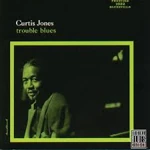 Buy from Amazon Trouble Blues (Bluesville, 1960)
-
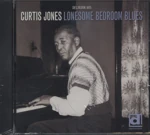 Buy from Amazon Lonesome Bedroom Blues (Delmark, 1962)
-
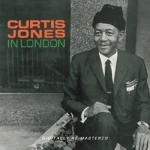 Buy from Amazon In London (Decca, 1964)
-
 Buy from Amazon Now Resident in Europe (Blue Horizon, 1968)
-
 Buy from Amazon Blues and Trouble (Oldie Blues, 1980)
Selected Compilations
-
 Buy from Amazon Curtis Jones: Complete Recorded Works in Chronological Order, Volume 1 (Document, 1994)
-
 Buy from Amazon Curtis Jones: Complete Recorded Works in Chronological Order, Volume 2 (Document, 1994)
-
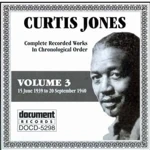 Buy from Amazon Curtis Jones: Complete Recorded Works in Chronological Order, Volume 3 (Document, 1994)
-
 Buy from Amazon Curtis Jones: Complete Recorded Works in Chronological Order, Volume 4 (Document, 1994)
 Buy from Amazon Americans in Europe Vol. 2 (Impulse!, 1963)
-
 Buy from Amazon Blues Piano Orgy (Delmark, 1972/1996)
Conclusion: The Forgotten Poet
Curtis Jones never enjoyed the acclaim or recording contracts that fellow pianists Memphis Slim, Champion Jack Dupree, and Willie Mabon found abroad. He was, in many ways, a musician out of time—too melodic and subtle for the aggressive electric blues that dominated post-war Chicago, too rooted in the pre-war tradition to fully embrace the folk-blues revival that embraced artists like Son House and Mississippi John Hurt. Yet his music—those rolling piano figures, that light, heartfelt voice, those songs of loneliness and longing—remains among the most beautiful and personal in the blues canon.
From the cotton fields of East Texas to the barrelhouses of Dallas, from the South Side of Chicago to the jazz clubs of Paris and the concert halls of London, Curtis Jones carried the blues with him, adapting his style to each new environment while maintaining the melodic sensitivity that was his signature. He was a much underrated pianist with a variety of styles, a rock-steady left hand, and a good ear for improvising melody. The re-release of his recordings puts back into catalogue a significant part of his very prolific recording career as some small measure of redress for an artist who deserved far more recognition in his lifetime.