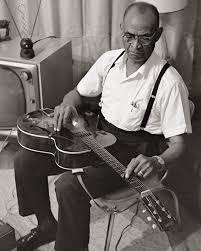
Robert Timothy Wilkins was born on January 16, 1896, in Hernando, Mississippi, a small town roughly twenty-one miles south of Memphis, Tennessee. Of mixed African-American and Cherokee descent, Wilkins grew up in a household where music was a constant presence. His biological father was a bootlegger who was eventually expelled from the state of Mississippi, and after his departure, Wilkins's mother remarried a guitarist named Tim Oliver. It was Oliver who taught young Robert the rudiments of guitar around 1904, and the house became a gathering place for local musicians, including the famed songster Jim Jackson, who occasionally stayed as a house guest.
By the age of fifteen, Wilkins had reassumed his birth surname and was already performing at dances and parties for money. His musical education was further enriched by lessons from Aaron "Buddy" Taylor and by the informal jam sessions that took place at his sister's house, where itinerant musicians passed through and shared techniques.
Memphis and the Roaring Twenties
In 1915, Wilkins moved to Memphis with his mother, a relocation that would prove decisive for his musical development. His arrival in Memphis coincided with the city's emergence as a major hub for African-American music, particularly along Beale Street. World War I briefly interrupted his musical pursuits—he served in the Army—but he returned to Memphis in 1919 and launched his career as a professional musician.
During the 1920s, Wilkins became a fixture of the Memphis blues scene, sharing stages with some of the era's most formidable talents, including Furry Lewis, Son House, Charley Patton, Frank Stokes, and Gus Cannon. He claimed to have tutored a young Memphis Minnie in guitar, a claim that speaks to the respect he commanded among his peers even if his commercial success never matched theirs.
Like many Memphis musicians of the period, Wilkins organized a jug band to capitalize on the "jug band craze" then sweeping the region. Though his group never achieved the fame of the Memphis Jug Band or Cannon's Jug Stompers, it helped secure better-paying gigs. In 1927, he reinforced his local popularity with a groundbreaking appearance on a Memphis radio station, making him one of the first Black artists to perform live on radio in the city.
The Pre-War Recordings (1928–1936)
Wilkins's recording career began in September 1928 when he was invited by Ralph Peer of Victor Records to cut four sides in Memphis. The session yielded "Rolling Stone" (Parts 1 and 2), a droning, one-chord composition whose title—if not its structure—would later inspire Muddy Waters and, by extension, the name of one of rock's most famous bands. The song's stark, minimalist approach, built on solo bass notes that suggest chord changes without fully sounding them, stands as one of the earliest known recordings to feature the phrase "rolling stone."
In September 1929, Wilkins recorded for Brunswick Records at Memphis's Peabody Hotel, producing what many consider his masterpiece: "That's No Way to Get Along," a song of intricate guitar work and world-weary lyrics about faithless women and existential despair. A follow-up session in February 1930 demonstrated a remarkable diversity of song styles, tunings, and time signatures that set him apart from his Delta contemporaries.
The Great Depression devastated the recording industry, and opportunities grew scarce. Nevertheless, Wilkins managed one final pre-war session in 1935 for Vocalion Records in Jackson, Mississippi, backed by second guitarist Little Son Joe and a spoons player known as "Kid Spoons." The session produced "Old Jim Canan's," a celebration of the gambling parlor at 340 Beale Street, among other varied compositions.
What distinguished Wilkins from nearly all his contemporaries was his versatility. He moved fluidly between ragtime, blues, minstrel songs, and gospel, crafting highly individual songs rather than relying on a trademark sound. His guitar technique—employing both thumb and finger picks—produced a bright, cutting tone, while his fast, tight vibrato and superb vocal control created a singing style that was distinctive precisely because it avoided the eccentricities and theatrical tics favored by many bluesmen of the era.
The Road to Damascus
Wilkins's life took a dramatic turn in the mid-1930s. A quiet teetotaler who had long been disturbed by the violence and moral degradation of the blues party circuit, he experienced a crisis at a house party in Hernando where a violent brawl broke out. According to some accounts, his wife also became seriously ill around this time, and Wilkins offered his life to God in exchange for hers. When she survived, he kept his pledge.
In 1936, at the age of forty, Wilkins renounced secular music entirely and joined the Church of God in Christ, a denomination that encouraged musical expression within worship. He was ordained as a minister in 1950 and spent the next three decades tending to his congregation and a large extended family in Memphis, while also developing a sideline in herbal medicine and healing.
Crucially, Wilkins never stopped playing the guitar. The Church of God in Christ permitted him to perform gospel music on electric guitar, and he began rewriting his secular compositions with sacred lyrics. "That's No Way to Get Along" was transformed into "The Prodigal Son," a powerful retelling of the parable from Luke 15:11–32. "My Baby" became "My Lord." The musical architecture remained intact; only the words changed.
Rediscovery and the Folk-Blues Revival
For nearly three decades, Wilkins's music was heard only within the walls of his Memphis church. But in the early 1960s, as white folk enthusiasts and blues scholars began scouring the South for the creators of the rare 78s being reissued on LP, Wilkins was "rediscovered" by Dick and Louisa Spottswood. Unlike many of his rediscovered peers—some of whom seemed to have been literally unearthed—Wilkins was remarkably easy to find: a blues enthusiast simply checked the Memphis phone book and found his name listed.
Wilkins agreed to perform for the new audience, but with one non-negotiable condition: he would play only gospel material. In 1964, he recorded Rev. Robert Wilkins: Memphis Gospel Singer for Piedmont Records, an album that stands as one of the masterpieces of the blues revival. It featured original compositions including "Jesus Will Fix It Alright," "I'm Going Home to My Heavenly King," a reverent reading of Thomas A. Dorsey's "Just a Closer Walk with Thee," and a definitive version of "Prodigal Son."
That same year, Wilkins appeared at the 1964 Newport Folk Festival, where he delivered a breathtaking nine-and-a-half-minute rendition of "Prodigal Son" that was subsequently released on Vanguard's Blues at Newport, Volume 2. The performance revealed a musician whose technical powers had, if anything, deepened during his years in the church. His fingerpicking was as precise and inventive as ever, and his voice carried the authority of a man who had lived through—and transcended—the hardships his songs described.
Wilkins continued to perform at festivals and clubs throughout the 1960s and 1970s. He appeared at the Memphis Country Blues Festival in 1968, recorded by producer Mike Vernon and released on Sire Records, and a live session from the 1969 festival was eventually issued in 1993 as "...Remember Me" on Adelphi Records.
The Rolling Stones and "Prodigal Son"
Wilkins might have remained a cult figure known only to dedicated blues aficionados had it not been for the Rolling Stones. In 1968, the band released Beggars Banquet, one of the defining albums of rock music, and included a track titled "Prodigal Son." The song was, in essence, a direct adaptation of Wilkins's "That's No Way to Get Along," with Mick Jagger and Keith Richards closely approximating Wilkins's guitar style and vocal phrasing.
The initial release became embroiled in controversy. Early pressings of Beggars Banquet credited Jagger and Richards as the song's composers, an error that reportedly occurred when the album's original toilet-themed cover art was rejected by the record label and replaced with an invitation-style design; in the rush to redo the artwork, the songwriting credits were mistakenly reassigned. The Stones maintained the mistake was inadvertent, and once the error was pointed out to London Records, Wilkins was properly credited on subsequent pressings.
Unfortunately, the corrected credits did not result in a financial windfall for Wilkins. The publishing rights to the original Vocalion recording had been acquired by another party, meaning Wilkins saw little in the way of royalties despite the song's massive exposure. Nevertheless, Wilkins was reportedly pleased that his music was reaching a global audience, and he began referring to "That's No Way to Get Along" as "Prodigal Son" in his own performances, capitalizing on the notoriety while embracing a title that better suited his religious convictions.
Musical Style and Artistic Distinction
Wilkins occupies a unique position in the blues pantheon. Unlike Charley Patton, who was inseparable from "Pony Blues," or Robert Johnson, whose mythology sometimes overshadows his music, Wilkins had no single trademark song or sound. His genius lay in his adaptability and craftsmanship. He was equally comfortable with the droning modalism of "Rolling Stone," the ragtime-inflected bounce of his jug band material, and the devotional intensity of his gospel repertoire.
His guitar technique was meticulous and highly coordinated. Using a thumb pick and finger pick, he developed a bright, articulate tone that cut through the ambient noise of juke joints and house parties. His arrangements were carefully tailored to the lyrics, with rhythmic patterns shifting to match the narrative arc of each song. The ten-minute version of "Prodigal Son" he recorded for Memphis Gospel Singer is a masterclass in extended blues form, building tension through subtle variations in picking patterns and vocal dynamics rather than through volume or histrionics.
As a vocalist, Wilkins eschewed the raw holler of Delta blues in favor of a controlled, measured delivery with a fast, tight vibrato. His singing conveyed a quiet authority—the sound of a man wondering, as critic Francis Davis observed, "if he was on the right path." Even in his secular material, there is a moral seriousness that sets him apart from the hard-living, hard-drinking stereotypes of blues mythology.
Later Years and Legacy
Robert Wilkins died on May 26, 1987, in Memphis, Tennessee, at the age of 91. His longevity—attributed by some to his teetotaling lifestyle and knowledge of herbal remedies—allowed him to outlive nearly all of his pre-war contemporaries, and he died secure in the knowledge that his music had found new generations of listeners.
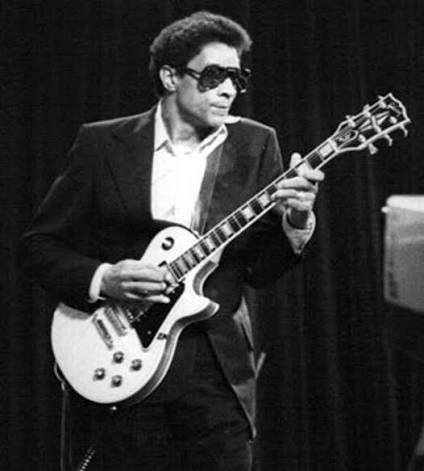
His legacy continues through his son, Reverend John Wilkins (1943–2020), who followed a remarkably similar path: after years playing secular music in Memphis clubs—including backing soul singer O.V. Wright on his 1965 hit "You're Gonna Make Me Cry"—John Wilkins turned his life over to God in the early 1980s, was ordained in 1985, and eventually recorded his own gospel blues album, You Can't Hurry God, which included a moving version of his father's "Prodigal Son."
Wilkins's pre-war recordings have been compiled on numerous anthologies, most notably Yazoo's The Original Rolling Stone (1980) and Magpie Records' Robert Wilkins 1928–1935: Before the Reverence (1976). His rediscovery recordings, particularly Memphis Gospel Singer and the live material from Newport, remain essential documents of the 1960s folk-blues revival.
In the final analysis, Robert Wilkins represents one of the most compelling figures in American roots music—a virtuoso who transcended genre boundaries, a bluesman who became a minister without abandoning his instrument, and a quiet, teetotaling craftsman whose influence reached from the juke joints of Beale Street to the stadiums of the British Invasion. The Rolling Stones may have introduced his "Prodigal Son" to millions, but Wilkins's own recordings reveal an artist of far greater depth and range than any single cover could suggest.

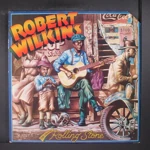 Buy from Amazon The Original Rolling Stone