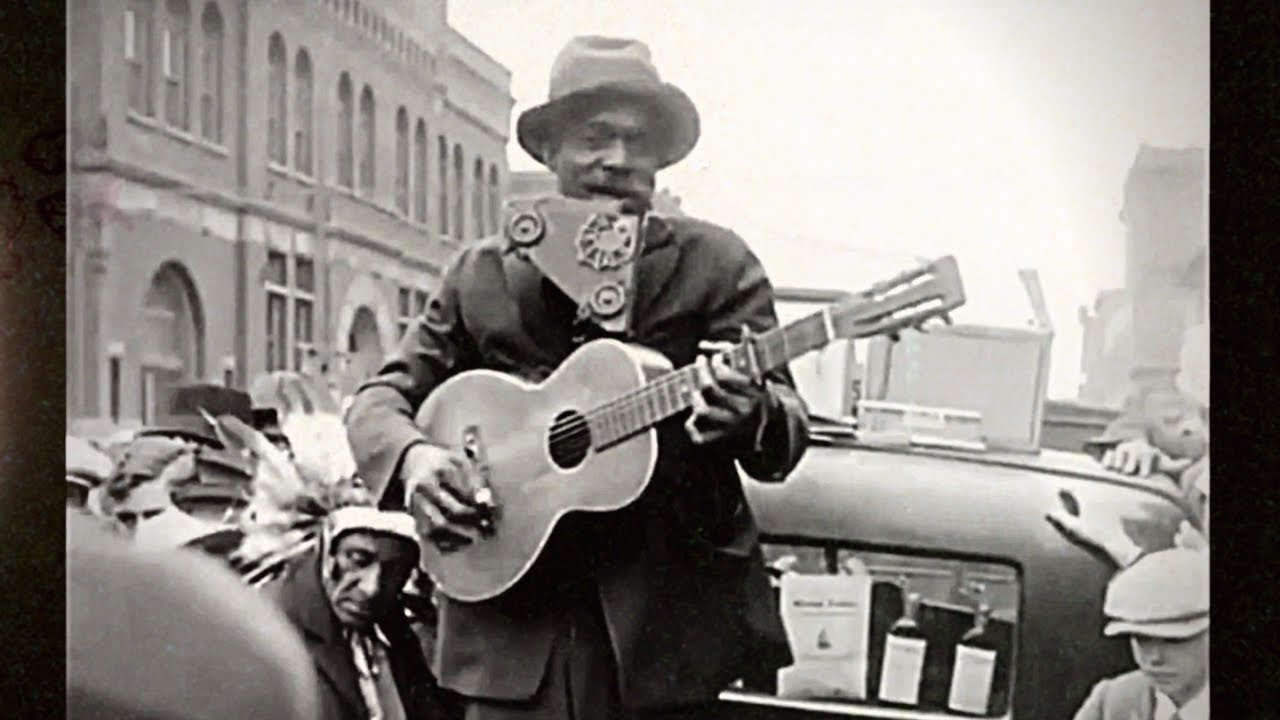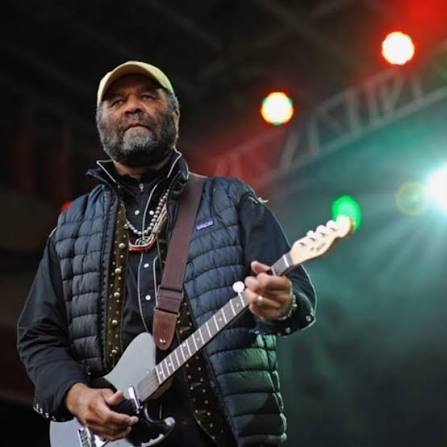
Charlie Musselwhite's life reads like a classic blues song: born in Mississippi, raised in Memphis, and schooled on the South Side of Chicago. As a teenager, he worked grueling jobs as a ditch digger and concrete layer, and even ran moonshine in his 1950 Lincoln—a detail that seems lifted from a blues lyric itself.
Early Life in Mississippi and Memphis
Charles Douglas Musselwhite was born on January 31, 1944, in Kosciusko, Mississippi, into a blue-collar family. Raised by a single mother who relocated the family to Memphis during his childhood, Musselwhite grew up surrounded by the sounds of blues, hillbilly, and gospel music pouring from radios and neighborhood musicians.
As a teenager, Musselwhite worked tough jobs: ditch digger, concrete layer, and even moonshine runner.
But it was the blues that captured his soul. He began playing guitar and harmonica, crossing paths with local musicians including Elvis Presley, Johnny Cash, and Johnny Burnette. Yet the celebrities young Charlie actively sought out were Memphis' veteran bluesmen—Furry Lewis, Will Shade, and Gus Cannon—men who would become his first teachers in the language of the blues.
Memphis in the 1950s was a crucible of musical innovation, and young Charlie found himself at its center. He crossed paths with future rockabilly and country legends like Elvis Presley, Johnny Cash, and Johnny Burnette, even landing on invitation lists to parties hosted by Elvis.
But while his peers were drawn to the emerging sounds of rock and roll, Musselwhite sought out the city's veteran bluesmen. He befriended and learned from Memphis legends Furry Lewis, Will Shade, and Gus Cannon, absorbing the deep traditions of country blues at their source.
"The blues sounded like how I felt growing up," Musselwhite would later reflect. "Too many people think of the blues as sad, but I think many of these tunes will immediately dispel that notion, as they are fun, dancing tunes that lift your spirits... It is secular spiritual music, the gospel blues. It's music from the heart instead of the head."
Chicago: The South Side Education
In 1962, following the well-worn path of Southern migrants seeking better wages, Musselwhite moved to Chicago. He did not arrive with dreams of musical stardom—he simply needed a better-paying job.
By day, he drove an exterminator truck. By night, he immersed himself in the blues clubs of Chicago's South Side, where he discovered that many of his musical idols had also settled. "I didn't know all those guys were happening in Chicago," he later recalled. "I'd seen Jimmy Reed and Muddy Waters in Memphis. I had their records—I knew the music, I just didn't know where they were."
Chicago proved to be his conservatory. He formed close bonds with harmonica giant Big Walter Horton, often roaming the streets with him, and recorded alongside him in 1965 for Vanguard's landmark Chicago/The Blues/Today! series.
He became especially close with the venerated country bluesman Big Joe Williams, sharing an apartment with the famously cantankerous singer and occasionally performing alongside him.
His circle of mentors expanded to include Little Walter, Sonny Boy Williamson, Howlin' Wolf, and Muddy Waters. Before long, Musselwhite was sitting in at clubs with Muddy Waters, Magic Sam, Earl Hooker, and Jimmy Reed, building an impressive word-of-mouth reputation.
The black Chicago blues artists welcomed the young white Southerner not as an outsider but as one of their own. "They felt that he was one of them—a southern country boy with a deep affinity for the blues," noted blues journalist Dick Sherman.
Big Joe Williams would later declare, "Charlie Musselwhite is one of the greatest living harp players. He's right up there with Sonny Boy Williamson."
Breakthrough: Stand Back! and the San Francisco Scene
Musselwhite's big break came in 1966 when Vanguard Records producer Sam Charters offered him a solo album. Recorded when Musselwhite was just 22 years old, Stand Back! Here Comes Charley Musselwhite's South Side Band became an instant classic and one of the most influential blues recordings of the era.
The album's raw, authentic Chicago blues sound found a surprising audience on the newly emerging progressive rock FM radio stations, particularly on the West Coast. "That album put me on the road and gave me a career," Musselwhite said. "They gave me three hours to cut that record...It's never been out of print."'
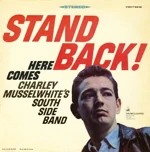 Buy from Amazon Stand Back!
Recognizing the opportunity, Musselwhite relocated to San Francisco in August 1967. In the counterculture capital of Haight-Ashbury, he became an exotic and intoxicating figure to the flower children—an authentic purveyor of "the real deal" blues.
He became a fixture at the legendary Fillmore Auditorium and other iconic venues, effectively becoming the king of the blues on the West Coast. His success helped convince John Lee Hooker and other blues masters to relocate to California as well, transforming the Bay Area into an unexpected hotbed of genuine blues music.
A Prolific and Eclectic Recording Career
Over the next six decades, Musselwhite released nearly 40 albums, refusing to be confined by genre boundaries. While his foundation remained firmly in the blues, his exploratory recordings incorporated elements of jazz, gospel, Tex-Mex, Cuban, and other world musics.
After his initial Vanguard releases—including Stone Blues (1968) and Tennessee Woman (1969)—he recorded for a variety of labels throughout the 1970s, including Paramount, Blue Thumb, Arhoolie, and Capitol. In 1979, he recorded The Harmonica According to Charlie Musselwhite in London, an instructional album that became so popular it was released commercially and later reissued on vinyl.
A pivotal moment came in 1990 when he signed with Alligator Records, a partnership that sparked a major resurgence in his career. The label released four of his most heralded and best-selling albums: Ace of Harps (1990), Signature (1991), In My Time (1994), and The Well (2010).
His 1999 recording Continental Drifter paired him with Cuarteto Patria from Cuba's Santiago region—the Cuban musical counterpart of the Mississippi Delta. Because of political tensions between Cuba and the United States, the album was recorded in Bergen, Norway, with Musselwhite's wife handling the logistical details.
Collaborations and Cultural Reach
Musselwhite's influence extends far beyond his own discography. He has been a featured guest on recordings by an astonishingly diverse array of artists, including Tom Waits, Eddie Vedder, Ben Harper, John Lee Hooker, Bonnie Raitt, The Blind Boys of Alabama, INXS, Hot Tuna, Cyndi Lauper, George Thorogood, and Cat Stevens.
He has soloed on "Girls Just Wanna Have Fun" with Cyndi Lauper on Good Morning America, recorded with Japan's Kodo Drummers (produced by Grateful Dead's Mickey Hart), and blended blues with Cuban son legend Eliades Ochoa.
His collaboration with Ben Harper proved particularly fruitful. After meeting at Australia's Byron Bay Blues Festival in 1996, the two developed a deep musical friendship. Their 2013 album Get Up!, released on Stax Records, won the Grammy Award for Best Blues Album in 2014.
Shortly before winning the Grammy, Musselwhite and Harper performed at the White House for President Obama and First Lady Michelle Obama in a salute to Memphis soul.
In 2020, Musselwhite teamed with his old friend Elvin Bishop for 100 Years of Blues, a Grammy-nominated album that debuted at #1 on the Billboard Blues Chart and was named Best Blues Album of the Year by DownBeat.
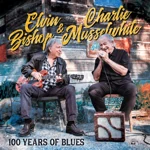 Buy from Amazon 100 Years of Blues
Return to Roots: Mississippi Son
In 2022, Musselwhite released Mississippi Son on Alligator Records, marking a profound return to his origins. Having moved back to Mississippi from Northern California, he recorded the album in Clarksdale, in the heart of the Delta. The stripped-down, emotionally raw performances featured Musselwhite on both harmonica and guitar, playing a set that included autobiographical originals, a reading of Charley Patton's "Pea Vine Blues," and a tribute to Big Joe Williams titled "Thinking of Big Joe," performed on Williams' own guitar.
Musselwhite describes his music as "secular spiritual music," a sound he has been perfecting since, as a teenager, he played his first E7 chord on a Supertone acoustic guitar and thought, "I have to have more of that."
Awards and Honors
Musselwhite's trophy case reflects a lifetime of excellence. He has won 33 Blues Music Awards, multiple Living Blues Awards, and has been nominated for 16 Grammy Awards, winning one. He was inducted into the Blues Foundation's Blues Hall of Fame in 2010 and has received the Mississippi Governor's Award for Excellence in the Arts. He has also been honored with Lifetime Achievement Awards from the Monterey Blues Festival and the San Javier Jazz Festival in Spain.
Acting and Film Work
Musselwhite's charisma and authentic presence have translated to the screen. He appeared in the 1998 film Blues Brothers 2000 as a member of the Louisiana Gator Boys, alongside B.B. King, Eric Clapton, Bo Diddley, Dr. John, and others.
More recently, he portrayed Alvin Reynolds in Martin Scorsese's 2023 film Killers of the Flower Moon. The director was intrigued when Musselwhite told him the story of his grandfather killing a man in Oklahoma, and Musselwhite's performance was so compelling that he gained additional lines of script after the casting director saw him in a video.
Musical Style and Philosophy
Musselwhite's harmonica playing is distinguished by its melodic sensibility, rich tone, and emotional depth. "To me, the harmonica is like a voice," he has said.
He has described his approach with characteristic humility: "I only know one tune, and I play it faster or slower, or I change the key, but it's just the one tune I've ever played in my life. It's all I know."
Yet that "one tune" has proven remarkably adaptable. Rolling Stone declared him "superb, original and compelling...Charlie Musselwhite, with unabashed excellence, sets the standard for blues."
Living Blues observed that "Musselwhite's rock-solid vocals creep up and overwhelm you before you know it. He plays magnificent harp with superb dexterity and phrasing. The results are amazing."
Personal Life and Sobriety
Musselwhite's life has not been without tragedy. In December 2005, he lost both parents in separate incidents; his mother, Ruth Maxine Musselwhite, was murdered.
His sobriety was inspired by an unlikely source: the 1987 ordeal of Jessica McClure, the child trapped in a well for over 58 hours. Musselwhite explained, "She was trapped in there with a broken arm in the dark, in a life-and-death situation she was singing nursery rhymes to herself and being brave... It made my problems seem tiny. So as a prayer to her and myself, I decided I wasn't going to drink till she got out of that well... It took three days to get her out, and I haven't had a drink since."
Legacy and Influence
At age 82, Charlie Musselwhite continues to record and perform with undiminished power.
More than any other harmonica player of his generation, he can rightfully lay claim to inheriting the mantle of the great harp players who came before him—Little Walter, Big Walter Horton, Sonny Boy Williamson—while forging a sound entirely his own.
His influence extends across generations. He has been cited as an inspiration by countless harmonica players and has helped bridge the gap between traditional blues and rock audiences. From the South Side of Chicago to the Fillmore Auditorium, from Grammy-winning collaborations to Scorsese films, Musselwhite's journey embodies the enduring power of the blues.
As The Chicago Tribune summarized: "imaginative and stunning...utterly convincing."
In an era when the term "legendary" is applied too freely, Charlie Musselwhite remains the genuine article—a true master of American vernacular music whose every note carries the weight of a life fully lived and a tradition honorably upheld.