Early Life in Memphis
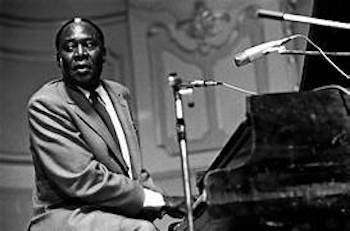
John Len Chatman—who would become known to the world as Memphis Slim—was born on September 3, 1915, in Memphis, Tennessee. He came from a family deeply rooted in the blues tradition. His father, Peter Chatman, was a singer, pianist, guitarist, and juke joint operator who led a group called the Washboard Band, which at times featured the influential blues pianist Roosevelt Sykes.
Inspired by Sykes, young John began teaching himself piano and was soon performing in juke joints and dance halls throughout the Southeast, gaining the experiences that would fuel his voluminous catalog of songs. He absorbed influences from musicians performing on Beale Street and throughout South Memphis. He admired pianists who could entertain crowded clubs while maintaining technical brilliance. Their styles blended boogie-woogie bass patterns with elegant melodic improvisation.
For his first recordings in 1940, he used the name of his father, Peter Chatman, as a tribute. Later that year, Bluebird Records producer Lester Melrose gave him the stage name "Memphis Slim," though he continued to publish songs under Peter Chatman for many years.
The Road to Chicago
Throughout the 1930s, Slim honed his craft in the rough-and-tumble environments of West Memphis, Arkansas, and southeast Missouri, playing in honky-tonks, dance halls, and gambling joints.
In 1939, he made the pivotal move to Chicago, joining the vibrant and competitive blues scene that was reshaping American music. He quickly fell in with some of the city's most respected musicians, most notably guitarist and singer Big Bill Broonzy.
Broonzy had recruited Slim to fill the piano chair vacated by the death of Joshua Altheimer in 1940. Under Broonzy's mentorship, Slim was encouraged to stop emulating Roosevelt Sykes and develop his own distinctive voice. It was advice that would prove transformative.
The Bluebird Years and Session Work
In 1940 and 1941, Slim recorded his first sides for Bluebird Records, including "Beer Drinking Woman", "Grinder Man Blues" and "Blues and Lonesome" —songs that would remain staples of his repertoire for decades. Although sales were modest, critics recognized an unusually refined pianist capable of blending boogie-woogie with traditional blues.
He also became a regular session musician for Bluebird, lending his formidable piano skills to recordings by John Lee "Sonny Boy" Williamson, Washboard Sam, and Jazz Gillum.
A major turning point came after Big Maceo Merriweather suffered a devastating stroke in 1946. Big Maceo had been Chicago's dominant blues pianist. Memphis Slim inherited many of the club engagements previously held by Maceo and became one of the city's leading performers. Rather than imitate Maceo completely, Slim developed a smoother, more harmonically adventurous approach.
In 1947, folklorist Alan Lomax brought Slim, Broonzy, and Williamson to the Decca Records studios in New York. The resulting recordings were presented on BBC Radio in the early 1950s as the documentary
The Art of the Negro, and later released as the influential LP
Blues in the Mississippi Night.
The House Rockers and Postwar Stardom
After World War II, Slim began leading his own bands, reflecting the popular appeal of jump blues. Starting in late 1945, he recorded with trios for the small Chicago-based Hy-Tone Records. In the fall of 1946, he signed with the Miracle label and formed the House Rockers, a seven-piece ensemble featuring saxophones, bass, drums, and piano. One of the first songs recorded at the Miracle session was the ebullient boogie "Rockin' the House," from which the band took its name.
The House Rockers achieved significant commercial success. "Messin' Around" reached number one on the R&B charts in 1948, while "Blue and Lonesome" peaked at number two and "Angel Child" at number six.
In 1947, Slim recorded a song originally titled "Nobody Loves Me." Released in 1949 as "Every Day I Have the Blues," it would become one of the most enduring blues standards in history.
The song was subsequently recorded by a staggering array of artists including B.B. King, Elmore James, Ray Charles, Eric Clapton, Jimi Hendrix, Sarah Vaughan, Carlos Santana, John Mayer, and Lou Rawls. Joe Williams's 1956 version with Count Basie was inducted into the Grammy Hall of Fame in 1992.
The 1950s: Matt "Guitar" Murphy and Vee-Jay
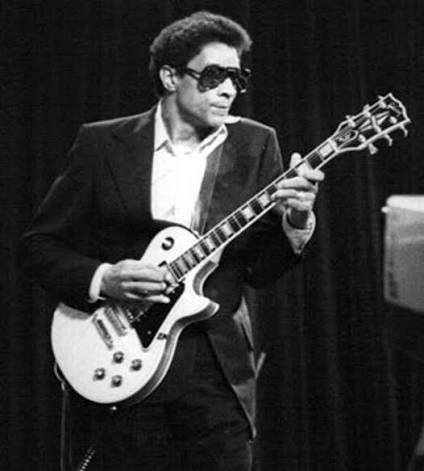
A crucial development in Slim's sound came in 1952 with the addition of guitarist Matt "Guitar" Murphy, who had previously played with Howlin' Wolf. Murphy's sophisticated guitar work provided a perfect counterpoint to Slim's thunderous vocals and pounding piano, adding a new dimension to the House Rockers' sound.
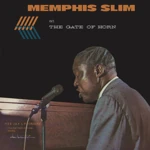
After stints with King, Mercury, and United Records, Slim signed with Vee-Jay in 1958. In 1959, his band—still featuring Murphy—recorded Memphis Slim at the Gate of the Horn, an album that collected many of his best-known songs including "Mother Earth," "Rockin' the Blues," "Steppin' Out," and "Slim's Blues."
That same year, he served as pianist and co-writer on Willie Dixon's debut album,
Willie's Blues, receiving almost equal billing.
Expatriate in Paris
Slim first appeared outside the United States in 1960, touring Europe with Willie Dixon. The experience was revelatory. Like many African-American artists of his generation, Slim was acutely aware of the racial inequities he faced in the United States. In 1962, after returning to Europe as a featured artist in Willie Dixon's American Folk Festival concerts, Slim made the decision to move permanently to Paris.
In Paris, Slim found the respect and opportunities that had become increasingly scarce for blues musicians back home. His engaging personality and well-honed presentation—combining piano virtuosity, powerful singing, and storytelling—secured his position as one of the most prominent blues artists in Europe for nearly three decades.
He appeared on television throughout Europe, acted in several French films, and wrote the score for
À nous deux France (1970). He performed regularly in Paris and across the continent, becoming a true ambassador for the blues. When performing in Paris, he would arrive in his Rolls Royce and park it directly in front of the theater—a symbol of the dignity and success he had found abroad.
Recording Style
Unlike many blues singers whose piano merely accompanied their voice, Memphis Slim's keyboard work often carried equal importance. The characteristics of his style included a Wlaking Left Hand where his bass patterns created enormous rhythmic momentum, Rich Chords that employed jazz harmonies rarely heard in country blues, Spacious Solos where rather than play continuously, he left dramatic pauses that heightened emotional tension and Dynamic Control as he shifted effortlessly from whisper-soft accompaniment to thunderous boogie passages.
Vocally Memphis Slim possessed a deep, resonant baritone and his delivery emphasized dignity, humor, heartbreak and conversational phrasing. Rather than shouting, he often sounded as though he were speaking directly to the listener. This understated approach gave tremendous emotional power to his performances.
Songwriting
Slim was one of blues' finest composers. His songs often explored loneliness, failed romance, poverty, resilience, humor and social commentary. Many featured memorable hooks supported by sophisticated chord progressions. His writing demonstrated influences from jazz and popular songwriting while remaining unmistakably blues.
Honors and Later Years
Memphis Slim's contributions to music were recognized on both sides of the Atlantic. Two years before his death, the French government named him a Commander in the Ordre des Arts et des Lettres. The United States Senate honored him with the title of Ambassador-at-Large of Good Will.
In the last years of his life, Slim teamed with respected jazz drummer George Collier, touring Europe together until Collier's death in August 1987. Afterward, Slim rarely appeared in public, though he did reunite with Matt "Guitar" Murphy for a gig at Antone's in Austin, Texas, in 1987.
Memphis Slim died of renal failure on February 24, 1988, in Paris, at the age of 72. His body was later returned to Memphis for burial, symbolically completing the journey that had defined his remarkable life. He is buried at Galilee Memorial Gardens in Memphis, Tennessee.
Suggested Listening
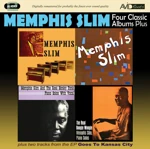 Buy from Amazon Memphis Slim / More Memphis Slim
Legacy
Memphis Slim was posthumously inducted into the Blues Hall of Fame in 1989 and the Memphis Music Hall of Fame in 2015. He made over 500 recordings during his lifetime, leaving behind a catalog that spans raw barrelhouse piano, sophisticated jump blues, and intimate folk-blues.
His influence on blues piano is incalculable. He bridged the gap between the rural blues of the Mississippi Delta and the urban sophistication of Chicago, then carried that sound to international audiences as one of the first American blues artists to build a permanent career in Europe. Songs like "Every Day I Have the Blues," "Mother Earth," "Rockin' the House," and "Beer Drinking Woman" remain essential entries in the blues canon, performed and recorded by generations of musicians who followed.
In the final analysis, Memphis Slim stands as one of the most prolific and internationally celebrated figures in blues history—a pianist of thunderous authority, a songwriter of rare durability, and a performer whose dignity and artistry earned him the title he truly deserved: Ambassador of the Blues.