The Big Soul of John Lee Hooker is a landmark studio album by the blues legend John Lee Hooker, recorded in 1962 at Universal Recording Corporation in Chicago and released by Vee-Jay Records in early 1963. It stands as one of the most intriguing and commercially successful experiments in Hooker's long career—a deliberate fusion of his raw Delta blues roots with the emerging R&B and soul sounds of the early 1960s. The album features a remarkable ensemble of musicians, including several members of Motown's legendary Funk Brothers session crew, creating a blues-soul hybrid that was both commercially accessible and artistically daring.
Background and Context
By 1962, John Lee Hooker had already enjoyed a fifteen-year recording career that had established him as one of the most distinctive voices in American blues. His 1948 hit "Boogie Chillen'" had reached No. 1 on the R&B charts, and he had followed with a string of successful singles for various labels. His relationship with Vee-Jay Records, which began in 1955, had produced some of his most enduring work, including the 1962 hit "Boom Boom."
The early 1960s marked a transitional period for Hooker. The folk-blues revival was bringing his music to new, younger audiences, but the commercial landscape was shifting toward soul and R&B. Vee-Jay, under the direction of A&R man Calvin Carter, was pushing its blues artists toward more arranged, commercially viable productions. The result was The Big Soul of John Lee Hooker—an album that, as AllMusic reviewer Bruce Eder noted, found Hooker "jumping into the R&B and soul explosions of the early '60s" in "a totally unexpected setting."
The album's title itself was significant. "Big Soul" signaled both the musical direction—soul-influenced blues—and the ambition of the project. It was a deliberate attempt to position Hooker within the contemporary R&B market while maintaining his blues authenticity.
Recording Sessions
The album was recorded in 1962 at Universal Recording Corporation in Chicago, Illinois. The sessions were split across two dates:
-
1962 (unspecified date): Tracks including "Old Time Shimmy," "Onions," "You Know I Love You," and "Send Me Your Pillow" were recorded
-
January 8, 1962: The remainder of the album, including "Big Soul," "Frisco Blues," "She Shot Me Down," "Take a Look at Yourself," "Good Rockin' Mama," "I Love Her," and "No One Told Me"
The master numbers for the January 8 session range from 62-2798 to 62-2804.
Universal Recording Corporation was one of Chicago's premier studios, known for its role in the city's vibrant music scene. The facility had excellent acoustics and state-of-the-art equipment for the era, allowing for the multi-track recording capabilities necessary to layer the horn sections and arrangements that characterize the album.
Producer
Calvin Carter (1925–1986) served as the album's producer. Carter was Vee-Jay's principal A&R man and producer, having joined the label in 1953 when it was founded by his sister Vivian Carter and her husband James Bracken. According to AllMusic, Carter was responsible for giving "direction and vision" to the company, which mainly recorded R&B acts such as Elmore James, John Lee Hooker, Billy Emerson, and Jimmy Reed.
Carter's production approach for The Big Soul prioritized a streamlined method that preserved the spontaneous energy of Hooker's live performances while adapting them for studio polish. He was known for his ability to work with singers, often providing guidance on harmonies and vocal arrangements. For the blues sessions, however, there was often a collective approach—session musicians would listen to playbacks and make their own suggestions for improvements.
Personnel
The album features an extraordinary lineup that bridges the Chicago blues and Detroit soul worlds:
-
John Lee Hooker – guitar, lead vocals, composer
-
Hank Cosby – tenor saxophone
-
Andrew "Mike" Terry – baritone saxophone
-
Joe Hunter – keyboards (piano, organ)
-
Larry Veeder – guitar
-
James Jamerson – bass
-
Benny Benjamin – drums
-
Unidentified musician – trumpet
-
Mary Wilson – backing vocals (tracks 1, 2, 4, 5, 8)
-
The Andantes (Jackie Hicks, Marlene Barrow, Louvain Demps) – backing vocals (tracks 1, 2, 4, 5, 8)
The presence of James Jamerson on bass and Benny Benjamin on drums is particularly significant. These two musicians, along with pianist Joe Hunter, were core members of the Funk Brothers—the legendary Motown session band that would define the sound of Hitsville U.S.A. in the 1960s. Their participation on a John Lee Hooker album represents a remarkable cross-pollination between Detroit's soul machine and Chicago's blues heritage.
Hank Cosby on tenor saxophone was also a Motown-affiliated musician who would become a key figure in the label's horn section. Andrew "Mike" Terry on baritone saxophone provided the deep, rhythmic bottom that anchored the horn arrangements. Larry Veeder on second guitar added textural depth to Hooker's playing.
The backing vocals by Mary Wilson (of The Supremes) and The Andantes (Motown's premier female backing vocal group) further cemented the album's soul credentials. Their polished, gospel-tinged harmonies on tracks like "San Francisco," "Take a Look at Yourself," "She Shot Me Down," "I Love Her," and "Big Soul" gave the album a commercial sheen that was unusual for blues recordings of the era.
Songwriting
All compositions on the album are credited to John Lee Hooker. This was standard practice for Hooker's Vee-Jay recordings, though like many blues artists of his generation, he often drew from traditional blues themes and adapted existing material. The songwriting credits reflect the industry practice of attributing compositions to the recording artist, even when they were built on blues standards or shared communal material.
Track-by-Track Breakdown
Side One
1. "San Francisco" – 2:46
The album opens with a track that immediately establishes the album's soul-blues direction. Hooker's gritty vocals are supported by the full ensemble—Hunter's piano, the horn section of Cosby and Terry, and the rhythm section of Jamerson and Benjamin. Mary Wilson and The Andantes provide backing vocals that give the track a polished, commercial feel. The song's lyrics reference the California city, reflecting the westward migration theme common in postwar blues. The arrangement is upbeat and danceable, a deliberate departure from Hooker's more minimalist solo recordings.
Musicians: John Lee Hooker (vocals, guitar), Larry Veeder (guitar), Joe Hunter (keyboards), James Jamerson (bass), Benny Benjamin (drums), Hank Cosby (tenor saxophone), Andrew "Mike" Terry (baritone saxophone), unidentified musician (trumpet), Mary Wilson and The Andantes (backing vocals)
2. "Take a Look at Yourself" – 2:48
This track continues the soul-infused approach with a message-oriented lyric. The backing vocals by Wilson and The Andantes are prominent, creating a call-and-response pattern with Hooker's lead vocal that was characteristic of soul music. The horn section provides punctuated accents, while Jamerson's bass walks with the fluidity that would make him famous on countless Motown hits. The track's tempo is moderate, allowing Hooker's vocal to remain the focal point while the arrangement provides rich support.
Musicians: John Lee Hooker (vocals, guitar), Larry Veeder (guitar), Joe Hunter (keyboards), James Jamerson (bass), Benny Benjamin (drums), Hank Cosby (tenor saxophone), Andrew "Mike" Terry (baritone saxophone), unidentified musician (trumpet), Mary Wilson and The Andantes (backing vocals)
3. "Send Me Your Pillow" – 2:25
A shorter track that shifts to a more intimate, blues-ballad feel. The horns are more restrained here, allowing Hooker's vocal and guitar to dominate. The song's title and theme—longing for a lover's presence so desperately that even her pillow would provide comfort—is classic blues territory. The track was recorded on the earlier 1962 session (master 62-2653), suggesting it may have been held over from a different recording date than the January 8 session.
Musicians: John Lee Hooker (vocals, guitar), Larry Veeder (guitar), Joe Hunter (keyboards), James Jamerson (bass), Benny Benjamin (drums), Hank Cosby (tenor saxophone), Andrew "Mike" Terry (baritone saxophone), unidentified musician (trumpet)
4. "She Shot Me Down" – 2:50
One of the album's standout tracks, this song features a dramatic narrative of romantic betrayal. The backing vocals by Wilson and The Andantes add a theatrical quality to the chorus, while the horn section provides staccato punches that accentuate the song's tension. Hooker's vocal delivery is particularly emotive, moving between spoken and sung passages. The track demonstrates how effectively the soul production elements could enhance Hooker's storytelling.
Musicians: John Lee Hooker (vocals, guitar), Larry Veeder (guitar), Joe Hunter (keyboards), James Jamerson (bass), Benny Benjamin (drums), Hank Cosby (tenor saxophone), Andrew "Mike" Terry (baritone saxophone), unidentified musician (trumpet), Mary Wilson and The Andantes (backing vocals)
5. "I Love Her" – 2:14
The shortest track on Side One, this is a straightforward declaration of love set to an upbeat groove. The backing vocals again feature Wilson and The Andantes, creating a lush harmonic bed for Hooker's gravelly voice. The contrast between Hooker's raw delivery and the polished backing vocals is striking—it's a sonic representation of the album's central concept, bridging raw blues and sophisticated soul.
Musicians: John Lee Hooker (vocals, guitar), Larry Veeder (guitar), Joe Hunter (keyboards), James Jamerson (bass), Benny Benjamin (drums), Hank Cosby (tenor saxophone), Andrew "Mike" Terry (baritone saxophone), unidentified musician (trumpet), Mary Wilson and The Andantes (backing vocals)
Side Two
6. "Old Time Shimmy" – 2:21
This track, recorded on the earlier 1962 session (master 62-2651), harkens back to Hooker's boogie-woogie roots. The "shimmy" was a popular dance in the 1920s and 1930s, and the song's title suggests a nostalgic look at earlier dance crazes. The arrangement is more stripped-down than the soul-oriented tracks, with the horns taking a more prominent melodic role. The track's title and feel connect to Hooker's prewar influences while the electric instrumentation keeps it contemporary.
Musicians: John Lee Hooker (vocals, guitar), Larry Veeder (guitar), Joe Hunter (keyboards), James Jamerson (bass), Benny Benjamin (drums), Hank Cosby (tenor saxophone), Andrew "Mike" Terry (baritone saxophone), unidentified musician (trumpet)
7. "You Know I Love You" – 1:56
The shortest track on the album, this is a concise, direct statement of affection. The song's brevity works in its favor—there's no time for elaborate arrangements, just Hooker's voice, his guitar, and the rhythm section locking into a tight groove. The track was recorded on the earlier 1962 session (master 62-2653).
Musicians: John Lee Hooker (vocals, guitar), Larry Veeder (guitar), Joe Hunter (keyboards), James Jamerson (bass), Benny Benjamin (drums), Hank Cosby (tenor saxophone), Andrew "Mike" Terry (baritone saxophone), unidentified musician (trumpet)
8. "Big Soul" – 2:09
The title track and the album's conceptual centerpiece. Recorded on January 8, 1962 (master 62-2798), this is the song that gives the album its name and encapsulates its mission. The track features the full ensemble with backing vocals, creating a sound that is simultaneously blues and soul. The "big soul" of the title refers both to the musical style and to the emotional depth of the blues tradition. Hooker's vocal is commanding, the horns are bold, and the rhythm section drives with the authority that only Jamerson and Benjamin could provide.
Musicians: John Lee Hooker (vocals, guitar), Larry Veeder (guitar), Joe Hunter (keyboards), James Jamerson (bass), Benny Benjamin (drums), Hank Cosby (tenor saxophone), Andrew "Mike" Terry (baritone saxophone), unidentified musician (trumpet), Mary Wilson and The Andantes (backing vocals)
9. "Good Rockin' Mama" – 2:28
This track returns to the uptempo, danceable feel of the album's opening. The title references the "rockin'" tradition in blues and R&B, and the song's energy is infectious. The horns provide a punchy, rhythmic backdrop, while Hooker's guitar and vocal drive the song forward. The track was recorded on January 8, 1962 (master 62-2802).
Musicians: John Lee Hooker (vocals, guitar), Larry Veeder (guitar), Joe Hunter (keyboards), James Jamerson (bass), Benny Benjamin (drums), Hank Cosby (tenor saxophone), Andrew "Mike" Terry (baritone saxophone), unidentified musician (trumpet)
10. "Onions" – 2:10
The title refers to the "onion" as a metaphor for something that makes you cry—likely a relationship that brings tears. The track was recorded on the earlier 1962 session (master 62-2652). It features a more stripped-down arrangement, with the rhythm section and horns providing support but the focus remaining on Hooker's vocal and guitar. The song's relatively short length keeps it punchy and direct.
Musicians: John Lee Hooker (vocals, guitar), Larry Veeder (guitar), Joe Hunter (keyboards), James Jamerson (bass), Benny Benjamin (drums), Hank Cosby (tenor saxophone), Andrew "Mike" Terry (baritone saxophone), unidentified musician (trumpet)
11. "No One Told Me" – 2:08
The album closes with a track that combines the soul elements with a more reflective, blues-oriented lyric. The song's theme—being caught unaware by life's difficulties—is universal blues territory. The arrangement is full but not overwhelming, allowing Hooker's voice to carry the emotional weight. The track was recorded on January 8, 1962 (master 62-2804).
Musicians: John Lee Hooker (vocals, guitar), Larry Veeder (guitar), Joe Hunter (keyboards), James Jamerson (bass), Benny Benjamin (drums), Hank Cosby (tenor saxophone), Andrew "Mike" Terry (baritone saxophone), unidentified musician (trumpet)
Critical Reception
The Big Soul of John Lee Hooker received strong critical acclaim upon its release. AllMusic reviewer Bruce Eder called it "near-essential listening as some of Hooker's most interesting work of the '60s," praising the unexpected setting and the value of every second. Record Mirror in the UK also reviewed the album favorably. The Penguin Guide to Blues Recordings and The Virgin Encyclopedia of The Blues both included it in their assessments of Hooker's discography.
The album's commercial performance was solid, though exact chart positions are not well-documented. It was released in both mono and stereo formats (Vee-Jay LP 1058 / V.J. 1058), and the stereo version has become a collector's item.
Legacy and Influence
The Big Soul of John Lee Hooker stands as a pivotal example of blues-soul fusion in the early 1960s. The album demonstrated that Hooker could adapt his primal Delta blues style to contemporary R&B arrangements without losing his essential identity. It prefigured the kind of blues-soul crossovers that would become more common later in the decade, and it showcased the versatility of the Motown session musicians who could move seamlessly between genres.
The album's influence extends to Hooker's later career. The success of this approach—combining his raw vocals and guitar with polished arrangements—likely influenced his decision to continue working with full bands throughout the 1960s and 1970s. The 1970 collaboration with Canned Heat on Hooker 'n Heat, while very different in style, can be seen as an extension of the experimental spirit that animated The Big Soul.
For collectors, the album has been reissued multiple times. A 2025 reissue on Discogs was described as "the definitive remastered edition" of the 1962 Vee-Jay recordings. The original stereo pressing remains highly sought after by audiophiles and blues collectors.
The Vee-Jay Connection
The album was part of Hooker's prolific nine-year stint with Vee-Jay Records (1955–1964), during which he recorded some of his most enduring work. Vee-Jay was a Chicago-based independent label founded by Vivian Carter and James Bracken, with Calvin Carter as the principal A&R man. The label was known for its blues roster (Jimmy Reed, John Lee Hooker, Elmore James) as well as for being the first American company to sign The Beatles and for establishing The Four Seasons as a major-selling group.
Vee-Jay's financial troubles in the mid-1960s would eventually lead to its collapse, but during its peak years, it provided Hooker with a stable recording home and the resources to experiment with new sounds. The Big Soul represents the label at its most ambitious, attempting to bridge the gap between traditional blues and the emerging soul market.
Buy This Album on Amazon
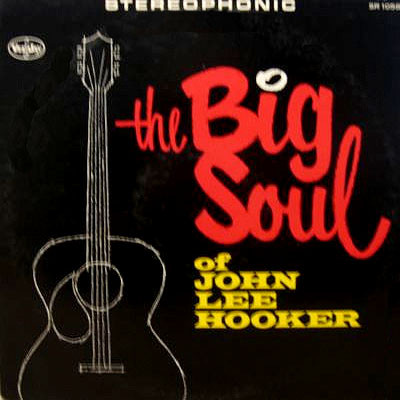 The Big Soul of John Lee Hooker
Conclusion
The Big Soul of John Lee Hooker is a fascinating document of a blues legend in transition. Recorded with some of the finest session musicians of the era—including future Motown legends James Jamerson, Benny Benjamin, and Joe Hunter—the album represents a bold experiment in blues-soul fusion. John Lee Hooker's raw, emotive vocals and distinctive guitar playing remain the focal point, but they are framed by arrangements that were contemporary, commercial, and sophisticated.
The album's eleven tracks demonstrate the range of this approach, from the uptempo dance numbers like "San Francisco" and "Good Rockin' Mama" to the more reflective "Send Me Your Pillow" and "No One Told Me." The backing vocals by Mary Wilson and The Andantes add a layer of polish that was unusual for blues albums of the era, while the horn section of Hank Cosby and Andrew "Mike" Terry provides the kind of punchy, rhythmic support that would define soul music.
Nearly sixty years after its release, The Big Soul of John Lee Hooker remains, as Bruce Eder observed, "near-essential listening"—a testament to Hooker's adaptability, to the versatility of the musicians who supported him, and to the creative possibilities that emerged when blues and soul collided in the recording studios of early 1960s Chicago.