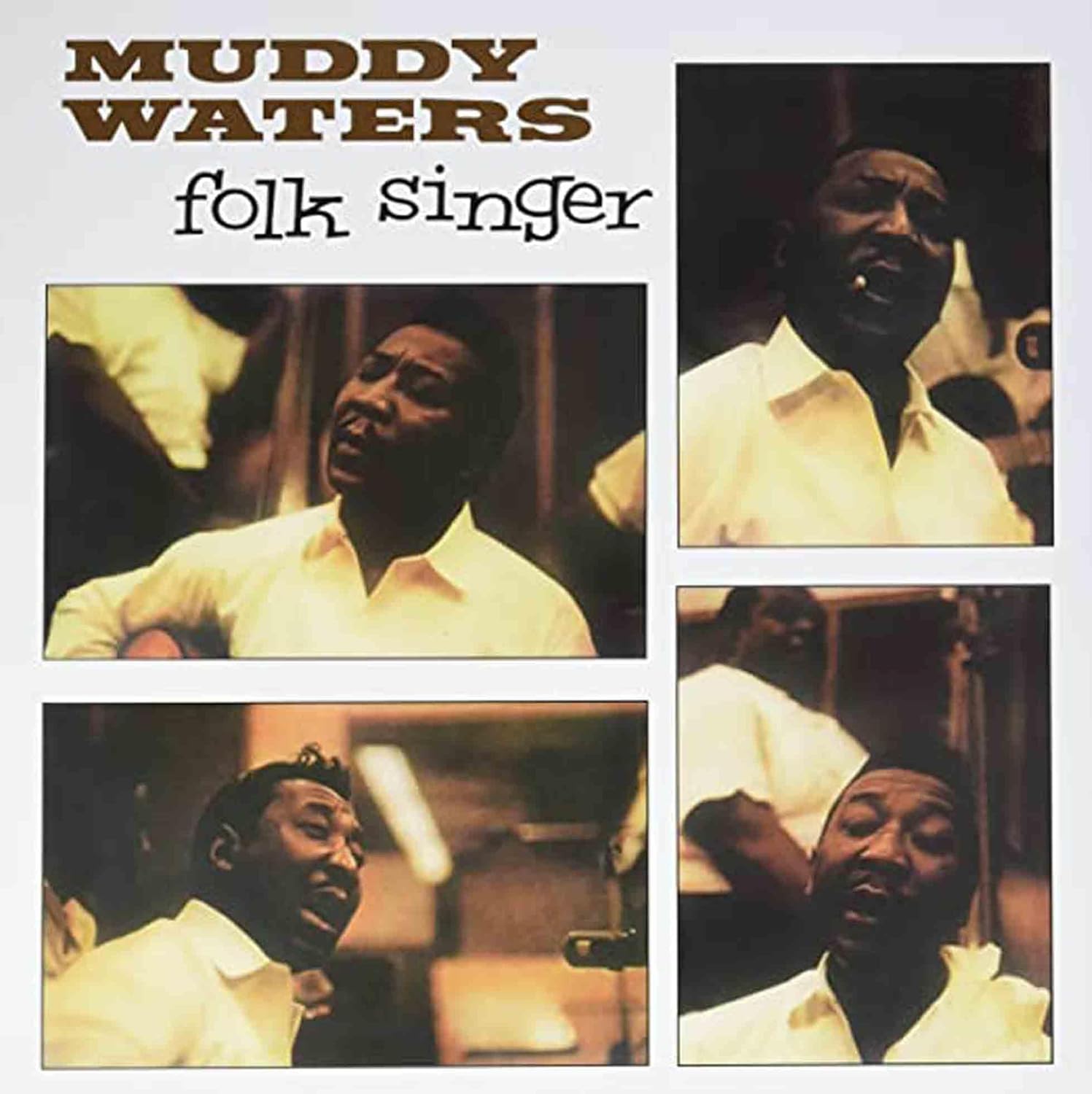
Folk Singer is the fourth studio album by Muddy Waters, released in January 1964 by Chess Records. It stands as one of the most anomalous yet artistically significant entries in the Waters discography—a deliberate acoustic departure from the electrified Chicago blues sound that Waters himself had pioneered and that had made him the "father of modern Chicago blues." Recorded in September 1963 at Chess's Ter Mar Recording Studios in Chicago, the album features an intimate, stripped-down sound that captures Waters at his most raw and roots-oriented, accompanied by a remarkable ensemble including a then-unknown Buddy Guy on second guitar, Willie Dixon on upright bass, and Clifton James on drums.
Background and Context
By 1963, Muddy Waters had spent nearly two decades building the template for electric Chicago blues. His migration from the Mississippi Delta to Chicago in 1943, his adoption of the electric guitar to cut through noisy club crowds, and his string of Chess Records hits in the 1950s—including "Hoochie Coochie Man," "I Just Want to Make Love to You," and "I'm Ready"—had established him as the central figure of postwar blues. His 1960 performance at the Newport Jazz Festival, captured on the live album At Newport 1960, had introduced him to a new, younger, predominantly white audience.
However, the early 1960s presented challenges for the Chicago blues scene. The once-thriving South and West Side club circuit was declining as the Black community's musical tastes shifted toward soul and R&B. Several of Waters's key band members had departed: guitarist Jimmy Rogers had effectively retired from club work in 1960; drummer Francis Clay had been replaced by Willie "Big Eyes" Smith; and guitarist Pat Hare was serving a life sentence for murder. The Chess brothers, Leonard and Phil, were looking for ways to maintain their franchise's relevance.
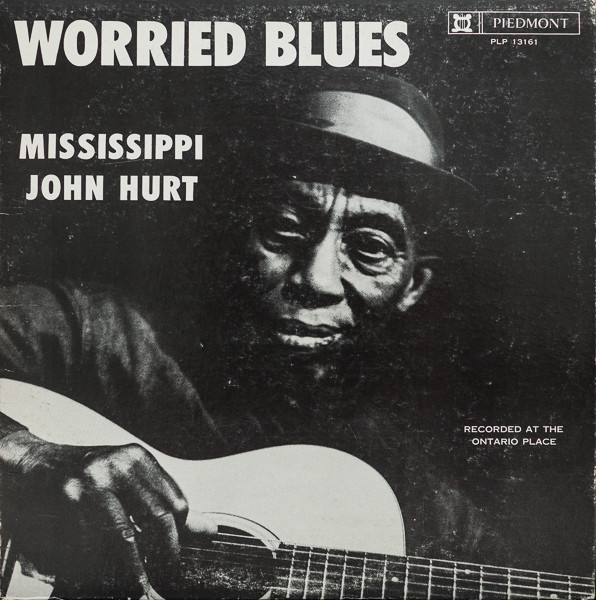
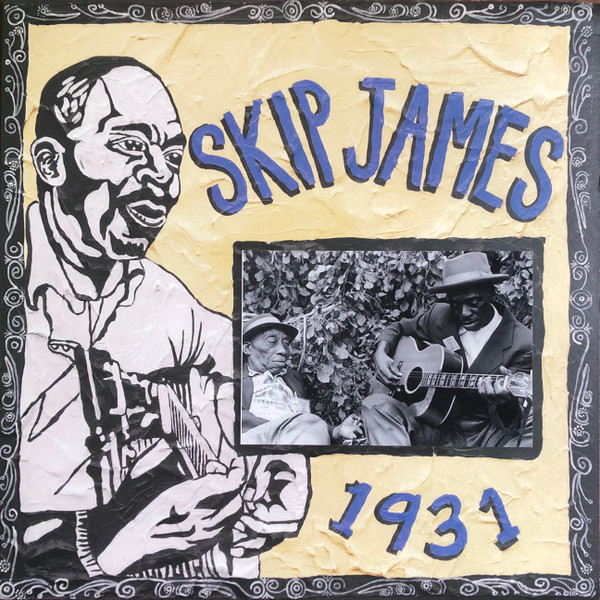
The folk music boom of the early 1960s—driven by artists like Pete Seeger, the Kingston Trio, Joan Baez, Bob Dylan, and Peter, Paul and Mary—presented an opportunity. Simultaneously, the rediscovery of older Delta blues artists like Son House, Skip James, and Mississippi John Hurt by young white enthusiasts was creating a new market for "authentic" acoustic blues. The Chess brothers wanted to capitalize on this trend. As one commentator noted, "What they didn't seem to realize was that they had it all along. Hell, Big Bill Broonzy—the epitome of rural southern black folk music—had lived right there in Chicago."
The album's title, Folk Singer, was chosen by Chess Records management as a direct appeal to the folk music audience. Waters himself was reportedly not enthusiastic about the concept—he had spent his career moving away from the acoustic Delta sound, and the idea of returning to it was contrary to his artistic trajectory. The two-hour session that produced the album almost ended before it began, largely due to the stubbornness of label owner Leonard Chess, but Waters stood his ground and prevailed.
Recording Sessions
The Main Session: September 1963
The primary recording session took place in September 1963 at Ter Mar Recording Studios in Chicago, Illinois. The studio was located in the Chess Records building at 2120 South Michigan Avenue, a facility that had become legendary for its contributions to blues, R&B, and rock and roll. The name "Ter Mar" was an abbreviation of the first names of the Chess brothers' sons—Terry and Marshall—and had been adopted sometime in 1963.
The studio itself was a 37×20 foot room with a 13-foot-high ceiling, designed by Jack "Sheldon" Wiener, who had previously worked for Universal Recording Corp. Wiener had created an innovative echo chamber system by converting two basement rooms into matching echo chambers, with speakers at one end and microphones at the other, connected by tubes running through the floor. This system, which Chess producer Phil Chess once described as involving "a mike in the bathroom with an amplifier" and later "a sewer pipe" with a microphone at one end and an amplifier at the other, had created the distinctive "Chess sound" heard on recordings by Bo Diddley, Howlin' Wolf, Chuck Berry, and Sonny Boy Williamson.
Engineer Ron Malo, who had replaced Malcolm Chisholm in 1960, handled the recording. Malo had spent considerable time improving the studio's sound capabilities and was responsible for capturing the warm, intimate sound that would make Folk Singer an audiophile favorite decades later.
The session was remarkably efficient. According to session logs, the nine original album tracks were recorded in an unbroken sequence, with each song done in approximately one take. The takes were coded as numbers 12838 through 12846, indicating a continuous, uninterrupted session. The exact date of the session remains unknown, though it was completed in time for Waters to depart for the second American Folk Blues Festival tour in Europe, which began in Frankfurt, Germany on September 24, 1963.
The Bonus Track Sessions
The album has been reissued multiple times with bonus tracks drawn from subsequent sessions:
-
April 1964 session: Produced additional material that appeared on later reissues
-
October 1964 session: Produced tracks that were added to expanded CD editions
The 1993 Mobile Fidelity Sound Lab CD reissue added two bonus tracks: "You Can't Lose What You Never Had" and "The Same Thing." The 1999 remastered MCA/Chess CD added five bonus tracks: "The Same Thing," "You Can't Lose What You Never Had," "My John the Conqueror Root," "Short Dress Woman," and "Put Me In Your Lay Away." These later sessions featured additional musicians including Otis Spann on piano and harmonica, Sammy Lawhorn and James "Pee Wee" Madison on guitar, and S.P. Leary on drums.
Producers
The album was produced by Ralph Bass and Willie Dixon. Bass (born Ralph Basso, Jr., an Italian-American) was 52 years old at the time and served as the primary Chess producer for the session, also writing the album's liner notes. Dixon, the legendary bassist and songwriter, was the musical director on the studio floor. His role was crucial—he knew the music from a player's standpoint and commanded the respect of all the musicians. As one account noted, "He was the floor general, and all the musicians acknowledged his experience and authority on the recording room floor—much more than they did Leonard Chess."
Dixon's relationship with Buddy Guy dated back to Guy's arrival in Chicago in 1957. Dixon had arranged sessions and played bass on Guy's first two released singles for Cobra Records in 1958. His presence on Folk Singer helped bridge the gap between the veteran Waters and the young Guy.
Personnel
Core Musicians (September 1963 Session)
-
Muddy Waters – lead vocals, acoustic guitar, slide guitar
-
Buddy Guy – acoustic guitar, second guitar
-
Willie Dixon – upright bass (string bass)
-
Clifton James – drums
Additional Musicians (Bonus Tracks and Later Sessions)
-
Otis Spann – piano, harmonica
-
Sammy Lawhorn – guitar
-
James "Pee Wee" Madison – guitar
-
Francis Clay – drums
-
S.P. Leary – drums
-
J.T. Brown – clarinet, tenor saxophone
-
Milton Rector – bass
-
James Cotton – harmonica
Production Team
-
Ralph Bass – producer
-
Willie Dixon – producer, musical director
-
Ron Malo – engineer
-
Don Bronstein – cover design, photography
-
Jim Marshall – photography
The Buddy Guy Connection
The presence of Buddy Guy on Folk Singer is one of the album's most significant aspects. Guy, born George Guy in Lettsworth, Louisiana in 1936, had arrived in Chicago in 1957 and had been discovered by Waters shortly after. Their relationship was paternal—Waters had literally slapped Guy at the 708 Club when the shy young guitarist tried to hide in a corner, telling him, "I don't want to hear that from you. You gonna play." After that, as Guy recalled, "he just took over like a daddy to me, man."
About six weeks before the Folk Singer session, on July 26, 1963, all four core musicians had recorded together at the Copa Cabana Club on Chicago's West Side. Waters and Guy had collaborated on "Got My Mojo Working" and "19 Years Old," while Guy had recorded his own tracks with Clifton James on drums. This prior collaboration established the musical rapport that would make the Folk Singer session so cohesive.
Guy was 27 years old at the time of the Folk Singer recording, still a virtual unknown outside Chicago blues circles. He had recently achieved some success with a pair of singles on Chess, but his first LP for the label would not come out for another seven years. His kinetic, frenetic delivery of slashing guitar lines was already apparent, but on Folk Singer he was required to adapt his electric style to acoustic guitar.
According to some sources, Guy did not own an acoustic guitar at the time—his reputation had been built entirely on electric prowess. Muddy Waters reportedly lent him one of his archtop guitars for the session, possibly a Kay model K1 Jumbo archtop from circa 1955. The guitar featured a large 17" wide lower body with laminated maple back and sides, which contributed to the sonorous acoustic sound.
Track-by-Track Breakdown
Side One
1. "My Home Is in the Delta" (Muddy Waters) – 3:58
The album opens with a Waters original that serves as a mission statement for the entire project. A lonely slide guitar figure kicks off the track, playing a lick that echoes Robert Johnson's style, before Clifton James's drums enter with a gentle, rolling pattern and Willie Dixon's bass provides foundation. Waters' voice follows, deep and resonant as a canyon, with every subtle flex of his vocal cords audible.
The song establishes the album's aesthetic: a deliberate recreation of the Mississippi Delta sound using modern recording techniques. Waters and Dixon, both Mississippi natives, were effectively reimagining the music of their youth. The tempo is slow and deliberate, with Waters taking his time singing—the antithesis of the manic energy of many 1930s Delta recordings. Guy's slide guitar work is melodic but retains a country rawness. The track is in the key of E, with Waters using open tuning and Guy playing complementary figures two octaves lower.
Musicians: Muddy Waters (vocals, slide guitar), Buddy Guy (acoustic guitar), Willie Dixon (upright bass), Clifton James (drums)
2. "Long Distance Call" (Muddy Waters) – 3:30
This track opens with the same lick, in the same key (E), and at the same tempo as the previous track—demonstrating Waters's deliberate consistency and his understanding that in blues, the emphasis should be on the lyrics rather than instrumental variety. The intro serves as a setup for a passionate plea.
Waters had recorded this song before, for Chess in 1951 (Aristocrat #1452), with bassist Ernest "Big" Crawford and Little Walter on harmonica. That version was in a different key (F), at a faster tempo, with amplified guitar and thumping bass. The Folk Singer version is entirely reimagined for the acoustic setting. James plays gentle kick drum and snare on beats 2 and 4, using stiff brushes rather than sticks to create a warm but crisp attack. There are no cymbals, toms, or hi-hat—just the essential rhythmic pulse.
The lyrics tell a story of separation and longing: "When I hear your voice, ease my worried mind." Waters promises to buy his woman a brand new Cadillac, deliberately slurring the word to "caddilaummmmm"—a deliberate stylistic choice that enhances the blues feel. The interplay between Waters and Guy is remarkable; when Waters takes a vocal quiver on "Plee-EEZE," they instinctively switch registers, with Waters dropping to low trills on the E note while Guy moves into the 10-12 fret range.
Musicians: Muddy Waters (vocals, guitar), Buddy Guy (acoustic guitar), Willie Dixon (upright bass), Clifton James (drums)
3. "My Captain" (Willie Dixon) – 5:10
The longest track on the album, "My Captain" showcases the echo chamber that was a signature of the Chess sound. The reverb is prominent across the entire sonic spectrum—Waters's voice, both guitars, and the bass all carry varying degrees of ambient depth. The drums do not appear on this track; it is a trio performance of voice, two guitars, and bass.
The song is a Willie Dixon composition that Waters had been performing live. During the 1963 American Folk Blues Festival tour in Europe, Waters performed the song with alternate lyrics: "Captain captain, what make u treat me so mean / Now u know I, asked u for water… and you brought me gasoline." The studio version features the delicate interplay between Waters and Guy, with musical cues and turnarounds that function as "street signs" guiding the arrangement. At one point, Waters can be heard snapping his fingers to get Guy's attention to cue the exit ramp after Guy misses a turnaround.
Musicians: Muddy Waters (vocals, guitar), Buddy Guy (acoustic guitar), Willie Dixon (upright bass)
4. "Good Morning Little Schoolgirl" (Sonny Boy Williamson) – 3:12
The only uptempo track on the album, this is Waters's version of the classic blues standard most associated with Sonny Boy Williamson I (John Lee Williamson), who recorded it in 1937. The arrangement is counted in a fast 4/4 or cut time (2/4), with Dixon's bass panned left playing a gentle two-step pattern, James slapping on beats two and four, and Guy opening with a clean, bright treble tone on his steel-string acoustic, panned right. Waters's voice and soft guitar are centered, with an almost inaudible low E trill underneath.
The song's lyrics have been controversial due to their subject matter—a grown man's advances toward a schoolgirl. Waters sings, "I'm gonna buy me a air plan," deliberately slurring "airplane" in the same way he slurred "Cadillac" on "Long Distance Call." The track demonstrates the band's ability to navigate tempo changes effortlessly—when Guy takes his solo, Dixon shifts to a straight 4/4 walking bass line for exactly one measure before immediately returning to the 2/4 feel, like "watching someone turn a corner and just break out into a little hop skip and jump, then start walking normally again."
Musicians: Muddy Waters (vocals, guitar), Buddy Guy (acoustic guitar), Willie Dixon (upright bass), Clifton James (drums)
5. "You Gonna Need My Help" (Muddy Waters) – 3:09
Waters had recorded this song previously for Chess in 1951. The Folk Singer version demonstrates the sophisticated musical understanding of the performers. Waters accompanies Guy's solo with a perfectly articulate chord progression, playing the third and then the flat third to indicate the IV chord. Instead of playing the typical V chord, Waters moves to the ii (F#), a harmonic substitution that many guitar players don't realize. Dixon contributes a descending four-note bass line (E-D-C#-B) on the last verse, using the C# to indicate a Mixolydian scale appropriate for the dominant chord.
Guy plays his "three favorite pet phrases" repeatedly underneath Waters's countermelody, knowing exactly where to place them and how not to overplay. The track is a masterclass in restrained, conversational blues interplay.
Musicians: Muddy Waters (vocals, guitar), Buddy Guy (acoustic guitar), Willie Dixon (upright bass), Clifton James (drums)
Side Two
6. "Cold Weather Blues" (Muddy Waters) – 4:40
This track floats ethereally in its own space and time, with no drums and minimal bass. It is essentially a duet between Waters and Guy, with the two guitars dancing around each other in a beautiful, almost telepathic conversation. The song is nearly impossible to count in regular 4/4 beats or measures—it breathes organically, with Waters and Guy meeting up perfectly on the E (home key) and the B (V chord) at precisely the right moments.
The lyrics describe a woman so cold that even hot springs water doesn't help her. If things don't get better, the narrator will head back to Mississippi "where the weather suits my clothes." It's so cold up north that even the birds "can't hardly fly." Waters repeats the final line four times, and after the third repetition, listeners can hear him snap his fingers to signal to Guy that the next one is the last—they're heading out.
Musicians: Muddy Waters (vocals, guitar), Buddy Guy (acoustic guitar), Willie Dixon (upright bass, minimal)
7. "Big Leg Woman" (John Temple) – 3:25
The only track on the album not written by Waters or Dixon, "Big Leg Woman" was composed by John Temple. It is an uptempo, good-natured blues that provides a moment of levity on an otherwise predominantly serious album. The song celebrates the physical attributes of a full-figured woman with typical blues directness.
Musicians: Muddy Waters (vocals, guitar), Buddy Guy (acoustic guitar), Willie Dixon (upright bass), Clifton James (drums)
8. "Country Boy" (Muddy Waters) – 3:26
A Waters original that explicitly references his rural Mississippi roots. Willie Dixon's bass is slightly out of tune on this track—his low E string is a hair flat, most likely because he had laid the instrument down for the previous two tunes. The reverb jumps out prominently on the first word "Don't" in each verse. Guy plays a repeated loping counter-melody while Waters shimmers and shakes on single stinging notes between lyrics.
When Waters solos, his left hand vibrates rapidly, especially when he hits the F# high on the 14th fret at the V chord, producing a characteristic clacking sound against the back of the guitar neck. The track is simple and straightforward, over in fairly short order.
Musicians: Muddy Waters (vocals, guitar), Buddy Guy (acoustic guitar), Willie Dixon (upright bass), Clifton James (drums)
9. "Feel Like Going Home" (Muddy Waters) – 3:52
The album closes with what many consider its masterpiece. Waters performs this track solo—no Buddy Guy, no Dixon, no James. It is just Muddy, his acoustic guitar, and his voice, bringing the album full circle back to the Delta. He starts with an entire chorus of solo guitar as an introduction, sliding in open G tuning with the capo on the third fret. The shimmering, shaking quality of his slide work is at its most exposed and powerful.
The song was originally recorded by Waters in April 1948 for the pre-Chess Aristocrat label (Aristocrat 1305), achieving his first breakthrough hit. The Folk Singer version is a deliberate return to that foundational moment in his career. From the opening word—"wellll, gettin'..."—there is a sense of profound storytelling. Waters says he "feel like blowin' mah hone" but woke up and "all I had was gone." The deliberate use of "hone" rather than "horn" creates a perfect rhyme with "gone" and maintains a double entendre that is essential to the blues tradition.
The track is a consummate lesson in microtonal command and evocative blues delivery. It is, as one critic noted, "as close as you'll ever come to experiencing what it would sound like to have Muddy Waters singing and playing acoustic guitar in your living room."
Musicians: Muddy Waters (vocals, guitar, slide guitar) – solo performance
Bonus Tracks (Later Sessions)
"The Same Thing" (Willie Dixon)
Recorded at a later session (likely April or October 1964), this Willie Dixon composition is one of the most famous tracks associated with the Folk Singer era. The song had an interesting history: Buddy Guy and Dixon had rehearsed it together for six to eight months before the studio session. When Leonard Chess overheard the tune, he placed a quick phone call to Muddy Waters, who suddenly appeared at the studio. Chess insisted the song be taken from Guy and given to Waters. As Guy recalled, "Muddy just looked at me and said, 'Don't move, play, motherfucker.' So I ended up playing guitar for Muddy Waters on 'The Same Thing.' I couldn't go against Muddy because I don't do that."
The track features a fuller electric arrangement than the acoustic Folk Singer material, with Otis Spann on piano and a more prominent rhythm section.
"You Can't Lose What You Never Had" (Muddy Waters)
Another later session track, this Waters original was added to the 1993 Mobile Fidelity reissue. It features the expanded band with electric instrumentation.
"My John the Conqueror Root," "Short Dress Woman," "Put Me In Your Lay Away"
These additional bonus tracks appeared on the 1999 MCA/Chess remastered CD. They feature various combinations of the extended Waters band, including Sammy Lawhorn and Pee Wee Madison on guitars, and demonstrate the range of material Waters was recording during this prolific period.
Buy this album on Amazon
Critical Reception and Legacy
Despite not charting in any country, Folk Singer received considerable critical acclaim. Down Beat magazine, in a 1964 review, opined that Muddy's singing was "forced and artificial"—a judgment that history has not vindicated. Rolling Stone magazine, in a 1993 review, offered a very different assessment: "There aren't too many blues albums that qualify as audiophile recordings, but Muddy Waters' Folk Singer surely does. A wonderfully intimate session, it delivers Waters' voice in all its power and subtlety, while rendering his guitar work with such vivid realism you would think you were sitting in the studio."
In 2003, the album was ranked number 280 on Rolling Stone's list of "The 500 Greatest Albums of All Time" (later adjusted to number 282). It has become a staple of audiophile demonstration discs, with numerous high-end reissues including the Mobile Fidelity Sound Lab gold CD, the Analogue Productions 45 RPM 200-gram vinyl edition (mastered by Bernie Grundman), and various Japanese XRCD and SACD releases.
The album's significance extends beyond its sound quality. It represents a crucial moment in the folk-blues revival, demonstrating that the "authentic" Delta sound could be recreated with modern fidelity without losing its emotional power. It introduced Buddy Guy to a wider audience, though his contribution would not be fully appreciated until his own solo career took off decades later. And it provided a template for the "unplugged" approach that would become a staple of rock and blues recordings in the 1990s and beyond.
The album also captures a fascinating irony: the very man who had done more than anyone to electrify the blues, who had been criticized by British trad jazz purists in 1958 for being "too loud," was now being asked to return to his acoustic roots. As one commentator noted, "The very same month Folk Singer was released, the Rolling Stones released their debut album. Not only are the Stones named for a Waters' song, but that debut featured the Waters' tune 'I Just Want to Make Love to You.' So just as the British Invasion was about to blast open rock and pop, powered by electric blues artists like Waters, Leonard and Phil Chess were worried about folk."
The American Folk Blues Festival Connection
The timing of the Folk Singer session was directly tied to the second American Folk Blues Festival tour of Europe. Waters was scheduled as one of the main acts, and the album was likely conceived, at least in part, to capitalize on his European exposure. The tour, which began in Frankfurt on September 24, 1963, included performances in London, Belgium, Germany, France, and Denmark.
Live recordings from this tour capture Waters performing several Folk Singer tracks in acoustic arrangements, including "My Captain" and "Country Boy." These performances, documented on various bootlegs and official releases, confirm that the album's sound was not merely a studio construct but represented music Waters was actively performing in concert.
Conclusion
Folk Singer is a landmark album that captures Muddy Waters at a unique crossroads in his career. It is his only all-acoustic album, a deliberate departure from the electrified Chicago blues sound he had pioneered, created at the behest of a record label trying to capitalize on the folk music boom. Yet despite its commercial motivations, the album transcends its origins through the sheer quality of the performances. Waters's voice has never been more powerfully recorded, his guitar work never more exposed and intimate. The accompaniment by Willie Dixon, Clifton James, and especially the young Buddy Guy creates a warm, conversational atmosphere that feels less like a studio recording and more like a private performance in a living room.
The album's enduring appeal to audiophiles—its vivid realism, its warm analog sound, its perfect capture of acoustic instruments in a real space—has ensured its place in the canon of great recorded sound. But its musical value is equally significant. Folk Singer demonstrates that the blues, at its core, is not about amplification or instrumentation but about the human voice and the stories it tells. In stripping away the electric power of his Chicago band, Waters revealed the Delta foundation that had always underpinned his music. The result is timeless—a bridge between the rural Mississippi of his youth and the modern recording studio, between the 1930s and the 1960s, between acoustic folk and electric blues. It is, as Rolling Stone recognized, one of the greatest albums ever made.