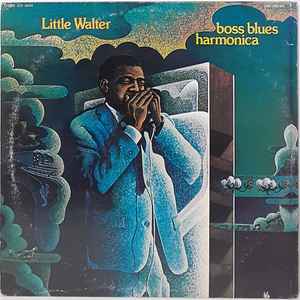
Boss Blues Harmonica is a landmark double-LP compilation released in 1972 on Chess Records (catalog number 2CH 60014), four years after Little Walter's death. Spanning 24 tracks recorded between 1952 and 1964, the album serves as one of the most comprehensive single-volume surveys of Walter's career as a bandleader. It was produced by Leonard Chess and Phil Chess, with liner notes by blues scholar Pete Welding. The collection draws from Walter's extensive catalog on Chess's subsidiary label, Checker Records, capturing him at the height of his powers as well as during his later, more troubled years.
The album is structured roughly chronologically across two LPs, presenting a mix of Walter's biggest R&B chart hits, beloved B-sides, and deeper album cuts. It showcases his revolutionary approach to the amplified harmonica — what Muddy Waters described as losing "someone cutting off my oxygen" when Walter left his band — alongside his underrated vocal talents and the stellar Chicago blues musicians who backed him.
The Recording Context
Little Walter (born Marion Walter Jacobs, May 1, 1930, Marksville, Louisiana) had already redefined blues harmonica before his first solo session. Frustrated by being drowned out by electric guitars, he pioneered the technique of cupping a small microphone in his hands with his harmonica and plugging into a guitar amplifier, pushing the equipment beyond its technical limits to create radical new timbres — feedback, distortion, and sonic effects never before heard from the instrument.
His first session as a leader came in May 1952, when he recorded "Juke" at the tail end of a Muddy Waters session. The instrumental became the only harmonica-led record ever to reach #1 on the Billboard R&B charts, staying there for eight weeks. From 1952 to 1958, Walter notched 14 Top Ten R&B hits, a level of commercial success that exceeded even Muddy Waters or Howlin' Wolf.
Key Musicians Across the Sessions
The album features an evolving cast of Chicago's finest blues musicians:
-
The Aces / The Jukes (1952–1954): Guitarists Louis Myers and Dave Myers (brothers), with drummer Fred Below. Walter poached them from Junior Wells's band and renamed them the Jukes.
-
The Lockwood-Tucker Era (1954–1957): Guitarists Robert "Junior" Lockwood Jr. and Luther Tucker, with Willie Dixon on bass and Fred Below on drums. This lineup powered many of Walter's mid-50s classics.
-
The Late 50s / Early 60s: As Walter's personal life deteriorated (alcoholism, violent altercations, and a self-inflicted gunshot wound to the foot), his recording bands became more fluid, featuring pianists like Otis Spann, guitarists like Freddie Robinson and Jimmy Lee Robinson, and various drummers including George Hunter and Billy Stepney.
-
Chess House Band Regulars: Bassist Willie Dixon and drummer Fred Below appear on the majority of tracks, providing the rock-solid foundation for Walter's flights of fancy.
Track-by-Track Breakdown
LP One
1. "My Babe"
-
Songwriter: Willie Dixon (with Jesse Stone) — based on the traditional gospel song "This Train (Is Bound for Glory)," popularized by Sister Rosetta Tharpe
-
Recorded: January 25, 1955, Chicago
-
Musicians: Little Walter (vocals, harmonica), Robert Lockwood Jr. (guitar), Leonard Caston (guitar), Willie Dixon (double bass), Fred Below (drums)
-
Notes: Walter's second #1 R&B hit, spending five weeks at the top of the charts. Dixon had been trying to get Walter to record it for two years; Walter initially resisted but finally relented. The B-side was "Thunderbird." A 1961 overdubbed version with female backing vocals briefly crossed over to the pop charts.
2. "Sad Hours"
-
Songwriter: Little Walter
-
Recorded: October 1952, Chicago
-
Musicians: Little Walter (harmonica, vocals), Louis Myers (guitar), Dave Myers (guitar), Fred Below (drums)
-
Notes: A slow, mournful instrumental that reached #2 on the R&B charts. It was the B-side of "Mean Old World" (Checker 764). The track exemplifies Walter's ability to sustain emotional tension at slow tempos, with his harmonica weaving counter-melodies against the Myers brothers' guitar interplay.
3. "You're So Fine"
-
Songwriter: Little Walter
-
Recorded: July 23, 1953, Chicago
-
Musicians: Little Walter (vocals, harmonica), Louis Myers (guitar), Dave Myers (guitar), Willie Dixon (bass), Fred Below (drums)
-
Notes: A jump-blues styled vocal number that reached #2 on the R&B charts. Recorded at the same session as "Blues with a Feeling," it demonstrates Walter's lighter, more playful vocal side.
4. "Last Night"
-
Songwriter: Little Walter
-
Recorded: October 5, 1954, Chicago
-
Musicians: Little Walter (vocals, harmonica), with members of his Jukes band
-
Notes: Walter recorded this as a tribute to his best friend Henry Strong, who had been killed. It reached #6 on the R&B charts. The same session also produced "Mellow Down Easy" and "You Better Watch Yourself."
5. "Blues with a Feeling"
-
Songwriter: Little Walter (adapted from Jack McVea's 1947 version)
-
Recorded: July 23, 1953, Chicago
-
Musicians: Little Walter (vocals, harmonica), Louis Myers (or possibly Jimmy Rogers) and Dave Myers (guitars), Willie Dixon (upright bass), Fred Below (drums)
-
Notes: One of Walter's most enduring compositions, this reached #2 on the R&B Juke Box chart. The distinctive harp intro — a 12-bar theme that reappears throughout the song — became a template for generations of harmonica players. Biographer Tony Glover noted the "nice interplay between the guitar and the harp" and Below's shuffling brush work. Checker chose the second of two takes after a faulty audio connection affected the first.
6. "Can't Hold Out Much Longer"
-
Songwriter: Little Walter
-
Recorded: May 12, 1952, Chicago
-
Musicians: Little Walter (vocals, harmonica), Jimmy Rogers (guitar), Elgin Evans/Elga Edmonds (drums)
-
Notes: The B-side of "Juke," recorded at Walter's very first session as a leader. It was essentially a Muddy Waters band session without Muddy — the same lineup that powered Waters's classics. The track shows Walter's raw early vocal style before he developed the smoother approach of his later hits.
7. "Juke"
-
Songwriter: Little Walter
-
Recorded: May 12, 1952, Chicago
-
Musicians: Little Walter (harmonica), Muddy Waters (guitar), Jimmy Rogers (guitar), Elgin Evans/Elga Edmonds (drums)
-
Notes: The single most important harmonica instrumental in blues history. Credited to "Little Walter and His Night Cats," it was recorded at the end of a Muddy Waters session when Leonard Chess gave Walter some leftover studio time. It spent eight weeks at #1 on the Billboard R&B charts — the first and still only harmonica instrumental to achieve this. The track captures Walter's flawless amplified technique across a wide range of timbres and remains a test piece for harmonica players.
8. "Mean Old World"
-
Songwriter: Little Walter
-
Recorded: October 1952, Chicago
-
Musicians: Little Walter (harmonica, vocals), Louis Myers (guitar), Dave Myers (guitar), Fred Below (drums)
-
Notes: Reached #6 on the R&B charts. This was one of the first recordings with Walter's newly formed Jukes band (formerly Junior Wells's Aces). The track uses the classic blues device of "taking it from the turnaround" — the band comes in on the V chord in the ninth bar.
9. "Off the Wall"
-
Songwriter: Little Walter
-
Recorded: Early March 1953, Chicago
-
Musicians: Little Walter (vocals, harmonica), Louis Myers (guitar), Dave Myers (guitar), Willie Dixon (bass), Fred Below (drums)
-
Notes: An up-tempo instrumental that reached #8 on the R&B charts. Recorded at the same session as "Tell Me Mama," it features Walter at his most aggressive, pushing the tempo hard with his harp soaring over the locked-in rhythm section.
10. "You Better Watch Yourself"
-
Songwriter: Little Walter
-
Recorded: October 5, 1954, Chicago
-
Musicians: Little Walter (vocals, harmonica), with his Jukes band
-
Notes: A threatening stop-time shuffle that reached #8 on the R&B charts. Walter's harmonica functions like a switchblade slicing through the air, powered by male bravado and danger. The track captures the darker side of Walter's persona — the "mean, mean dude" who would not be crossed.
11. "Blue Lights"
-
Songwriter: Little Walter
-
Recorded: October 5, 1954, Chicago
-
Musicians: Little Walter (vocals, harmonica), with his Jukes band
-
Notes: The B-side of "You Better Watch Yourself" (Checker 799). A slow blues where Walter rages against the night using every technique in his arsenal, culminating in one of his most dramatic climaxes.
12. "Tell Me Mama"
-
Songwriter: Little Walter
-
Recorded: Early March 1953, Chicago
-
Musicians: Little Walter (vocals, harmonica), Louis Myers (guitar), Dave Myers (guitar), Willie Dixon (bass), Fred Below (drums)
-
Notes: A chirpy, up-tempo number that reached #10 on the R&B charts. The lyrics suggest a cuckolded Walter — "Yes, when I came in, who went out that back door" — set against an almost jaunty musical backdrop.
LP Two
1. "Back Track"
-
Songwriter: Little Walter
-
Recorded: 1959, Chicago
-
Musicians: Little Walter (harmonica, vocals), Freddie Robinson (guitar), Luther Tucker (guitar), Willie Dixon (bass), with possible piano by Otis Spann
-
Notes: The B-side of "Everything Gonna Be Alright" (Checker 930). By 1959, Walter's chart success was waning as rock and roll eclipsed straight blues, but his musicianship remained sharp. The track features a more modern, streamlined sound.
2. "It's Too Late Brother"
-
Songwriter: Al Duncan
-
Recorded: July 27, 1956, Chicago
-
Musicians: Little Walter (vocals, harmonica), Robert Lockwood Jr. (guitar), Luther Tucker (guitar), Willie Dixon (bass), Fred Below (drums)
-
Notes: A vocal number from the same session that produced "Just a Feeling" and "Teenage Beat." The Lockwood-Tucker guitar pairing provides rich textural backing.
3. "Just a Feeling"
-
Songwriter: Little Walter
-
Recorded: July 27, 1956, Chicago
-
Musicians: Little Walter (vocals, harmonica), Robert Lockwood Jr. (guitar), Luther Tucker (guitar), Willie Dixon (bass), Fred Below (drums)
-
Notes: By this period, Walter's band had solidified around the Lockwood-Tucker guitar axis with Dixon and Below. The track shows Walter experimenting with more pop-oriented material while maintaining his blues foundation.
4. "Teenage Beat"
-
Songwriter: Little Walter
-
Recorded: July 27, 1956, Chicago
-
Musicians: Little Walter (harmonica), Robert Lockwood Jr. (guitar), Luther Tucker (guitar), Willie Dixon (bass), Fred Below (drums)
-
Notes: A free-form instrumental that showcases Walter's pioneering use of the chromatic harmonica. The track is almost jazz-like in its conception, with Walter swooping and soaring over a one-chord vamp, demonstrating harmonic ideas far ahead of his contemporaries.
5. "Just Your Fool"
-
Songwriter: Little Walter
-
Recorded: December 1960, Chicago
-
Musicians: Little Walter (vocals, harmonica), Otis Spann (piano), Freddie Robinson (guitar), Luther Tucker (guitar), Willie Dixon (bass), George Hunter (drums)
-
Notes: By 1960, Walter's personal troubles were mounting. This session found him working with a more expanded ensemble including piano. The track was released as a single in 1962 (Checker 1013).
6. "Flying Saucer"
-
Songwriter: Little Walter
-
Recorded: March 9, 1956, Chicago
-
Musicians: Little Walter (harmonica), Robert Lockwood Jr. (guitar), Luther Tucker (guitar), Willie Dixon (bass), Fred Below (drums)
-
Notes: An instrumental from the mid-50s, released as the B-side of "One More Chance With You" (Checker 838). The title reflects the 1950s fascination with UFOs and space themes. Walter's harp mimics the whirring, otherworldly sounds suggested by the title.
7. "I Got to Go"
-
Songwriter: Little Walter
-
Recorded: April 1955, Chicago
-
Musicians: Little Walter (vocals, harmonica), Robert Lockwood Jr. (guitar), Luther Tucker (guitar), Willie Dixon (bass), Fred Below (drums)
-
Notes: An up-tempo rocker reminiscent of "Tell Me Mama." Walter's use of minor-key scales over major-chord guitar backing adds tension and energy. The track was recorded during the same period as "Roller Coaster" and "Hate to See You Go."
8. "Shake Dancer"
-
Songwriter: Little Walter
-
Recorded: March 5, 1957, Chicago
-
Musicians: Little Walter (vocals, harmonica), Louis Myers (guitar), Dave Myers (guitar), Willie Dixon (bass), Fred Below (drums)
-
Notes: An instrumental recorded in 1957 but not released until 1964 (Checker 1071), by which time Walter's commercial fortunes had declined significantly. The track features Robert Jr. Lockwood's distinctive rhythm guitar work.
9. "Too Late"
-
Songwriter: Little Walter
-
Recorded: July 23, 1953, Chicago
-
Musicians: Little Walter (vocals, harmonica), Louis Myers (guitar), Dave Myers (guitar), Willie Dixon (bass), Fred Below (drums)
-
Notes: Recorded at the same marathon session as "Blues with a Feeling," "You're So Fine," "Lights Out," and "Quarter to Twelve." An unconventional blues number that shows Walter being experimental even at this early stage. It was not released until 1955 (Checker 825).
10. "Thunderbird"
-
Songwriter: Little Walter
-
Recorded: January 25, 1955, Chicago
-
Musicians: Little Walter (harmonica), Robert Lockwood Jr. (guitar), Leonard Caston (guitar), Willie Dixon (bass), Fred Below (drums)
-
Notes: The B-side of "My Babe." A harmonica instrumental that features Walter switching between diatonic and chromatic harmonicas within the same composition — a technique he pioneered. The chromatic harp allowed him to create more sensitive, orchestral textures.
11. "Ah'w Baby"
-
Songwriter: Little Walter
-
Recorded: June 20, 1957, Chicago
-
Musicians: Little Walter (vocals, harmonica), Robert Lockwood Jr. (guitar), Jimmy Lee Robinson (guitar), Willie Dixon (bass), Fred Below (drums)
-
Notes: Released in 1960 (Checker 945). By this period, the Lockwood-Tucker partnership had shifted; Jimmy Lee Robinson replaces Luther Tucker on this session. The track shows Walter's vocal style maturing into a more world-weary, nuanced delivery.
12. "Boom Boom, Out Go the Lights"
-
Songwriter: Little Walter
-
Recorded: December 1955, Chicago
-
Musicians: Little Walter (vocals, harmonica), Robert Lockwood Jr. (guitar), Luther Tucker (guitar), Willie Dixon (bass), Fred Below (drums)
-
Notes: A deliberate attempt to appeal to a younger, more pop-oriented market. The title and aggressive delivery reflect Walter's attempt to compete with the rising tide of rock and roll. It was released in 1957 (Checker 867).
Buy This Album
Summary Assessment
Boss Blues Harmonica stands as one of the essential documents of postwar Chicago blues. The compilation's genius lies in its chronological breadth — from the raw, revolutionary energy of the 1952 "Juke" session through the polished, hit-making years of the mid-50s Jukes band, to the more experimental and ultimately tragic final recordings of the early 1960s.
The album captures Walter at the peak of his powers: a harmonica player who treated the instrument with the harmonic sophistication of a saxophonist, the rhythmic drive of a drummer, and the emotional range of a vocalist. His bands — particularly the Myers brothers and later the Lockwood-Tucker pairings — were among the tightest and most responsive in blues history, largely thanks to Willie Dixon's anchoring bass and Fred Below's crisp, jazz-influenced drumming.
Yet the album also documents a career in decline. By the late 1950s, Walter's alcoholism, violent temper, and physical injuries (including a self-inflicted gunshot wound to the foot) were taking their toll. The later tracks, while still musically compelling, lack the effortless brilliance of the 1952–1956 period. Walter would record only sporadically in the 1960s before his death in 1968 at age 37.
For anyone seeking to understand why Little Walter remains the undisputed king of blues harmonica — the "Jimi Hendrix of the electric harp," as one critic put it — Boss Blues Harmonica provides the definitive case.