
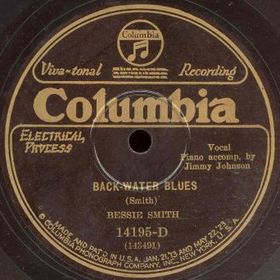
"Backwater Blues" is one of Bessie Smith's most powerful and enduring recordings, a poignant flood narrative that captures the raw emotion and social realities of the era. Released in 1927, it stands as a masterpiece of classic female blues and a landmark in American music history.
Recording Session
"Backwater Blues" was recorded on February 17, 1927, in New York City for Columbia Records. It was part of a productive session during Smith's peak years as the "Empress of the Blues." The track was paired with "Preachin' the Blues" on Columbia 14195-D.
Producer: Frank Walker, Columbia's A&R executive who had signed Smith in 1923 and oversaw many of her key sessions. Walker played a crucial role in shaping her recording career, pairing her with top musicians.
Songwriter: Bessie Smith is credited as the composer. While drawing on traditional blues themes and the devastating 1927 Mississippi River flood (which occurred around the time of recording and devastated the Delta region), Smith infused the song with personal, vivid storytelling drawn from lived experience and collective Black Southern hardship.
Musicians
- Bessie Smith – vocals
- James P. Johnson – piano (the legendary stride pianist, known for "The Charleston" and his work with Smith on several classic sides)
The sparse arrangement—Smith's commanding voice accompanied solely by Johnson's sensitive, rolling piano—heightens the song's emotional intimacy and drama. Johnson's playing provides a perfect foil: supportive yet dynamic, with rolling bass lines and expressive fills that evoke the rising waters and human struggle.
Musical Style and Analysis
"Backwater Blues" is a classic example of 1920s vaudeville blues / classic female blues, delivered in a slow-to-medium 12-bar blues form. The performance is intimate yet powerful, relying on the interplay between Bessie Smith's monumental voice and James P. Johnson's stride-influenced piano accompaniment. The arrangement is deliberately sparse—just voice and piano—which intensifies the song's emotional weight and narrative focus, creating a sense of isolation and vulnerability that mirrors the flood's impact.
Smith's Vocal Performance: Smith's voice is the centerpiece—deep, resonant, authoritative, and richly textured with a wide range and commanding projection honed from years of live performance and recording. She employs masterful phrasing, dynamic shading, and expressive blue notes. Her delivery moves from somber storytelling in the verses to more urgent, almost wailing intensity in key lines ("When it rains five days and the skies turn dark as night..."). She uses subtle melisma, bent notes, and rhythmic flexibility to convey despair, resignation, and quiet defiance. The vocal line feels conversational yet theatrical, drawing listeners into the personal tragedy while evoking broader communal suffering.
James P. Johnson's Piano: Johnson's accompaniment is sensitive and sophisticated. He provides a rolling, stride-based foundation with strong left-hand bass lines that evoke the relentless rain and rising waters. His right hand offers empathetic fills, tremolos, and chordal punctuations that respond to Smith's phrasing like a second voice. The piano never overwhelms; instead, it creates space, tension, and release—mirroring the flood's ebb and flow. Johnson's Harlem stride roots add a layer of urban sophistication to the rural Delta imagery.
Overall Structure and Mood: The song follows a traditional blues structure but feels through-composed due to Smith's storytelling. The modal feel and minor-inflected harmonies contribute to a dark, mournful atmosphere. There's a cinematic quality: verses build vivid scenes of displacement ("I went and stood upon some high old lonesome hill"), while the chorus-like refrains drive home the inescapable reality. The track's approximately 3-minute length is concise yet complete, packing emotional depth without excess.
The recording captures the era's acoustic recording technology limitations beautifully—the warmth and presence of Smith's voice cut through, making it sound immediate and timeless. It stands as a high point of Smith's Columbia period, blending artistic excellence with social relevance.
Other Versions and Covers
- Smith herself may have performed variations live, though this Columbia recording is the definitive version.
- Notable covers include: Dinah Washington, Muddy Waters, Big Bill Broonzy, and modern interpretations by artists like Tracy Chapman or in various blues revivals.
- The song gained renewed attention during later flood events and remains a staple in flood/disaster-themed blues playlists. It entered the public domain in the U.S. on January 1, 2023.
Legacy
"Backwater Blues" solidified Bessie Smith's reputation as a voice of her people, blending entertainment with social commentary. It was a commercial success upon release and has been hailed as one of her finest achievements. The track influenced generations of blues, jazz, and soul singers, from Billie Holiday and Dinah Washington to rock and folk artists. Its documentation of the 1927 flood makes it a cultural artifact as well as a musical one—highlighting themes of resilience amid adversity that remain relevant.
The song appears on countless compilations, including The Essential Bessie Smith, and is frequently cited in discussions of Smith's impact on American music. As one of the earliest recorded responses to a major natural disaster in popular music, it helped establish the blues as a vehicle for storytelling and protest. Bessie Smith's powerful delivery continues to inspire, cementing "Backwater Blues" as a timeless classic.
Suggested Reading
 Buy from Amazon Bessie
Suggested Listening
 Buy from Amazon Bessie Smith The Anthology









