Imperial Records was one of the most successful and influential independent record labels in American music history. Founded in Los Angeles in 1946 by a Canadian-born radio executive, the label transformed from a small operation catering to Mexican-American audiences into a powerhouse of New Orleans R&B, rock and roll, and pop music. Its roster included Fats Domino — one of the best-selling artists of the 1950s — Ricky Nelson, T-Bone Walker, Smiley Lewis, and countless others who defined the sound of postwar American popular music.
Founding and Early Years (1946–1949)
Lew Chudd
Lew Chudd (1911–1998) was a Canadian who had worked with NBC radio in New York before starting Crown Records in the mid-1940s. When he sold Crown in 1945, he headed west to California and launched Imperial Records in 1946 in Los Angeles. The label's name was derived from the heavily Hispanic Imperial Valley in California, reflecting Chudd's initial focus on the region's sizable Mexican migrant population.
Initially, Imperial concentrated on local Mexican groups and ethnic folk artists, releasing Spanish-language versions of pop hits and recordings of Mexican folk music. The early 10-inch LP series reflected this focus. However, in August 1947, Chudd expanded into a popular record series consisting of rhythm and blues recordings, beginning with the 5000 series.
The New Orleans Revolution (1949–1963)
The Dave Bartholomew Connection
Imperial's destiny changed dramatically in 1949. While in Houston seeking to expand his market, Chudd visited the Bronze Peacock Club and saw Dave Bartholomew performing. Bartholomew, a bandleader, songwriter, and arranger who had already enjoyed a national hit with "Country Boy" on DeLuxe Records, was exactly what Chudd needed — a musically sophisticated partner who could handle writing, production, talent scouting, and session direction.
Bartholomew's contract with DeLuxe was expiring, and he was agreeable to working with Chudd. When Chudd showed up weeks later in New Orleans ready to begin, Bartholomew shifted Imperial's focus from Mexican folk to New Orleans R&B and rock and roll. This partnership would prove one of the most fruitful in independent label history.
Fats Domino
Bartholomew's most significant discovery was Antoine "Fats" Domino (1928–2017), a 22-year-old pianist who sang with a Creole accent. In December 1949, Bartholomew recorded Domino's debut single, "The Fat Man" backed with "Detroit City Blues" (Imperial 5058). The results were explosive. Imperial claimed the song sold 10,000 copies in New Orleans in the first ten days of release. By February 18, 1950, it was at No. 2 on the Billboard R&B Chart. The single went on to sell over one million copies and was added to the Grammy Hall of Fame.
Domino became the most important artist on Imperial and one of the best-selling rock and roll artists of the 1950s — second only to Elvis Presley. His Imperial hits included:
-
"The Fat Man" (1950) — R&B No. 2
-
"Goin' Home" (1952)
-
"Ain't That a Shame" (1955) — Pop No. 10, R&B No. 1; crossed over to mainstream pop
-
"I'm in Love Again" (1956)
-
"Blueberry Hill" (1956) — Pop No. 2
-
"Blue Monday" (1957)
-
"I'm Walkin'" (1957)
-
"I Want to Walk You Home" (1959)
-
"Walking to New Orleans" (1960)
By 1955, Domino had crossed into the mainstream pop market, and by 1960 he had ten more top ten hits. Four of his songs have been added to the Grammy Hall of Fame. Domino remained with Imperial until 1963, when he left for ABC-Paramount after a dispute over royalties.
The New Orleans Roster
Bartholomew's band served as the house band for most Imperial recordings made in New Orleans, providing a consistent, high-quality sound that became the label's trademark. Beyond Domino, the New Orleans roster included:
-
Smiley Lewis (Overton Amos Lemons, 1913–1966) — "Tee Nah Nah," "Lowdown," "Dirty People," "The Bells Are Ringing," "Gumbo Blues," "I Hear You Knocking" (later covered by Dave Edmunds)
-
Tommy Ridgley — "Shrewsbury Blues," "Early Dawn Boogie," "Boogie Woogie Mama," "Monkey Man"
-
Jewel King — "3×7=21" (R&B No. 4), "Don't Marry Too Soon," "Broke My Mother's Rule," "I'll Get It"
-
Archibald (Leon T. Gross, 1912–1973) — "Stack-A-Lee" (Parts 1 & 2), "Shake Shake Baby," "Ballin' With Archie," "She's Scattered Everywhere," "My Gal"
-
The Spiders — New Orleans vocal group
-
Bobby Mitchell — R&B vocalist
-
Chris Kenner — "I Like It Like That" (later a hit for him on Instant Records)
-
Roy Brown — "Let the Four Winds Blow" (revived hit)
-
Faye Adams — "Shake a Hand" (revived hit)
-
Big Joe Turner — "Jumpin' Tonight," "Story To Tell," "Love My Baby," "Lucille"
-
Dave Bartholomew himself — "Carnival Day," "That's How You Got Killed Before," "Country Boy Goes Home," "Messy Bessie," "Frantic Chick," "Going To Chow," "Ah Cubanas," "Who Drank My Beer While I Was In The Rear," "Little Girl Sing Ding-A-Ling" (the original "My Ding-A-Ling," later a No. 1 hit for Chuck Berry in 1972)
Texas and West Coast Blues: The Imperial Legacy
While Imperial is best known for its New Orleans R&B and rock and roll, the label made significant contributions to Texas and West Coast blues through a diverse roster of artists who recorded primarily in Los Angeles, Houston, Dallas, and Shreveport. These recordings, made between 1947 and 1954, documented some of the most important regional blues styles of the era and preserved the work of artists who might otherwise have been lost to history.
T-Bone Walker: The King of West Coast Blues
T-Bone Walker (1910–1975) was the most significant blues artist on Imperial's roster and one of the most important figures in the history of electric blues guitar. Born Aaron Thibeaux Walker in Linden, Texas, he was the uncle of guitarist B.B. King and a direct link between the acoustic blues of the 1920s and the electric blues-rock of the 1960s. Walker had already established himself as a pioneer of the electric guitar with his 1942 hit "Mean Old World" for Capitol Records when he signed with Imperial.
Walker's Imperial recordings, made between 1950 and 1954 in Los Angeles, represent a crucial period in his career. He recorded 52 tracks for the label, compiled in the 1991 collection The Complete Imperial Recordings, 1950-1954. These sessions captured Walker at the height of his powers, with his sophisticated, jazz-influenced guitar style and smooth vocal delivery defining the West Coast blues sound.
Key Imperial recordings by T-Bone Walker include:
-
"Strollin' With Bones" / "Glamour Girl" (Imperial 5071, April 1950) — His debut Imperial single
-
"The Sun Went Down" / "You Don't Love Me" (Imperial 5086, April 1950)
-
"Evil Hearted Woman" / "Travelin' Blues" (Imperial 5094, April 1950)
-
"No Reason" / "Look Me In The Eye" (Imperial 5116, September/October 1950)
-
"You Don't Understand" / "Welcome Blues" (Imperial 5147, August 1951)
-
"Alimony Blues" / "Life Is Too Short" (Imperial 5153, August 1951)
-
"I Get So Weary" / "You Just Wanted To Use Me" (Imperial 5161, August 1951)
-
"Blue Mood" / "Got No Use For You" (Imperial 5216, February 1952)
Walker's Imperial sessions featured his signature guitar style — fluid single-note lines, sophisticated chord voicings, and a tone that influenced B.B. King, Chuck Berry, and Jimi Hendrix. The Los Angeles studio environment allowed for fuller arrangements than his earlier Chicago or Texas recordings, with horn sections and rhythm sections that anticipated the jump blues and early R&B styles of the mid-1950s.
Lil' Son Jackson: The Dallas Bluesman
Melvin "Lil' Son" Jackson (1915–1976) was a Texas blues guitarist and singer who recorded prolifically for Imperial between 1950 and 1952. Born in Tyler, Texas, Jackson was a self-taught musician who worked as a truck driver and laborer before his recording career. His Imperial sessions were held in Los Angeles, Dallas, and Fort Worth, producing some of the most authentic down-home blues recordings of the era.
Jackson's Imperial singles include:
-
"True Love Blues" / "Ticket Agent Blues" (Imperial 5100, September 1950)
-
"Tough Luck Blues" (Imperial 5108, September 1950)
-
"Peace Breaking People" / "Rockin' And Rollin'" (Imperial 5113, December 1950)
-
"Two Timin' Woman" / "Rocky Road" (Imperial 5119, December 1950)
-
"Stop For The Red Light" / "Aching Heart" (Imperial 5144, July 1951)
-
"Restless Blues" / "Wondering Blues" (Imperial 5137, April 1951)
-
"Upstairs Boogie" / "All My Love" (Imperial 5165, November 1951)
-
"Rockin' And Rollin' #2" / "Journey Back Home" (Imperial 5204, October 1952)
-
"Black And Brown" / "Sad Letter Blues" (Imperial 5218, October 1952)
Jackson's style was sparse and direct — a droning bass string, simple chord changes, and a vocal delivery that was more spoken than sung. His records sold consistently enough that Imperial kept him under contract for two years, though he never achieved a national hit. His work has been rediscovered by collectors and reissued on compilations like Texas Blues (1974) and Down Home Blues Classics: Texas 1946-1954 (2005).
Lightnin' Hopkins: The Texas Blues Poet
Sam "Lightnin'" Hopkins (1912–1982) was already a legendary figure in Texas blues when he recorded for Imperial. Born in Centerville, Texas, Hopkins had recorded for Aladdin, Gold Star, and numerous other labels before his Imperial sessions. His relationship with the label was primarily through compilation albums rather than original singles, though he did appear on some Imperial releases as a sideman.
Hopkins' Imperial appearances include:
-
"Howlin' Wolf Blues" and "Can't Get That Woman Off My Mind" — Featured on the 1974 compilation Texas Blues: Blues Anthology Vol. 1 (Toshiba/Liberty LLR-8188)
-
"I Wonder Why" and "Buck Dance Boogie" — Featured on the 1960 compilation Riot Blues (Imperial LP 9186)
-
"Mean And Evil Blues" and "All Through My Dreams" — Featured on the 1995 compilation Texas Guitar Killers (Capitol CDP 33915)
Hopkins also served as a sideman on Imperial sessions for other Texas artists, including J.D. Edwards (Imperial 5245, 1953) and appeared on the Rural Blues compilation series (Imperial LM-94001, 1968). His association with Imperial was more as a compilation artist than a recording star for the label, but his presence helped establish the label's credibility in the blues market.
Smokey Hogg: The Prolific Blues Shouter
Andrew "Smokey" Hogg (1914–1960) was a down-home bluesman from Texas who recorded prolifically for numerous labels, including two significant stints with Imperial. Born in Westconn, Texas, Hogg scored major R&B hits with "Long Tall Mama" (1948) and "Little School Girl" (1950) for other labels before joining Imperial.
Hogg's Imperial recordings include:
-
"Great Big Mama" / "Key To My Door" (Imperial 5111, December 1950)
-
"Up Today - Down Tomorrow" / "Worryin' Blues" (Imperial 5106, 1950)
-
"When I've Been Drinking" / "Tear Me Down" (Imperial 5269, 1953)
-
"Train Whistle" / "My Baby's Gone" (Imperial 5290, 1953)
Hogg's style was raw and emotional, with a shouting vocal delivery that earned him his nickname. His Imperial sides were later compiled on the Texas Blues anthology and the Texas Guitar Killers box set. He died in 1960, relatively obscure, but his recordings have been rediscovered by collectors who value his authentic Texas blues style.
James Wayne: The Junco Partner
James Wayne (also credited as James Waynes and later Wee Willie Wayne) was a Texas-born singer who recorded for Imperial in 1951 and 1955. His most significant contribution to American music was "Junco Partner," a song he recorded for Bob Shad's Sittin' In With label before his Imperial sessions. The song became a New Orleans standard, covered by Dr. John, Professor Longhair, James Booker, and Snooks Eaglin.
Wayne's Imperial recordings include:
-
"Home Town Blues" / "When Night Falls" (Imperial 5151, September 1951)
-
"A Two Faced Man" / "Bad Weather Blues" (Imperial 5160, September 1951)
-
"Vacant Pillow Blues" / "Ageable Woman" (Imperial 5166, September 1951)
Wayne was signed by Imperial after his success with "Tend To Your Business" on Sittin' In With (which reached No. 2 on the Billboard R&B charts in 1951). His Imperial recordings were made in New Orleans with Dave Bartholomew's band, blending his Texas roots with the New Orleans sound. He returned to Imperial in 1955 to record "Travelin' Mood" and again in 1961 for a third stint.
Pee Wee Crayton: The West Coast Guitarist
Connie "Pee Wee" Crayton (1914–1985) was a Texas-born guitarist who became a major figure in the West Coast blues scene. Born in Rockdale, Texas, Crayton moved to Los Angeles and recorded for Modern, Aladdin, and other labels before his Imperial session.
Crayton's Imperial recording:
-
"When It Rains It Pours" / "Daybreak" — Featured on the 1995 compilation Texas Guitar Killers (Capitol CDP 33915)
While his Imperial output was limited, Crayton's presence on the label's Texas blues compilations helped establish Imperial's credibility in the West Coast market. His guitar style, influenced by T-Bone Walker and Charlie Christian, was a bridge between jazz and blues.
Goree Carter: The Rock and Roll Pioneer
Goree Carter (1930–1990) was a Houston-born guitarist who recorded for Imperial in 1950 and is sometimes cited as a pioneer of rock and roll guitar. His Imperial single:
-
"You've Got Everything" / "Every Dog Has His Day" (Imperial 5152, June 1950)
Carter's guitar work on these recordings showed the influence of T-Bone Walker and anticipated the harder, more aggressive sound that would emerge in rock and roll. His Imperial sides are rare and highly sought after by collectors.
Big Jay McNeely: The West Coast Saxophone Honker
Cecil "Big Jay" McNeely (1927–2018) was one of the most exciting saxophone players of the West Coast R&B scene, known for his "honking" style and theatrical performances. Born in Watts, Los Angeles, McNeely recorded for Imperial in the early 1950s, bringing a raw, energetic sound that bridged jump blues and early rock and roll.
McNeely's Imperial singles include:
-
"All That Wine Is Gone" / "Don't Cry Baby" (Imperial 5115, January 1951) — with vocals by Jesse Belvin and Three Dots and A Dash
-
"Jet Fury-Cheers" / "Deacon's Express" (Imperial 5219, January 1953)
-
"Let Me Do It" / "I'll Never Love Again" (Imperial 5164, November 1951) — with Three Dots and A Dash
McNeely's Imperial recordings captured him at the peak of his honking powers, with screaming saxophone lines that drove dancers wild. His work for the label was later compiled on various West Coast R&B anthologies.
Joe Houston: The Saxophone Showman
Joe Houston (1926–2015) was another West Coast saxophone specialist who recorded for Imperial in 1952. Born in Austin, Texas, Houston moved to Los Angeles and became a fixture of the Central Avenue R&B scene. His Imperial single:
-
"Windy City Hop" (also known as "Moody on Bayou") / "Atom Bomb" (Imperial 5213, July 1952)
Houston's "Atom Bomb" was a topical reference to the nuclear age, with a driving rhythm that anticipated the rock and roll explosion. His work for Imperial was part of a larger career that included recordings for Aladdin, Specialty, and numerous other labels.
Other Texas and West Coast Artists
Imperial's blues and R&B roster included numerous other regional artists:
-
Mercy Dee (Mercy Dee Walton, 1915–1962) — Texas-born pianist who recorded "Bird Brain Baby" / "Big Foot Country" (Imperial 5110, 1950) and "Roamin' Blues" / "Bought Love" (Imperial 5118, 1951). His "One Room Country Shack" became a blues standard.
-
Country Jim (James Bledsoe) — Shreveport-based bluesman who recorded "Rainy Morning Blues" / "Avenue Breakdown" (Imperial 5062, 1950), "Plantation Blues" / "Good Looking Mama" (Imperial 5091, 1950), and "Old River Blues" (Imperial 5073, 1950).
-
Duke Henderson — Recorded "Kinfolks" / "Ten Days of Agony" (Imperial 5109, December 1950) with Monroe Tucker's orchestra.
-
Eddie "Guitar Slim" Jones — Recorded "Standin' At The Station" / "Cryin' In The Morning" (Imperial 5141, May 1951) in New Orleans. His "The Things That I Used to Do" became a major hit for Specialty.
-
Cecil Gant — Recorded "When You Left Me Baby" / "You'll Be Sorry" (Imperial 5066, February 1950) and "Blues By Cecil" / "Come Home" (Imperial 5112, February 1950) in New Orleans.
-
Nathaniel Terry — Dallas-based artist who recorded "Take It Easy" / "I Don't Know Why" (Imperial 5150, July 1951).
The Legacy of Imperial's Texas and West Coast Blues
Imperial's Texas and West Coast blues recordings represent a crucial but often overlooked chapter in the label's history. While the New Orleans R&B of Fats Domino and the teen pop of Ricky Nelson brought the label its greatest commercial success, the blues recordings documented a vital American tradition at a moment of transition.
The label's willingness to record regional artists in their home cities — Los Angeles, Dallas, Houston, Shreveport — preserved styles that might otherwise have been lost. T-Bone Walker's sophisticated West Coast blues, Lil' Son Jackson's down-home Texas style, Smokey Hogg's raw shouts, and Big Jay McNeely's honking saxophone all found a home on Imperial, creating a diverse catalog that reflected the breadth of postwar African American music.
These recordings also demonstrated Lew Chudd's business acumen — he recognized that the blues market, while smaller than the pop market, was loyal and consistent. By maintaining a blues roster alongside his mainstream pop and R&B acts, Chudd ensured that Imperial had product for every segment of the market.
Today, Imperial's Texas and West Coast blues recordings are prized by collectors and have been reissued on numerous compilations, including the Legendary Masters series, Texas Guitar Killers, and Down Home Blues Classics. They remain a testament to the label's commitment to documenting American music in all its regional diversity.
Jazz on Imperial
While R&B was the label's mainstay, Chudd also recorded jazz artists:
-
Sonny Criss (1927–1977) — Alto saxophonist, multiple albums
-
Warne Marsh (1927–1987) — Tenor saxophonist
-
Charlie Mariano — Jazz saxophonist
-
Papa Celestin (1884–1954) — New Orleans jazz bandleader
-
Erskine Hawkins (1914–1993) — "Tuxedo Junction" bandleader
-
Harold Land — Jazz saxophonist
-
Paul Chambers — Jazz bassist
-
Wild Bill Davis — Jazz organist
-
Wingy Manone (1900–1982) — New Orleans jazz trumpeter
-
Punch Miller (1894–1971) — New Orleans jazz trumpeter
-
Tony Almerico — "French Quarter Jazz" (1961)
Country and Pop
Imperial's eclecticism extended to country and pop:
-
Slim Whitman (1923–2013) — The label's most successful country artist, with hits like "Indian Love Call" and "Rose Marie"
-
Ricky Nelson (1940–1985) — See below
-
Frankie Ford (1939–2015) — "Sea Cruise"
-
Bob Luman — Country and rockabilly
-
Johnny and Dorsey Burnette — Rockabilly songwriters and performers
-
The Teddy Bears — Phil Spector's first group, "To Know Him Is to Love Him"
-
Sandy Nelson — "Teen Beat," "Let There Be Drums"
-
Santo & Johnny — "Sleep Walk" (1959 instrumental hit)
-
Cher — Early recordings under Liberty ownership
-
Jackie DeShannon — "What the World Needs Now Is Love"
-
Johnny Rivers — "Secret Agent Man," "Poor Side of Town"
-
The Hollies — British Invasion group (licensed from EMI)
-
Billy J. Kramer & the Dakotas — British Invasion (licensed from EMI)
-
The Swinging Blue Jeans — British Invasion (licensed from EMI)
-
The Bonzo Dog Band — British comedy/rock group
-
Kim Fowley — Producer and eccentric recording artist
-
Classics IV — "Spooky," "Stormy"
-
Irma Thomas — "Soul Queen of New Orleans," transferred from Minit
Ricky Nelson and the Teen Idol Era (1957–1963)
In 1957, Lew Chudd made a pivotal signing that transformed Imperial's image. Ricky Nelson, the son of television stars Ozzie and Harriet Nelson, had recorded three songs for the Verve label as a lark. His cover of Fats Domino's "I'm Walkin'" was featured on The Adventures of Ozzie and Harriet TV show and became a surprise hit. Verve did not have Nelson under contract, and Chudd quickly signed him to Imperial.
Nelson became a "Teenage Idol" and one of Imperial's most consistent hit-makers. His first single, "Be-Bop Baby," sold over one million copies, and his first album went to No. 1. Many of Nelson's best recordings were written by Johnny and Dorsey Burnette. His Imperial albums included Ricky (1957), Ricky Nelson (1958), Ricky Sings Again (1959), and Rick Is 21 (1961).
Nelson's singing, sometimes disparaged by critics, had a genuine feel for rockabilly and produced some of the finest examples of the genre. He left Imperial in 1963 for Decca Records.
Acquisitions and Expansion (1961–1963)
Aladdin Records
In 1961, Chudd purchased the Aladdin Records catalog, one of the most important independent labels of the 1940s and 1950s. Aladdin had recorded Charles Brown, Johnny "Guitar" Watson, Amos Milburn, Jimmy Witherspoon, Louis Jordan, and many others. Chudd reissued many Aladdin masters on Imperial with an "A" suffix following the album number.
Minit Records
In 1963, Chudd purchased Minit Records of New Orleans from Joe Banashak. Imperial had been distributing Minit since 1960, and the acquisition gave Imperial control of Irma Thomas ("It's Raining," "Breakaway," "Wish Someone Would Care") and Ernie K-Doe ("Mother-in-Law"). This purchase was intended to shore up Imperial's New Orleans connection after the departure of Fats Domino.
The Sale to Liberty Records (1964)
The End of an Era
By the early 1960s, Imperial's commercial peak was waning. Fats Domino had left for ABC-Paramount in late 1963, and Ricky Nelson had departed for Decca. Chudd, facing a changing industry with increased corporate investment in rival companies, decided to exit the recording business. In 1964, he sold Imperial to Liberty Records.
The Liberty/United Artists Era (1964–1979)
Under Liberty's management, Imperial underwent an almost overnight metamorphosis. The New Orleans R&B focus was abandoned in favor of teen-oriented pop, rock, and British Invasion acts. The new owners brought over Irma Thomas from Minit, signed British groups like The Hollies, Billy J. Kramer with the Dakotas, and The Swinging Blue Jeans (licensed from EMI), and developed American acts like Cher, Jackie DeShannon, Johnny Rivers, and The Classics IV.
The mid-1960s period (1964–1968) was actually the most successful for Imperial on the pop charts, with hits like:
-
Johnny Rivers — "Secret Agent Man," "Poor Side of Town," "Baby I Need Your Lovin'"
-
The Hollies — "Bus Stop," "Stop Stop Stop"
-
Jackie DeShannon — "What the World Needs Now Is Love"
-
Cher — "All I Really Want to Do," "Bang Bang (My Baby Shot Me Down)"
-
Classics IV — "Spooky," "Stormy," "Traces"
Liberty also issued "live" albums from the Los Angeles "Go-Go" scene, including Johnny Rivers' At the Whisky à Go Go and Sandy Nelson's Live!. At least some of these "live" albums featured studio recordings with label employees overdubbed as audience noise.
In 1968, Transamerica Corporation, which owned United Artists, bought Liberty/Imperial and merged them with UA. By 1970, most Imperial artists were transferred to Liberty for future releases, and by 1971, Imperial had essentially ceased to exist as a distinct new-product label. UA maintained the back catalog for many years, reissuing some Imperial and Aladdin material under the United Artists banner.
The EMI and Universal Era (1979–Present)
EMI Acquisition
In 1979, EMI acquired the Imperial Records catalog with its purchase of United Artists from Transamerica. The Imperial, Minit, Liberty, Aladdin, and Score masters all became part of the EMI-Capitol Music empire.
2006 Reactivation
In 2006, EMI reactivated the Imperial label as part of its ongoing catalog management. The reactivation was short-lived in terms of new releases, but it demonstrated the enduring value of the Imperial brand.
Universal Music Group
As of 2025, Universal Music Group owns the Imperial Records catalog and brand, having acquired EMI's recorded music operations. The label exists primarily as a legacy catalog entity, though the possibility of future reactivations remains.
Technical Innovations
Imperial was one of the first independent labels to embrace stereo recording. In 1958, they began issuing stereo albums with a distinctive black stereo label, using a completely different numbering system from their mono counterparts — one of the only labels to take such a bewildering approach. After a few years of confusion, Imperial changed the stereo numbering system (LP-12000 series) to echo the corresponding last three digits in the LP-9000 mono numbering system.
The Legacy of Lew Chudd
Lew Chudd died on June 15, 1998, just shy of his 87th birthday. His innovative approach to artist development and genre diversity set a precedent for independent labels, proving that smaller companies could compete with major players. Chudd's willingness to travel to New Orleans, Houston, and other regional music centers to find talent — rather than waiting for artists to come to Los Angeles or New York — was a key factor in Imperial's success. His partnership with Dave Bartholomew demonstrated the value of empowering local musical directors who understood their communities.
Significance and Influence
Imperial Records' significance in American music history is multifaceted:
-
New Orleans R&B: Imperial, through Dave Bartholomew, virtually cornered the market on New Orleans rock and roll in the 1950s, documenting the sound that would influence everything from Fats Domino's piano triplets to the funk revolution of the 1960s.
-
Rock and Roll Foundations: Fats Domino's Imperial recordings were foundational to rock and roll, with "The Fat Man," "Ain't That a Shame," and "Blueberry Hill" becoming standards of the genre.
-
Crossover Success: Imperial demonstrated that independent labels could achieve mainstream crossover success, with Domino moving from the "race record" market to the pop charts and Ricky Nelson becoming a teen idol.
-
Regional Documentation: The label's commitment to recording regional artists in their home cities — New Orleans, Houston, Los Angeles — preserved musical traditions that might otherwise have been lost.
-
The Aladdin Legacy: By acquiring Aladdin, Imperial became the custodian of one of the most important West Coast R&B catalogs, ensuring the preservation of recordings by Charles Brown, Johnny "Guitar" Watson, and others.
-
British Invasion Bridge: Under Liberty, Imperial served as a crucial American outlet for British Invasion groups, helping to introduce The Hollies and others to U.S. audiences.
From its founding in 1946 to its sale in 1964, Imperial Records represented the golden age of the American independent label — a period when small companies with sharp ears and regional connections could compete with the majors, discover transformative artists, and shape the course of popular music. The label's legacy lives on in the countless recordings that continue to be reissued, sampled, and celebrated by new generations of listeners.
Selected Discography
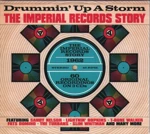 Drummin' Up a Storm: The Imperial Records Story Buy from Amazon