Black Top Records was a New Orleans-based independent label founded in 1981 by brothers Nauman S. Scott III and Hammond Scott. It specialized in blues, R&B, zydeco, and American roots music, releasing well over 100 albums before folding around 1999. It is best remembered for high-quality, authentic recordings of both veteran and emerging blues artists, often giving career second winds to overlooked or long-inactive performers while documenting Southern regional styles with strong session support from New Orleans and Austin musicians.
Founding and Ownership
The Scott brothers, natives of Alexandria in central Louisiana, grew up immersed in blues and soul via late-night radio (notably WLAC from Nashville). They launched Black Top in New Orleans out of a desire to record authentic blues and related styles that received little mainstream attention. Hammond Scott served as the primary producer on most releases; Nauman handled executive and business sides. The label’s first release was Anson Funderburgh & the Rockets’ Talk to You By Hand (1981).
Black Top began with distribution through Rounder Records. After that arrangement ended in the mid-1990s, there was a short period with Passport Music, followed by a production/distribution deal with Alligator Records (announced around 1997). The label remained focused on blues even as it expanded into New Orleans R&B and other roots forms. It closed in 1999 after more than 100 albums. Nauman Scott died in 2002; Hammond subsequently sold the catalog rights. Reissues later appeared on Varèse Sarabande, Fuel 2000, Shout! Factory, Hep Cat Records, and (from 2006) Japan’s P-Vine Records, which acquired worldwide rights.
The Scotts frequently used New Orleans players (George Porter Jr., David Torkanowsky, Herman V. Ernest III, Sammy Berfect, and others) and members of the Antone’s house band from Austin (including saxophonist Mark “Kaz” Kazanoff). While most releases were new studio or live material, the catalog also included some reissues (e.g., material by Earl Hooker and the Hollywood Fats Band).
Focus on Blues and Notable Artists/Recordings
Black Top excelled at spotting and documenting under-the-radar or long-dormant talent alongside stronger regional acts. Its blues roster emphasized Texas and Louisiana styles, West Coast jump/harmonica blues, and classic New Orleans R&B/blues hybrids, often with strong songwriting, vocal character, and guitar or harmonica work.
Anson Funderburgh & the Rockets (with early vocalist/harmonica player Darrell Nulisch, later featuring Sam Myers) launched the label. Key albums include the debut Talk to You By Hand (1981), She Knocks Me Out! (1983), My Love Is Here to Stay (with Myers, 1985), Sins (1987), Rack ’Em Up (1989), Tell Me What I Want to Hear (1991), the live Live at the Grand Emporium (1995), and That’s What They Want (1997). These records showcase crisp Texas blues guitar, shuffle grooves, and Myers’ powerful vocals and harmonica.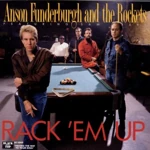 Buy from Amazon Rack 'Em Up
Ronnie Earl & the Broadcasters delivered some of the label’s finest guitar-focused blues. Releases include Smoking (1983), They Call Me Mr. Earl (1985), Soul Searching (1988), Peace of Mind (1990), and Surrounded by Love (1991). Earl’s expressive, jazz-tinged playing and the band’s tight support made these albums standouts of 1980s–90s contemporary blues.
Snooks Eaglin, the eclectic New Orleans guitarist and “human jukebox,” enjoyed one of his most consistent recording periods with Black Top. Albums include Baby, You Can Get Your Gun! (1987), Out of Nowhere (1989, with guests including Ronnie Earl and Anson Funderburgh), Teasin’ You (1992), Soul’s Edge (1995), and the live Live in Japan (1997; related to a 1995 Japanese festival set). These capture his fluid, wide-ranging style blending blues, R&B, and New Orleans flavors.
Earl King, the New Orleans R&B/blues songwriter and guitarist (composer of “Come On,” “Trick Bag,” and others), revitalized his career on the label. Notable releases are Glazed (1986, with Roomful of Blues; Grammy-nominated for Best Contemporary Blues Album), Sexual Telepathy (1990, with guests including Snooks Eaglin and Ronnie Earl & the Broadcasters), and Hard River to Cross (1993, featuring New Orleans players such as George Porter Jr.). These albums highlight King’s songwriting, guitar work, and Crescent City sensibility.
Other important blues artists and examples include:
- Mike Morgan and the Crawl — Texas shuffle blues on albums such as Raw & Ready (1990) and Mighty Fine Dancin’ (1991).
- Guitar Shorty — High-energy electric blues (e.g., material from the early 1990s).
- Rod Piazza & the Mighty Flyers — West Coast harmonica-driven jump blues, including Blues in the Dark and related titles.
- Hubert Sumlin — Hubert Sumlin’s Blues Party (1987) and Healing Feeling (1990), featuring the Howlin’ Wolf guitarist with strong support.
- Nappy Brown — Something Gonna Jump Out the Bushes (1987), bringing gospel-inflected R&B/blues energy.
- Robert Ward — Rediscovered talent whose Black Top work helped reintroduce his distinctive guitar and vocal style.
- Carol Fran & Clarence Hollimon, W.C. Clark, James “Thunderbird” Davis (Check Out Time, 1989), Gary Primich, Joe “Guitar” Hughes, Bobby Radcliff, Grady Gaines & the Texas Upsetters, and others who received strong showcases or career boosts.
The label also issued series such as the Black Top Blues-A-Rama live volumes recorded at Tipitina’s in New Orleans, capturing the roster in a club setting, and various-artist compilations that highlighted the depth of the catalog.
Suggested Listening
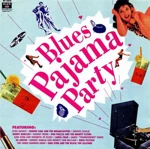 Buy from Amazon Blues Pajama Party
Broader Scope and Legacy
While blues remained the core, Black Top released New Orleans R&B and roots material by artists including the Neville Brothers (Neville-ization, 1984), Buckwheat Zydeco (100% Fortified Zydeco, 1983), Solomon Burke, Maria Muldaur (Louisiana Love Call), Tommy Ridgley, and others. This reflected the Scotts’ interest in Southern vernacular music beyond strict genre lines.
Black Top’s lasting impact lies in its documentation of authentic blues and related styles during a period when major labels largely ignored them. It provided high-production-value recordings, strong production by Hammond Scott, and national (and later international) distribution that helped sustain careers and introduce artists to wider audiences. After the label’s closure, reissues kept much of the catalog available, ensuring that landmark albums by Funderburgh/Myers, Ronnie Earl, Snooks Eaglin, Earl King, and many others continue to be heard. The Scott brothers’ work stands as a model of independent blues entrepreneurship rooted in genuine passion for the music.