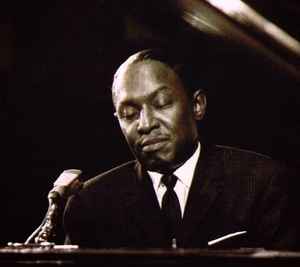
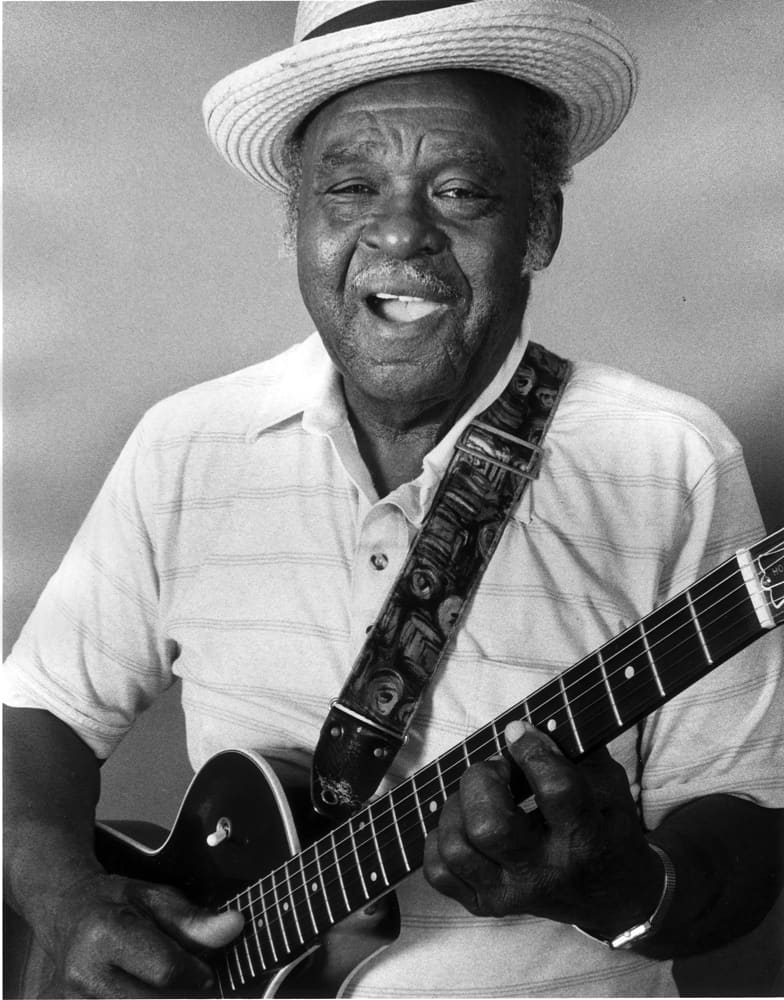
There is a particular kind of blues artist who builds a career not through flash or spectacle but through persistence, craft, and an unwavering commitment to the fundamentals of the form. Eddie Boyd was such an artist—a pianist and singer whose name may not carry the mythic weight of a Muddy Waters or a Howlin' Wolf, but whose contributions to the Chicago blues sound were every bit as essential. He wrote and recorded one of the most enduring blues standards of the postwar era, anchored countless sessions for Chess Records and its subsidiaries, and eventually became one of the first American bluesmen to transplant himself permanently to Europe, where he spent the final quarter-century of his life spreading the gospel of the blues to audiences who treated the music with a reverence that his own country too often withheld. His was a life shaped by the Great Migration, the postwar recording boom, the racial indignities of mid-century America, and the international blues revival that he helped to catalyze. To understand Eddie Boyd is to understand the working musician's life in the blues, a life of constant motion, adaptation, and the quiet dignity of a man who knew that his art was worthy of respect even when the world around him refused to grant it.
The Delta and the Making of a Musician
Edward Riley Boyd was born on November 25, 1914, though some documents suggest November 13, on Frank Moore's Stovall Plantation near Clarksdale, Mississippi, squarely in the heart of the fertile Mississippi Delta. The exact location of his birth has been a matter of some dispute among blues historians, with some sources placing it on Stovall Plantation proper and others on Frank Moore's plantation near Stovall. What is not in dispute is that he entered the world in one of the most musically rich and economically impoverished regions of the American South, a landscape of cotton fields and cypress groves where the blues was not merely entertainment but a necessary response to the harsh realities of sharecropping life.
Boyd's early years were spent in the fields, working the land that his family did not own, and in the evenings he found his way to the legendary Mississippi juke joints where the blues was played for rowdy audiences of Black workers seeking release from the grinding labor of the day. It was in these rough-hewn establishments that Boyd first encountered the music that would become his life's work. He taught himself to play guitar, the instrument of choice for Delta bluesmen, and began performing in the local joints, developing a style that was rooted in the country blues of the region but that already showed signs of the urban sophistication that would characterize his mature work.
The Delta of Boyd's youth was a place of rigid racial segregation and limited opportunity, and like many young Black men of his generation, he eventually found himself in trouble with the authorities. The specific incident that precipitated his departure from Mississippi has been recounted in various forms, but the consensus holds that Boyd was involved in an altercation with a white youth, an incident serious enough—some accounts suggest he threw a hayfork—that he decided it was no longer safe for him to remain in the state. The Jim Crow South offered little prospect of justice for a Black man who had defended himself against a white aggressor, and Boyd, like thousands of others before and after him, chose exile over imprisonment or worse. Around 1931, he made his way north to Memphis, Tennessee, joining the first wave of the Great Migration that would eventually draw millions of African Americans from the rural South to the industrial cities of the North and Midwest.
Memphis and the Beale Street Education
Memphis in the 1930s was a city in musical ferment, and Boyd arrived at a propitious moment. The Beale Street district, with its clubs, theaters, and street-corner musicians, was one of the great training grounds for blues artists, a place where country musicians from the Delta could absorb the urban influences that were transforming the music. Boyd quickly inserted himself into this vibrant scene, forming a group called the Dixie Rhythm Boys and establishing himself as a regular presence in the city's bars and juke joints.
It was in Memphis that Boyd made the crucial transition from guitar to piano. While he had started as a guitarist, the piano offered possibilities that the guitar could not match: the ability to provide both harmonic foundation and melodic counterpoint, to fill the sonic space of a crowded club with a volume and authority that a solo guitarist could not easily achieve. Boyd's piano education was largely self-directed, absorbed from the players he heard on Beale Street and from the records that were beginning to circulate among the musical community. He was particularly drawn to the styles of Roosevelt Sykes and Leroy Carr, two of the most influential blues pianists of the prewar era.
Roosevelt Sykes, the "Honeydripper," was a master of the rolling, boogie-tinged piano style that would become a cornerstone of Chicago blues, his left hand providing a relentless rhythmic drive while his right hand danced across the upper registers with a facility that made complex figures sound effortless. Leroy Carr, by contrast, was a more introspective player, a pioneer of the "slow blues" style that emphasized emotional nuance over technical display. Carr's duets with guitarist Scrapper Blackwell, recorded in the late 1920s and early 1930s, established a template for the piano-guitar partnership that Boyd would return to throughout his career. From Sykes, Boyd absorbed the power and drive of the blues piano; from Carr, he learned the value of restraint, the art of making every note count, and the importance of matching the vocal delivery to the emotional content of the lyric.
Boyd's years in Memphis were formative in other ways as well. He learned how to front a band, how to work a room, and how to survive as a professional musician in a competitive environment. The Dixie Rhythm Boys became a reliable draw on Beale Street, and Boyd established a reputation as a solid, dependable performer who could deliver the blues with conviction night after night. Yet Memphis, for all its musical riches, was still the South, and the racial barriers that had driven Boyd from Mississippi were only marginally less oppressive in Tennessee. By 1941, with war production creating unprecedented demand for industrial labor in the North, Boyd made the decision that would define his professional life: he moved to Chicago.
Chicago: The Promised City and the Session Life
Boyd arrived in Chicago at the tail end of the first great wave of the Great Migration, a period when the city's Black population was expanding so rapidly that the South Side seemed to be reinventing itself block by block. The Chicago that greeted him was a city of factories and foundries, of crowded tenements and thriving Black business districts, and above all, of music. The blues was everywhere in the Black neighborhoods of the South and West Sides, pouring out of clubs, house parties, and street-corner gatherings, and being transformed by the new environment into something harder, louder, and more urban than its rural antecedents.
Boyd quickly found work in the city's blues joints, his Memphis-honed skills making him a welcome addition to the scene. He also began to establish himself as a session musician, a pianist who could be relied upon to provide solid accompaniment for the growing number of blues artists who were finding their way into recording studios. His first significant recording work came for Bluebird Records, the budget label owned by RCA Victor that had become the primary outlet for Chicago blues during the late 1930s and early 1940s. On Bluebird, Boyd accompanied some of the most important names in the blues: Sonny Boy Williamson, the harmonica genius whose "Good Morning, School Girl" and "Sugar Mama" were already standards; Jazz Gillum, the clarinetist and singer whose "Key to the Highway" would become one of the most recorded blues songs of all time; Muddy Waters, the Delta transplant who was in the process of inventing the electric Chicago blues sound; and Tampa Red, the veteran guitarist and singer whose "hoochie coochie" style had been a major influence on the development of the genre.
These session credits are worth pausing over, for they reveal something important about Boyd's musicianship. To play piano behind artists as diverse as Sonny Boy Williamson's raw harmonica, Muddy Waters' electrified Delta grit, and Tampa Red's urbane sophistication required not merely technical skill but a chameleon's adaptability. Boyd had to be able to match his accompaniment to the needs of each artist, to provide a foundation that would support without overwhelming, and to navigate the often-unpredictable dynamics of a recording session where time was money and mistakes were costly. He proved himself equal to these demands, and by the mid-1940s he had established himself as one of the most reliable session pianists in the city.
In 1947, Boyd made his first recordings under his own name, a session for RCA Victor arranged by Lester Melrose, the legendary talent scout and producer whose fingerprints are on nearly every important Chicago blues recording of the prewar and immediate postwar periods. Melrose had a keen eye for commercial potential and a network of connections that could get an artist into a major-label studio, and his interest in Boyd was a sign that the pianist was beginning to attract attention as a potential star in his own right. The Victor session did not produce a hit, but it established Boyd as a recording artist with a distinctive voice and a repertoire of original material.
That same year, Boyd found himself in a position that would have profound implications for his musical development. Big Maceo Merriweather, the towering Chicago pianist whose "Worried Life Blues" had been a massive hit in 1941 and who had influenced a generation of keyboard players with his heavy, two-fisted style, suffered a stroke that left him partially paralyzed on his right side. Maceo, who had been one of the dominant figures in Chicago blues piano since his arrival in the city, was no longer able to play with his former power, and he needed a pianist who could accompany him on club dates and recording sessions. Boyd was the natural choice. The experience of working with Maceo was a master class in blues piano, an opportunity to study at close range the techniques that had made the older man one of the most influential keyboardists in the genre. Maceo's heavy bass patterns, his rolling left hand, and his ability to build tension through repetition and dynamic variation—all of these elements would find their way into Boyd's own style, filtered through his own sensibility and adapted to the changing musical landscape of the late 1940s.
"Five Long Years" and the J.O.B. Breakthrough
By the early 1950s, Boyd had been a fixture of the Chicago blues scene for a decade, a respected session player and club performer who had yet to achieve the commercial breakthrough that would elevate him from sideman to star. The Chicago blues recording industry of this period was a complex ecosystem of major labels, independent startups, and fly-by-night operations, and an artist who wanted to record under his own name often had to navigate a maze of promoters, producers, and A&R men who were as interested in exploiting talent as in nurturing it. Boyd, like many of his peers, found that the major labels were not always eager to record him, and he began to explore the independent route.
In 1951, he took two demo recordings to Joe Brown at J.O.B. Records, a small Chicago independent that had been established in 1949 and that was rapidly becoming one of the most important outlets for blues artists who had been bypassed by the major labels. Brown liked what he heard and agreed to re-record the tracks properly. The result was a series of sessions that would produce some of the most important recordings of Boyd's career.
The breakthrough came in May 1952, when Boyd recorded "Five Long Years," a slow blues that distilled the experience of romantic betrayal and economic exploitation into a narrative of devastating simplicity. The song's structure was classic twelve-bar blues, but its lyric was a masterpiece of compressed storytelling: "Five long years, I have been working in this steel mill / Five long years, I have been working in this steel mill / I have a woman, she won't let me pay her grocery bill." The protagonist's complaint was both specific and universal, a tale of a man who works himself to the bone only to find that his labor does not earn him the respect or fidelity he deserves. Boyd delivered the lyric in a voice that was rough and urgent, his piano providing a steady, rolling accompaniment that built in intensity as the song progressed.
When "Five Long Years" was released on J.O.B., it became an immediate sensation. The record topped the Billboard R&B chart for seven weeks late in 1952, a remarkable achievement for an independent release in an era when the major labels still dominated the "race records" market. The success of the record transformed Boyd's career. He was no longer merely a session pianist or a club performer; he was a star, a name that could sell records and draw audiences.
The success of "Five Long Years" also attracted the attention of the Chess brothers, Leonard and Phil, who were in the process of building Chess Records into the most important blues label in America. Chess had originally passed on Boyd, inviting him in for a session in October 1951 with his working trio but then declining to release the recordings. After "Five Long Years" proved Boyd's commercial viability, the Chess brothers rethought their position. Boyd signed with Parrot Records, a label owned by the Chess brothers' associate Al Smith, and his contract was subsequently sold to Chess. The J.O.B. version of "Five Long Years" had featured a larger combo with overdubbed tenor saxophone and drums, a fuller sound than the trio recordings that Chess had originally deemed insufficiently commercial.
For Chess, Boyd recorded two more hits in 1953: "24 Hours" and "Third Degree." "24 Hours" was a mid-tempo blues that showcased Boyd's ability to craft a catchy, memorable chorus without sacrificing the emotional weight of the lyric. "Third Degree," co-written with Willie Dixon, was a slow, grinding blues that became one of the most enduring songs in the Chess catalog. Both records reached number three on the Billboard R&B chart, confirming Boyd's status as one of the most consistent hitmakers in the blues. The three records—"Five Long Years," "24 Hours," and "Third Degree"—established a template for Boyd's artistry: the steady, functional piano style, the pithy and acidic lyrics, the vocal delivery that was rough enough to convey authenticity but controlled enough to suggest craft.
The Chess Years and the Session Grind
Boyd's relationship with Chess Records was productive but, by his own account, contentious. The Chess brothers were notorious for their business practices, which often involved paying artists minimal royalties, claiming songwriting credits for themselves or their associates, and maintaining a system of accounting that was opaque at best and fraudulent at worst. Boyd, like many Chess artists, found that his commercial success did not translate into financial security. He was a working musician, dependent on the income from club dates and session work to supplement the meager royalties from his recordings.
During his years with Chess, Boyd was a ubiquitous presence in the label's studios. He recorded as a leader, cutting sessions that produced some of his finest work, but he also played piano on countless sessions for other Chess artists. His keyboard work can be heard on recordings by Muddy Waters, Howlin' Wolf, Little Walter, and a host of lesser-known artists who passed through the Chess studios during the 1950s. Boyd's piano was a constant in the Chess sound, his steady left hand and economical right-hand figures providing the harmonic foundation that allowed the label's guitarists and harmonica players to shine.
The Chess recordings reveal a pianist who was less interested in virtuosic display than in serving the song. Boyd's style was, in the words of one critic, "steadily functional rather than spectacular," and this functionality was precisely what made him so valuable as a session player. He could play a slow blues with the patience of a man who understood that tension is built through restraint, or he could drive an up-tempo number with a rhythmic authority that made dancing inevitable. His main strength, beyond his keyboard work, was his ability to craft lyrics that were "pithy and acidic," observations on love, work, and betrayal that cut to the heart of the blues experience without resorting to cliché.
Yet the Chess years were also a period of frustration. Boyd's contract with the label ended in 1958, and he found that the recording opportunities that had seemed plentiful in the early 1950s were now harder to come by. The blues was changing, with rock and roll and rhythm and blues beginning to eclipse the older styles in the marketplace, and Boyd's brand of straightforward, piano-driven blues was no longer the commercial force it had once been. He recorded sporadically for a series of smaller labels—J.O.B., Ruler, Palos, and others—releasing singles that found modest success but failed to match the impact of his Chess hits.
The 1957 Accident and the Decline
In 1957, Boyd's career was derailed by a serious automobile accident in Illinois. He was injured badly enough to require a lengthy convalescence, and the timing could not have been worse. His popularity was already in decline, the result of changing musical tastes and the fickle nature of the record industry, and the accident put his career on hold at a moment when he could least afford the interruption. For three months, Boyd was laid up, unable to perform or record, and when he returned to the scene, he found that the landscape had shifted. The younger generation of blues fans was gravitating toward the electric guitar heroes who were redefining the music, and the piano was becoming an increasingly marginalized instrument in the blues world.
Boyd continued to work, playing club dates and the occasional recording session, but the momentum of his early 1950s success was gone. He was still a respected figure in the Chicago blues community, still capable of delivering a powerful performance, but the industry that had once embraced him now seemed indifferent to his talents. It was in this context of professional frustration and personal disappointment that Boyd began to look beyond America's shores for the recognition that he felt he deserved.
The American Folk Blues Festival and the European Discovery
The blues revival of the 1960s, driven by the discovery of the music by young white audiences in America and Europe, created new opportunities for artists who had been bypassed by the first wave of success. In 1965, Boyd was invited to tour Europe as part of the American Folk Blues Festival, the traveling revue organized by German promoters Horst Lippmann and Fritz Rau that had been introducing European audiences to the greatest living blues artists since 1962. The 1965 tour featured an extraordinary lineup: Big Mama Thornton, Big Walter Horton, J.B. Lenoir, Roosevelt Sykes, John Lee Hooker, Mississippi Fred McDowell, Buddy Guy, and Eddie Boyd, among others.
For Boyd, the tour was a revelation. He discovered that there were audiences in Europe who treated the blues with a reverence that was rare in America, who listened intently to every note, and who understood that they were witnessing a cultural treasure that was in danger of disappearing. The tour stopped in Germany, Switzerland, France, Belgium, the Netherlands, Britain, and Scandinavia, playing to packed houses of enthusiastic fans who had learned about the blues through records and were now seeing the music performed live for the first time.
In London, the tour's stop provided an opportunity that would have lasting consequences for Boyd's career. Mike Vernon, the young British producer who was in the process of establishing Blue Horizon Records as the premier British blues label, supervised a session for Boyd with members of Buddy Guy's band. The result was Boyd's first LP, Five Long Years, released on Fontana. The album was a raw, powerful document of Boyd's art, recorded with a sympathetic band that understood the Chicago blues idiom and that gave Boyd the space to stretch out in ways that his American recordings had rarely allowed.
The European tour also exposed Boyd to a way of life that was free from the racial discrimination that had plagued him throughout his American career. In Europe, he was not a second-class citizen; he was an artist, respected and celebrated for his contributions to a music that Europeans recognized as one of America's greatest cultural achievements. The contrast with his treatment at home was stark, and it planted a seed that would eventually lead to his permanent relocation.
The British Blues Boom: Fleetwood Mac, John Mayall, and Blue Horizon
Boyd's connection with Mike Vernon and the British blues scene deepened in the years following the 1965 tour. In 1967, he recorded an album with the Dutch blues band Cuby and the Blizzards, a session that found him adapting his Chicago style to the more aggressive, electric approach of the European blues-rock bands. The album, Praise the Blues, was released on Phillips and showed that Boyd was capable of more than just the traditional blues that had defined his American career. He could swing, he could boogie, and he could hold his own with a band that played louder and faster than anything he had encountered in Chicago.
Eight days after the Cuby session, Boyd was back in London, recording Eddie Boyd and His Blues Band for Decca Records, with Mike Vernon producing and John Mayall and members of the Bluesbreakers providing backing. The session was a fascinating collision of generations and cultures: Boyd, the veteran Chicago bluesman who had learned his craft in the juke joints of Mississippi and Memphis, and Mayall's band, the young British acolytes who had absorbed the blues from records and were now playing it with a fervor that bordered on religious devotion.
The following year, 1968, Boyd returned to the studio with Vernon and a new band: Peter Green's Fleetwood Mac. The resulting album, 7936 South Rhodes—the title a reference to Boyd's address in Chicago—was recorded on January 25, 1968, and released on Blue Horizon in May of that year. The album featured Boyd on vocals and piano, with Peter Green on guitar, John McVie on bass, and Mick Fleetwood on drums. It was a stripped-down, intimate affair, the sound of four musicians listening to each other and finding common ground in a music that transcended national boundaries.
Boyd was deeply impressed by Peter Green's guitar playing. He called Green "a negro turned inside-out," meaning that the young Englishman was "black on the inside"—that he had absorbed the emotional essence of the blues in a way that few white musicians had managed. Green's guitar work on 7936 South Rhodes was indeed remarkable, not merely for its technical proficiency but for its sensitivity as accompaniment. Green understood that the role of a blues guitarist was not to show off but to support, to find the spaces between the vocal lines and the piano chords and to fill them with something that enhanced rather than competed. The album's highlight was "The Big Boat," a slow blues that Boyd had first recorded in a different form with Cuby and the Blizzards, here distilled to its essence with Green's guitar providing a haunting counterpoint to Boyd's vocal.
The Blue Horizon sessions were later compiled as The Complete Blue Horizon Sessions, a document of Boyd's European period that stands as some of his most satisfying work. Freed from the commercial pressures of the American record industry and supported by musicians who treated him with the respect he deserved, Boyd sounds like a man who has finally found his audience.
Exile: Belgium, Finland, and the European Years
Despite the success of his British recordings, Boyd was not content to remain in England. In 1965, he had moved to Belgium, a country whose central location made it an ideal base for touring the European continent. In Belgium, he recorded with Cuby and the Blizzards and established himself as a regular presence on the European blues circuit. But Belgium was merely a way station. In 1970, Boyd made the move that would define the final phase of his life: he relocated to Helsinki, Finland.
The choice of Finland was unusual. Most American blues expatriates of the era settled in France, England, or Germany, countries with established blues scenes and large expatriate communities. Finland, by contrast, was a relative backwater, a country whose language and culture were unfamiliar to most Americans, and whose blues scene was in its infancy. Yet Boyd found something in Finland that he had not found elsewhere: a sense of peace, a community that embraced him without reservation, and a quality of life that was free from the racial tensions that had poisoned his American existence.
In Helsinki, Boyd became a beloved figure, a living link to the authentic blues tradition who was willing to share his knowledge and his art with a country that was hungry for both. He recorded his first Finnish album, Praise to Helsinki, in March 1970 for Love Records, a local label that specialized in documenting the burgeoning Finnish blues and jazz scene. The album featured Boyd on vocals and piano, backed by a Finnish rhythm section, and it was a revelation for local listeners who had previously known the blues only from records. Here was the real thing, a man who had played with Muddy Waters and Sonny Boy Williamson, who had written "Five Long Years" and "Third Degree," performing in their own city.
Boyd would go on to record ten blues albums in Finland, a remarkable output for a man who was supposedly in the twilight of his career. His Finnish recordings ranged from straightforward blues to more experimental material, and they featured a rotating cast of local musicians who were eager to learn from the master. Albums like Brotherhood (1975), My Lady (1978), and Hand in Hand (1978, with Ulli's Blues Band) documented a musician who was still evolving, still finding new ways to express himself within the blues idiom.
In 1977, Boyd married Leila, a Finnish woman who became his partner for the remainder of his life. The marriage was a source of great happiness for Boyd, and it anchored him in a community that had become his home. He continued to perform regularly in Helsinki and across Finland, and he became a fixture of the European blues festival circuit, traveling to Sweden, Germany, France, and Britain to play at events that were increasingly devoted to preserving and celebrating the blues tradition.
Boyd's European years were not without their challenges. He underwent heart surgery in 1980 for the replacement of a defective valve, a serious operation that could have ended his performing career. But Boyd recovered, and he returned to the stage with the same determination that had carried him through the car accident of 1957 and the countless professional setbacks of his American years. In 1986, he made a triumphant return to Chicago for the Chicago Blues Festival, receiving a warm response from the city where he had made his name. It was a homecoming of sorts, a recognition by the American blues community that one of its own had achieved something remarkable in exile.
The Final Recordings and Death
Boyd's last recording was a cassette of religious music, released in 1993, a year before his death. It was a fitting coda to a career that had begun in the church-influenced juke joints of the Mississippi Delta and that had never entirely lost the spiritual dimension that underlies all great blues. The cassette was a private document, not intended for commercial release, and it suggested a man who was turning inward, reflecting on a life of struggle and triumph and finding solace in the faith that had sustained his ancestors.
Eddie Boyd died on July 13, 1994, at Meilahti Hospital in Helsinki, Finland. He was seventy-nine years old, a remarkable age for a man who had lived as hard as he had, and who had survived the accidents, the professional disappointments, and the racial indignities that had marked his American years. He was buried in the cemetery of St. Lawrence Church (Pyhän Laurin Kirkko) in Vantaa, near Helsinki, a final resting place far from the Mississippi Delta where he had been born but entirely appropriate for a man who had found his home in the world rather than in any single country.
A few months after Boyd's death, Eric Clapton released From the Cradle, a chart-topping blues album that included Clapton's interpretations of Boyd's "Five Long Years" and "Third Degree." The album was a massive commercial success, introducing Boyd's songs to a new generation of listeners who had never heard the original recordings, and it served as a belated tribute to a songwriter whose work had been central to the blues repertoire for four decades. Clapton's versions were respectful but not slavish, and they demonstrated the enduring power of Boyd's compositions, their ability to speak to new audiences in new contexts while retaining the emotional truth that had made them classics.
Suggested Listening
 Buy from Amazon The Singles Collection 1947-62 - A 2-CD set that includes selected A and B sides from the tracks he released as singles for the RCA-Victor, J.O.B., Herald, Chess, Bea & Baby, Keyhole, Mojo & Art-Tone labels. This is a solid cross-section of his work.
 Buy from Amazon The Complete Blue Horizon Sessions - This includes all of his recordings for the Blue Horizon label
The Boyd Style: Piano, Voice, and Songcraft
To understand Eddie Boyd's contribution to the blues, one must listen closely to his piano playing, for it was here that his artistry was most fully expressed. Boyd's style was built on the foundation laid by Roosevelt Sykes and Leroy Carr, but it was also shaped by his years of session work and his understanding of what a blues band required from its pianist. His left hand was steady and functional, providing a rolling bass that could drive a band without overwhelming the other instruments. His right hand was economical, preferring clean, articulated figures to flashy runs, and always serving the vocal rather than competing with it.
This functional approach to the piano was precisely what made Boyd so valuable as a session musician. He was not a soloist in the manner of Otis Spann, whose piano solos could take flight into realms of harmonic complexity, nor was he a showman like Sunnyland Slim, whose rolling style was instantly recognizable. Boyd was a team player, a pianist who understood that the blues was an ensemble music and that his role was to make the other musicians sound better. When he did solo, as on his own recordings, his playing revealed a depth of musical knowledge that was often hidden beneath the surface of his accompaniments. He could quote from the barrelhouse tradition, from boogie-woogie, from jazz, and from the gospel music of his youth, weaving these influences into a personal style that was both traditional and individual.
As a vocalist, Boyd possessed a rough, urgent instrument that conveyed the weight of his experience with an authority that made every lyric convincing. He was not a smooth crooner; his voice cracked on the high notes and rasped on the low ones, and his delivery was sometimes closer to speech than to song. But this roughness was an asset, not a liability. It suggested a man who had lived the blues, who had worked in the steel mill and the cotton field, who had loved and lost and kept moving. His voice was the sound of the Great Migration itself, of the millions of African Americans who had left the South seeking a better life and who had found, at best, a different kind of struggle.
As a songwriter, Boyd's greatest gift was his ability to distill complex emotions into simple, memorable phrases. "Five Long Years" is a masterpiece of narrative compression, its three verses telling a story of economic exploitation and romantic betrayal that could have filled a novel. "Third Degree," co-written with Willie Dixon, is a slow blues of almost unbearable intensity, its lyric a catalogue of suffering that is redeemed by the sheer beauty of its musical setting. "24 Hours" is a more upbeat number, but its lyric—"I got twenty-four hours to get my baby back"—captures the urgency of romantic desperation with a precision that few songwriters have matched.
Influence and Legacy
Eddie Boyd's influence on the blues is both direct and diffuse. Directly, his songs have been recorded by some of the most important artists in the genre. "Five Long Years" has been covered by B.B. King, Eric Clapton, Muddy Waters, and countless others, and it remains a staple of the blues repertoire, a song that every blues musician is expected to know. "Third Degree" has been similarly widely recorded, its co-authorship by Willie Dixon ensuring its place in the Chicago blues canon. "24 Hours" may be less frequently covered, but it remains a favorite among blues aficionados who value Boyd's songwriting craft.
More diffusely, Boyd's influence can be heard in the playing of every Chicago blues pianist who came after him. His steady, functional style established a template for blues piano accompaniment that emphasized reliability over flash, and that served the song rather than the soloist. Pianists from Otis Spann to Pinetop Perkins to the present generation of Chicago keyboardists owe something to Boyd, whether they know it or not. His session work on the Chess recordings of the 1950s helped to define the sound of Chicago blues at its classic peak, and his piano is an essential component of some of the greatest blues recordings ever made.
Boyd's decision to move to Europe also had a significant influence on the development of the international blues scene. He was one of the first American bluesmen to establish a permanent base in Europe, and his example paved the way for the many artists who would follow in subsequent decades. His Finnish recordings helped to establish the blues as a viable genre in Scandinavia, and his performances across the European continent contributed to the growth of a blues audience that would eventually support festivals, clubs, and record labels devoted to the music.
In Finland, Boyd's legacy is particularly strong. The Finnish Blues Society has worked diligently to preserve his memory, releasing compilation albums like Brotherhood (1975) and Mello' Hello! – Eddie Boyd in Finland (2005), organizing concerts in his honor, and erecting a commemorative plaque in front of his longtime home in Helsinki's Kallio district in 2009. Boyd was named an honorary member of the Finnish Blues Society in 1993, a year before his death, and he remains a revered figure in the country's musical culture.
The Last Word
Eddie Boyd's story is the story of the blues in the twentieth century: the migration from the rural South to the urban North, the struggle for recognition in a recording industry that exploited its artists, the international discovery of the music by audiences who valued it more than its country of origin, and the final exile of the artist to a foreign land where he found the respect that had been denied him at home. He was not the most famous bluesman of his generation, nor the most technically dazzling, but he was one of the most reliable, one of the most craftsmanlike, and one of the most genuinely moving.
"Five Long Years" remains his monument, a song that has outlived its author and that continues to speak to anyone who has ever felt the weight of unappreciated labor or the sting of romantic betrayal. But Boyd's body of work extends far beyond that single masterpiece. His Chess recordings, his European albums, his session work behind Muddy Waters and Sonny Boy Williamson, his Finnish recordings with local musicians who were learning the blues at the feet of a master—all of these constitute a legacy that is rich, varied, and essential to any serious understanding of the blues.
Eddie Boyd was a working musician who became, through sheer persistence and undeniable talent, an artist of lasting significance. He played the blues because it was the only music that could contain his experience, and he played it with a dignity and a commitment that elevated every performance, every recording, every note. From the juke joints of Clarksdale to the Beale Street clubs of Memphis, from the South Side bars of Chicago to the concert halls of Europe, and finally to the recording studios of Helsinki, Boyd carried the blues with him, a torchbearer for a tradition that he never stopped honoring. The blues, he proved, was not merely a music of a particular time and place. It was a universal language, and he spoke it fluently until the day he died.