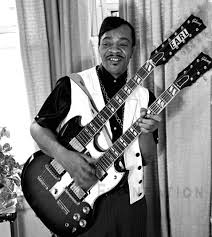
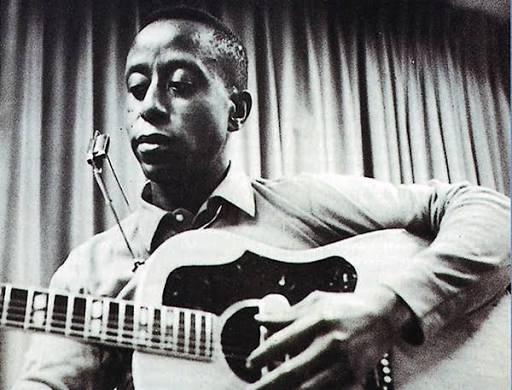
There is a moment in the 1969 documentary footage of the American Folk Blues Festival where Earl Hooker, backstage somewhere in Europe, picks up an acoustic guitar and runs through a medley of "Walking the Floor Over You" and "Rocket 88" with an ease that suggests he is not performing so much as breathing. The camera catches him in an unguarded moment, his fingers moving across the fretboard with a precision that seems almost inhuman, his face betraying none of the effort that such virtuosity would seem to demand. It is a fleeting glimpse of a musician who spent his entire life making the impossible sound effortless, and who died before the world had fully grasped what it had lost.
Earl Zebedee Hooker was born on January 15, 1930, in rural Quitman County, Mississippi, outside of Clarksdale, the city that would later market itself as the "birthplace of the blues." His family was already steeped in the music. His father played harmonica and guitar and sang; his mother sang; his sister Earlene played organ and sang. The extended family included cousins who would become famous in their own right: John Lee Hooker, the Detroit-based bluesman whose droning, modal style would influence generations of rock musicians, and Joe Hinton, the vocalist who would later record "Funny How Time Slips Away." Music was not an occupation in the Hooker household; it was a fact of life, as natural as eating or sleeping.
In 1930, when Earl was still an infant, his parents joined the Great Migration and moved the family to Chicago, seeking the economic opportunities and relative freedom from Jim Crow violence that the industrial North promised. The Chicago that young Earl grew up in was a city of stark contrasts: the glittering downtown skyline visible from the cramped tenements of the South Side, the promise of prosperity coexisting with the reality of segregation and exploitation. But it was also a city where music flourished, where the blues that Southern migrants brought with them was being transformed by electricity and urban energy into something new and powerful.
By the age of ten, Earl had begun teaching himself guitar on a Sears acoustic, a "folk guitar" as they were called. He was self-taught in the truest sense, picking up what he could from the musicians around him, absorbing the sounds that poured from radios and phonographs and live performances in the neighborhood. The blues was his music from the beginning, but the blues of 1940s Chicago was not the acoustic country blues of the Delta. It was swing-influenced, jump-blues, increasingly electric, and it demanded a different kind of technique and showmanship.
In 1942, when Earl was twelve, the modern electric blues came to Chicago in the person of T-Bone Walker, who began a three-month stint at the Rhumboogie Club. Walker's impact on the young Hooker was immediate and profound. Here was a guitarist who played with the sophistication of a jazz musician, who ran the blues scales with a jazzy fluidity, who choked chords with a complexity that made the guitar sound like an orchestra, and who performed with a theatrical flair that included playing the instrument behind his neck and with his teeth. Walker showed Hooker that the blues guitar could be a vehicle for both musical sophistication and physical spectacle, a lesson that Hooker would absorb and eventually exceed.
Around this same time, Hooker became friends with Robert Nighthawk, one of the first guitarists in Chicago to fully embrace the electric guitar and one of the most influential slide players the city would ever produce. Nighthawk had a music store, and young Earl would hang around, watching, listening, absorbing. Nighthawk taught him slide guitar techniques, including various tunings and a highly articulated approach that emphasized clarity and melodic precision over the raw, slashing power that Elmore James would later popularize. The relationship was that of mentor and protégé, and Nighthawk's influence on Hooker's playing would be audible throughout his career, even as Hooker developed a voice that was entirely his own.
Hooker also formed a friendship with Junior Wells around this time, another South Side teenager who was already displaying the harmonica prowess that would make him one of the blues' greatest front men. The two were frequent street performers, playing on corners for spare change, and when the weather turned foul or truancy officers appeared, they would take their act into the streetcars, riding from one line to another across Chicago, playing for captive audiences of commuters who had no idea that they were witnessing the birth of a musical revolution.
By 1942, at the age of thirteen, Hooker was already performing regularly, sometimes alongside another neighborhood kid named Bo Diddley. But the South Side was not enough for a young man with ambitions and a restless spirit. Around 1946, he ran away from home and made his way back to the South, traveling to Helena, Arkansas, where he performed with Robert Nighthawk and appeared on Sonny Boy Williamson's popular KFFA radio program, "King Biscuit Time." The experience of playing on the radio, of hearing his guitar come back through the speakers, was a revelation, and it confirmed what Hooker already suspected: that he was destined for a life on the road, playing music for whoever would listen.
He toured the South as a member of Nighthawk's band for the next couple of years, learning the ropes of the itinerant blues musician's life: the cheap hotels, the endless miles, the audiences that could be ecstatic or indifferent, the promoters who would cheat you if you let them. In 1949, he tried to establish himself in Memphis, the city where his cousin John Lee Hooker had already made a name, and where a young B.B. King was beginning to attract attention on Beale Street. It was in Memphis that Hooker fell in with a circle of young musicians who would all go on to significant careers: Bobby "Blue" Bland, Johnny Ace, and Ike Turner. Turner, in particular, would become a recurring figure in Hooker's story, a connection that would pay unexpected dividends two decades later.
But Memphis could not hold him. By the early 1950s, Hooker was back in Chicago, performing regularly in the local clubs and establishing the pattern that would define most of his adult life: extensive touring with various musicians, interspersed with periods of establishing himself in various cities, always returning to the Chicago club scene that remained his home base. During this period, he formed a band with blues drummer and vocalist Kansas City Red, and he began to attract the attention of the talent scouts and record producers who were always on the lookout for the next big thing in the blues.
The Early Recordings and the Shadow of the Voice
Earl Hooker began recording in 1952 and 1953 for a series of small independent labels: King, Rockin', Sun, Argo, and others. His early singles were often credited to the vocalist he was backing, a common practice in the blues industry that obscured the contributions of instrumentalists, and many of his recordings, including a blazing rendition of "The Hucklebuck" cut at Sun with pianist Pinetop Perkins, remained unissued at the time, languishing in the vaults while Sam Phillips focused on other artists. Among these early recordings was Hooker's first vocal performance, an interpretation of the blues standard "Black Angel Blues," released in 1953 as "Sweet Angel" on Rockin' 513. The record showed that Hooker had by now transcended his teacher Robert Nighthawk, taking the older man's template and extending it into territory that was entirely his own.
Yet the vocal recordings also revealed a limitation that would shape Hooker's career. He had a pronounced stutter, a speech impediment that afflicted him all his life, and while he could sing adequately, his voice lacked the power and authority that the blues market typically demanded. He was not a shouter like Howlin' Wolf, nor a smooth crooner like Charles Brown. His vocals were serviceable but not compelling, and the industry, always driven by the search for a charismatic front man, tended to view him as a sideman rather than a star.
This vocal limitation, however, pushed Hooker to develop his instrumental artistry to a degree that few of his contemporaries could match. If he could not captivate audiences with his voice, he would do it with his fingers. And captivate them he did. His instrumental recordings from this period, including the upbeat "Frog Hop" recorded for Argo in 1956, revealed a guitarist of astonishing versatility, equally comfortable with T-Bone Walker's swing-blues chording, Nighthawk's slide precision, and his own increasingly personal approach to the instrument.
The year 1956 brought a crisis that would haunt Hooker for the rest of his life. He suffered a major tuberculosis attack that required hospitalization. Hooker had contracted tuberculosis when he was young, and while the disease had not yet become critical, it required periodic hospital visits and treatments that began at an early age. The 1956 attack was a warning, a signal that the lifestyle of the road—irregular meals, sleepless nights, constant travel, and the stress of making a living in an unforgiving industry—was taking a toll on a body that was already compromised. Hooker recovered and returned to performing, but the tuberculosis remained, a silent predator that would eventually claim him.
The Chief Years: House Guitarist and "Blue Guitar"
Despite his health challenges, Hooker's reputation continued to grow. By late 1959, Junior Wells, his old street-corner partner, brought him to the Chief/Profile/Age group of labels, where owner and producer Mel London was building a roster of Chicago blues talent. The association would prove to be the most fruitful of Hooker's recording career.
Their first recording together, "Little by Little," released on Profile 4011, became a hit in 1960, reaching number 23 on the Billboard Hot R&B Sides chart. The success established Hooker as a valuable commodity, and he became Chief's house guitarist, appearing on approximately forty recordings for the label between 1959 and 1963. He backed Wells on nearly all of the harmonica player's releases during this period, including "Come on in This House," "Messin' with the Kid," and "It Hurts Me Too," tracks that would remain in Wells' repertoire for the rest of his career and that would become staples of the Chicago blues canon. He also recorded with Lillian Offitt, Magic Sam, A.C. Reed, Ricky Allen, Reggie "Guitar" Boyd, Johnny "Big Moose" Walker, and Jackie Brenston, his guitar providing the spark and the polish that elevated every session he touched.
As a leader for Chief, Hooker released a series of instrumentals that showcased the full range of his artistry. "Calling All Blues" (1960 Chief 7020) featured his slide guitar in a slow blues setting, while "Blues in D Natural" (Chief 7016) demonstrated his ability to switch seamlessly between fretted and slide guitar within the same song. These recordings revealed a musician who was not content to simply repeat the formulas of his predecessors but was actively expanding the vocabulary of the blues guitar, incorporating elements of jazz, country, and R&B into a style that was recognizably blues but that refused to be confined by genre boundaries.
But the most consequential recording of Hooker's Chief years was, ironically, one that he did not know he was making. During a warm-up before a scheduled session in May 1961, Hooker and his band played an impromptu slow blues that featured his slide guitar in a particularly haunting, lyrical mood. The song was played once, and Hooker was apparently unaware that it was being recorded. Producer Mel London saved the tape, and when he was looking for material to release the following spring, he issued it as "Blue Guitar" on Age 29106.
The record sold unusually well for an instrumental blues side, and Chicago-area bluesmen began including it in their sets. But its real impact came when Leonard Chess, the owner of Chess Records, heard it. Chess sensed that the track had greater commercial potential than a mere instrumental, and he approached Mel London about using it for his star artist, Muddy Waters. An agreement was reached, and in July 1962, Waters overdubbed a vocal on Hooker's original recording, with lyrics supplied by Willie Dixon. The result was "You Shook Me," a song that would become one of Muddy Waters' signature tracks and, eventually, one of the most influential blues recordings in history.
Chess was so pleased with the result that he hired Hooker to record three more instrumentals for Waters to overdub. One of these, "You Need Love" (with Dixon-supplied lyrics), was also a success, selling better than Muddy's early sixties recordings and establishing a formula that Chess would exploit repeatedly. Later, rock bands such as Led Zeppelin would achieve massive success with their adaptations of both "You Shook Me" and "You Need Love" (the latter retitled "Whole Lotta Love"), bringing Hooker's guitar work to millions of listeners who had no idea who had played the original parts.
The irony of this situation was not lost on those who knew Hooker. He had created some of the most memorable guitar parts in blues history, yet he received little recognition and, by most accounts, little financial compensation for his contributions. The music industry of the 1950s and 1960s was not kind to sidemen, particularly Black sidemen, and Hooker's work on the Muddy Waters tracks was treated as a commodity to be bought, used, and forgotten. That his playing would eventually influence guitarists as diverse as Jimmy Page, Jeff Beck, and George Harrison was a form of delayed justice, but it was justice that Hooker himself would not live to see.
During his time with Chief, Hooker also recorded as a sideman for Bobby Saxton and Betty Everett, and he cut singles under his own name for Bea & Baby, C.J., and Checker. But by 1964, the Chief labels had gone out of business, ending Hooker's longest association with a record company. For many collectors and critics, the Chief/Profile/Age recordings represent Hooker's best work, a period when he was at the peak of his creative powers, supported by a sympathetic producer and a roster of talented musicians who understood and appreciated his gifts.
The Cuca Years and "The Genius of Earl Hooker"
After Chief folded, Hooker did what he had always done: he kept moving. He continued touring and began recording for a variety of small labels, including Cuca Records in Sauk City, Wisconsin, as well as Jim-Ko, C.J., Duplex, and Globe. The Cuca recordings, made between 1964 and 1967, were eventually compiled into his first full-length album, The Genius of Earl Hooker, a title that was not mere hyperbole but a statement of fact that anyone who heard the record could confirm.
The album was composed entirely of instrumentals, a reflection of Hooker's status as a guitarist's guitarist rather than a conventional blues singer. It included the slow blues "The End of the Blues," which showcased his ability to build tension through restraint, and "Two Bugs in a Rug," an early funk-influenced track whose title was an allusion to his tuberculosis—"TB" being the bugs in the rug. The album also featured "Bertha," a track that hinted at Hawaiian and pop influences, acknowledging the slide guitar's early slack-key roots, and "Off the Hook," a brilliant bebop-influenced instrumental that revealed the jazz leanings that Hooker had absorbed from T-Bone Walker and that he would continue to explore throughout his career.
The Cuca recordings also introduced a new element to Hooker's sound: the steel guitar, played by the virtuoso Freddie Roulette. The combination of Hooker's electric guitar and Roulette's steel created a rich, layered texture that expanded the sonic possibilities of the blues band, and it pointed toward the experimental direction that Hooker would pursue in his final years.
But the Cuca period was also marked by a devastating health crisis. In late summer 1967, Hooker experienced a major tuberculosis attack that required hospitalization for nearly a year. The disease that had stalked him since childhood had finally caught up, and for a time, it seemed that his career might be over. When he was released from the hospital in 1968, against his doctor's advice, he assembled a new band and returned to the Chicago clubs and the road. The band included pianist Pinetop Perkins, harmonica player Carey Bell, bassist Geno Skaggs, vocalist Andrew "Voice" Odom, and steel guitarist Freddie Roulette, and it was widely acclaimed as one of the best Hooker had ever carried with him.
Arhoolie, Buddy Guy, and Two Bugs and a Roach
It was Buddy Guy who recommended Hooker to Chris Strachwitz of Arhoolie Records, the California-based label that had become one of the most important documentarians of American roots music. Strachwitz, who had already recorded Lightnin' Hopkins, Mance Lipscomb, and Big Mama Thornton, recognized in Hooker a musician of extraordinary depth, and in 1968 he brought the guitarist and his new band into the studio.
The resulting album, Two Bugs and a Roach, released in the spring of 1969, was a revelation. It included a mix of instrumentals and vocals by Odom, Bell, and Hooker himself, and it showcased a musician who had lost none of his powers during his convalescence. For one of his own vocal tracks, Hooker chose "Anna Lee," a song based on Robert Nighthawk's 1949 "Annie Lee Blues," a nod to his mentor that also demonstrated how far Hooker had traveled from his teacher's template. The "brilliant bebop-influenced" instrumental "Off the Hook" showed his jazz leanings in full flower, while the title track grounded the album in the blues tradition that remained Hooker's foundation.
Two Bugs and a Roach was extremely well-received by critics and the public, and it stands today as part of Hooker's finest musical legacy. The album captured a band at the peak of its powers, playing with a telepathic unity that can only come from musicians who have spent countless hours on the bandstand together. Pinetop Perkins' piano provided a rolling, orchestral foundation, Carey Bell's harmonica wailed and moaned in sympathetic counterpoint to Hooker's guitar, and Andrew Odom's vocals filled the role that Hooker's own voice could not quite manage. It was a Chicago blues band in the classic mold, and Hooker's guitar was the glue that held it all together.
The Blue Thumb Sessions and Ike Turner
The year 1969 was the most consequential of Hooker's career, a period of intense creativity and recognition that suggested he was finally breaking through to the wider audience he had always deserved. In May 1969, following a recommendation from Ike Turner—the same Ike Turner with whom Hooker had toured the South as a teenager nearly two decades earlier—Hooker traveled to Los Angeles to record an album for Blue Thumb Records. The album, Sweet Black Angel, featured arrangements and piano by Turner, and it included Hooker's interpretations of several blues standards: "Sweet Home Chicago," "Drivin' Wheel," "Cross Cut Saw," "Catfish Blues," and the title track. It was a more polished, produced affair than his Arhoolie recordings, and it showed that Hooker could function in a mainstream studio context without sacrificing the raw power of his playing.
While in Los Angeles, Hooker visited the clubs and sat in with Albert Collins at the Ash Grove, the legendary folk and blues venue that was a gathering place for musicians of all genres. He also jammed with Jimi Hendrix, a meeting of two guitarists who represented opposite poles of the electric guitar revolution: Hendrix, the psychedelic explorer who was pushing the instrument into outer space, and Hooker, the blues traditionalist who was nevertheless experimenting with wah-wah pedals, tape delay, and other effects that would become staples of rock guitar. What they talked about, what they played, remains a matter of speculation, but the encounter suggests that Hendrix, whose own roots were in the blues, recognized in Hooker a kindred spirit, a guitarist who understood that innovation and tradition were not opposites but partners.
After the Blue Thumb session, Hooker and his band backed his cousin John Lee Hooker on a series of club dates in California. The association led to a recording session for Bluesway Records, an ABC subsidiary that was home to B.B. King. The resulting album, John Lee Hooker Featuring Earl Hooker – If You Miss 'Im ... I Got 'Im, was Earl Hooker's introduction to the Bluesway label, and it led to a remarkable burst of recording activity in 1969. Over the course of that year, Hooker would be involved in six more Bluesway albums: his own Don't Have to Worry, plus albums by Andrew Odom, Johnny "Big Moose" Walker, Charles Brown, Jimmy Witherspoon, and Brownie McGhee and Sonny Terry.
Don't Have to Worry, recorded on May 29, 1969, at Vault Recording Studio in Los Angeles, was a masterpiece of coherence and consistency. It featured Hooker on guitar and vocals, with Andrew "Blues Boy" Odom handling lead vocals on several tracks, Paul Asbell on second guitar, Jeffrey Carp on harmonica, Johnny "Big Moose" Walker on piano and organ, Chester E. "Gino" Skaggs on bass, and Roosevelt Shaw on drums. The album mixed instrumentals and vocal tracks, originals and standards, and it demonstrated the full range of Hooker's mature art. "The Sky Is Crying," "Hookin'," "You Got to Lose," "Blue Guitar," and the title track were all performed with a precision and authority that suggested a musician who had finally been given the resources and the support to match his ambitions.
San Francisco, the Fillmore, and Hooker and Steve
The Bluesway sessions brought Hooker to the San Francisco Bay Area in July 1969, where he played club and college dates as well as rock venues that would have been unimaginable for a blues musician a decade earlier. He performed at The Matrix and the Fillmore West, sharing bills with rock bands and playing for audiences of young white fans who had discovered the blues through the British Invasion and were now eager to hear the music from its source. In Berkeley, he and his band, billed as "Earl Hooker and His Chicago Blues Band," performed for two weeks at Mandrake's, a local club, while he recorded a second album for Arhoolie.
The album, titled Hooker and Steve, was recorded with Louis Myers on harmonica, blues keyboard player Steve Miller, Geno Skaggs on bass, and Bobby Robinson on drums. Hooker shared the vocals with Miller and Skaggs, and the album's title was a nod to the jazz organist Jimmy Smith and the guitarist Wes Montgomery, two of Hooker's heroes whose influence could be heard in the album's more jazz-oriented tracks. It was a departure from the straight Chicago blues of his earlier work, a sign that Hooker was continuing to evolve even as his health declined.
The Chicago Blues Festival and the European Apotheosis
After his California sojourn, Hooker returned to Chicago and performed regularly around the city. On August 30, 1969, he appeared at the first Chicago Blues Festival, an event that attracted about 10,000 people and that marked the beginning of the city's official recognition of the blues as a cultural treasure. For Hooker, who had spent his entire career in the clubs and bars of the South and West Sides, the festival was a sign that the world was finally catching up to what he had known all along: that the blues was art, worthy of celebration and preservation.
But the true climax of Hooker's career came in October 1969, when he toured Europe as part of the American Folk Blues Festival. The tour, organized by the German promoters Horst Lippmann and Fritz Rau, was a grueling affair: twenty concerts in twenty-three days in nine countries. Hooker played Germany, Switzerland, France, Belgium, the Netherlands, Britain, Scandinavia, and beyond, performing for audiences who treated him not as a barroom entertainer but as a master musician, a virtuoso whose every note was worthy of attention.
The journey overseas was a sort of apotheosis for Hooker, who regarded it, along with his recording trips to California, as the climax of his career. He was filmed for a tour documentary by Hanno Brühl, footage that captures him performing "Walking the Floor Over You" and "Off the Hook" with a precision and intensity that leave no doubt about his status as one of the greatest guitarists of his generation. Backstage, he jams on "Rocket 88" with a casual authority that suggests he could play anything, in any style, at any moment.
The tour exhausted him. His friends noticed a severe deterioration of his health upon his return, and it was clear that the tuberculosis, never fully vanquished, had taken advantage of the rigors of travel to reassert its grip. Hooker played a few dates around Chicago in November and early December, including some reunions with Junior Wells, but by mid-December he was hospitalized, and this time, there would be no recovery.
Death and the Weight of What Might Have Been
Earl Hooker died on April 21, 1970, at the age of forty, of complications due to tuberculosis. He was interred at Restvale Cemetery in the Chicago suburb of Alsip, a final resting place far from the Mississippi Delta where he was born but entirely appropriate for a man who had spent his life in motion, always moving, always playing, always searching for the next gig, the next audience, the next chance to make the guitar sing.
He was forty years old, an age when most musicians are just hitting their stride, when the accumulated wisdom of decades begins to merge with the physical powers of maturity to produce art of the deepest significance. Hooker had reached that threshold. His 1969 recordings—Two Bugs and a Roach, Sweet Black Angel, Don't Have to Worry, Hooker and Steve—represent a musician at the absolute peak of his powers, a guitarist who had synthesized every influence he had ever absorbed into a personal style of breathtaking originality and technical perfection. And then he was gone.
B.B. King, who knew something about the blues guitar, delivered the definitive assessment: "To me he is the best of modern guitarists. Period. With the slide he was the best. It was nobody else like him, he was just one of a kind." Coming from a man who was himself one of the most influential guitarists in history, this was not mere praise. It was a recognition of genius, an acknowledgment that Hooker had achieved something on the instrument that transcended the usual categories of "good" or "great" and entered the realm of the singular.
The Hooker Sound: Technique, Innovation, and Influence
To understand why B.B. King and so many other musicians regarded Earl Hooker with such awe, one must listen closely to his playing, for it was here that his true artistry resided. Hooker was, first and foremost, a master of the slide guitar, but his approach to the instrument was radically different from that of his contemporaries. While Elmore James and Muddy Waters played slide in open tunings, producing a raw, droning sound that was powerful but limited in its harmonic possibilities, Hooker played slide in standard tuning. This allowed him to switch between slide and fretted playing within the same song with a fluidity that no other guitarist could match.
He wore a short steel slide on his left pinky finger, leaving his remaining fingers free for fretted licks and chording. This technique, verified by Hooker authority Billy Flynn, enabled him to combine slide and standard phrases in call-and-response patterns, creating dialogues between contrasting timbres that made his solos sound like conversations between two different instruments. On "Blue Guitar," for example, he alternates familiar flurries and string bends without the slide with his uncommon standard-tuned slide lines, the overlapping, contrasting effect providing a sonic variety that transcends either style alone.
Part of his slide sound has been attributed to his light touch, a technique he learned from Robert Nighthawk. Instead of using full-chord glissando effects, he preferred the more subtle single-note runs inherited from others who played slide in standard tuning—Tampa Red, Houston Stackhouse, and Nighthawk himself. His slide intensified the minor-major blues polarity with powerful approach lines, and his use of microtonal slide melody and purposeful chromaticism created a vocal-like quality that made the guitar sound like it was singing.
But Hooker's innovations extended far beyond the slide. He was, in the words of one critic, "a true fusion artist," reconciling hillbilly, swing, Hawaiian, country, pop, boogie-woogie, funk, soul jazz, rock and roll, and nascent psychedelia with electric blues guitar in its modern form. "Off the Hook" and "Hot and Heavy" hint at soul-jazz leanings; "Galloping Horses a Lazy Mule" features a swing-jazz chording episode of chromatic ninth chords that presaged and likely influenced Jeff Beck's "Jeff's Boogie." "Bertha" acknowledges Hawaiian and pop sounds; "Walking the Floor" and "Guitar Rag" are the closest any modern blues guitarist has gotten to authentic country-western or western swing. "Hooker Special" and his rendition of "Hold On, I'm Coming" on 12-string slide highlight funk and soul elements. "Apache War Dance" mingles ethnic-tinged sounds with blues and R&B. "Bright Sounds" channels the mood and B3 colors of "Green Onions."
He exploited the full tonal range of the electric guitar and reached beyond traditional blues to incorporate electric 12-string and atypical effects like spring reverb on "Calling All Blues," rockabilly slap echo on "Universal Rock," and, most notably, the wah-wah pedal, which he began using in 1968. For Hooker, the wah was not a gimmick but a natural outgrowth of his earlier experiments with rapid motion of the Tone pot, a tool for blues phrasing that added a vocal-like quality to his solos. His slide-wah combination, exemplified in "Wah Blues," "Earl Hooker Blues," and "You Don't Want Me," demonstrated a personal application of the effect that influenced Jeff Beck's use of wah and slide during "I Ain't Superstitious."
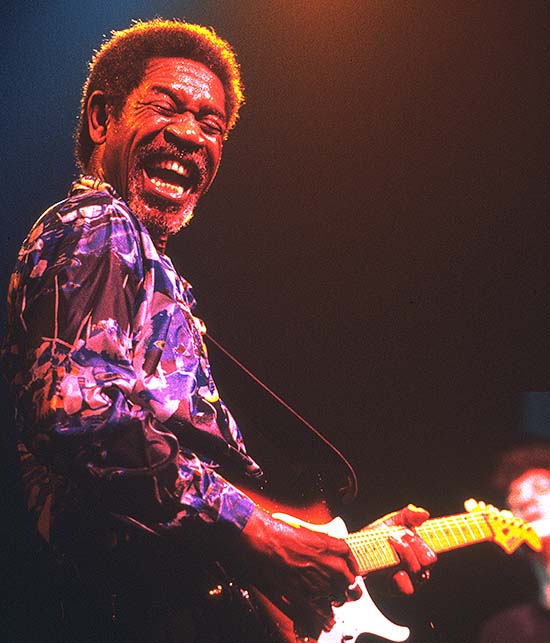
As a showman, Hooker was the equal of T-Bone Walker and Jimi Hendrix. He played the guitar with his teeth, with his feet, behind his neck, and between his legs. He was a flamboyant performer who understood that the blues was entertainment as well as art, and he gave audiences a visual spectacle to match the aural one. Yet for all his showmanship, his playing remained immaculate, every note ringing clear and precise, his technique so controlled that even at his most theatrical, he never sacrificed musicality for effect.
His influence on subsequent generations of guitarists is incalculable. George Harrison's melodic approach to the Beatles' guitar parts recalls the Hooker mystique of "Tanya." Jeff Beck's slide work and wah-wah explorations owe a direct debt to Hooker's innovations. Jimmy Page's bottlenecking on "You Shook Me" and other Led Zeppelin tracks was essentially an adaptation of Hooker's standard-tuned slide approach. Duane Allman's stratospheric slide lines on "Layla" echo Hooker's use of the slide above the pickups to create effects that sound almost otherworldly. And any guitarist who plays standard-tuned slide guitar—whether in blues, rock, or country—is working in a tradition that Hooker did more than anyone to establish.
The Instruments and the Gear
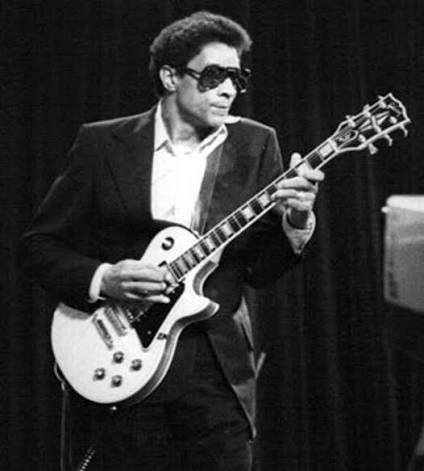
Hooker's sound was also a product of his instruments, and his choices revealed a musician who was always searching for new tonal possibilities. In the 1950s and early 1960s, he favored a Fender Stratocaster, heard to good effect on Junior Wells tracks including "Messin' With the Kid." Unique among bluesmen of his era, he employed doubleneck guitars, including a Danelectro 3923 guitar/bass and a Gibson EDS-1275. Between 1958 and 1962, he used a Double 12, a hollow double Florentine-cutaway instrument made specifically for him, and later, the solidbody EDS. By 1968, according to Paul Asbell, he preferred a Gibson SG Standard but experimented with an ES-345, a Gibson Trini Lopez (used on Hooker and Steve), and an import Shaftesbury 3264 Barney Kessel knock-off. His black Univox was a Japanese Les Paul Custom copy with his name in stick-on letters and flower decals.
Amplification was equally important to his sound. Asbell reports that Hooker likely played through a blackface Fender Super Reverb, as favored by many Chicago blues guitarists. During his 1969 European tour, he achieved a potent blues-rock tone with this unassuming guitar and Sound City stacks, proving that the magic was in the fingers, not the equipment.
The Final Assessment
Earl Hooker's story is one of the most poignant in the history of the blues. He was a musician of extraordinary gifts who spent most of his career in the shadows, known primarily to his fellow musicians and to the dedicated fans who frequented the Chicago clubs where he held court night after night. He was a sideman on some of the most important recordings in the genre, a composer whose instrumentals became the foundation for hits by other artists, a guitarist whose innovations would influence rock and roll, jazz, and country music, and a performer whose live shows combined technical perfection with theatrical flair.
Yet he never achieved the mainstream recognition that his talent deserved. He never had a hit record under his own name. He struggled with tuberculosis throughout his life, a disease that sapped his strength and eventually killed him at an age when most artists are entering their most productive period. He was, in the words of one critic, "a musician's musician," admired by his peers but largely unknown to the general public.
The reasons for this obscurity are complex. His vocal limitations meant that he could not front a band in the manner of a Muddy Waters or a B.B. King. His refusal to settle on a single formula—his constant experimentation with styles, effects, and genres—may have confused audiences and record producers who preferred their blues artists to be easily categorizable. His health problems kept him off the road for extended periods, disrupting the momentum that a career requires. And the racial dynamics of the American music industry meant that a Black instrumentalist, no matter how brilliant, was always at a disadvantage when it came to securing the promotional support that could turn a regional reputation into a national one.
Yet the music remains. The Chief recordings, the Cuca instrumentals, the Arhoolie and Bluesway albums, the Blue Thumb session, the European tour footage—all of these constitute a body of work that stands with the greatest achievements in American music. Earl Hooker was not merely a great blues guitarist. He was a great guitarist, period, a musician who expanded the possibilities of the electric guitar and who demonstrated that the blues was not a prison of twelve bars and three chords but a vast territory capable of encompassing every human emotion and every musical innovation.
When he died in 1970, the blues world lost one of its most original voices, and rock music lost one of its most important pioneers. The fact that his name is not as widely known as those of his contemporaries is not a reflection of his abilities but of the world's failure to recognize them in time. B.B. King was right: there was nobody else like him. He was just one of a kind. And forty years after his death, the notes he played still ring out, clear and precise as bells, reminding us of what we had, and what we lost.
Suggested Reading
 Buy from Amazon Earl Hooker, Blues Master
Suggested Listening
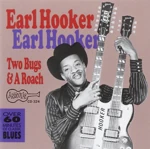 Buy from Amazon Two Bugs & a Roach
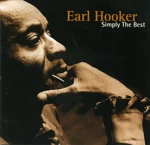 Buy from Amazon Simply The Best