"The Pony Blues" (also known as "Pony Blues" or "Shetland Pony Blues") is a foundational Delta blues song most closely associated with Charley Patton’s 1929 recording, but it became an important part of Son House’s repertoire. House learned it from Patton and recorded multiple versions, including a notable 1941–1942 Library of Congress field recording and later performances during his 1960s rediscovery. It exemplifies the raw, driving style of Mississippi Delta blues and the shared song tradition among early Delta musicians.
Recording Sessions
Charley Patton first recorded “Pony Blues” on June 14, 1929, in Richmond, Indiana, for Paramount Records during his debut session (produced with the help of talent scout H.C. Speir). It was released as the A-side of Paramount 12792 (backed with “Banty Rooster Blues”) and became one of his biggest commercial successes.
Son House recorded versions of the song later:
- In 1941–1942, Alan Lomax recorded House for the Library of Congress in Mississippi. One take is titled “Shetland Pony Blues” (or “The Pony Blues”), performed with Willie Brown on second guitar in some accounts.
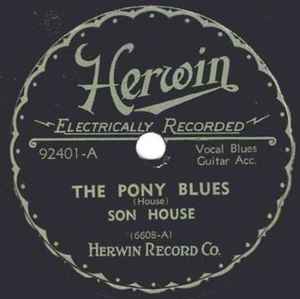
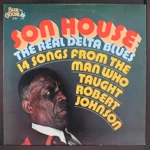
- During the 1960s blues revival (after his rediscovery in 1964), House performed and recorded the song in various settings, including live appearances and studio sessions. A version appears on releases such as The Real Delta Blues and live collections like The Great Bluesmen at Newport. It was also put out as a 78 rpm release by Herwin Records.
Producer (for Patton’s original): Paramount Records staff, with Art Laibly involved in later related sessions. For House’s 1941–42 versions, Alan Lomax supervised the field recordings. Later revival recordings were produced under various folk/blues labels.
Songwriters
The song is primarily credited to Charley Patton, who wrote it around age 19 and made it a staple of his repertoire by the mid-1910s. It is one of his earliest compositions and drew on the everyday presence of horses and ponies in rural Mississippi life. Patton later re-recorded a variant as “Stone Pony Blues” in 1934.
Son House adapted and performed it extensively, treating it as part of the shared Delta songbook rather than claiming original authorship. In the folk tradition of the era, songs circulated freely; House absorbed Patton’s material through personal association and performance. His versions retain core lyrical imagery (saddling a pony or black mare to search for a lost lover) while incorporating his own powerful vocal delivery and slide-guitar approach. The lyrics follow a classic AAB blues pattern, with repetition of the opening line and a resolving third line, often focusing on travel, longing, and the reliability (or lack thereof) of a horse as a companion in the search for a woman. House’s interpretations emphasize emotional intensity over Patton’s more rhythmic, dance-oriented delivery.
Musicians
- Charley Patton original (1929): Patton – vocals and guitar (solo performance).
- Son House versions:
- 1941–42 Library of Congress: Son House – vocals and guitar; often with Willie Brown on second guitar.
- 1960s revival performances: Primarily solo (House on vocals and slide guitar), occasionally with minimal accompaniment in live settings.
House’s versions highlight his signature bottleneck slide technique in open tunings, creating a raw, percussive, and emotionally charged sound.
Musical Style and Analysis
“The Pony Blues” is a classic Delta blues in the 12-bar form (or loose variants thereof), characterized by its driving rhythm, intense vocal delivery, and guitar interplay. In Son House’s hands, the song becomes a vehicle for his monumental style—powerful, almost preaching vocals combined with aggressive slide guitar.
Guitar approach: House typically played in open tunings (often open G or open D for slide work). His bottleneck slide produces sustained, crying notes and rhythmic percussive effects—string choking, muting, and tapping that create a full, driving sound even in solo performance. The guitar provides both a steady bass pulse and melodic responses to the voice, with the slide allowing for vocal-like phrasing and dramatic glissandos. Compared to Patton’s more intricate, non-slide fingerstyle (with its complex rhythms and percussive techniques), House’s versions emphasize raw power, emotional weight, and a hypnotic, trance-like groove.
Vocals: House’s singing is forceful, with a rough, resonant timbre, wide dynamic range, and intense emotional projection. He uses elongated notes, moans, and rhythmic phrasing that mirror field hollers and church traditions. The delivery turns the travel/longing theme into a deeply personal expression of isolation and determination.
Structure and feel: The song generally follows an AAB lyric pattern over a blues progression. House’s versions often feature a strong, marching or rolling rhythm, with the guitar establishing a repetitive, hypnotic figure that underpins the narrative. Dynamics build through vocal intensity and slide flourishes rather than complex chord changes. The overall mood is urgent and earthy—evoking the physicality of rural life, the companionship of a horse, and the restless search for a lost partner. In the 1941–42 recordings, the addition of Willie Brown’s second guitar adds interplay and depth; later solo versions focus entirely on House’s commanding presence.
This style influenced the next generation of Delta and Chicago blues artists. House’s intensity and slide technique helped shape the sound that Robert Johnson and others absorbed and transformed.
Other Versions
- Charley Patton (1929 original and 1934 “Stone Pony Blues”).
- Howlin’ Wolf (as “Saddle My Pony”).
- Big Joe Williams, Canned Heat, Corey Harris, Alvin Youngblood Hart, Cephas & Wiggins, Honeyboy Edwards, and others.
- Bob Dylan drew on the tradition (e.g., elements in “New Pony”).
- Numerous revival and modern acoustic/slide interpretations.
Legacy
“Pony Blues” is a cornerstone of the Delta blues canon. Patton’s 1929 recording helped define the genre’s commercial and artistic identity and was added to the National Recording Registry. Son House’s versions preserved and intensified the song during the field-recording era and the 1960s revival, ensuring its transmission to new audiences. The song’s imagery of the reliable pony/mare as a companion in the search for love became a recurring motif in blues. Through House and Patton, it influenced Robert Johnson, Howlin’ Wolf, Muddy Waters, and countless later artists, remaining a staple of acoustic blues performance and study. Its endurance underscores the power of shared Delta song traditions and the individual artistry of performers like Son House.
 Buy from Amazon The Real Delta Blues