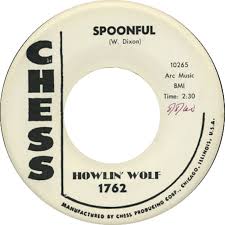
“Spoonful” is one of Howlin’ Wolf’s most powerful and influential recordings, a stark, hypnotic blues written by Willie Dixon and first released as a Chess single in 1960. It stands as a masterpiece of Chicago electric blues—raw, intense, and built around a relentless one-chord modal structure that perfectly suits Wolf’s towering voice and presence.
Recording Sessions and Producer
“Spoonful” was recorded in June 1960 at Chess Studios in Chicago. It was released later that year (Chess 1762), backed with “Howlin’ for My Darling.” The track later appeared on Wolf’s 1962 compilation album Howlin’ Wolf (often called the “Rocking Chair” album).
Producers were Leonard Chess, Phil Chess, and Willie Dixon. Dixon, as Chess’s house songwriter, bassist, and arranger, played a central creative role in shaping the session alongside the Chess brothers’ oversight of the label’s sound.
Howlin’ Wolf re-recorded the song in 1968 for the psychedelic-leaning The Howlin’ Wolf Album (produced under Marshall Chess’s direction in an attempt to update Wolf’s sound for the rock market). Wolf was reportedly unhappy with the results. He also performed it in various live contexts throughout his career.
Songwriters
The sole credited songwriter is Willie Dixon.
Detail on the songwriter: Willie Dixon (1915–1992) was the most important songwriter and behind-the-scenes architect of postwar Chicago blues. A Mississippi native who became Chess Records’ primary songwriter, bassist, arranger, and producer, Dixon crafted a remarkable catalog of songs tailored to the strengths of artists such as Muddy Waters, Howlin’ Wolf, Little Walter, and others. His writing combined vivid imagery, sexual metaphor, folklore, and psychological insight with strong, often modal or stop-time musical frameworks that translated powerfully to electric ensembles.
“Spoonful” draws loosely from earlier blues traditions, particularly Charley Patton’s 1929 “A Spoonful Blues” and related “spoonful” songs by Papa Charlie Jackson (“All I Want Is a Spoonful,” 1925) and others that used the spoon as a metaphor for desire, satisfaction, or intoxication. Dixon modernized and intensified the idea. The lyrics present a series of comparisons—“It could be a spoonful of coffee / It could be a spoonful of tea / But just a little spoon of your precious love / Is good enough for me”—building to the central claim that a small amount of the desired thing (love, sex, or, in some interpretations, something more dangerous) is all that is needed.
Dixon himself rejected drug interpretations, stating in his autobiography that people who heard heroin in the song mostly had “heroin ideas.” He framed it more broadly as a statement about how little of something valuable is required when it is truly needed. Howlin’ Wolf, however, often performed the song with blatantly sexual stage business (brandishing a large spoon), emphasizing the erotic reading. The ambiguity has only added to the song’s mythic power.
Dixon’s genius lay in writing material that felt ancient and archetypal while functioning perfectly in the electric Chicago context. “Spoonful” belongs to a group of Dixon songs for Wolf (including “Wang Dang Doodle” and “Back Door Man”) that use limited harmonic movement, heavy rhythmic insistence, and dark, almost ritualistic atmospheres—ideal vehicles for Wolf’s enormous voice and intimidating stage presence.
Musicians
The classic 1960 recording features:
- Howlin’ Wolf (Chester Burnett) – vocals, harmonica
- Hubert Sumlin – guitar
- Freddie Robinson (sometimes debated; both Sumlin and Robinson confirmed Robinson’s presence) – second guitar
- Otis Spann – piano
- Willie Dixon – double bass
- Fred Below – drums
This was a top-tier Chess studio ensemble. Sumlin’s stinging, angular guitar lines and Robinson’s complementary work create a tense, interlocking texture over Dixon’s foundational bass and Below’s precise, driving drums. Spann’s piano adds rolling, barrelhouse color without cluttering the modal space.
Musical Style and Analysis
“Spoonful” is built on a one-chord (or strongly modal) structure in E, moving at a medium blues tempo. It alternates eight-bar vocal sections with twelve-bar instrumental/chorus passages, but the overwhelming impression is of a single, unrelenting vamp. This modal approach—shared with Wolf’s “Smokestack Lightning” and other Dixon songs for him—creates a trance-like, almost ritual atmosphere rather than the tension-and-release of standard 12-bar blues harmony.
The arrangement is sparse yet massive. Dixon’s bass establishes a heavy, repeating figure that anchors the entire track. Sumlin and Robinson’s guitars deliver sharp, interlocking riffs and stinging fills. Spann’s piano provides rhythmic and harmonic color, while Below’s drumming is economical and propulsive. Over this foundation, Howlin’ Wolf’s voice dominates—huge, raw, and full of menace and desire. He delivers the lyrics with a combination of bellowing power, sly phrasing, and almost conversational asides that make the performance feel simultaneously ancient and immediate.
The song’s power lies in its refusal to resolve. There is little harmonic movement and no conventional “release.” Instead, the tension builds through repetition, dynamic control, and the sheer force of Wolf’s delivery. The result is one of the most concentrated and intimidating statements in the blues catalog: a piece that feels less like a song than a force of nature channeled through voice, guitar, and rhythm section. Later rock versions often expanded it into long jams; the original’s greatness lies in its compressed, unrelenting focus.
Other Versions
The song quickly became a blues and rock standard. Key versions include:
- Etta James & Harvey Fuqua (as Etta & Harvey), 1960/1961 – a smoother R&B/pop-leaning duet that reached the charts.
- Cream – studio version on Fresh Cream (1966) and extended live jams (notably the famous 16+ minute version on Wheels of Fire, 1968). Jack Bruce’s bass and the power-trio intensity made it a cornerstone of British blues-rock.
- Paul Butterfield Blues Band, Canned Heat, Ten Years After, Koko Taylor, Willie Dixon (his own later version), and numerous others.
It has been performed and recorded across blues, rock, jazz, and experimental contexts, including by the Kronos Quartet.
Suggested Listening
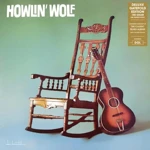 Buy from Amazon Howlin' Wolf (The Rockin' Chair Album)
Legacy
“Spoonful” is widely regarded as one of the greatest Chicago blues recordings. It appears on the Rock and Roll Hall of Fame’s list of the “500 Songs That Shaped Rock and Roll” and has ranked highly on Rolling Stone’s greatest-songs lists. Its influence on the 1960s British blues boom and subsequent hard rock and psychedelic music is profound—Cream’s versions in particular helped carry the song (and Wolf’s reputation) to massive international audiences.
The track exemplifies the creative peak of the Dixon–Howlin’ Wolf partnership and remains a benchmark for intensity, atmosphere, and the power of restraint in blues arrangement. Its combination of sexual tension, existential hunger, and hypnotic musical force continues to resonate with performers and listeners more than six decades later.