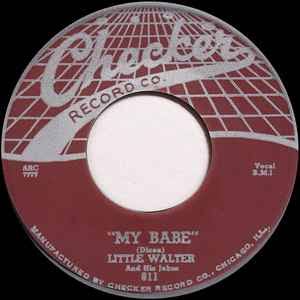
“My Babe” is Little Walter’s biggest hit and one of the defining Chicago blues recordings of the 1950s. Written by Willie Dixon and released on Checker Records in early 1955, it became a No. 1 R&B single and remains a blues standard. The song is a secular reworking of the traditional gospel song “This Train (Is Bound for Glory),” transformed into a swaggering declaration of romantic fidelity and control.
Recording Sessions and Producer
Little Walter recorded “My Babe” on January 25, 1955, in Chicago (most likely at Universal Recording, the primary studio used by Chess/Checker at the time). It was released in February 1955 on Checker 811, with “Thunder Bird” as the B-side. Producers were Leonard Chess and Phil Chess.
Willie Dixon had been pushing the song for roughly two years. Little Walter initially resisted it, but by 1955 the Chess brothers trusted Dixon’s judgment enough to insist. Once Walter cut it, the record took off immediately. It entered the Billboard R&B chart in March 1955, spent 19 weeks on the chart, and held the No. 1 position for five weeks—making it one of the biggest R&B hits of the year and the only Willie Dixon composition ever to reach No. 1 on the R&B singles chart. A 1961 reissue with overdubbed female backing vocals briefly crossed over to the pop charts.
Songwriters
The sole credited songwriter is Willie Dixon.
Detail on the songwriter: Willie Dixon (1915–1992) was the central songwriter, arranger, bassist, and creative force behind much of the classic Chess Records catalog. A Mississippi-born musician who became the architect of postwar Chicago blues, Dixon specialized in writing songs that perfectly matched the personalities and strengths of the artists he worked with. He had an exceptional ear for turning traditional material, folk imagery, and everyday speech into commercially potent blues vehicles.
“My Babe” is a textbook example of Dixon’s method of secularizing sacred material. He took the traditional gospel song “This Train (Is Bound for Glory)”—popularized in recordings by Sister Rosetta Tharpe and earlier groups—and inverted its spiritual meaning. Where the original celebrates the pure who are bound for heaven (“This train is bound for glory, this train”), Dixon’s version celebrates a woman who will not tolerate infidelity (“My baby don’t stand no cheatin’, my babe / She don’t stand none of that midnight creepin’”). The transformation is complete: sacred procession becomes secular possessiveness and pride.
Dixon later recalled that he specifically wrote the song with Little Walter in mind because Walter “was the type of fellow who wanted to brag about some chick, somebody he loved, something he was doing or getting away with.” Walter resisted the song for nearly two years, but Dixon refused to give it to anyone else. The result was a perfect match between writer and performer: Dixon supplied the catchy, gospel-derived structure and bragging lyric; Walter supplied the tough, swaggering delivery and revolutionary harmonica sound.
Dixon’s genius here lies in the economy and memorability of the lyric and the way the melody sits naturally over a driving, mid-tempo groove. The song is built for both radio and the bandstand—simple enough to stick after one hearing, strong enough to support extended harmonica solos and live improvisation.
Musicians
The January 25, 1955 session personnel were:
- Little Walter (Marion Walter Jacobs) – vocals, harmonica
- Robert Lockwood Jr. – guitar
- Leonard Caston – guitar
- Willie Dixon – double bass
- Fred Below – drums
Note that Luther Tucker, a regular member of Walter’s working band at the time, was absent from this particular session. Lockwood’s crisp, memorable guitar riffs are a key part of the record’s identity, interlocking with Walter’s amplified harmonica and Below’s precise, swinging drums.
Musical Style and Analysis
“My Babe” is a mid-tempo Chicago blues with a strong R&B feel, built on a gospel-derived melodic structure rather than a standard 12-bar blues form. The arrangement is tight, driving, and radio-friendly: two interlocking electric guitars (Lockwood’s riffing is especially prominent), Dixon’s solid walking bass, and Fred Below’s crisp, swinging drums create a buoyant yet tough foundation.
Little Walter’s vocal delivery is confident, slightly swaggering, and conversational—perfectly matched to the lyric’s boastful tone. His harmonica playing, however, is the record’s true revelation. Using amplification and a highly developed single-note style, Walter turns the harmonica into a lead voice capable of both melodic statements and biting fills. The solos are economical yet inventive, full of the tone, phrasing, and rhythmic sophistication that made him the most influential blues harmonica player of the postwar era.
The song’s structure cleverly retains the repetitive, almost chant-like quality of the original gospel source while converting it into a secular love boast. The result feels both traditional and modern: rooted in Black sacred music yet fully at home in the amplified, urban sound of mid-1950s Chicago. The groove is irresistible, the lyric instantly memorable, and Walter’s performance projects effortless authority. These qualities explain why “My Babe” became not only a major hit but a lasting standard—one of the purest and most successful marriages of gospel, blues, and R&B in the Chess catalog.
Other Versions
“My Babe” quickly became a standard. Notable covers and interpretations include:
- Elvis Presley (multiple versions, including a well-known 1969 recording)
- Bo Diddley
- Chuck Berry
- Ike & Tina Turner
- Steve Miller Band
- Cliff Richard
- Nancy Wilson
- Johnny Winter
- Many blues, R&B, rock, and jazz artists
The song has been performed across genres and continues to appear in live sets and tribute recordings.
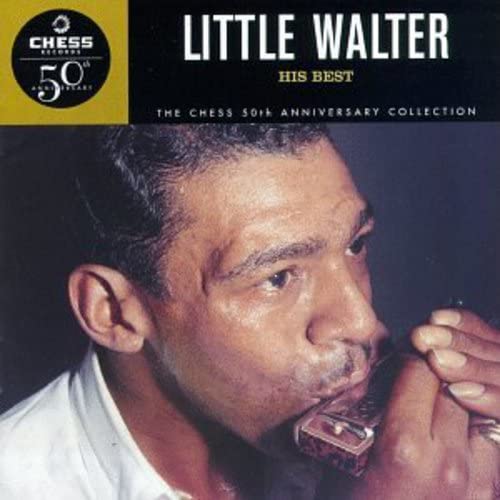 Buy from Amazon His Best: The Chess 50th Anniversary Collection
Legacy
“My Babe” was inducted into the Blues Hall of Fame in the “Classic of Blues Recording – Singles or Album Tracks” category in 2008. It stands as Little Walter’s signature vocal hit and one of the commercial peaks of the entire Chess/Checker catalog. The record helped solidify Walter’s status as the most innovative and successful harmonica player in blues history and demonstrated Dixon’s unmatched ability to craft crossover R&B hits from blues and gospel roots.
Its influence extends beyond blues into early rock & roll and R&B; the combination of gospel-derived melody, tough Chicago rhythm, and amplified harmonica became a template for countless later recordings. For both Little Walter and Willie Dixon, it remains one of the defining achievements of their careers.